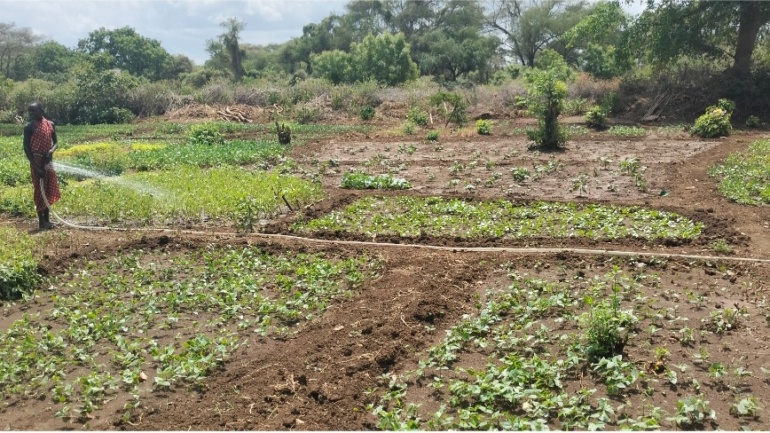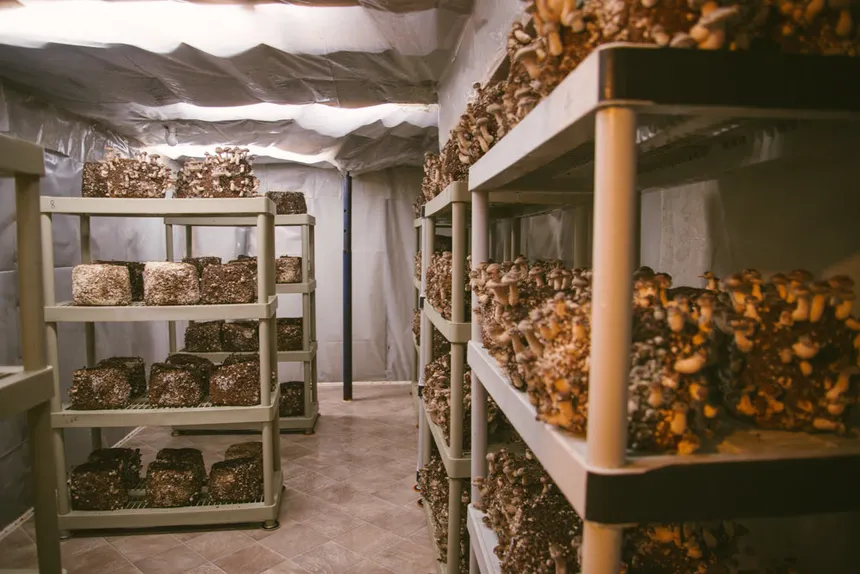
Stephen Kamau remembers exactly where he was the day he decided mushrooms were worth his attention. He watched a woman order a plate with mushrooms on it and pay a thousand shillings without hesitation.
Kamau, already trained as an agriculturalist, found himself doing the math. What was in this thing that made someone pay that kind of money for it?
That question sent him to JKUAT to study mushroom production formally. He graduated, returned to Wangige in Kiambu County, and by 2016 had started what would become Bayside Mushrooms. What followed was not the smooth transition from classroom to commercial success he might have hoped for.
“It is a challenge to start.” His first crops failed. The compost, the growing medium mushrooms are cultivated on, kept letting him down, and no amount of textbook knowledge seemed to fix it.

It’s a familiar story in Kenyan mushroom farming, according to Kamau, and it’s the reason so many growers who enter the business quietly exit it within a season or two. The crop itself, he insists, was never really the hard part. The compost was.
The compost problem
Compost for mushroom cultivation is not simple potting soil. It’s a living, working mixture of manure, cottonseed, fertilizer, molasses, and water that has to be actively managed before it can safely support a crop.
Left untreated, it plays host to competing moulds, pests, and pathogens that will either kill young mushrooms outright or let them fruit small, stained, and unfit for the premium end of the market.
“That’s where a lot of farms fail,” Kamau says. “You get a farm, it gets mushrooms, but they come out small, or with a stain. That’s the challenge.”
By his own account, Kamau hit that wall early. The turning point came when he brought in a pair of mushroom growers from South Africa, not for a short course or a site visit, but for a full year of hands-on work on the farm itself.
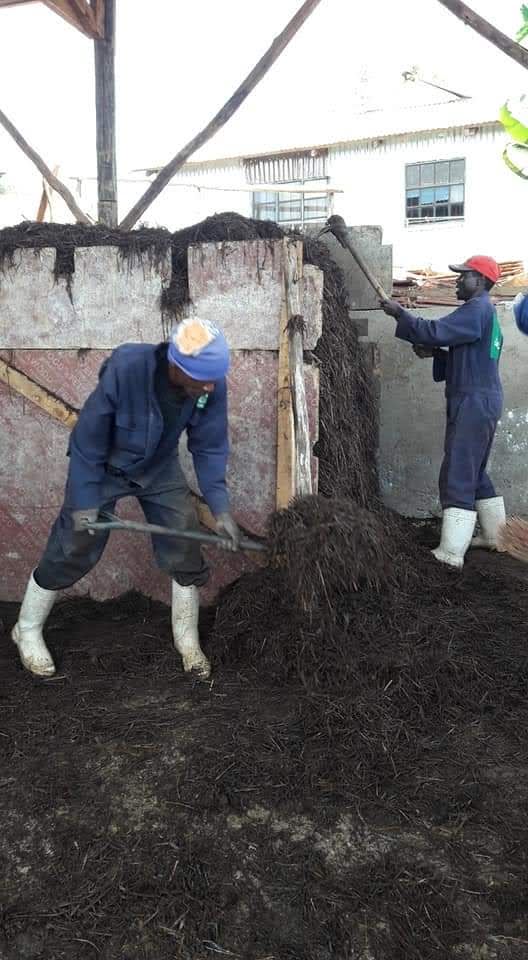
Kamau worked alongside them for the duration, learning to run a production system properly rather than growing a batch here and there. Central to that year of training was one specific skill: compost decontamination.
“They showed me the tunnel,” Kamau says. “That’s where I learned a lot.”
Inside the tunnel
The tunnel is a sealed, insulated chamber, and it’s the piece of infrastructure Kamau credits with turning his operation around.
A boiler, run on gas or charcoal, produces steam, which a motorized fan pushes through the chamber. The system is built to be airtight: no steam or heat escapes.
Compost inside is held at high temperature for an extended period, long enough to eliminate the organisms that would otherwise compete with the mushroom crop for nutrients, while also breaking down the ammonia that naturally builds up during composting into a form the mushroom can use as food rather than one that’s toxic to it.
None of this is proprietary or mysterious. It’s standard agronomic science, the same basic pasteurization principle commercial mushroom operations rely on internationally, where compost is typically held in the region of 55–65°C for several hours to kill off competing fungi and pests before conditioning.
What’s scarce in Kenya, Kamau argues, isn’t the science, it’s growers who have had the chance to learn it properly, hands-on, from people who run it every day.
The yield difference speaks for itself. A grower working without a functioning tunnel, even one being careful, will typically only get a 30 to 40 percent success rate from a batch of compost, according to Kamau, more than half the potential crop lost before it even begins. With a tunnel run correctly, that number rises to 90, sometimes 95 percent.
The economics
Bayside Mushrooms now runs on a tight, repeating cycle: roughly 14 days to prepare a batch of compost, another 16 days from spawning to fruiting, and five to six weeks of continuous harvest before that batch is spent, with the next one already moving through the pipeline behind it.
A well-managed 10×10 foot growing room, Kamau says, can produce around 70 kilograms of mushroom per cycle.
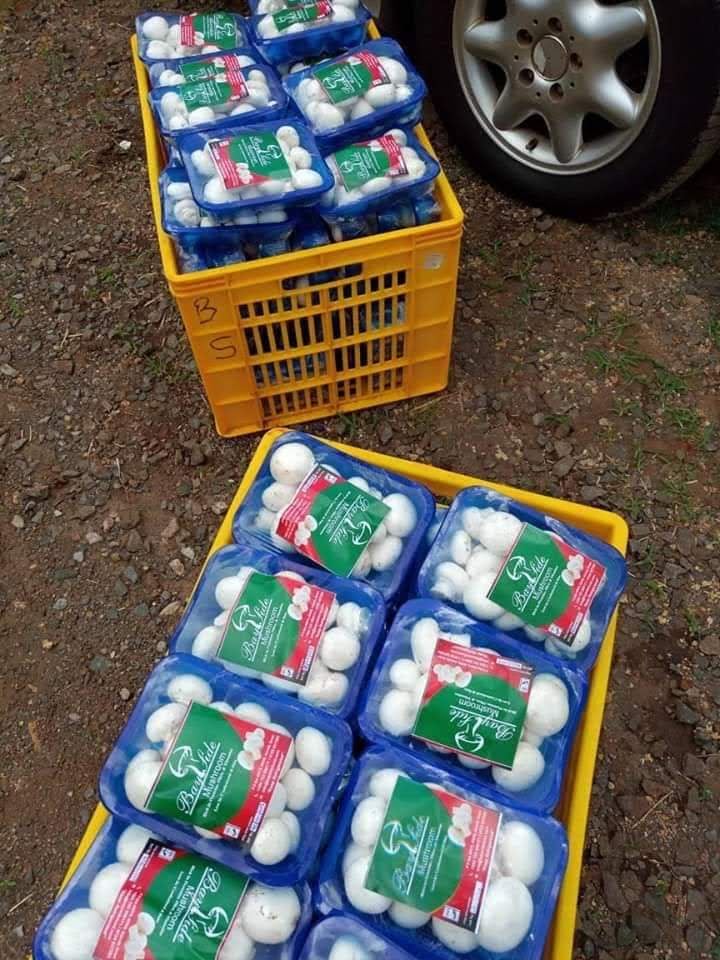
At today’s market price of roughly a thousand shillings per kilogram, the arithmetic is straightforward enough to explain why the business has grown.
For a prospective farmer, the entry costs are fairly predictable too: a house built to hold about 100 growing bags will need in the region of 150,000 shillings to set up. Space and budget are the two non-negotiables, Kamau says; mushrooms cannot be grown outdoors, only in a controlled, climate-managed room, shielded from the cold.
Of the two mushroom varieties most commonly grown in Kenya, Bayside has settled on button mushroom over oyster. Oyster carries a loyal following, particularly among consumers managing diabetes, and holds its own premium price.
But Kamau found it more expensive and labour-intensive to produce at the scale he wanted. Button, by contrast, has given him consistency, the variety behind much of the mushroom pizza and mushroom soup served in hotels like Kempinski, and demand for it has stayed dependable.
Discipline as much as science
That dependability, Kamau is quick to point out, isn’t just a function of good infrastructure. It’s maintained daily. Workers are required to wash their hands every fifteen to twenty minutes, and the farm is strict about what and who enters the growing rooms, since outside bacteria introduced by careless hygiene will stain the crop. A stained mushroom drops from Grade 1 to Grade 2 in the market, a downgrade that hits the price immediately.
There’s also a commercial discipline behind the operation. Hotels and retailers place standing orders that are expected to be filled daily; failing to deliver on a given day simply means forfeiting that day’s payment.
To manage this, Bayside stages its growing rooms deliberately, each at a different point in the production cycle, ensuring there is always a room ready for harvest.
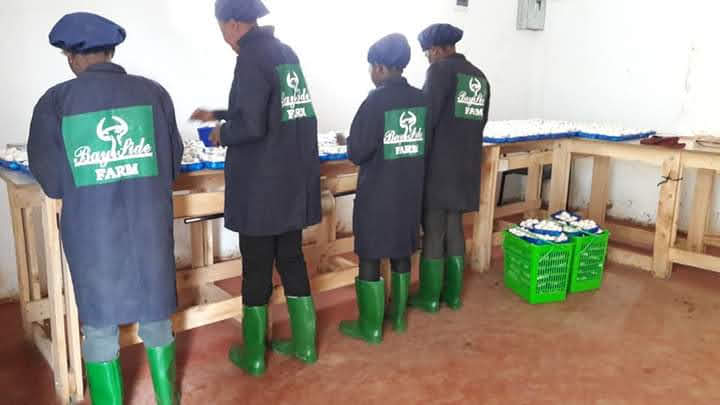
Today, the farm supplies roughly ten hotels alongside supermarket chains including Carrefour and Naivas. Mushroom remains relatively scarce in the Kenyan retail market relative to demand, Kamau says, which has kept that side of the business strong, though he’s candid that the next frontier, exporting to markets like Dubai and Abu Dhabi, remains unrealized for now.
Asked what he’d tell someone considering entering the business, Kamau doesn’t hesitate. “If you do a shortcut, it will hurt you,” he says.
“The mushroom you are planting today, even on the day you sell it, is what you have done to it.” Whatever goes into the compost, in his account, is exactly what comes out of it on harvest day. Get the process right, he says, and mushroom farming will reward a grower as reliably as almost anything else in Kenyan agriculture. Cut a corner, and there may be no crop to sell at all.
Read Also: Dark Taxa: The Underground Fungi Saving Our Planet
Author Profile

- How can we learn if we don't question?
Latest entries
 Agriculture16 October 2026“There Is No Shortcut”: A Kiambu Grower’s Decade in Mushrooms
 COP3115 October 2026Pacific Leaders Call for Urgent Climate Action Ahead of COP31
 Agriculture13 October 2026Can the buffalo fix Kenya’s milk problem? Farmers say start with the feed bill
 Events12 October 2026Cybersecurity in the Floriculture Industry