Open any farmer’s almanack and the seasons are laid out in order: when to plant, when to wait, when to harvest. Similarly, ten years since the Paris Agreement adoption, COP31 unfolds. Now imagine one calendar shared by the whole planet, where a dry spell in one country becomes a price rise in another, and a flooded river on one continent reorders a factory schedule on another.
That is the idea at the heart of COP31, which opened on 9 November in Antalya, Türkiye. Here is what the gathering is, who is in the room, and what it is trying to achieve.
What is COP31?
COP31 is the United Nations Climate Change Conference, the largest annual international gathering dedicated to advancing cooperation on climate change, a challenge no country, society or economy is immune to.
The name stands for the 31st meeting of the Conference of the Parties (COP) to the UN Framework Convention on Climate Change (UNFCCC), a treaty agreed in Rio de Janeiro in 1992 and the parent agreement of the 2015 Paris Agreement.
These meetings have been held annually since 1995, growing from diplomatic working sessions into major international conferences involving governments, businesses, scientists, young people, Indigenous Peoples and civil society.
Over the years, the negotiations have produced important agreements, the Paris Agreement chief among them. No single COP can resolve the climate crisis, but each meeting is expected to build on previous decisions and move countries closer to delivering them.
COP31 at a glance
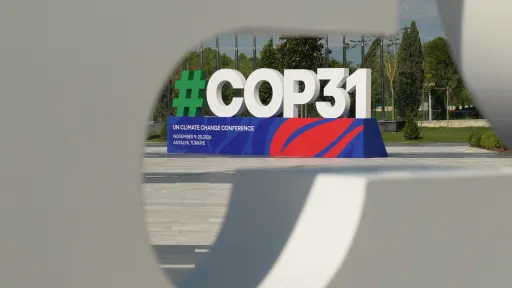
- When: 9–20 November 2026.
- Where: Antalya Expo Centre, Antalya, Türkiye.
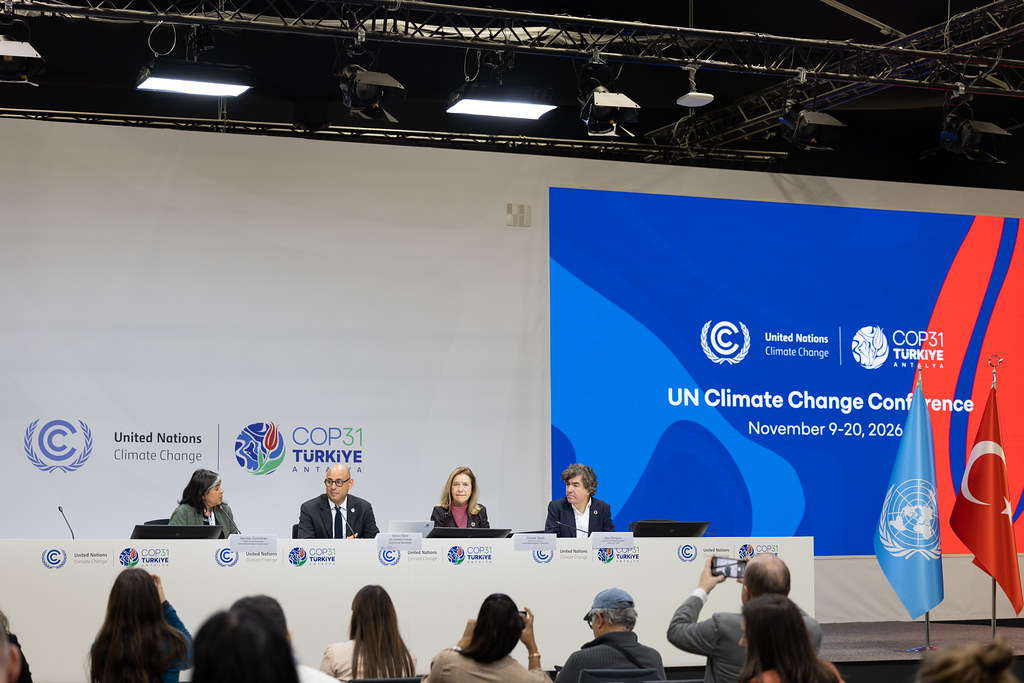
- Host and presidency: Türkiye hosts, with Murat Kurum as COP31 President. Australia’s Chris Bowen serves as President of Negotiations, under a partnership between the two countries.
- World Leaders’ Summit: 11–12 November, bringing together Heads of State and Government.
- Who attends: Government negotiators representing the Parties, alongside accredited observers from business, civil society, youth organisations, Indigenous communities and scientific institutions.
- Where activities happen: The Blue Zone hosts official negotiations and UN events for registered participants, while the Green Zone showcases public-facing climate solutions and innovation.
What are the talks about?
COP is where governments negotiate how to respond collectively to climate change. The central objectives include limiting global warming to 1.5°C, strengthening resilience to climate impacts and accelerating the transition away from fossil fuels.
The negotiations cover several interconnected areas:
- Adaptation: Helping countries and communities prepare for climate impacts, including droughts, floods and extreme heat, while advancing the commitment to triple adaptation finance by 2035.
- Mitigation: Reducing greenhouse gas emissions, including methane pollution from the energy and waste sectors.
- Climate finance: Advancing the Baku climate finance goal of at least $300 billion annually by 2035 for developing countries, within the wider ambition of mobilising at least $1.3 trillion annually from all sources.
- Just transition: Operationalising the Just Transition Mechanism adopted at COP30 in Belém to support workers and communities through the shift towards cleaner energy and more sustainable economies.
Alongside the formal negotiations is the Climate Action Agenda, which brings together businesses, cities, regional governments and civil society to showcase practical climate solutions. Its focus includes food systems, health, clean energy, transport, waste management and resilient cities.
Why this is called the Implementation COP
The word hanging over Antalya is implementation. Previous COPs have produced agreements, targets and political commitments. The challenge now is turning those decisions into concrete action.
The Turkish presidency argues that climate change cannot be addressed separately from other development challenges. War, geopolitical tensions, shifting trade routes, debt, food insecurity and the rising cost of living all influence countries’ ability to respond to climate change.
Its ambition is to take decisions beyond negotiating rooms and into what it describes as the last mile: a farmer’s field, a small island state or a city street.
However, implementation means different things to different countries. For African nations, it is closely tied to whether international climate commitments are accompanied by the financial resources, technology and institutional support needed to deliver them.
In an online meeting on the sixth of November 2026, the Chair of the African Group of Negotiators (AGN), Nana Dr Antwi-Boasiako Amoah, repeatedly emphasised that developing countries need the means to implement commitments already made under the Paris Agreement.
For Africa, three priorities stand out: climate finance, adaptation and climate-linked development.
On finance, the AGN wants substantive discussions on Article 9.1 of the Paris Agreement, which establishes the obligation of developed countries to provide financial resources to developing countries for climate action. The group is also pushing for predictable, concessional and grant-based financing, alongside a clearer pathway for replenishing the Green Climate Fund.
On adaptation, African negotiators want the commitment to triple adaptation finance by 2035 translated into a clear financing pathway, including an agreed baseline against which progress can be measured. They also want countries to retain a leading role in developing practical adaptation indicators rather than leaving the process exclusively to external technical experts.
The third priority is making the Just Transition Mechanism operational, with clear institutional arrangements and financing that can support developing countries as they pursue cleaner energy while addressing poverty, energy access and employment.
These demands reflect a broader African position: implementation should not simply mean asking developing countries to deliver more. It must also mean delivering the support that international agreements have already promised.
The presidency’s toolkit
Three principles guide the Turkish presidency: dialogue, consensus and action. Among its initiatives is the 35-by-35 Global Electrification Pledge, which seeks to raise electricity’s share of final energy consumption to 35 per cent by 2035, supported by renewable energy, stronger electricity grids, storage and energy efficiency.
The Climate Implementation Bridge is intended to connect investors with projects requiring funding, countries seeking technology with potential providers, and local needs with international expertise.
The Zero Waste Movement, led by Türkiye’s First Lady Emine Erdoğan, promotes resource efficiency and waste reduction, while the presidency is also seeking progress towards tripling global renewable energy capacity by 2030 and strengthening electricity connections across borders.
The Turkish concept of imece, where people contribute collectively to accomplish a task too large for one person, runs through the presidency’s thinking. It echoes the spirit of mutirão promoted by Brazil at COP30.
Together with Australia, Türkiye also presents itself as a bridge between developed and developing countries, with particular attention to ensuring that Pacific nations are heard.
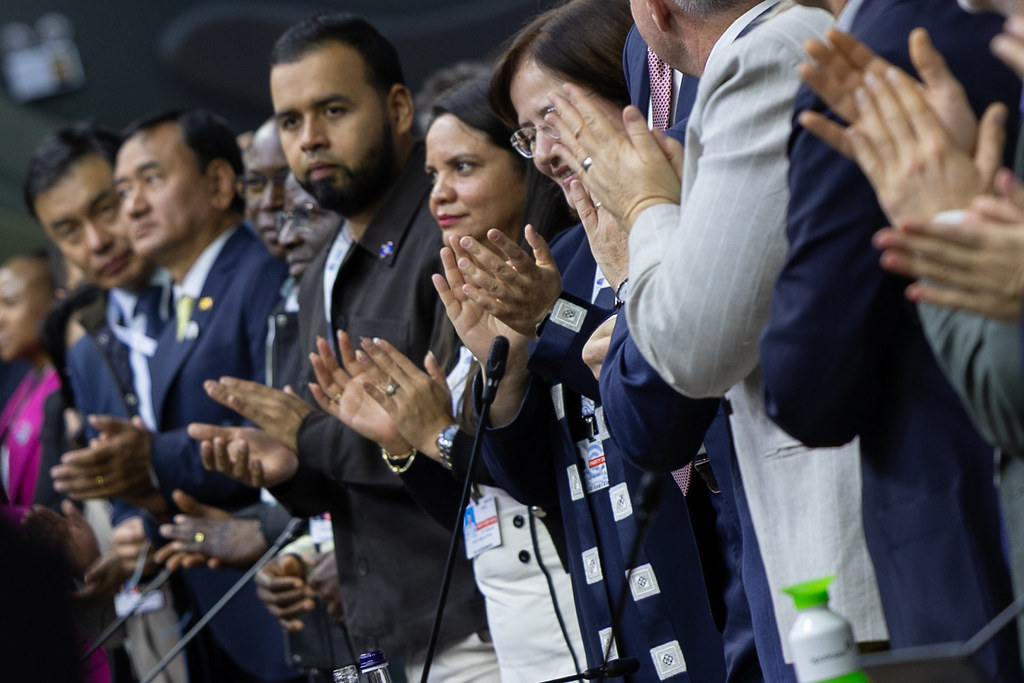
Why it matters
Climate negotiations are about more than diplomatic agreements. Their outcomes influence how countries finance renewable energy, protect communities against climate impacts, strengthen food security and create opportunities through cleaner industries.
For Africa, the stakes are particularly significant. The continent contributes a relatively small share of global greenhouse gas emissions but faces substantial climate-related risks, from prolonged droughts and flooding to agricultural losses and pressure on water resources.
Whether COP31 makes progress on adaptation finance, accessible climate funding and the Just Transition Mechanism will therefore matter beyond the negotiating rooms.
The conference will also contribute to the process leading to the second global stocktake in 2028, when countries will assess collective progress towards the Paris Agreement’s goals.
What to watch
Over the coming days, four developments will help indicate how far Antalya has progressed:
- The World Leaders’ Summit: Whether political leaders provide the direction and commitment needed to advance negotiations.
- Climate finance and adaptation: Whether countries make progress on financing commitments, adaptation finance and the role of the Green Climate Fund.
- The Just Transition Mechanism: Whether the negotiations establish practical arrangements for putting the mechanism adopted in Belém into operation.
- The Climate Action Agenda: Whether initiatives outside formal negotiations translate into measurable action.
Ultimately, COP31 will be judged not simply by the declarations made in Antalya, but by whether countries follow through on their commitments.
A shared calendar only has value when everyone can plan around it. In the same way, international climate agreements matter when countries have the resources and cooperation needed to turn them into action. For Africa and other developing regions, the test will be whether implementation finally catches up with ambition.
Author Profile

-
Seeker.
Inspire AFRIKA.
Latest entries
 Climate9 November 2026The Ocean Has a Fever, and It Is About to Exhale
 COP319 November 2026COP31: Africa Must Power Its Farms to Secure Food Sovereignty
 COP318 November 2026One Shared Calendar: What COP31 Is and What It Hopes to Achieve
 Oceans5 November 2026Shipping Emissions Have Cost the World Nearly $1 Trillion, Study Finds