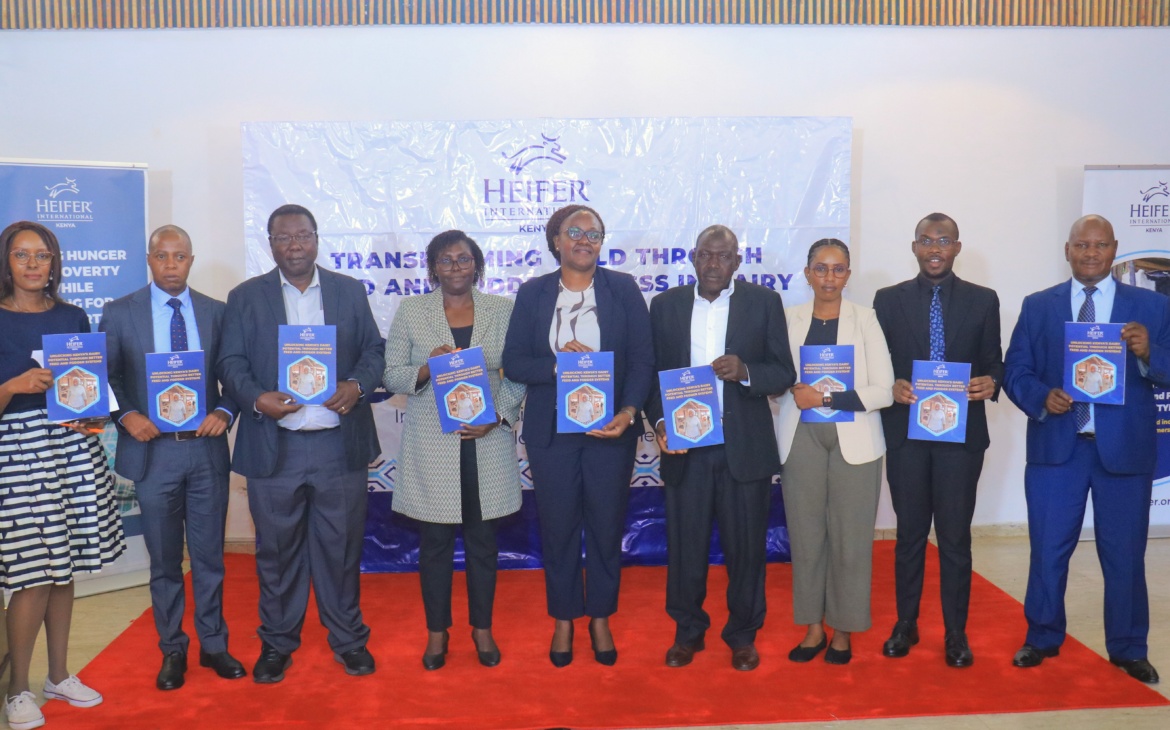
Kenya’s dairy sector will struggle to reach its production potential unless the country addresses persistent weaknesses in feed and fodder production, conservation, access, and marketing, a new Heifer International Kenya assessment found.
The report, Unlocking Kenya’s Dairy Potential Through Better Feed and Fodder Systems, identifies high feed costs, seasonal fodder shortages, inconsistent feed quality and weak market systems as major constraints affecting dairy productivity and farmers’ earnings.
It argues that improving milk production requires more than increasing the number of dairy animals or introducing better breeds. Farmers need reliable access to affordable, nutritious feed year-round, supported by functional markets, appropriate financing, and stronger livestock services.
The assessment examines dairy production systems across 11 counties, with a deeper analysis of Nyandarua, Embu and Elgeyo Marakwet. It highlights different challenges across the counties, including rising feed prices, limited storage and mechanization, small landholdings that restrict fodder production, and poorly developed feed markets.
In Nyandarua, for instance, 66 per cent of the 18 farmers surveyed reported that they had not received a veterinary or extension visit in the preceding year. In Embu, small farm sizes of between 0.5 and 0.7 hectares limit the amount of fodder farmers can produce for use throughout the year. Elgeyo Marakwet, meanwhile, faces seasonal fodder deficits and limited access to dairy services, with average milk production reported at approximately 1.7 litres per cow daily.
The report also identifies weaknesses in milk marketing. Although about 79 per cent of farmers surveyed reportedly had access to functional milk-cooling facilities before sale, delayed payments from cooperatives continue to push some producers towards informal traders offering immediate cash.
Moving Beyond Fragmented Interventions
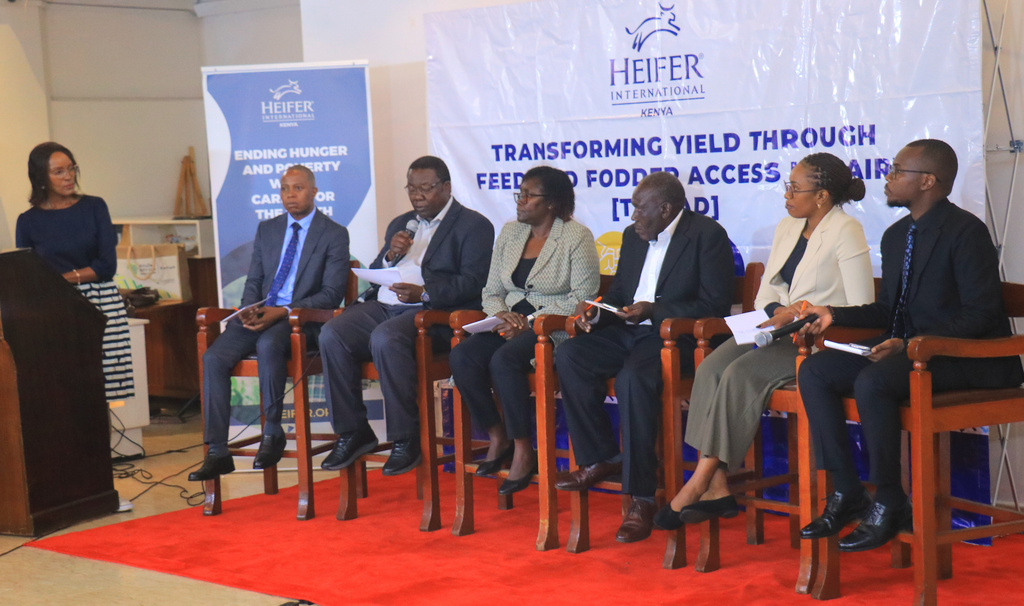
These findings formed the basis of a panel discussion titled Beyond Shortage – Unlocking Kenya’s Feed and Fodder Economy, which brought together researchers, private-sector representatives, financial institutions, regulators, farmer organizations and the media.
Dr James Rao of the International Livestock Research Institute (ILRI) pointed to weak partnerships and fragmented research efforts as obstacles to progress in the feed and fodder sector.
“What is lacking at the moment is strong partnerships between producers, dairy cooperatives and the other actors in the value chain. There is a lot of duplication of effort going on in the country, even in feed and forage research. We have pockets of research being done by various entities addressing the same issues, yet many of the actors do not know what others are doing,” he said.
He called for institutions to break out of their silos, share expertise and coordinate their interventions around the challenges facing farmers.
“What we need to do is come together, break those silos, work together, leverage on each other’s expertise and focus our efforts on what needs to be done. The change needs to start with us. You cannot put the responsibility for change on someone else,” Rao said.
He also emphasized the need to bring the private sector into the process, arguing that businesses have the capacity to scale technologies that can increase feed production.
“A lot of the efforts that have gone on in the past have excluded the private sector. Yet the private sector has the muscle to drive many of the technologies that will increase feed production in the future,” he said.
Rao added that government involvement remained essential, particularly in providing policy direction, regulation and extension services to support collaboration and adoption of appropriate technologies.
Farmers Need Stronger Bargaining Power

For dairy farmers and cooperatives, the feed challenge is closely connected to the economics of milk production and the terms under which they access markets.
Luke Kessei, Chair of Ainabkoi Dairy Cooperative Society, described how his cooperative approaches milk marketing and negotiations with processors.
“As a cooperative, we have our own negotiation mechanism. We collect and bulk our milk, then cool it to the required temperature to ensure its longevity. Every month, we advertise to processors that we have a particular volume of milk of a certain quality available for sale,” he said.
“When processors express interest, they come around, and we negotiate prices. We sell to the highest bidder, but we also consider how reliable a processor is. Reliability and price are both important.”
Kessei said the ability of cooperatives to negotiate effectively depended on their organization, governance, strength, and the quality of milk they produced.
He also raised concerns about competition from imported subsidized milk powder, arguing that it could disadvantage local farmers whose production costs were considerably higher.
“Cooperatives and farmers are not afraid of competition. But we are not afraid of competition to the extent that it becomes unfair. If you are competing on price with someone who can import subsidized milk powder and mix it at KSh20 per litre, while a farmer is producing milk at KSh35 per litre, it becomes very difficult. You cannot compete in an environment like that,” he said.
His remarks highlighted the need to consider the competitiveness of locally produced milk alongside the cost of production, import regulation and the conditions under which dairy products enter the market.
Drought Exposes the Vulnerability of Milk Supply

The link between feed availability and milk production was further illustrated by Paul Ndung’u of the Kenya Dairy Board, who attributed declining formal milk deliveries to prolonged dry conditions in Kenya and neighboring countries.
“Production of milk in Kenya is tied to the availability of fodder and feeds. As a country, we depend on rain. When we have plenty of pasture and fodder, production goes up. When we experience prolonged drought, pasture and fodder decline, and that affects milk production,” he said.
Ndung’u said the formal market handled slightly more than one billion litres of milk in 2025, translating to an average of approximately 83 million litres per month.
Although deliveries between January and June 2026 were higher than the previous year’s monthly average, he said intakes declined from July through September.
“In September, we had an intake of 74 million litres against an average of about 85 million litres that we would expect to receive for processing. That gives us a difference of around 11 million litres. That difference is tied to the drought,” he said.
He noted that the decline was not confined to Kenya, with drought conditions also affecting Uganda and Rwanda and reducing milk transfers, particularly from Uganda.
“The drought that Kenya experienced was also happening in Uganda and Rwanda. The transfers of milk, especially from Uganda, also went down. So, Kenya was experiencing lower intakes, and the transfers were lower,” he said.
Ndung’u added that October milk intakes were beginning to rise as rainfall improved pasture and fodder availability.
On milk powder imports, he explained that most of the powder entering Kenya was skimmed milk powder from Uganda, used by manufacturers to meet industrial demand that local processing capacity could not fully satisfy. He said whole milk powder imports were more restricted and subject to regulation.
Building a Commercially Viable Fodder Economy
The report calls for a shift from isolated fodder demonstrations towards commercially sustainable feed and fodder businesses that can supply farmers throughout the year.
It recommends strengthening feed-quality assurance, expanding mechanized harvesting and conservation services, improving access to quality seed and developing financing models that respond to the needs of farmers and agribusinesses.
It also argues that investments in cooling facilities and milk collection must be accompanied by better payment systems, competitive prices and stronger cooperative governance if farmers are to benefit from formal markets.
Ultimately, Kenya’s dairy challenge extends beyond producing more milk. It requires a feed and fodder economy that can withstand seasonal shocks, connect producers to reliable markets and make investment in livestock production commercially worthwhile.
Read Also: Tanzania and Kenya Sign Five-Year Potato Seed and Trade Agreement
Author Profile

- How can we learn if we don't question?
Latest entries
 Agriculture19 November 2026Kenya’s Dairy Future Depends on Fixing Its Feed and Fodder Economy
 COP3119 November 2026COP31: 25 Countries Call for Wildlife Protection to Become Climate Action
 Agriculture17 November 2026Tanzania and Kenya Sign Five-Year Potato Seed and Trade Agreement
 Agriculture16 November 2026Europe’s Pesticide Double Standard Puts African Farmers in Harm’s way