
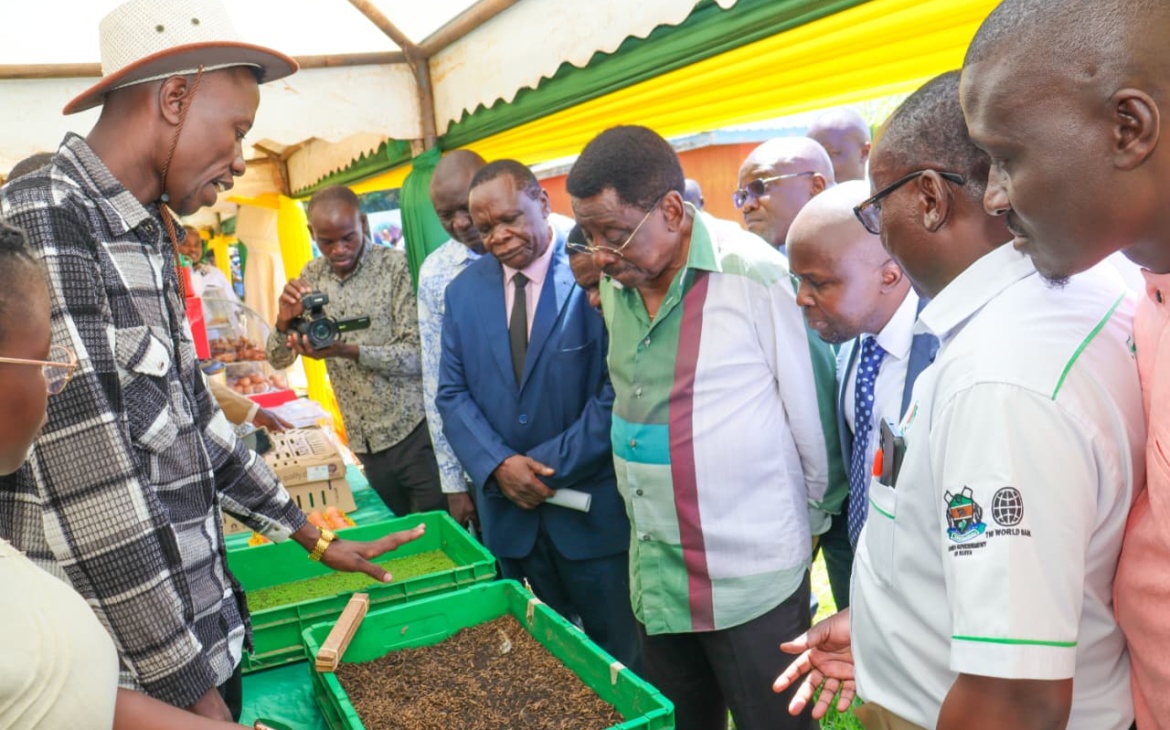
In Siaya County, the county government is aggressively repositioning agriculture as a commercial powerhouse capable of driving inclusive economic growth.
This vision came into sharp focus recently during the National Agricultural Value Chain Development Project (NAVCDP) Day, where Governor H.E. James Orengo presided over a landmark event focusing on financial disbursements, youth empowerment, and practical support for farmers.
During the occasion, Governor Orengo handed over cheques to Cooperative Societies, SACCOs, and Farmer-Producer Organizations (FPOs), while flagging off much-needed personal protective equipment (PPE) for all markets across the county.
Moreover, 150 young agripreneurs took their oath of service, ready to serve as extension agents and bring modern knowledge directly to grassroots farmers, a deliberate strategy to organize, invest, add value, and empower the next generation.

Agriculture remains the undeniable backbone of Siaya’s economy, contributing nearly 60% of the county’s Gross County Product, approximately KSh 9.2 billion annually. Yet Governor Orengo is quick to point out that potential alone is not enough.
“It is an important moment for reflection on whether agriculture can truly become the foundation of broad-based economic transformation in our county,” he said.
“My answer is yes, but only if we move from viewing agriculture as a subsistence activity to recognizing it as a strategic economic sector driven by productivity, enterprise, resilience, and markets.”
Siaya possesses natural advantages, including rich alluvial soils, reliable bimodal rainfall in much of the county, abundant water from Lake Victoria, and a hardworking population.
The challenge has historically been fragmentation, smallholder farmers operating in isolation, limited access to finance, poor market linkages, and low value addition. The county is now tackling these head-on.
Building Stronger Farmer Institutions
A cornerstone of the strategy is institutional development.
The county has established Community Driven Development Committees (CDDCs) in all 30 wards and onboarded 30 SACCOs alongside 13 Farmer Producer Organizations. These entities are designed to improve coordination, bargaining power, and access to services.
Through inclusion grants exceeding KSh 25 million, SACCOs have strengthened governance, deepened financial inclusion, and expanded affordable credit for smallholders.
This is critical in a region where access to formal finance has long been a barrier. Stronger institutions also mean better market coordination, reducing post-harvest losses and ensuring farmers capture more value from their produce.
Flagship Investments in Infrastructure
The NAVCDP framework is already delivering tangible infrastructure. Two standout projects include:
- The Siriwo Rice Mill paddy curing and storage facility, valued at over KSh 40 million. This will help rice farmers reduce losses, improve quality, and access better markets.
- The Kogonga–Kayundi Irrigation Project, worth over KSh 29 million, which will bring reliable water to more farmland and reduce dependence on unpredictable rainfall.
Governor Orengo emphasized that these are not isolated projects but part of a cohesive vision for a modern, resilient agricultural economy.
Complementing the hardware is smart agronomy; the county is conducting comprehensive soil intelligence mapping, collecting approximately 2,600 soil samples across all wards.
This data will guide precise fertilizer application, improve crop suitability decisions, and boost productivity while reducing waste, a vital step toward sustainable intensification.
Youth at the Center
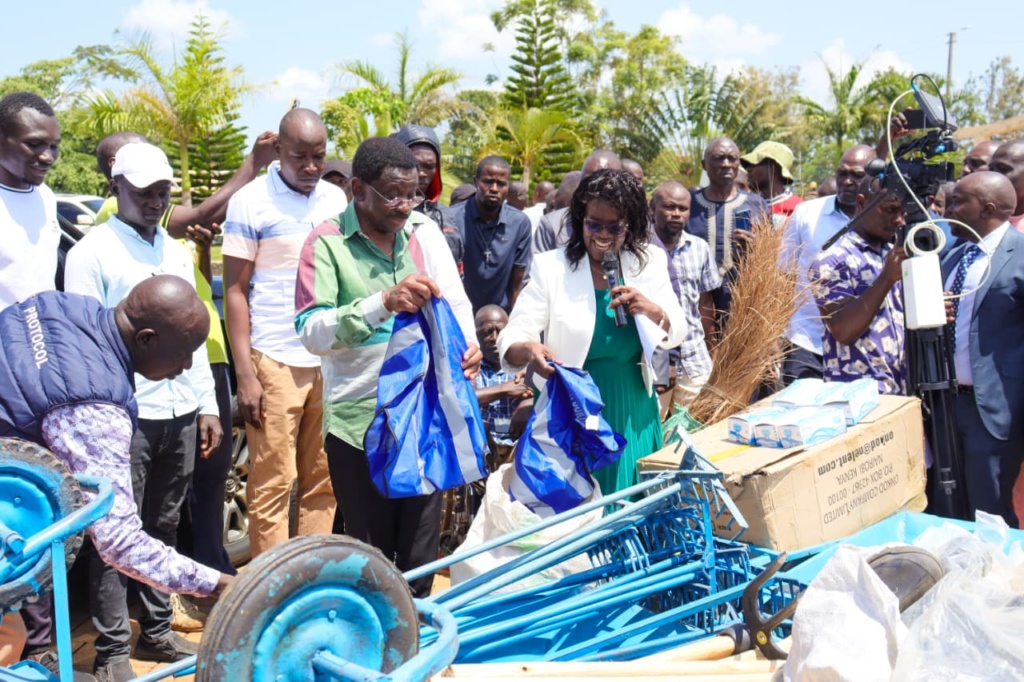
With Kenya’s youth bulge presenting both opportunity and employment pressure, Siaya is channeling young energy into agribusiness. The 150 newly sworn-in Young Agripreneurs will support extension services, helping bridge the gap between research and practice at the farm level.
Chief Officer for Agriculture Elizabeth Adongo said, “Production without markets creates vulnerability. Production without value addition limits income. That is why we must emphasize organization, enterprise, and market systems.”
Broader Context and Future Outlook
Siaya’s push comes at an opportune time.
Kenya’s agriculture sector contributes about 33% of national GDP and employs over 40% of the population, yet smallholders, who form the majority, often operate below potential due to fragmented value chains.
Successful county models elsewhere (such as dairy cooperatives in Central Kenya or horticulture in parts of the Rift Valley) show that strong institutions, value addition, and market linkages can dramatically raise rural incomes.
By expanding irrigation, promoting agro-processing, strengthening markets, and prioritizing women and youth participation, Siaya is positioning itself to become a regional agribusiness hub. Partnerships with the national government, development partners, and the private sector will be essential to scale these efforts.
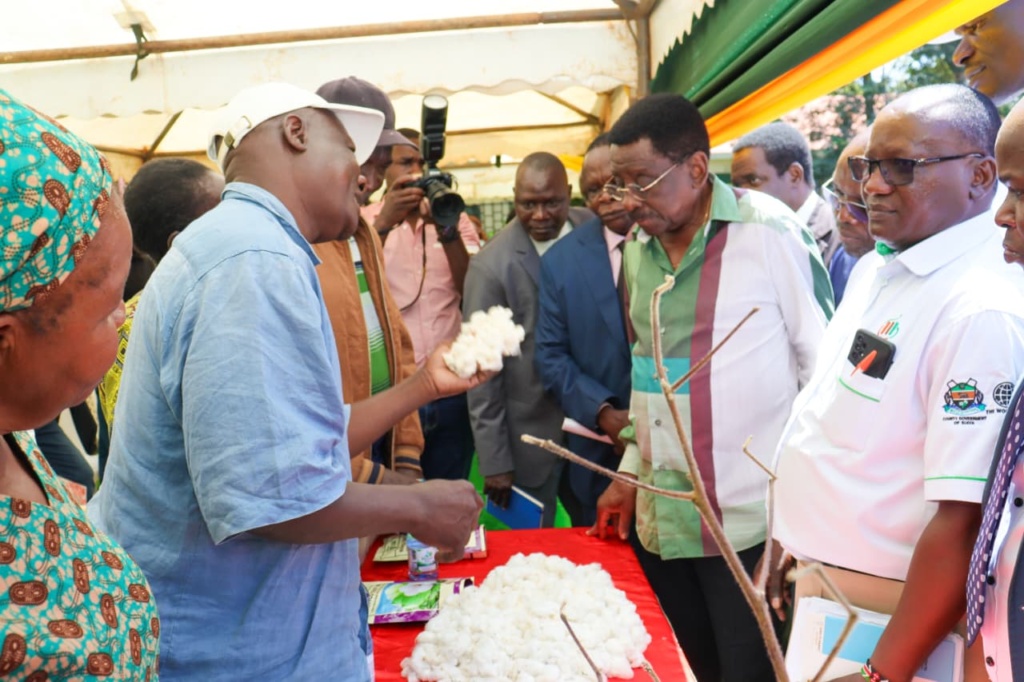
Challenges remain, like climate variability, pests and diseases, and infrastructure gaps in some areas. However, the county’s multi-pronged approach, combining hardware (irrigation, mills, soil mapping), software (institutions, training), and human capital (youth agripreneurs), offers a robust framework for resilience.
Read Also: Empowering Youth to Transform Agribusiness in Nigeria
Author Profile

- How can we learn if we don't question?
Latest entries
 COP3115 October 2026Pacific Leaders Call for Urgent Climate Action Ahead of COP31
 Agriculture13 October 2026Can the buffalo fix Kenya’s milk problem? Farmers say start with the feed bill
 Events12 October 2026Cybersecurity in the Floriculture Industry
 Opinion & Analysis8 October 2026Why Africa Must Look to What Already Exists in Its Blue Economy


