Water is an indispensable resource not only for sustaining life but also for socio-economic development. However, this resource has become scarce due to prolonged droughts, erratic rainfall, and declining water tables. Research indicates that global water demand will surpass supply by more than 40% by 2030 and by more than 50% in developing countries, especially in Sub-Saharan Africa.
Kenya is among water-scarce countries, and according to the Kenya Institute for Public Policy Research and Analysis, the nation has the lowest freshwater replenishment rates in the world at 647 m3 per capita, which is below the global benchmark of 1,000 m3 per capita. This means that there is water available for domestic and productive uses.
The increased drought has put a strain on agriculture. According to the National Drought Management Authority, despite improved short rains in 2023, residual effects of the previous droughts persist, with 2 million people in 23 ASAL counties remaining food-insecure.
Kenya has an irrigation potential of approximately 1.342 million hectares. However, only about 180,503 hectares have been developed for irrigation, representing roughly 13.5% of the potential.
Bancy Mati, Professor of Agricultural Engineering at Jomo Kenyatta University of Agriculture and Technology, says if Kenya is to increase its agricultural production, it must turn to irrigation-based farming in the arid and semi-arid areas, which make up More than 80% of Kenya’s land mass.
To ensure food security, smallholder farmers practice climate-smart irrigation as a survival, not a luxury.
Understanding the Shift
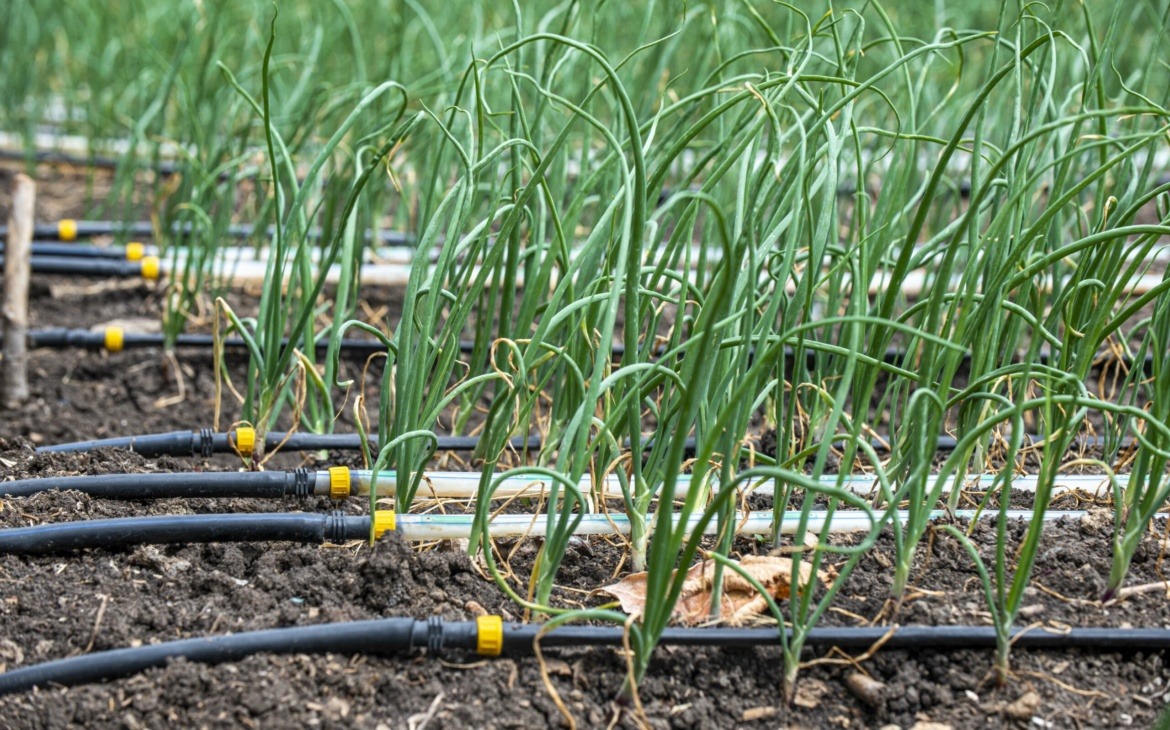
Wamae Mwangi, Director at Grekkon Limited, says, “In regions like Kitui and Baringo, we’ve seen a notable rise in the adoption of gravity-fed drip irrigation kits.” This shift to smart irrigation systems is due to the need for year-round production even during extended dry spells.
Mr. Mwangi says these low-pressure systems are ideal for farmers with minimal water access, particularly those drawing water from hand-dug wells or community tanks, and most of the uptake is driven by vegetable and fruit tree growers.
There is also a growing demand for solar-powered water pumps.
“In areas like Siaya, Busia, and Turkana, where electricity supply is unreliable or nonexistent, we’re supplying compact solar kits that power pumps efficiently,” says Mwangi.
This fallback from diesel pumps has been informed by the need to save, and the zero recurrent energy cost has made solar pumps attractive.
Farmers are also adopting rainwater harvesting systems for contingency during dry spells. Farmers are using rooftop rainwater for irrigation during dry spells, especially those involved in a poultry-vegetable integrated system. Mwangi says that since 2021, his company has installed hundreds of rainwater harvesting systems, particularly 5,000- to 10,000-liter tanks, across the Mount Kenya region and Nyeri’s mid-altitude zones.
Challenges to the adoption of Climate Smart Agriculture
Despite the benefits of CAS, like an increase in yield percentages, cost savings, and improved food security, reducing climate change vulnerability, adoption in Kenya faces several challenges.
Farmers’ adoption is confronted with challenges related to the technicality of some CSA practices, high cost of labor for CSA implementation, lack of credit and government support, limited access to weather and climate information, limited information about CSA options, high illiteracy level of smallholder farmers, and incompatibility of some practices with farmers’ crop of interest.
“The journey to achieving universal access [to water] by 2030 … requires substantial funding beyond the current level,” says Samwel Alima, Water Secretary at the Ministry of Water, Sanitation and Irrigation.
The establishment of County Irrigation Development Units (CIDUs) has been urged to prioritize irrigation and policy alignment. Collaboration with development partners and the private sector is encouraged to create innovative financing models for direct investment in agriculture.
Innovative projects are piloting IoT-based irrigation systems that monitor soil, microclimate, and water parameters to optimize irrigation management. These systems aim to improve water-use efficiency and enhance the climate resilience of smallholder farmers. Farmers are leveraging technology to do precision farming, significantly reducing the loss probability.
As Patrick Verkooijen, President of the Global Center on Adaptation and Chancellor of the University of Nairobi, says, “This is the moment to accelerate climate-smart agriculture—not just as a climate solution, but as a pathway to prosperity for millions of African farmers. We must invest in scalable innovations that empower communities to thrive in the face of climate shocks.”
Read Also: How Cities Can Convert Waste Water into Clean Energy and Food