

The Board of Directors of the African Development Bank Group has approved a €19.6 million financing package to support the Cabeólica Phase II Expansion Project in Cabo Verde.
The Cabeólica Phase II Expansion Project is the country’s first large-scale renewable energy initiative to integrate wind power generation with battery energy storage systems (BESS), marking a significant step forward in Cabo Verde’s efforts to scale up green energy production with a focus on sustainability.
The financing includes a loan of approximately €12.6 million from the African Development Bank and €7 million in concessional loan financing from the Bank Group-managed Sustainable Energy Fund for Africa (SEFA).
Building on the success of the original Cabeólica power project commissioned in 2012, Phase II will add 13.5 megawatts of wind generation capacity and 26 megawatt-hours of grid-connected battery energy storage. The expansion is expected to generate over 60 gigawatt-hours of clean energy annually, displacing expensive thermal generation and reducing carbon dioxide emissions by an estimated 50,000 tonnes per year.
According to Wale Shonibare, Director for Energy Financial Solutions, Policy and Regulations at the African Development Bank, the project is a testament to the long-term vision of Cabo Verde to decarbonize its power sector and enhance energy resilience.
He further noted that this is a demonstration of how private sector investment, enabled by catalytic concessional financing, can deliver cost-effective, sustainable energy solutions for small island economies.
Ayotunde Anjorin, Chairman of Cabeólica and Senior Director and CFO at Africa Finance Corporation, emphasized that Cabeólica, the first commercial-scale renewable energy public-private partnership (PPP) in sub-Saharan Africa, is once again proud to lead this transformative expansion project.
“This project underscores Cabeólica’s deep commitment to delivering reliable, clean energy infrastructure in line with national goals and priorities and continues to set a replicable model for the region,” said Anjorin.
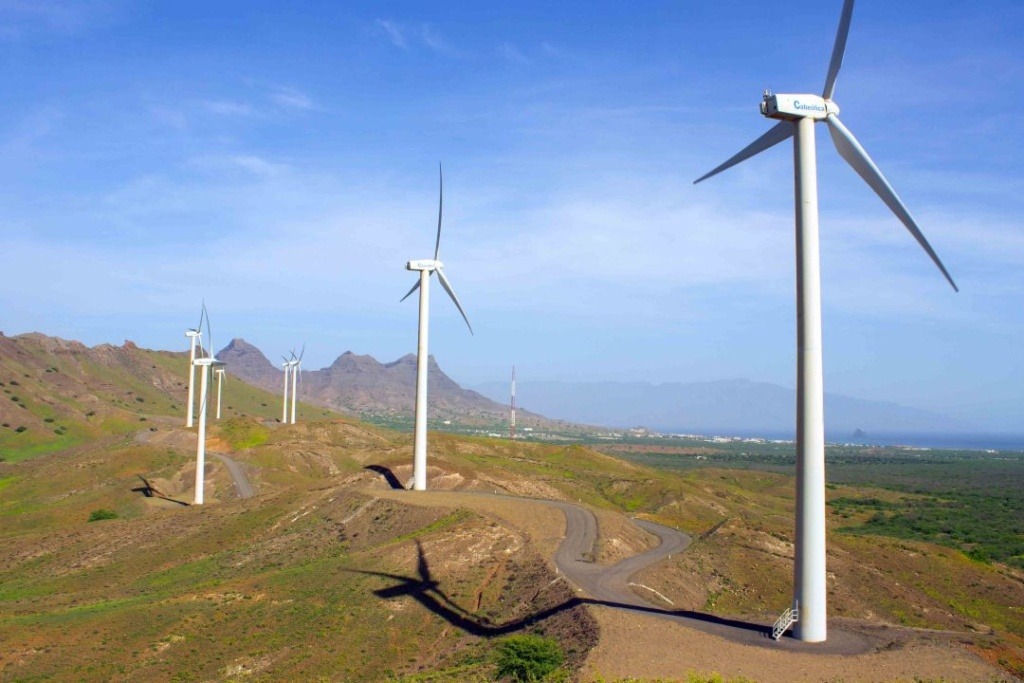
The Phase II expansion will include five installations across four islands: a wind expansion on Santiago and BESS deployments on Santiago, Sal, Boa Vista, and São Vicente. The battery systems will support ancillary grid services such as frequency response and voltage regulation, enhancing the efficient use of intermittent wind power and reducing energy curtailment.
With Cabo Verde having an electricity system that is heavily reliant on imported fossil fuels, these upgrades are expected to lower system costs and improve energy security.
Cabeólica S.A., the country’s first independent power producer (IPP), is owned by Africa Finance Corporation, A.P. Moller Capital, and Cabo Verdean public entities.
Phase II of the project will be underpinned by a 20-year power purchase and storage services agreement with the national utility Electra S.A., at tariffs significantly below the current national average generation cost.
Daniel Schroth, the Bank Group’s Director for Renewable Energy and Energy Efficiency, reiterated the importance of SEFA’s support in integrating battery storage into Cabo Verde’s power system, emphasizing that it strengthens power security and grid reliability while lowering generation costs.
He highlighted the project as a strong example of how the right combination of financing and technology can promote long-term sustainability in the power sector.
The Cabeólica Phase II project advances Cabo Verde’s target of generating 50% of its electricity from renewable sources by 2030 and supports its Nationally Determined Contribution under the Paris Agreement.
It also aligns with the African Development Bank’s “Light Up and Power Africa” High-5 priority, its Ten-Year Strategy, and SEFA’s Green Baseload pillar.


