
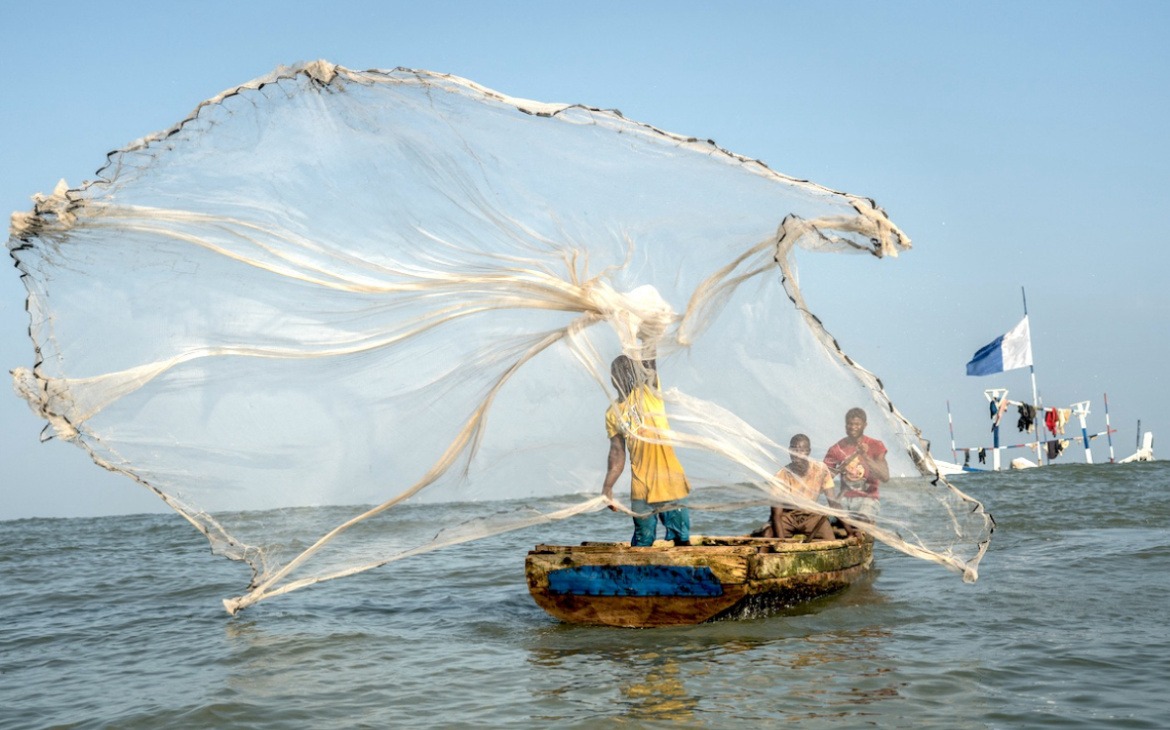
According to the United Nations’ Food and Agriculture Organization, small-scale fisheries account for nearly 40% of the global fish catch. Despite climate change threats, governments lack data to help fishers adapt.
To help address that gap, the international research partnership CGIAR recently launched its Asia Digital Hub at WorldFish’s headquarters in Penang, Malaysia, whose effects are rippling across Africa and the larger global south.
Among the key tools in this digital revolution is Peskas, an open-source system that allows near-real-time monitoring of small-scale fisheries. Zanzibar is among the first regions where the tool is being implemented in collaboration with WorlFish.
Currently, 100 fishing boats out of Zanzibar are equipped with trackers, and at 30 landing sites, data collectors use tablets to record catch information, including species, weight, and length.
“Peskas then analyzes the data and displays statistics automatically, radically changing monitoring systems, from when data were recorded on paper and only reported annually,” says WorldFish scientist Pascal Thoya.
First developed in Timor-Leste in 2016, Peskas is now being expanded to Zanzibar, Malawi, Kenya and Mozambique, with interest from Brunei, Djibouti, and Ethiopia, according to WorldFish
Arthur Tuda, the executive director of the Western Indian Ocean Marine Science Association, a WorldFish partner in Zanzibar, says, “This integration fills a big hole. It gives decision-makers the timely, reliable information they need to manage fisheries better and meet their reporting duties at home and abroad.”
Alex Tilley, the digital and data science lead with WorldFish, says the digital HUB looks beyond catch monitoring to integrate data on aquatic animal health, aquaculture, household nutrition, and women’s empowerment.
Moreover, these digital tools are changing how coastal communities adapt, plan, and survive in a changing climate, endangering livelihoods. Access to real-time data would enable fishers and policymakers to make informed decisions on seasonal closures, gear use, and conservation strategies.
Also, beyond technology, the shift has enabled the empowerment of small-scale fishers to become co-creators of the system by actively participating in data collection, fostering greater trust and relevance, especially when developing policies around licensing, subsidies, or closed seasons. For instance, in Malaysia, digital records are already helping verify operations and reduce abuse of fishing rights.
Along Kenya’s coast and across its inland waters, such as Lake Victoria and Lake Turkana, small-scale fisheries provide a critical source of nutrition and income for millions. For Kenya and its East African neighbors, the rise of digital monitoring tools like Peskas offers timely lessons in building climate-smart food systems.
However, data gaps have long hindered effective regulation, resource planning, and equitable access to fishing rights. The Peskas model, already expanding in East Africa, presents an opportunity for modernizing fisheries management.
With real-time data collection and open access to analytics, regional bodies like the Lake Victoria Fisheries Organization (LVFO) and community-based organizations can better align policy, conservation, and local development efforts.
Arthur Tuda notes that successful digital transformation goes beyond technology.
“For these tools to work, they need to be based on the needs and realities of the people who will be utilizing them. Small-scale fishers shouldn’t just give data but also help design things.”
Author Profile

- How can we learn if we don't question?
Latest entries
 Agriculture16 October 2026“There Is No Shortcut”: A Kiambu Grower’s Decade in Mushrooms
 COP3115 October 2026Pacific Leaders Call for Urgent Climate Action Ahead of COP31
 Agriculture13 October 2026Can the buffalo fix Kenya’s milk problem? Farmers say start with the feed bill
 Events12 October 2026Cybersecurity in the Floriculture Industry


