
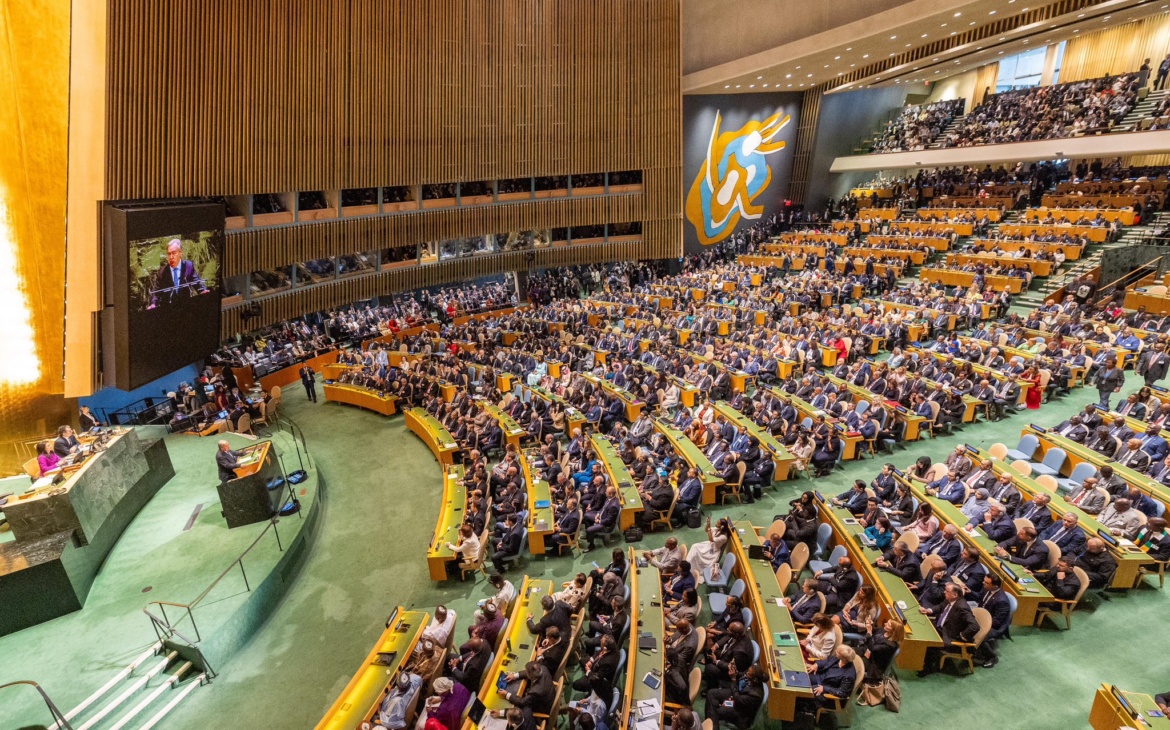
The 80th session of the United Nations General Assembly (UNGA80) in New York follows closely on the heels of the second African Climate Summit (ACS2) in Addis Ababa, marking a timely moment for Africa.
The conclusion of ACS2 with the Addis Declaration was pivotal, as African leaders sought to assert their diplomatic priorities, influence global governance, and advocate for sustainable development.
For Africa, the UNGA80 theme, “Better together: 80 years and more for peace, development and human rights,” carries a deeper meaning. It calls to mind historical injustices, the unresolved conversation about reparations, and the yet-to-be-fulfilled promise of $100 billion in climate finance for the Global South.
This is a moment to emphasize the urgency of collective sustainable development embedded in equity, climate action, peace, and security.
Global Governance and UN Reform
UN Secretary-General António Guterres placed an emphasis on the need for equitable and peaceful relations, citing the African Continental Free Trade Area (AfCFTA) as a significant driver of progress. He described it as an example of Africa’s “huge potential” being unleashed through economic integration and growth.
Reflecting on the UN’s founding in 1945, Guterres noted its establishment was a deliberate choice for cooperation, the rule of law, and peace over conflict. He additionally warned that today’s “raw power” dynamics, fueled by geopolitical divides, threaten to marginalize the UN. Without urgent reforms, he said, the world risks returning to “the law of force.”
“No country can stop a pandemic alone. No army can halt rising temperatures. No algorithm can rebuild broken trust. Therefore, I ask leaders at UNGA80 to reaffirm international law & the centrality of multilateralism, reinforce human rights & recommit to the principles of the @UN,” Guterres said.
He went on to highlight surging inequalities, extreme poverty, and the role of hate speech and disinformation in fueling divisions.
He emphasized greater African representation in global governance, particularly within the Security Council, describing current structures as outdated and unfair.
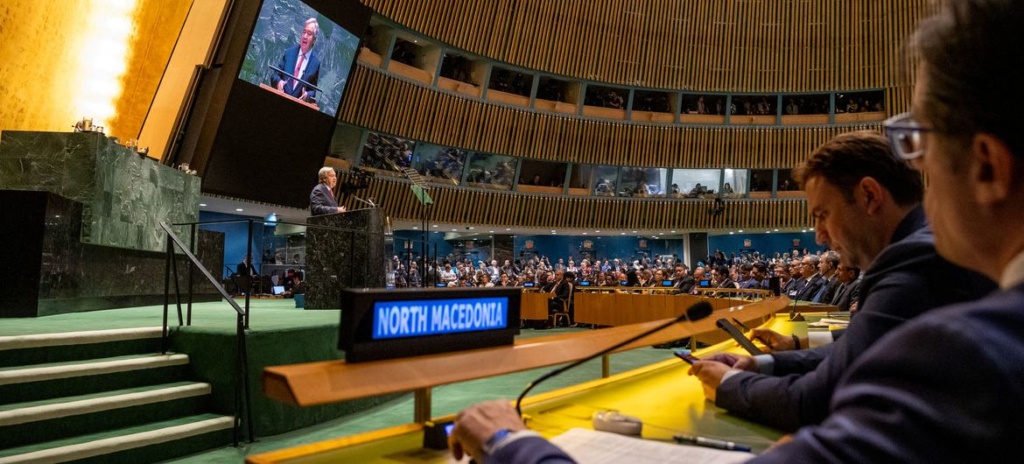
Africa, he reminded, is home to 1.4 billion people, more than one-sixth of the world’s population, yet remains inadequately represented in decision-making bodies.
The African Group (AG), with 54 member states, holds the largest representation in the UNGA, amplifying calls for a stronger presence on the United Nations Security Council (UNSC). For the continent, UNGA80 is a critical platform to advance environmental sustainability, foster economic growth, alleviate poverty, and improve healthcare and education.
Africa’s Collective Strength
According to Anubhav Roy, Senior Research Fellow at the Centre for Military History and Conflict Studies (CMHCS), United Service Institution of India (USI), Africa’s contributions are pivotal in shaping global policies that address systemic inequities rooted in colonial legacies and historical underdevelopment.
“Africa showcasing a sense of collective action is instrumental on issues related to sustainable development and humanitarian aid, which is vital to its influence in global governance,” Anubhav noted.
He added that this collective strength is evident in Africa’s pursuit of long-term goals such as reforming multilateral institutions, protecting the environment, and promoting peace in conflict-affected regions.
Climate Justice and Finance
For a continent plagued by climate extremes, Africa’s vulnerability is evidenced by the fact that it accounts for less than 4% of global emissions. Leaders have therefore demanded greater responsibility from developed nations, the highest polluters.
These obligations include commitments on historical injustices, financing for loss and damage, and mechanisms such as the New Collective Quantified Goal (NCQG).
Despite challenges in multilateralism’s ability to deliver solutions for the Global South, such as the contested $1.3 trillion climate finance gap, African leaders remain steadfast in urging developed nations to take responsibility for historical emissions by financing adaptation and mitigation strategies.
They are also pushing for a fairer global trading system that avoids exploiting Africa’s natural resources and instead empowers local economies. On this front, leaders are committed to fully integrating AfCFTA as a significant driver of economic progress.
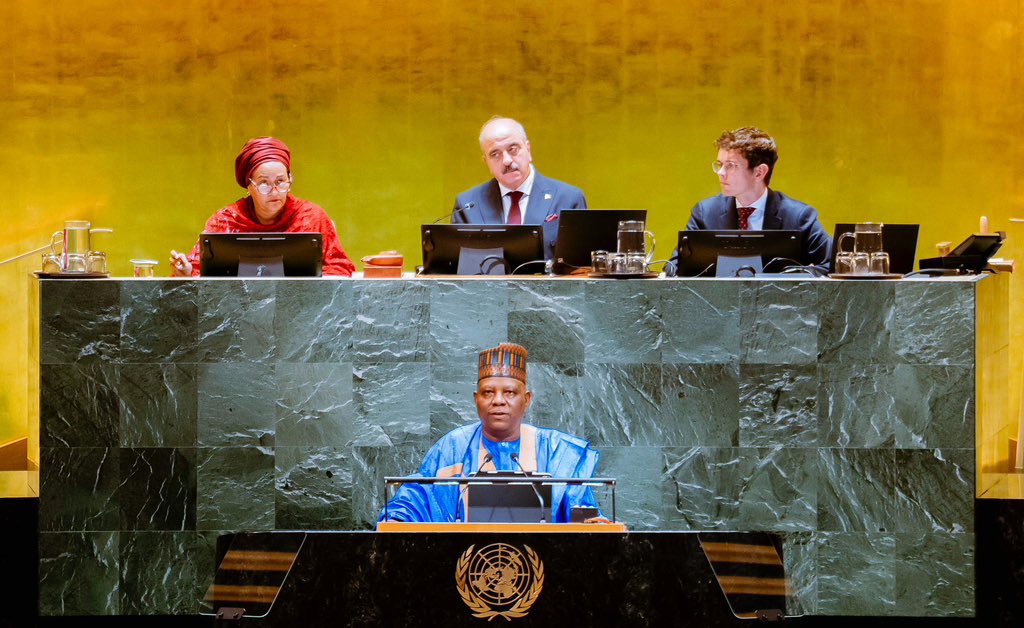
Nigerian President H.E. Bola Tinubu argued that the time has come for Africa to finance its own mineral assets and secure power in global supply chains. He pledged a “mineral-led renaissance” under Nigeria’s Renewed Hope Agenda to advance economic sovereignty amid shifting global dynamics.
Peace and Security at the Forefront
On the opening day of UNGA80, discussions centered on peace and security, with extensive deliberations on ceasefires in Gaza, Ukraine, Sudan, and the Democratic Republic of Congo (DRC).
DRC President Félix Tshisekedi called for recognition of a “silent genocide” that has lasted more than three decades. He urged Pan-African unity, the enforcement of UN agreements, and sovereignty over occupied territories.
Reflections also included threats from geopolitical tensions, with calls for sanctions, embargoes, UN protection forces, recognition of the State of Palestine, and an end to occupation within 12 months.
African Leadership Voices
African leaders’ speeches at UNGA80 portrayed the continent as a force for renewal, a move that critiques the outdated UN structures while offering proactive solutions. They reiterated calls for greater representation in the Security Council, specifically for two permanent member seats, alongside a restructuring of the global financial system.
Kenyan President H.E. William Ruto declared that Africa’s exclusion from permanent membership of the Security Council is “unacceptable, unfair, and grossly unjust.”
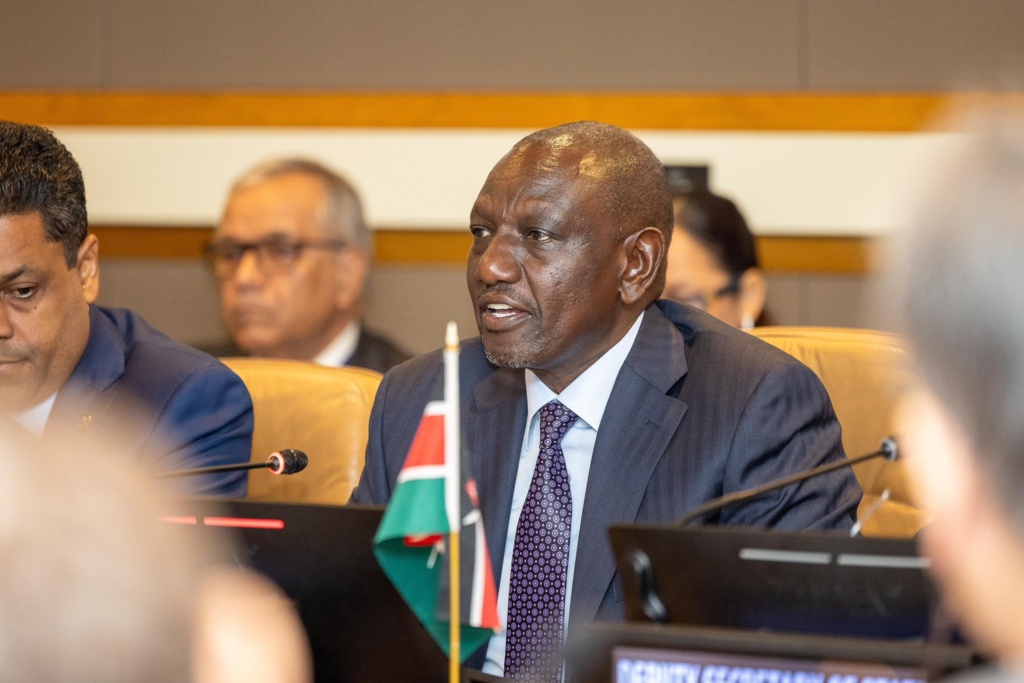
“The UN cannot claim to be united while Africa, with 54 nations, remains excluded from permanent representation on the Security Council and denied a voice at the top table. To remain legitimate, it must confront today’s challenges with vision and decisive action,” Ruto said.
He also pressed for urgent reforms of the global financial architecture and the UN itself, criticizing the International Monetary Fund (IMF) and World Bank for “punishing poor countries while rewarding the rich.” He called for democratizing decision-making to serve all nations fairly.
South African President H.E. Cyril Ramaphosa echoed this message, urging the Security Council to embrace reforms for accountability, representativeness, and democracy. He stressed that Africa’s exclusion is openly “unjust and unacceptable.”
Reflecting on peace as the foundation of sustainable development, Ramaphosa stressed that indivisible freedom and global justice, drawing parallels between the International Court of Justice case on Gaza and apartheid-era struggles.
“The denial of one person’s rights diminishes all,” said Ramaphosa. “The only lasting solution is the establishment of a Palestinian State that will exist side by side with Israel with East Jerusalem as its capital,” he stressed.
On other issues, he said every effort must be taken to bring peace to the Democratic Republic of the Congo, Sudan, Yemen, Ukraine, and the Sahel region, but that all requires a truly representative and inclusive Security Council.

“The Security Council must be reformed as a matter of urgency. It must become more inclusive so that the voices of all nations can be heard and considered,” he reiterated.
As discussions unfold at UNGA80, it is clear that global leaders are being pressed to act with conviction for a better future.
The challenge lies in whether commitments made at the world stage will meet the demands of citizens, especially the younger generations who, restless and resilient, continue to raise their voices through protests and digital activism.
For Africa, the test is whether the world will finally match words with action, supporting its resilience not just to survive climate shocks but to thrive and lead in shaping a just global future.
Author Profile

-
Seeker.
Inspire AFRIKA.
Latest entries
 Climate9 October 2026Beyond Negotiations: Africa Expects Concrete Outcomes from Antalya
 Animals7 October 2026In Kajiado’s Drylands, Collective Selling of Small Herds Is Changing the Livestock Trade
 Oceans6 October 202640 Years of Ocean Cooperation: The Western Indian Ocean’s Next Test Is Implementation
 Adaptation5 October 2026Africa Is Financing Its Own Survival as Climate Adaptation Money Falls Short


