
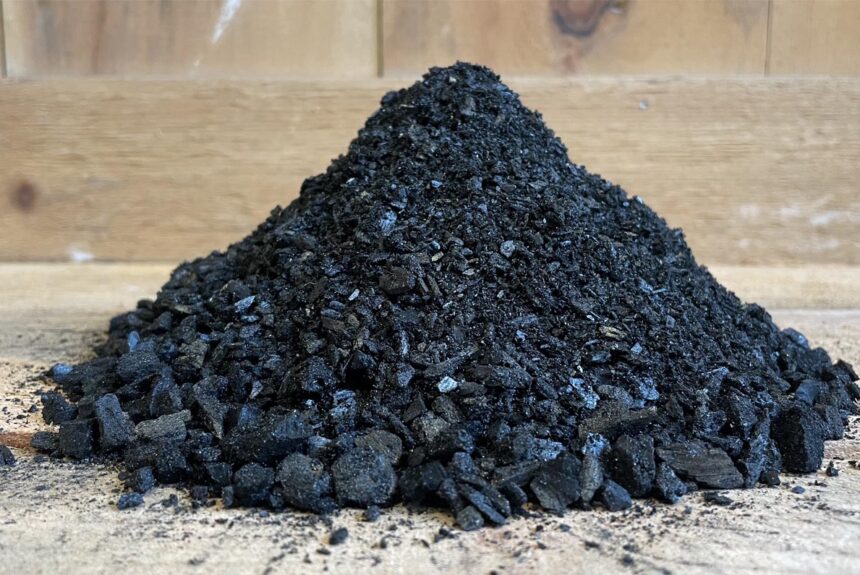
Earlier, I came upon a piece exploring bio-char as a quiet ally in the fight against climate change, enriching soils, boosting yields, and locking away carbon for centuries.
But just when we thought we understood its limits, science has thrown us a curveball. Biochar, it turns out, is far more than just a soil healer. It may also be the world’s most underrated weapon against water pollution.
The Hidden Power of Biochar
Biochar has long been considered as a supporting component. It was seen as a sponge, useful for adsorbing pollutants, or a catalyst helping oxidants like hydrogen peroxide break down toxins.
Dr. Yuan Gao and his team at the Dalian University of Technology in China, using advanced electrochemical techniques, proved that biochar doesn’t just trap pollutants, it actively breaks them down.
Through a process called direct electron transfer, biochar zaps organic contaminants, degrading them without the need for extra chemicals.
In their experiments, this direct degradation accounted for as much as 40% of the total pollutant removal.
“It’s not just a sponge,” says Dr. Gao. “It’s a battery, a conductor, and a degrader all in one.”
How It Works
Three key features stand out:
- Functional groups (C–O and O–H): These act like handholds for electron transfer.
- Graphitic carbon structures: Highways that allow electrons to move quickly and attack pollutants.
- Durability: Even after five reuse cycles, the biochar retained nearly 100% of its degradation power.
The result is a sustainable, resilient material that not only removes pollutants but keeps doing so reliably — cycle after cycle.
Why This Changes Everything
This discovery redefines biochar’s role in environmental engineering. No longer just a filter, it emerges as an active pollutant destroyer, with several advantages
- Lower costs: Less reliance on expensive chemicals in treatment plants.
- Cleaner processes: Reduced sludge and secondary waste.
- Sustainability: A green, scalable solution for industries and communities alike.
For countries in Africa, including Kenya, where water contamination from textiles, agro-processing, and urban waste is a growing concern, this technology could be transformative.
Imagine affordable wastewater treatment systems powered by biochar, serving both factories and communities with cleaner water.
The work of Dr. Gao’s team at Dalian University is a blueprint for the future of sustainable water purification. By understanding and harnessing direct degradation, researchers can design smarter biochar tailored for real-world challenges.
Read Also: Harnessing biotar for Sustainability
Author Profile

- How can we learn if we don't question?
Latest entries
 Agriculture16 October 2026“There Is No Shortcut”: A Kiambu Grower’s Decade in Mushrooms
 COP3115 October 2026Pacific Leaders Call for Urgent Climate Action Ahead of COP31
 Agriculture13 October 2026Can the buffalo fix Kenya’s milk problem? Farmers say start with the feed bill
 Events12 October 2026Cybersecurity in the Floriculture Industry


