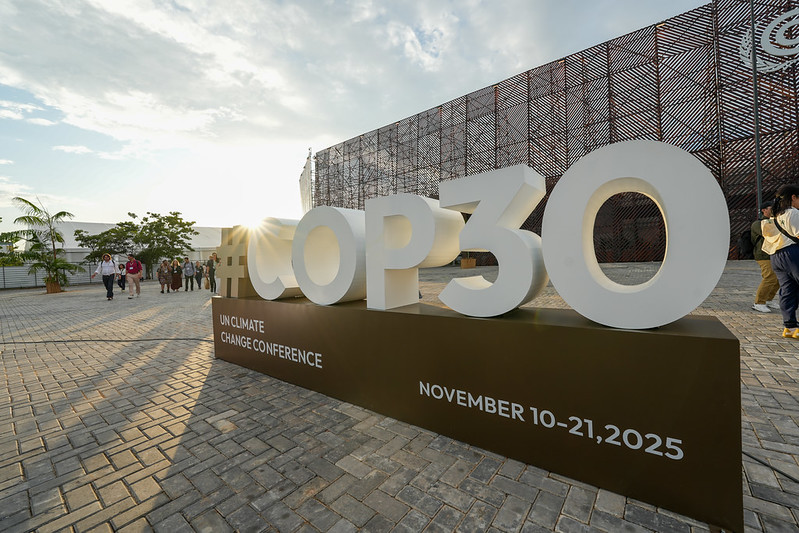
Amid the humidity and stifling heat, the throngs of crowds in long corridors, and the torrential afternoon rains, the absence of African journalists in key spaces is an eyesore.
The imbalance in representation becomes even more glaring inside the media room, a space where the voices of those least represented in traditional media should be elevated, yet the presence of African journalists is painfully thin.
It hasn’t gone unnoticed, as the media colleagues from other countries have openly expressed concern about what this imbalance could mean. One journalist remarked, “I’ve been at the last few COPs and this obvious exclusion of African journalists seems to be a concerted effort by the UNFCCC, although the motive is unclear.”
This imbalance is not only regional; it is also gendered. Women, particularly from African and Indigenous communities, remain chronically underrepresented in negotiation rooms, press briefings, and expert panels, despite bearing the heaviest burdens of the climate crisis.
The silencing of these voices means the lived realities of those who hold communities together through care, food production, and local adaptation rarely make it into the official record.
The consequence is limited coverage of African perspectives in the public domain and the sidelining of critical actors pushing for the outcomes African delegates seek. Several factors feed into this situation, including rampant visa denials, especially for Africans, and the requirement for physical verification in countries where Brazilian embassies are not even present.
Civil society organizations (CSOs) in Africa play a vital role in ensuring that the voices of the most vulnerable and most impacted are heard within UNFCCC COP processes, a reality that hasn’t changed at COP30 in Belém do Pará, Brazil.
As climate change intensifies, African communities, especially women, youth, Indigenous Peoples, and rural populations, bear disproportionate burdens. CSOs help bring these lived realities into global negotiations by advocating for equitable finance (NCQG), adaptation support, and loss and damage responses.
They amplify grassroots perspectives, monitor commitments, and push for accountability from governments and global institutions. Through their engagement, CSOs ensure African priorities are not sidelined, helping shape climate decisions that reflect justice, resilience, and community needs.
Although Africa’s participation in UNFCCC negotiation spaces has grown, capacity gaps still limit how effectively African views are reflected in the process. Many delegations, especially from least developed and climate-vulnerable countries, remain under-resourced, with limited technical expertise, small teams, and heavy agenda workloads.
This makes it difficult to follow parallel negotiations or influence rapidly evolving texts, leading to burnout and enabling the Global North to take ownership of key issues.
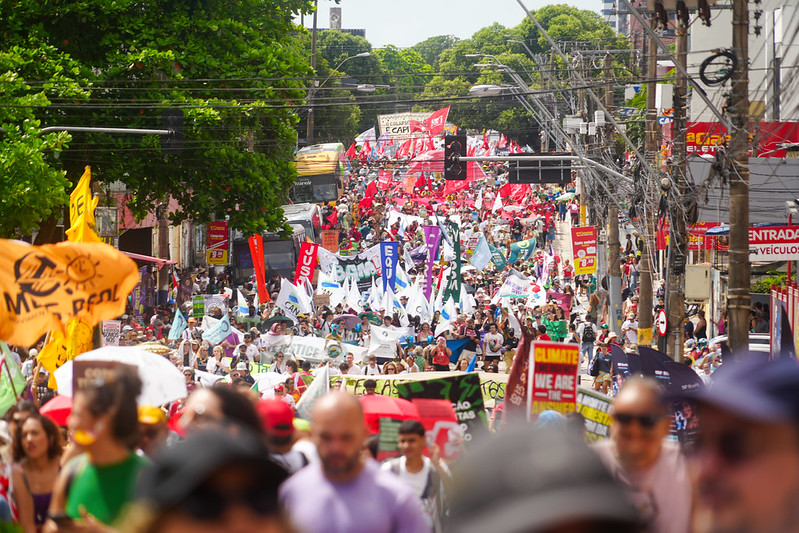
While regional bodies, CSOs, and youth networks increasingly provide technical support, persistent funding constraints and limited access to data remain barriers. Strengthening negotiation skills, sustained capacity-building, and stable financial support are essential to ensure African contributions are substantial, strategic, and consistently integrated into COP outcomes.
Negotiations in progress
The diminished presence of the US (are they here at all?) has created a vacuum. It has also lifted a veil: the EU and others who claim to be climate champions can no longer hide behind Washington’s shadow.
At the June climate meetings in Bonn, the LMDCs called out the EU as hypocritical for berating the Global South on its climate commitments while falling behind on its own mitigation targets.
The ambition gap remains stark. Few countries’ NDCs align with the 1.5°C global threshold, many have failed to submit revised NDCs altogether, and most developed nations continue to fall short on their adaptation and climate finance commitments.
The NDC Synthesis Report shows that current NDCs fall significantly short of what is needed to keep global warming below 1.5°C. Yet the ICJ has affirmed in its Advisory Opinion that 1.5°C is a legal obligation.
For Africa, the consequence is higher exposure to climate risks, greater debt as countries borrow to respond to disasters, and worsening inequality and economic instability. These impacts fall disproportionately on women and girls.
As floods destroy crops and droughts intensify food insecurity, women’s unpaid care work increases, while access to land, credit, and technology remains restricted. Yet women’s networks have been among the most effective in sustaining local resilience.
Without their inclusion in shaping climate finance and adaptation targets, the ambition gap is not only scientific; it is social.
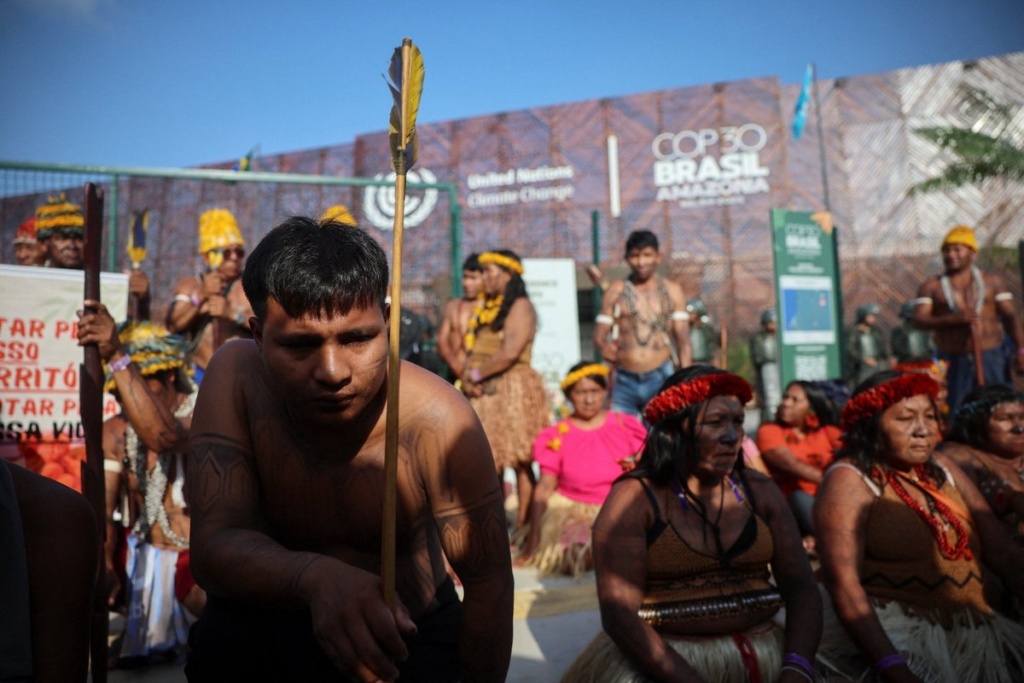
The promise of climate justice rings hollow if those historically most responsible for greenhouse gas emissions continue to dictate the terms while slowing the pace of progress. “If you drive while hitting the brakes, at best you drift, at worst you crash,” quipped one delegate.
One of the expected outcomes from Belém is a set of indicators to help countries track progress on climate adaptation. Although African and Arab countries are seeking a two-year postponement of this decision until 2027, as reflected in a new draft text.
Behind every statistic is a political choice. According to CarbonBrief’s delegate analysis, as the host country, the EU, and other major economies have sent thousands of participants to COP30, while many African countries have delegations numbering only in the dozens.
This imbalance is structural: it reflects a global order where the power to pollute still correlates with the power to make decisions.
Representation goes beyond optics; it is the foundation of legitimacy. The same applies to gender representation. Delegations that lack women’s voices, especially grassroots and feminist organizers, miss the perspectives that connect the technical to the human.
COP30’s gender sessions underscore that justice cannot be achieved if climate finance and adaptation policies ignore the invisible labor that sustains survival in African communities. Ensuring women’s meaningful participation is not a diversity metric; it is an accountability measure.
A multilateral process that sidelines African journalists, women, civil society, and negotiators cannot claim to be inclusive or just. Without Africa’s full participation, the global climate regime risks reproducing the very hierarchies it ought to dismantle.
As COP30 enters its final stretch, Africa’s message must be clear: we cannot afford another round of empty promises. Real progress requires more than procedural breakthroughs; it demands resources, recognition, and repair.
Developed countries must deliver on climate finance not as charity or aid, but as a matter of legal obligation, as clarified by the ICJ. They must support the tripling of annual public climate finance through the operating entities of the Financial Mechanism and align adaptation finance with lived realities.
Africa does not lack ideas, ambition, or moral clarity; it is denied access to finance, technology transfer, and voice. Within that exclusion, African women are doubly erased, first by global hierarchies, then by national and institutional silencing.
Correcting this imbalance means centering those on the frontlines of care and adaptation, women, Indigenous peoples, and youth, in decision-making and resource flows. Until that happens, climate negotiations will continue to benefit the powerful while the most vulnerable pay the price.
Co-authored by African CSOs at COP30, Belem:
Marina Agortimevor, Africa Just Transition Network
Lavender Namdiero, Africa Futures Lab
Omar Elmawi, Powershift Africa
Ibrahim Muhammad Shamsuddin, Yanayi Haki Africa