
It was a relief stepping into the lift from the heat. As I stepped out onto the seventh floor of the building for my meeting, I could feel the shirt sticking to my back and my palms sweating.
‘Nairobi is sweltering!’ I exclaimed, asking directions to the washroom from the front desk, to freshen up before stepping into the office. Hot days and cold nights, that was the city now, with clouds of dust and exhaust fumes constantly hanging over the city.
“Oh, you’re early,” Mac said as he welcomed me into his plush air-conditioned office. “Have you just showered?” he asked, feigning surprise.
“No, I just splashed some water on my face,” I replied, taking a seat on the couch opposite his desk.
“Well, the city is boiling right now, quite different from the Nairobi of a decade ago; the crisis is real,” Mac commented.
“What if Africa already holds the answer to the global climate crisis?” I ventured.
With an estimated $6.2 trillion in natural capital, according to the Africa Development Bank, an $82 billion projected carbon market, and nature delivering up to 600% return on investment alongside the emerging $1.5 trillion digital and AI economy by 2030, the opportunity is clear.
“To realize that, we need to trade our value, not our vulnerability,” Mac said, sitting back on his chair.
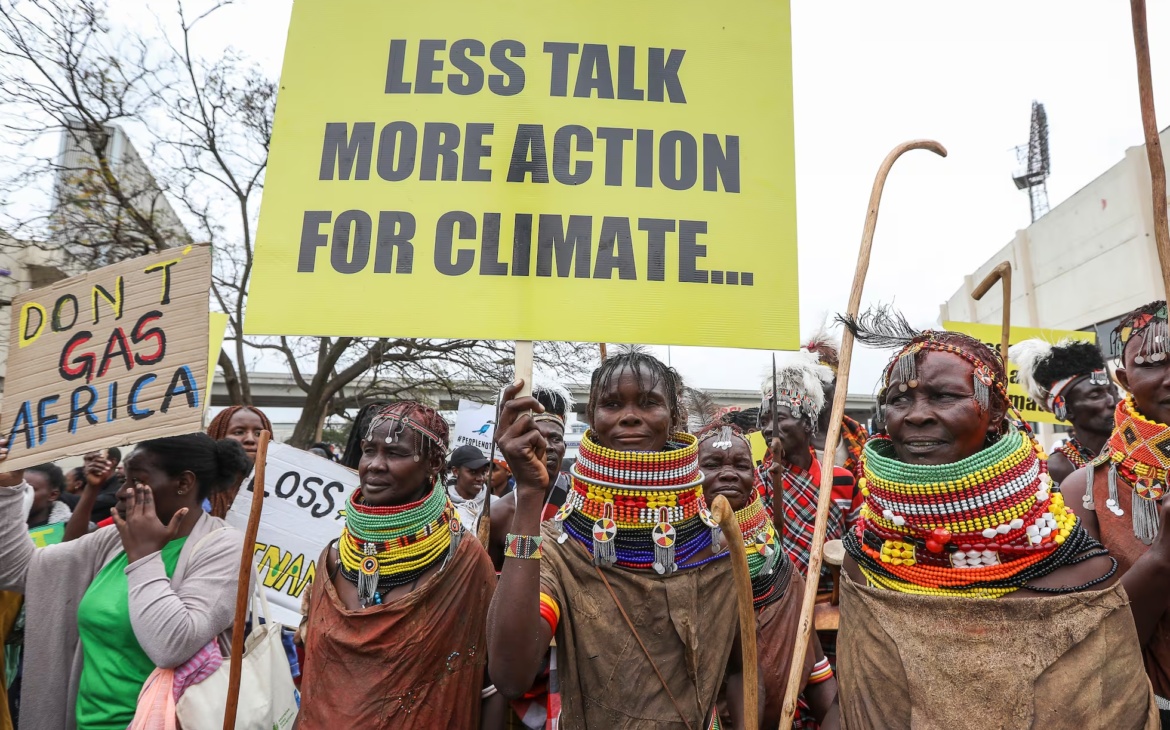
Africa hardly adds to global emissions, just 4%. But when it comes to climate change, the continent takes some of the hardest hits. Droughts dry up crops. Floods force families to move. Communities all over Africa are paying for a mess they didn’t make.
Moreover, it is a common practice of the media and other information outlets to focus on the continent’s vulnerabilities instead of the potential it holds.
Also, climate discourse is dominated by the Global North, with a focus on high-tech, capital-intensive solutions, completely out of touch with communities on the crisis frontlines.
“Underestimation of indigenous knowledge and nature-based systems is a crisis on its own, besides Africa being framed mainly as vulnerable, not innovative,” he added, as his assistant brought in glasses of cold orange juice.
Across the continent, Africa is already practicing nature-based solutions that the world is only beginning to rediscover.
Indigenous land-use systems such as agroforestry, intercropping, and pastoral mobility have long balanced food production with ecosystem health, while sacred forests and community-managed lands protect biodiversity and regulate local climates, such as the Arabuko Sokoke forest in coastal Kenya.
Africa is also home to some of the planet’s most critical carbon sinks, from the Congo Basin rainforest, often called the world’s “second lung,” to vast mangrove systems along the East and West African coasts, as well as peatlands and savannahs that store enormous amounts of carbon and buffer against climate extremes.
As the discussion went on, it became clear that Africa’s climate promise also lies in its ability to leapfrog outdated development pathways.
With abundant solar, wind, and geothermal resources, particularly along the Rift Valley, the continent has the potential to build a clean energy future without locking itself into fossil fuel dependence.
Across rural and peri-urban areas, off-grid and mini-grid innovations are already expanding access to affordable, renewable power where traditional infrastructure has failed to reach, such as Sun King.
Much like mobile banking transformed finance by bypassing landlines, Africa can accelerate a renewable transition that blends cutting-edge technology with local realities, offering the world a model of rapid, inclusive and low-carbon development.
“What do you think would happen if the world actually listened? Indigenous knowledge would influence global policy, African ecosystems would be protected as global assets, and Local communities would be put at the center of climate action,” concluded Mac.


