
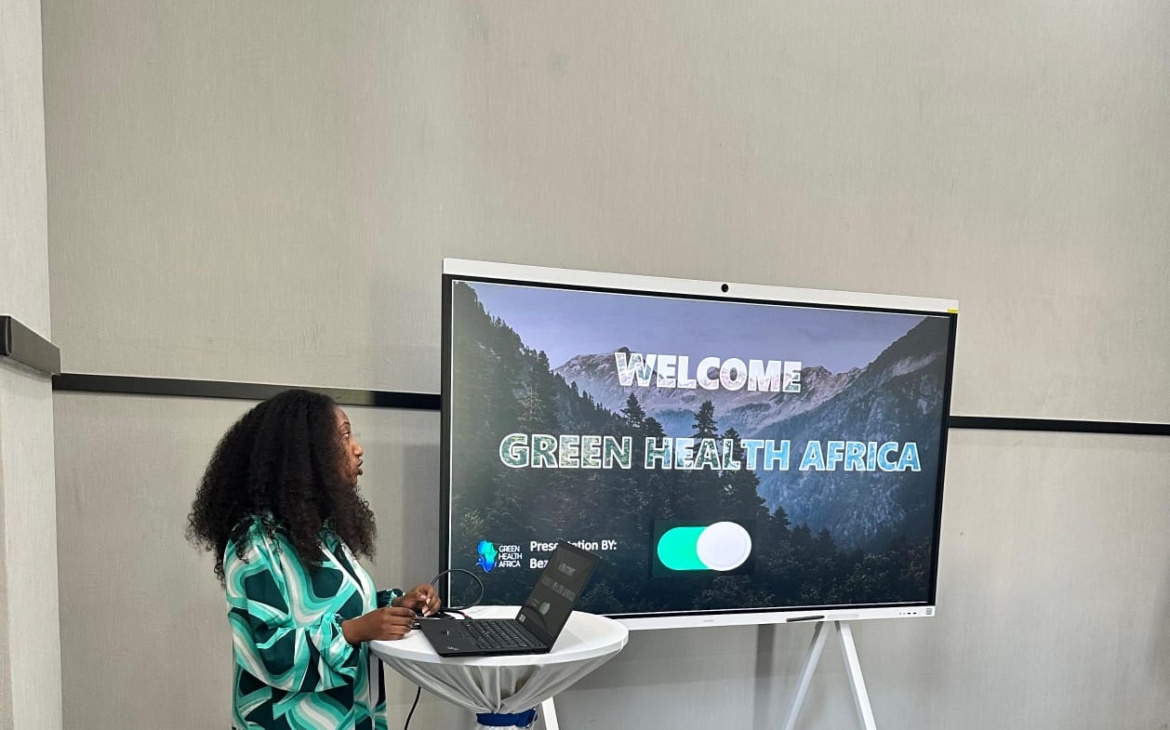
For many young climate advocates, the turning point comes in a single moment. For Beza Melaku, now Secretary General of Green Health Africa and Chair for the U-Report Sub-Steering Committee, it came at a global climate negotiation.
At the time, she was a fresh graduate at Addis Ababa University, currently a second-year software engineering student at Addis Ababa University. A future at the intersection of climate change and public health was not part of her plan until she attended UN climate talks.
“Before attending COP, I thought solutions would be simple because we are all addressing a common global issue,” she said. “But being there showed me that reaching a global consensus takes time.”
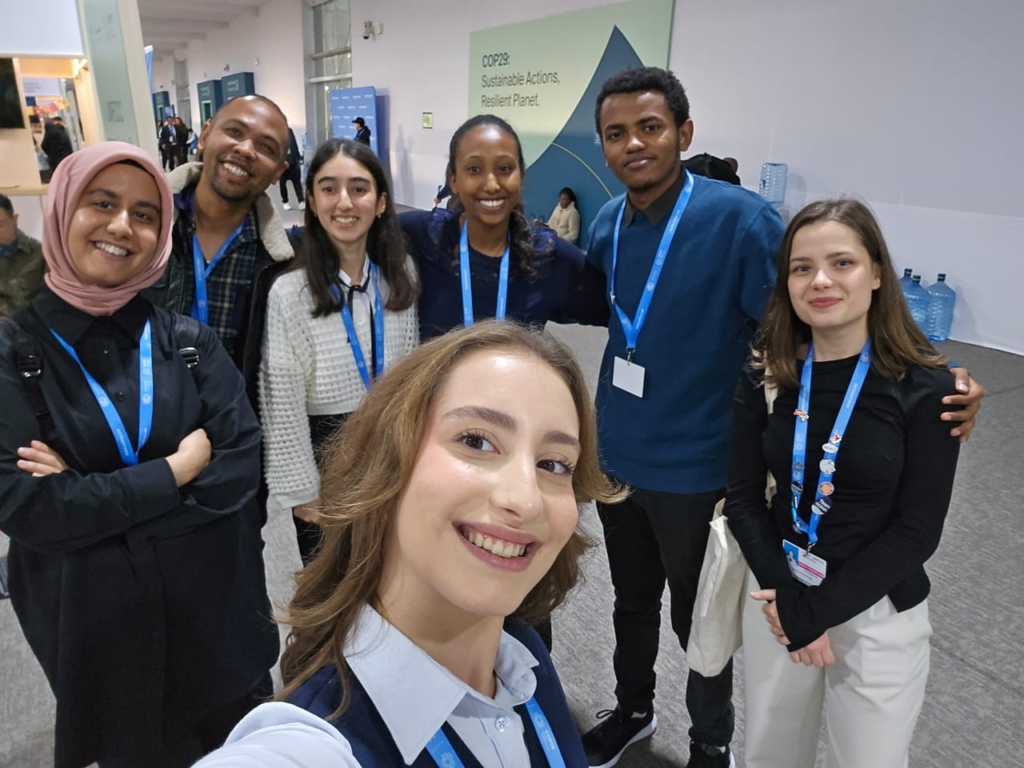
Selected through a national process organized by the Ethiopian Government’s Ministry of Planning and Development and UNICEF, she joined other youth globally at COP29. The experience was overwhelming, but transformative.
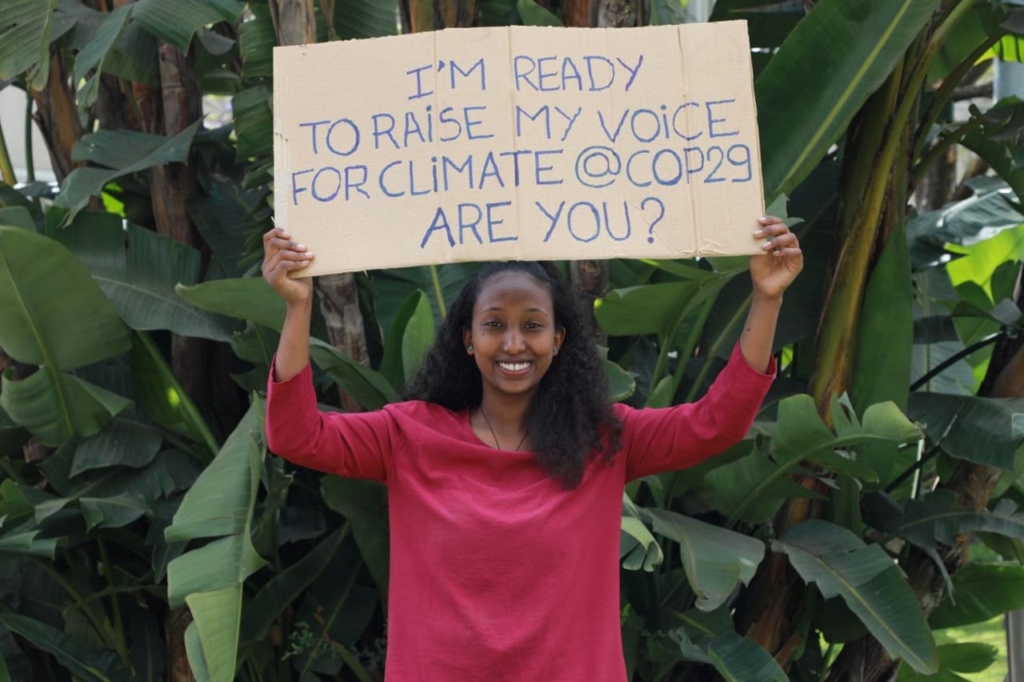
“You think you understand COPs from videos, but seeing nearly 190 countries negotiating is different,” she said. “It made me realize that while global talks matter, local action cannot wait.”
Back in Addis Ababa, she connected with Green Health Africa, a youth-led organization working at the intersection of climate and public health, a link she had already begun to notice in daily life.
“When a climate disaster happens, like floods or droughts, it often triggers a chain reaction,” she explained. “Displacement after floods can create conditions for outbreaks of malaria, cholera, or measles.”
Global estimates project up to 250,000 additional deaths annually between 2030 and 2050 due to climate-related health risks, including undernutrition, malaria, and heat stress, impacts that hit hardest in vulnerable communities.
“When we advocate for climate justice, we are also advocating for human health and human rights,” Beza said. “The two cannot be separated.”
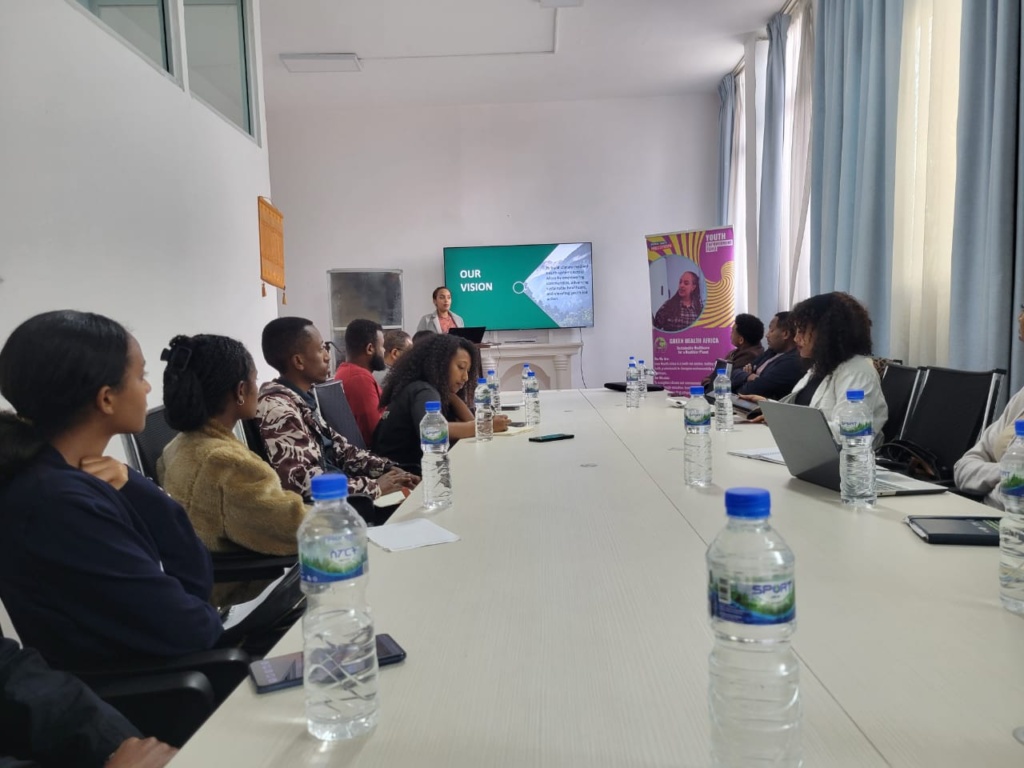
Green Health Africa Bridging the Knowledge–Action Gap
Since its founding a year ago, Green Health Africa has focused on closing the gap between awareness and action.
A Knowledge, Attitude and Behaviour (KAB) assessment revealed that while many Ethiopians understand sustainable healthcare, few apply it in practice.
“Most participants had basic knowledge and saw its benefits,” Beza said. “But when asked if they consider environmental impacts in healthcare decisions, most said ‘rarely’ or ‘never’.”
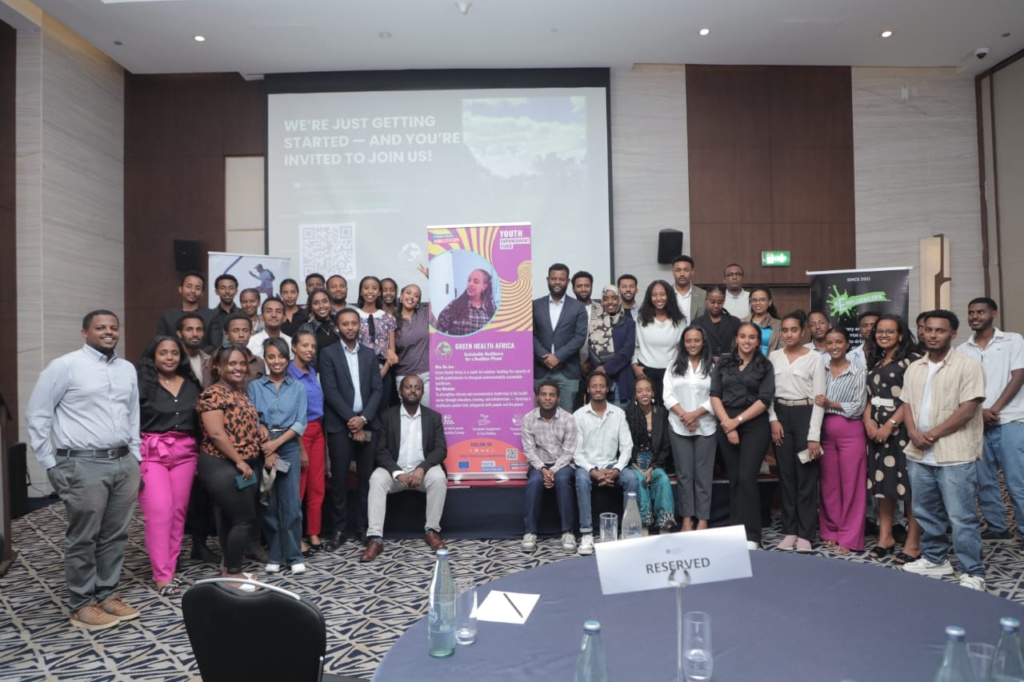
The findings, Beza Melaku reveals, led to targeted training for youth, women, and local communities.
The organization also trained around 250 healthcare workers through a Continuous Professional Development program, in partnership with Blue Health Ethiopia and the Ministry of Health.
The sessions focused on climate–health links, risk communication, and building climate-resilient health systems.
“For developing countries, this is urgent,” Beza said. “When disasters hit, many frontline communities cannot recover quickly.”
Tackling Plastic Pollution and Medical Waste
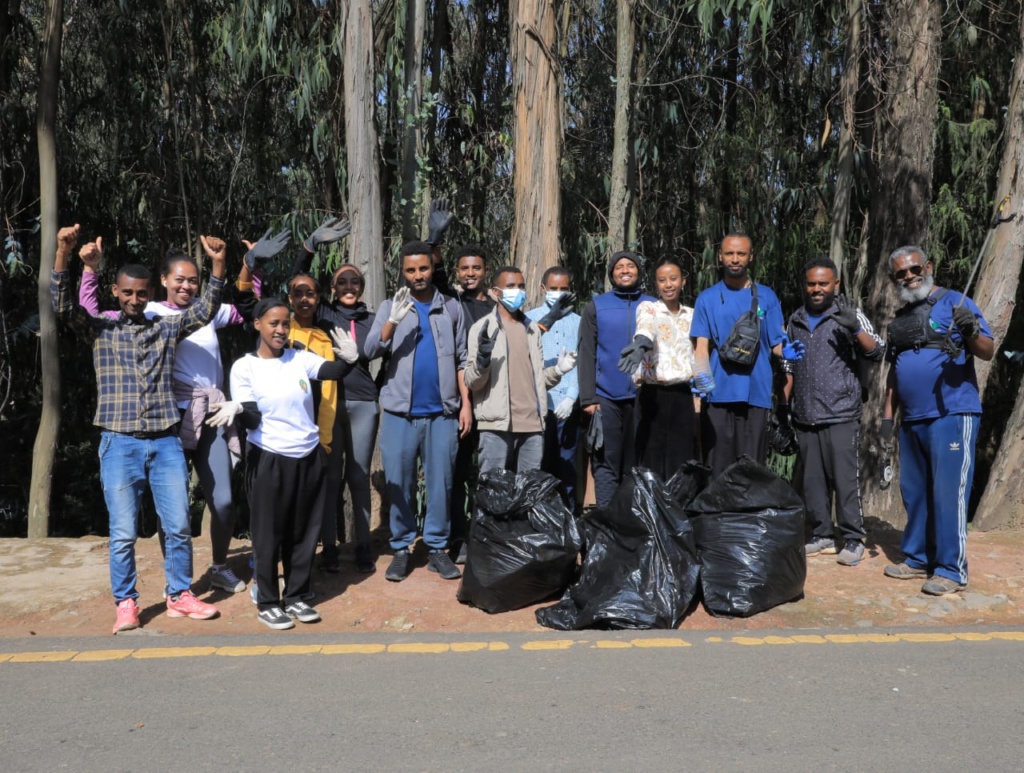
Green Health Africa is also addressing plastic pollution and medical waste, two growing public health risks.
Ethiopia’s recent restrictions on single-use plastics mark progress, but Beza stresses that policy must be matched with practical alternatives.
“If we want people to stop using single-use plastics, alternatives must be accessible, available, and affordable,” she said.
Plastic pollution is increasingly linked to health risks, particularly from microplastics entering the body through air, water, and food.
At the same time, the healthcare sector carries a significant environmental footprint. “If the global healthcare sector were a country, it would be the fifth-largest emitter,” Beza noted.
In many developing countries, medical waste is still disposed of through open burning, contributing to pollution and emissions. This makes sustainable waste management a key priority for the organization.
Youth Leadership and Community Action
As a youth-driven initiative, Green Health Africa places young people at its core, while working with experienced professionals.
“We believe in intergenerational collaboration,” Beza said. “Young people bring energy and innovation, while professionals bring guidance.”
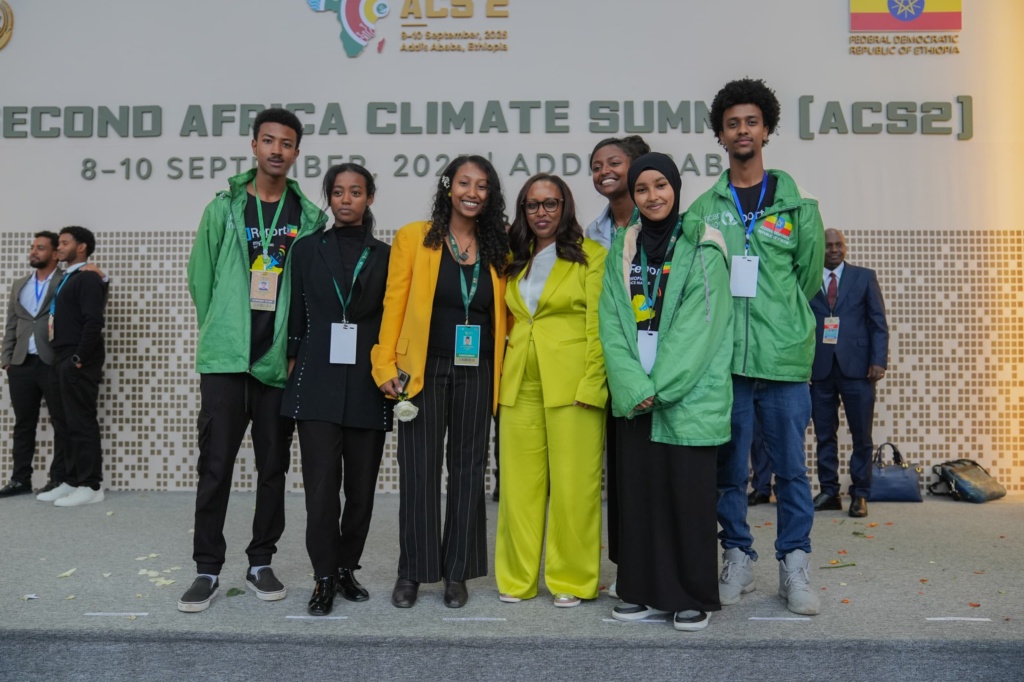
The organization engages communities through clean-ups, awareness campaigns, and regional climate forums. It has also contributed to discussions at the second Africa Climate Summit (ACS2) and supported Ethiopia’s Clean Ethiopia campaign through environmental education and tree planting.
Like many emerging organizations, it faces challenges, including limited funding, administrative hurdles, and difficulty reaching rural communities.
“Most of our participants are from Addis Ababa,” Beza said. “Reaching rural areas remains difficult due to logistical and technological barriers.”
Still, partnerships continue to drive the work forward. “People are your greatest resource,” she said. “Collaboration helps you find solutions.”
For Beza, youth engagement is critical as climate impacts intensify. “Climate change is not a future problem,” she said. “It is already shaping our lives, the air we breathe, the food we eat, and the water we drink.”
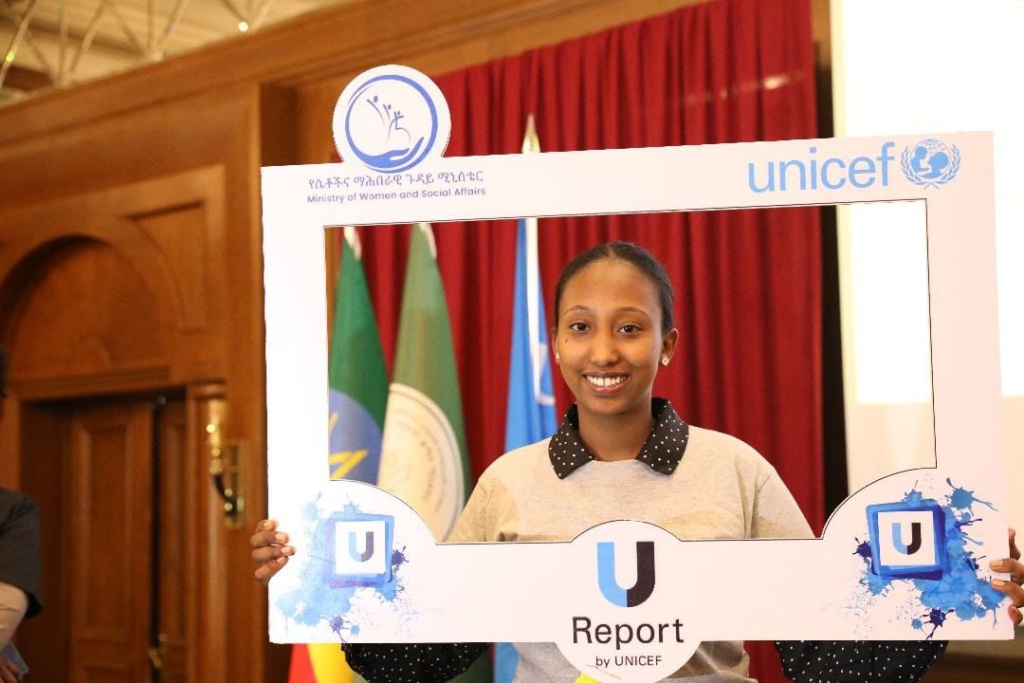
Her message is simple: everyone has a role. “Whether you study medicine, engineering, law, or political science, there is space to contribute.”
She describes her approach as being a “locally rooted global citizen.” “We live in a globalized world, but real change starts with understanding local realities and acting on them.”
BEZA MELAKU: https://www.linkedin.com/in/beza-melaku-mandefro


