
As climate impacts intensify across the globe, new efforts like the framework of Barbados Implementation Modalities (BIM)are emerging to help vulnerable countries cope with the growing burden of environmental loss and damage.
The Fund for Responding to Loss and Damage (FRLD) has taken a significant step in this direction, outlining how nations can access financing under its Barbados Implementation Modalities (BIM), a US$250 million framework designed to respond to climate-related crises.
During a recent informational session, the Fund detailed how the BIM will support countries facing a range of climate challenges, from sudden disasters to slow, irreversible environmental changes.
The framework, introduced during COP30, reflects a growing global recognition that climate change is not only a future threat, but a present and escalating reality.
Responding to a Changing Climate
The Barbados Implementation Modalities is structured to address three critical dimensions of climate impact: rapid response after extreme weather events, long-term reconstruction, and slow-onset processes such as sea-level rise.
These focus areas acknowledge that climate change manifests in different ways, through sudden shocks like floods and droughts, as well as gradual transformations that steadily erode ecosystems and livelihoods.
Unlike conventional funding models, the framework offers flexibility in how countries design their responses. Projects are not bound by a fixed implementation timeline and can address past, ongoing, or anticipated climate events.
Funding proposals can range between $5 million and $20 million, allowing both small-scale and large-scale interventions, depending on national needs.
Barbados Implementation Modalities: Improving Access to Climate Finance
Access to climate finance has long been a challenge for many developing countries. Under the BIM, governments can submit proposals through a Direct Access modality, although this pathway is still being finalized and is expected to be fully operational after the Fund’s next Board meeting.
To streamline the process, countries are required to designate focal points who will coordinate with the FRLD and formally endorse project proposals. This step is intended to strengthen national ownership and ensure alignment with local priorities.
The framework also builds on existing global climate finance systems. Organizations already accredited to the Green Climate Fund, the Global Environment Facility, and the Adaptation Fund can access BIM resources without undergoing additional vetting processes. This reduces administrative barriers and allows projects to move more quickly from proposal to implementation.
Scaling Support for Vulnerable Countries
The BIM allows countries to submit multiple proposals, recognizing that climate impacts often affect different regions and sectors simultaneously. However, individual projects are capped at $20 million, ensuring that funding is distributed across a range of initiatives and beneficiaries.
Applications are open until June 15, 2026, with reviews expected to begin in July.
The launch of the BIM marks an important step in the evolution of climate finance as it prioritizes flexibility, accessibility, and responsiveness. The Fund aims to better reflect the realities faced by countries on the frontlines of climate change.
As extreme weather events become more frequent and slow-onset impacts continue to reshape environments, initiatives like this signal a shift toward more adaptive and inclusive solutions.
The challenge ahead will be ensuring that such funding reaches the communities that need it most and translates into lasting resilience in the face of a changing climate.
Author Profile

-
Seeker.
Inspire AFRIKA.
Latest entries
 Corporate15 October 2026Water, Sanitation and Digital Learning at the Centre of Garissa School Upgrade
 Agriculture14 October 2026Africa’s Food Systems Future Depends on Listening to Farmers
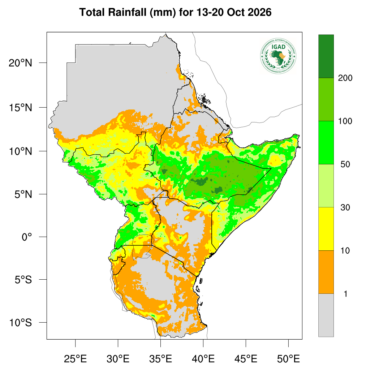 Weather Forecasts13 October 2026Rain and Rising Temperatures Forecast Across the Greater Horn of Africa
 Climate9 October 2026Beyond Negotiations: Africa Expects Concrete Outcomes from Antalya


