
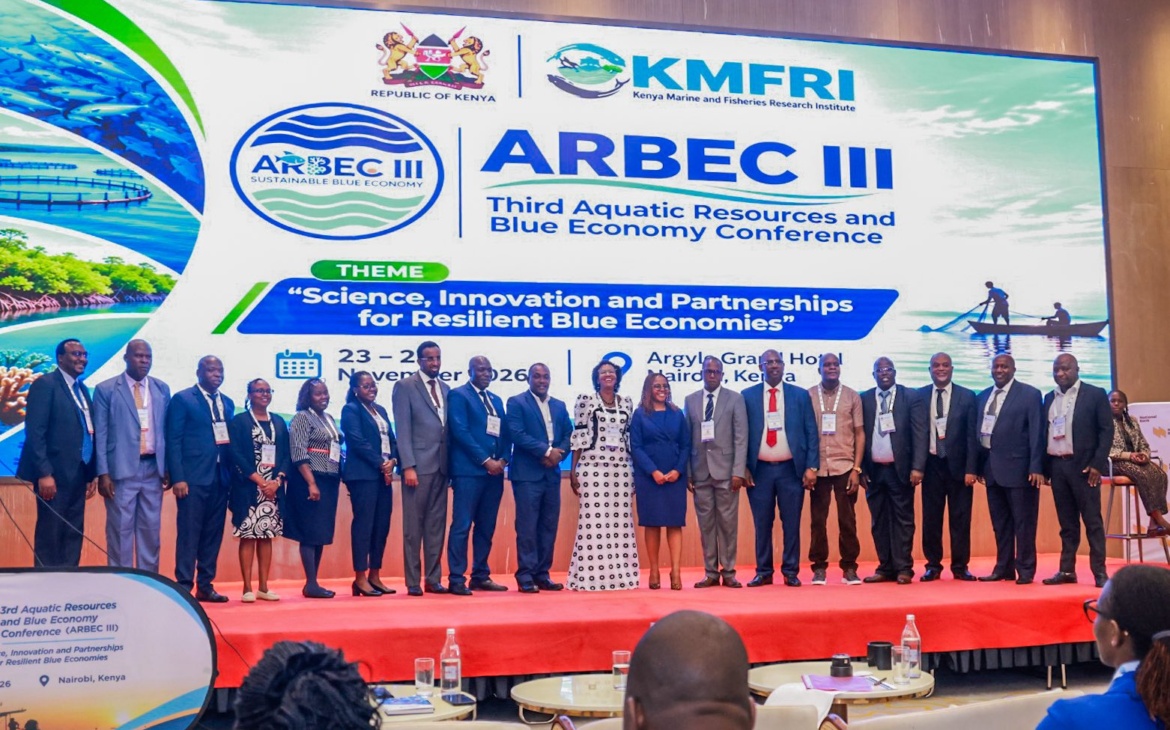
At ARBEC III, government, scientists and investors call for stronger partnerships to turn Africa’s aquatic resources into sustainable economic opportunities.
Africa’s lakes, rivers and oceans hold immense economic potential, supporting fisheries, food security, tourism and millions of livelihoods. Yet translating this natural wealth into lasting opportunities requires more than scientific knowledge or investment alone. It demands stronger partnerships between governments, researchers, businesses and the communities whose lives depend on aquatic ecosystems.
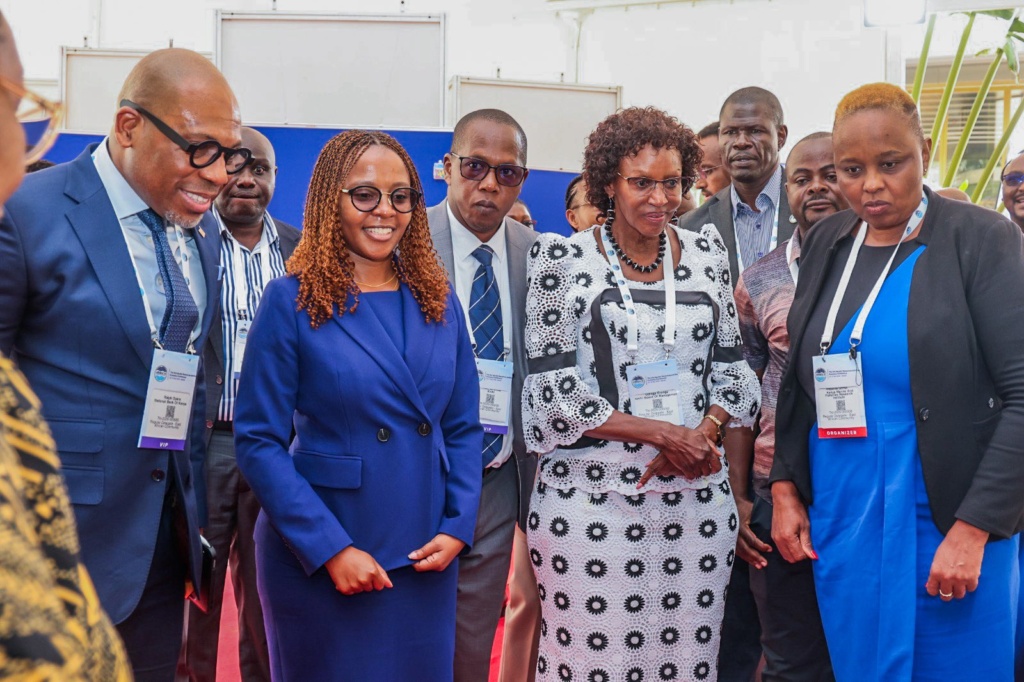
That was the central message as the third Aquatic Resources and Blue Economy Conference (ARBEC III) opened in Nairobi on Monday, 23 November, bringing together scientists, policymakers, investors and development partners to examine the future of Africa’s blue economy.
Hosted by the Kenya Marine and Fisheries Research Institute (KMFRI) at the Argyle Grand Hotel, the five-day conference is being held under the theme Science, Innovation and Partnerships for Resilient Blue Economies. Its programme brings together more than 1,000 participants from over 40 countries, with seven thematic tracks and hundreds of scientific presentations.
Opening the conference, Principal Secretary for the State Department for the Blue Economy and Fisheries, Betsy M. Njagi, challenged stakeholders to look beyond the continent’s abundant aquatic resources and focus on how these can improve people’s lives.
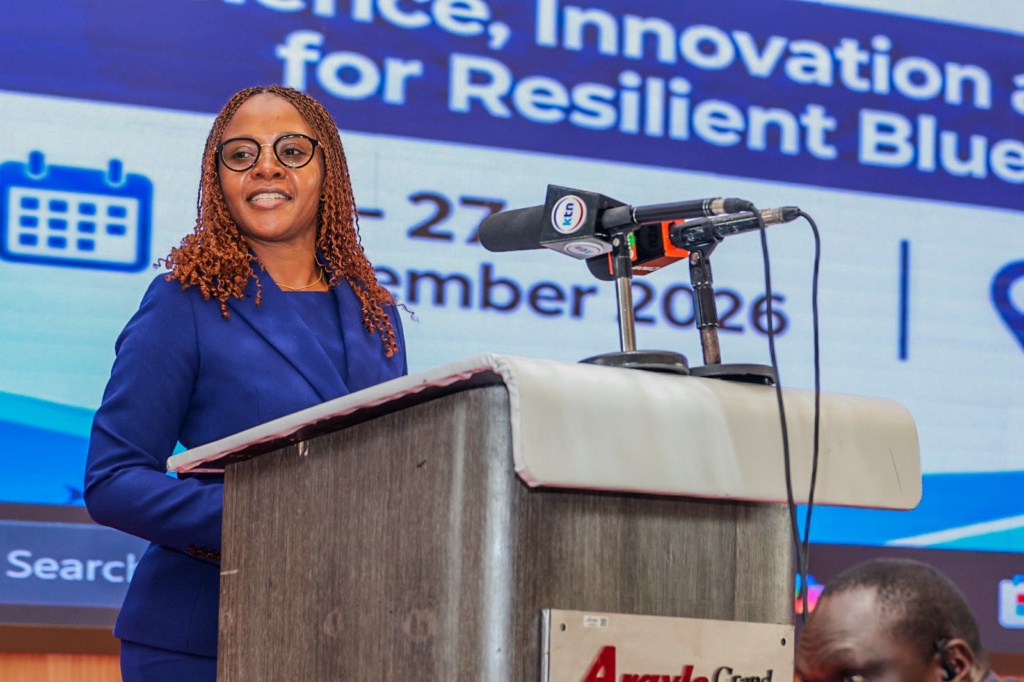
“The future of Kenya’s Blue Economy lies in turning our vast aquatic resources into opportunities that transform lives, create wealth and secure livelihoods,” she said.
The emphasis on communities reflects a wider challenge facing Africa’s aquatic economy: ensuring that the benefits of expanding industries reach small-scale fishers, women and young people rather than remaining concentrated among larger commercial players.
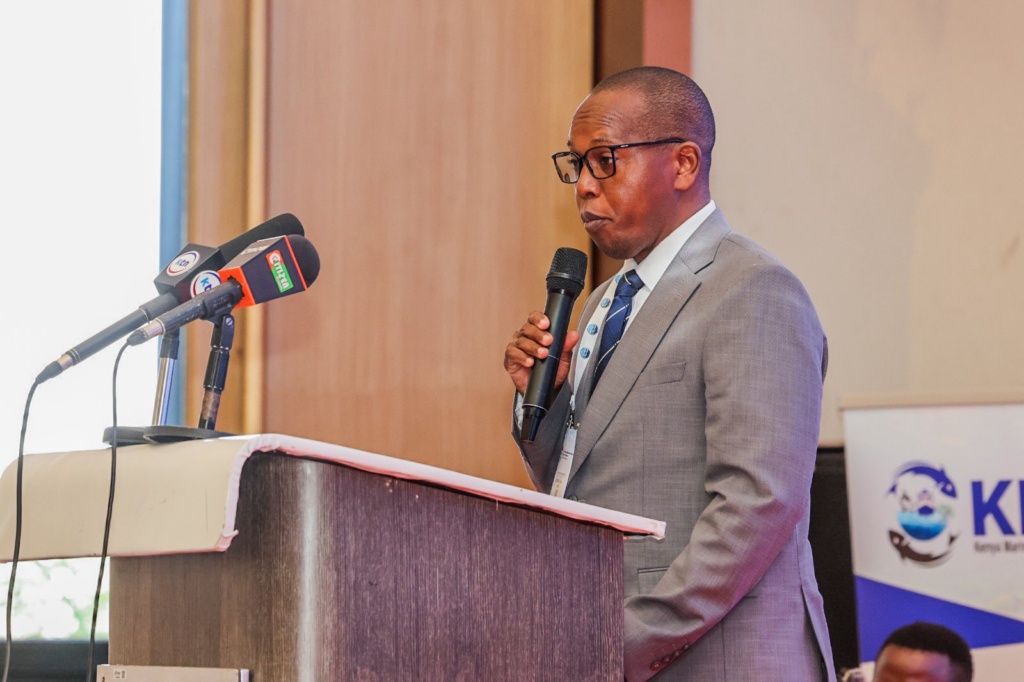
For KMFRI Director General and conference chair Dr Paul S. Orina, achieving this requires breaking down the institutional and professional barriers that often separate scientific research from policy and investment decisions.
He called for an environment where different disciplines and sectors could exchange knowledge and develop practical solutions.
“Let scientists listen to financiers in the room, engineers engage with field practitioners and community researchers, tour operators interact with oceanographers, and colleagues from different countries learn from one another,” he said.
The call is particularly relevant as the blue economy increasingly intersects with climate change, biodiversity conservation, food systems and technological innovation. Research findings must inform decisions that protect aquatic ecosystems while supporting the economic activities that depend on them.
KMFRI’s scientific programme reflects this breadth. Its seven thematic tracks cover sustainable fisheries and aquatic food systems, climate-smart aquaculture, blue tourism, governance and finance, digital innovation, ecosystem resilience, and community engagement.
Among the issues receiving attention is the environmental impact of cage aquaculture in Lake Victoria, alongside research on mangrove conservation, blue carbon, fisheries management and aquatic pollution.
These discussions highlight the need to balance economic expansion with ecological protection. Increasing fish production, developing coastal tourism and attracting investment cannot be sustainable if the ecosystems supporting these activities continue to deteriorate.
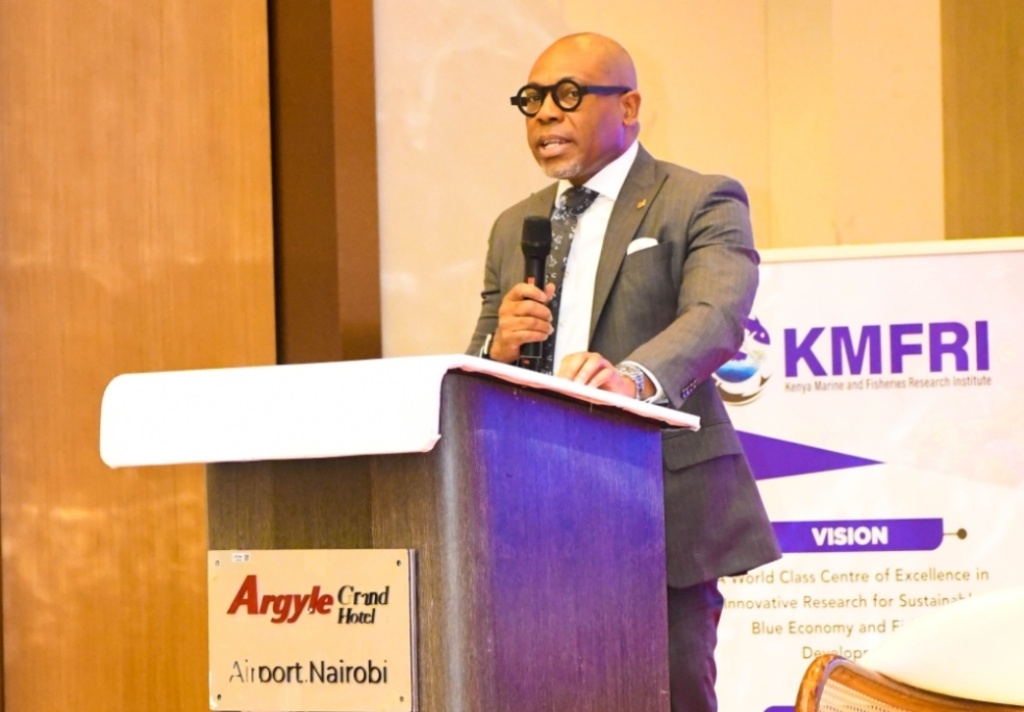
The financing question also featured prominently in the opening discussions, with Ralph Opara, Regional Managing Director for East Africa and Country Managing Director at Access Bank Kenya, calling for greater African ownership of the continent’s development priorities.
“Africa’s challenges will not be solved by waiting for the world to save us. The solutions must come from within. Africans must take ownership of their continent’s future, harness their knowledge, resources and innovation, and build the Africa they want to see. The future of Africa must be shaped by Africans, for Africans,” he said.
His remarks brought attention to the role of appropriate financing in translating research and innovation into viable economic opportunities. For African enterprises and aquatic-resource-dependent communities, access to investment remains important in developing infrastructure, improving value chains and expanding participation in emerging blue economy industries.
Beyond the opening ceremony, ARBEC III provides a platform for researchers and practitioners to share evidence, identify knowledge gaps and explore partnerships across the continent. Its programme also includes technical sessions, exhibitions and dedicated discussions on financing and innovation.
Ultimately, the conference presents an opportunity to reconsider how Africa approaches its aquatic wealth: not simply as a resource to be exploited, but as an interconnected economic and ecological system that requires responsible management.
As delegates continue their discussions in Nairobi, the central test will be whether the partnerships and recommendations emerging from the conference can move beyond institutional commitments into practical improvements in fisheries management, ecosystem protection and community livelihoods.
For Africa’s blue economy, turning water into wealth must also mean securing the ecosystems and people that make that wealth possible, and ARBEC III is a step towards that destiny.
Author Profile

-
Seeker.
Inspire AFRIKA.
Latest entries
 Fisheries25 November 2026ARBEC III: Bridging Science, Investment and Livelihoods in Africa’s Blue Economy
 Animals24 November 2026Where Is the Milk? Feed Is the Missing Link in Kenya’s Dairy Sector
 Events23 November 2026Why Kenya’s Young People Want Their Climate Struggles Counted
 COP3120 November 2026The Age of Electricity? Antalya’s Big Bet on 35 by 35 in COP31


