Widespread flooding is forecast in Rwanda and Burundi as parts of East Africa prepare for above-average rainfall, while warmer-than-usual temperatures and elevated heat stress persist across the Greater Horn of Africa.
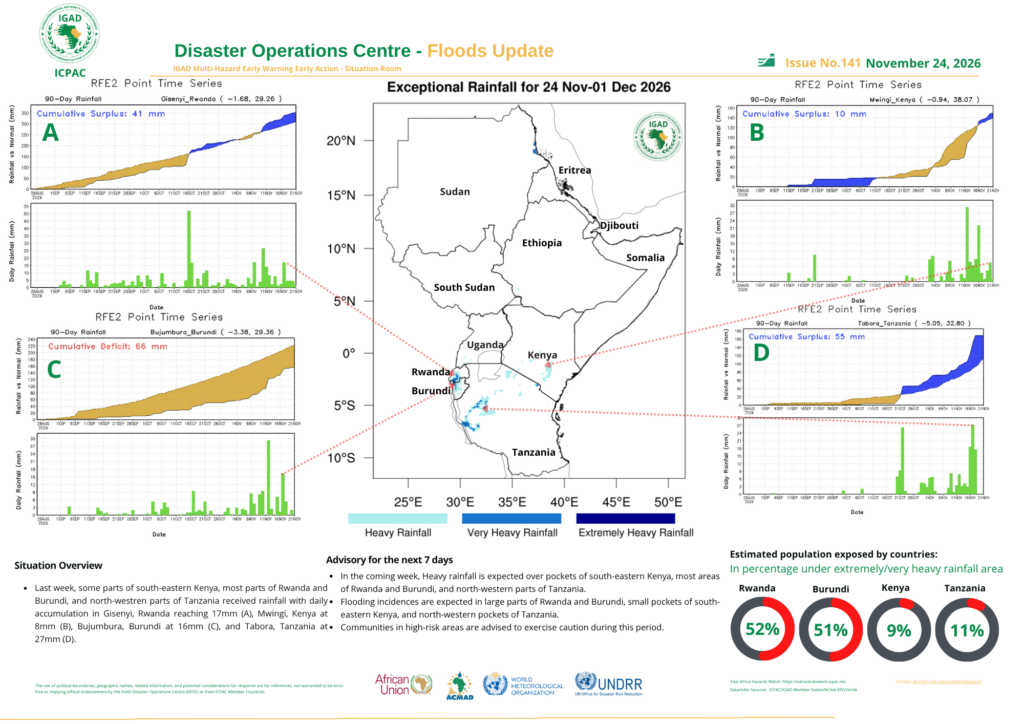
Rwanda and Burundi are among the countries facing heightened flooding risks as above-average rainfall is expected across parts of the Greater Horn of Africa between 24 November and 1 December 2026.
The latest IGAD Climate Predictions and Applications Centre (ICPAC) regional climate outlook identifies large parts of both countries as areas likely to experience flooding, with north-western Tanzania and isolated locations in south-eastern Kenya also facing potential flood risks.
The forecast comes amid increasingly uneven rainfall distribution across the region, with some areas expected to receive more rainfall than usual while others face below-average conditions. Meanwhile, warmer-than-average temperatures are expected across most parts of the Greater Horn of Africa (GHA), adding another layer of climate-related pressure on communities and livelihoods.
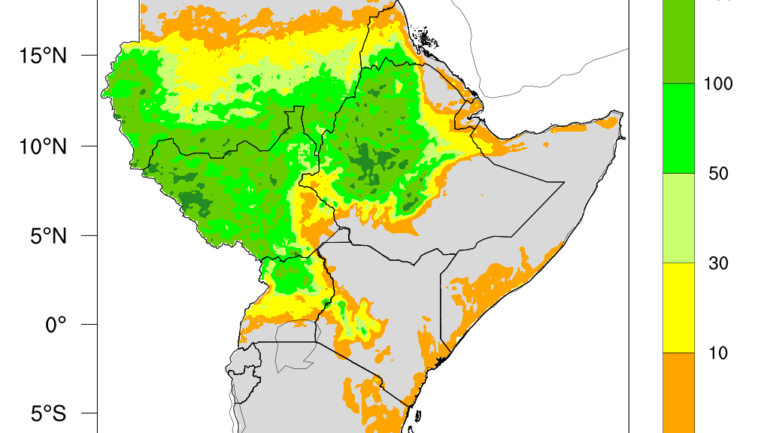
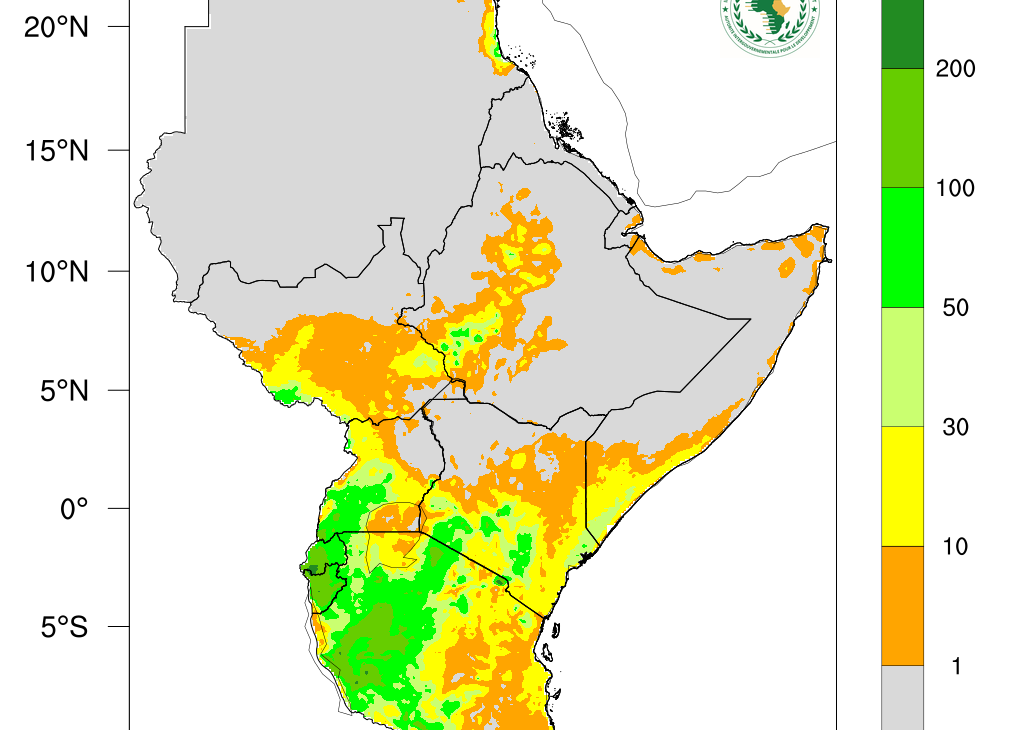
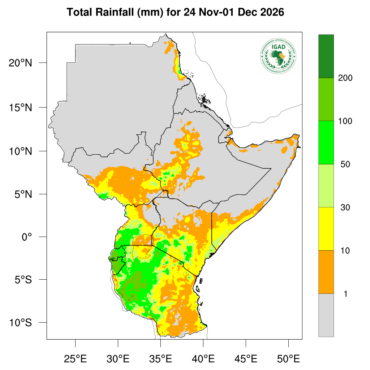
According to the weekly forecast, isolated areas of northern Tanzania, south-western Rwanda and central Kenya could receive more than 200 millimetres of rainfall during the seven days.
Moderate rainfall, ranging between 50 and 200 millimetres, is expected across most parts of Rwanda and Burundi, northern and south-western Tanzania, central to south-western Uganda and central to western Kenya. Isolated areas of south-western South Sudan and western Ethiopia are also expected to receive similar amounts.
However, the distribution of rainfall is not expected to be uniform. Light rainfall, below 50 millimetres, is forecast across most parts of Kenya and South Sudan, central to southern Tanzania, central to northern Uganda, coastal Sudan, western to northern Ethiopia and southern Somalia.
Rwanda and Burundi at the centre of flood concerns
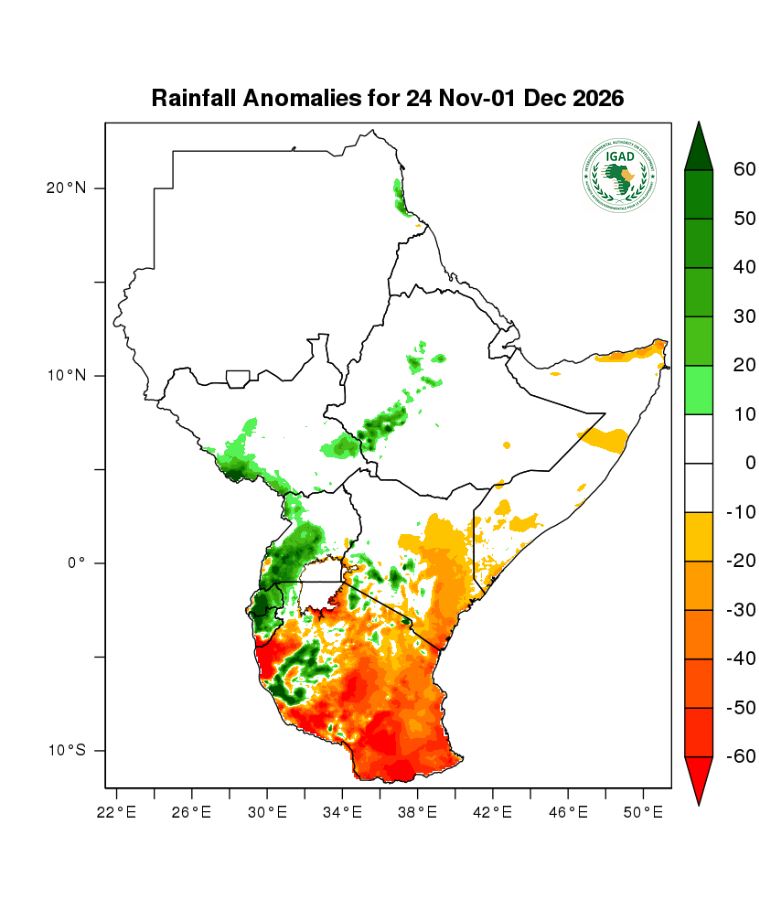
The rainfall anomaly forecast indicates that most parts of Rwanda and Burundi are likely to receive more rainfall than their seasonal averages.
Above-average rainfall is also expected across central to south-western and north-western Uganda, northern Tanzania, selected areas of Ethiopia and Kenya, and parts of South Sudan and north-eastern Sudan.
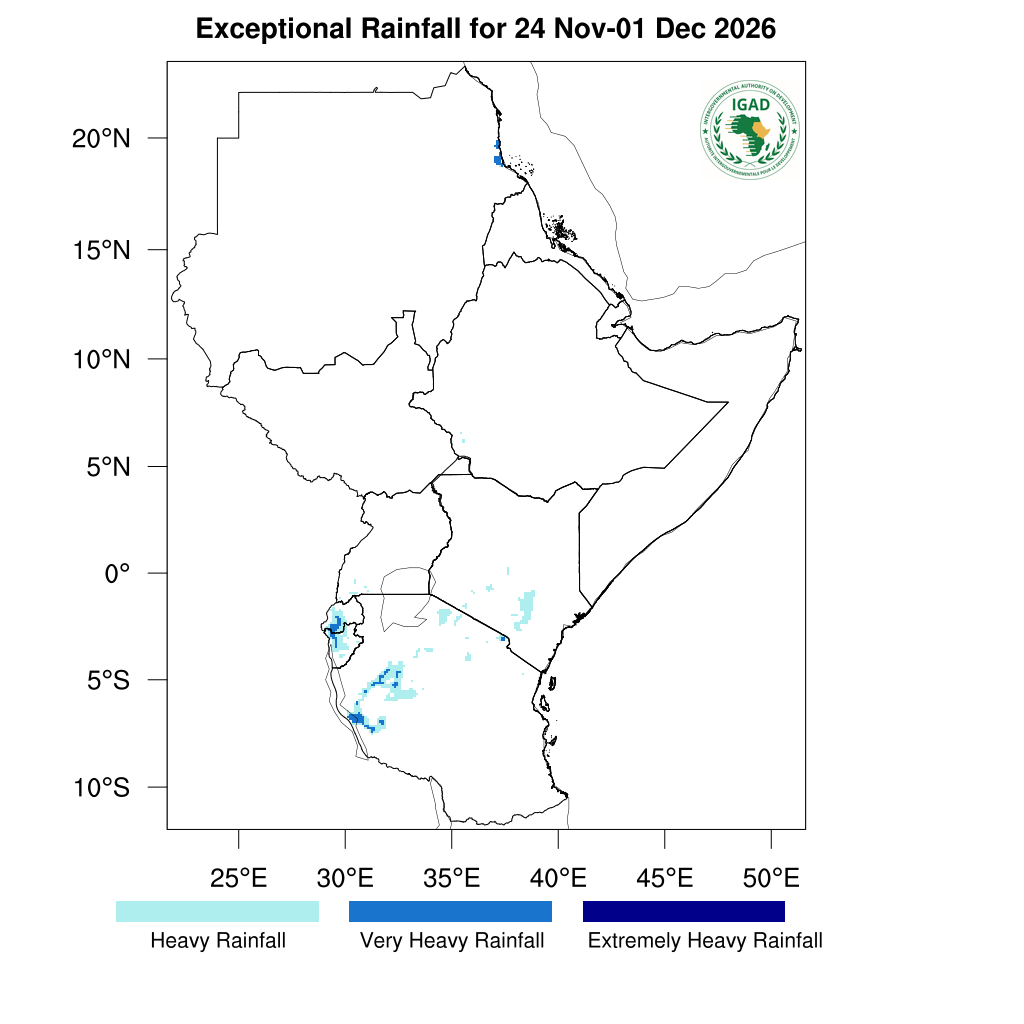
However, the exceptional rainfall forecast identifies additional areas where precipitation could be unusually high compared with historical conditions.
Rainfall exceeding the 90th percentile is expected across north-western Tanzania, western Rwanda and western Burundi, alongside isolated areas of central and south-eastern Kenya, south-western Uganda and north-eastern Sudan.
The 90th percentile represents rainfall amounts higher than approximately 90 per cent of historical observations for the corresponding period. This indicator helps identify locations where rainfall could be exceptionally high relative to what is normally experienced.
The anticipated flooding across large parts of Rwanda and Burundi, as well as smaller areas of south-eastern Kenya and north-western Tanzania, raises concerns about the exposure of communities, infrastructure and economic activities to excessive rainfall.
Flooding can disrupt transport, damage infrastructure, affect agricultural production and interrupt access to essential services. For farming communities, excessive rainfall can also create waterlogging conditions that affect crops and farming operations.
The risks are particularly important for communities whose livelihoods depend on rain-fed agriculture, livestock production and other climate-sensitive activities.
A contrasting rainfall picture across East Africa
While Rwanda and Burundi are expected to experience widespread above-average rainfall, the forecast presents a different picture for other parts of the region.
Most parts of Tanzania are expected to receive below-average rainfall, despite moderate to heavy rainfall being forecast in northern and south-western parts of the country.
Below-average rainfall is also expected across north-eastern and coastal Kenya, alongside isolated areas in southern, central and northern Somalia.
This distinction is important because total rainfall and rainfall anomalies measure different aspects of expected weather conditions.
For instance, an area can receive moderate rainfall in absolute terms but still experience below-average precipitation compared with its historical seasonal average.
Understanding this difference is essential for agricultural planning, water-resource management and pastoral decision-making, particularly in areas where livelihoods depend heavily on seasonal rainfall.
Warmer temperatures add to regional climate pressures
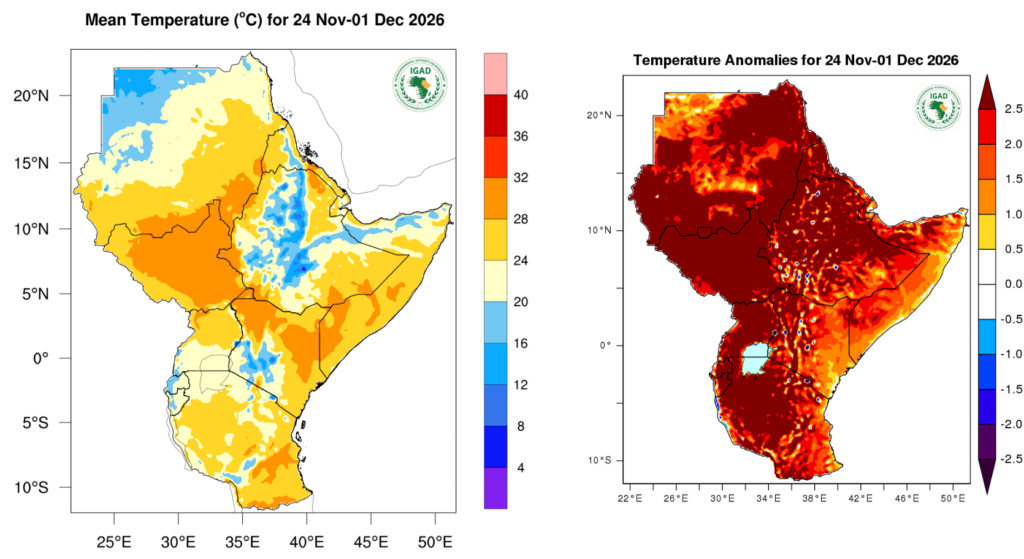
Beyond rainfall, the forecast indicates that warmer-than-usual temperatures are expected across most parts of the Greater Horn of Africa.
Moderate to high temperatures, ranging between 20°C and 32°C, are forecast across much of the region. Milder conditions below 20°C are expected in parts of Sudan, Ethiopia, Kenya, Rwanda, Burundi, Tanzania and other isolated locations.
The temperature anomaly outlook further indicates that most of the GHA will experience warmer-than-average conditions, although a few isolated areas are expected to record cooler-than-usual temperatures.
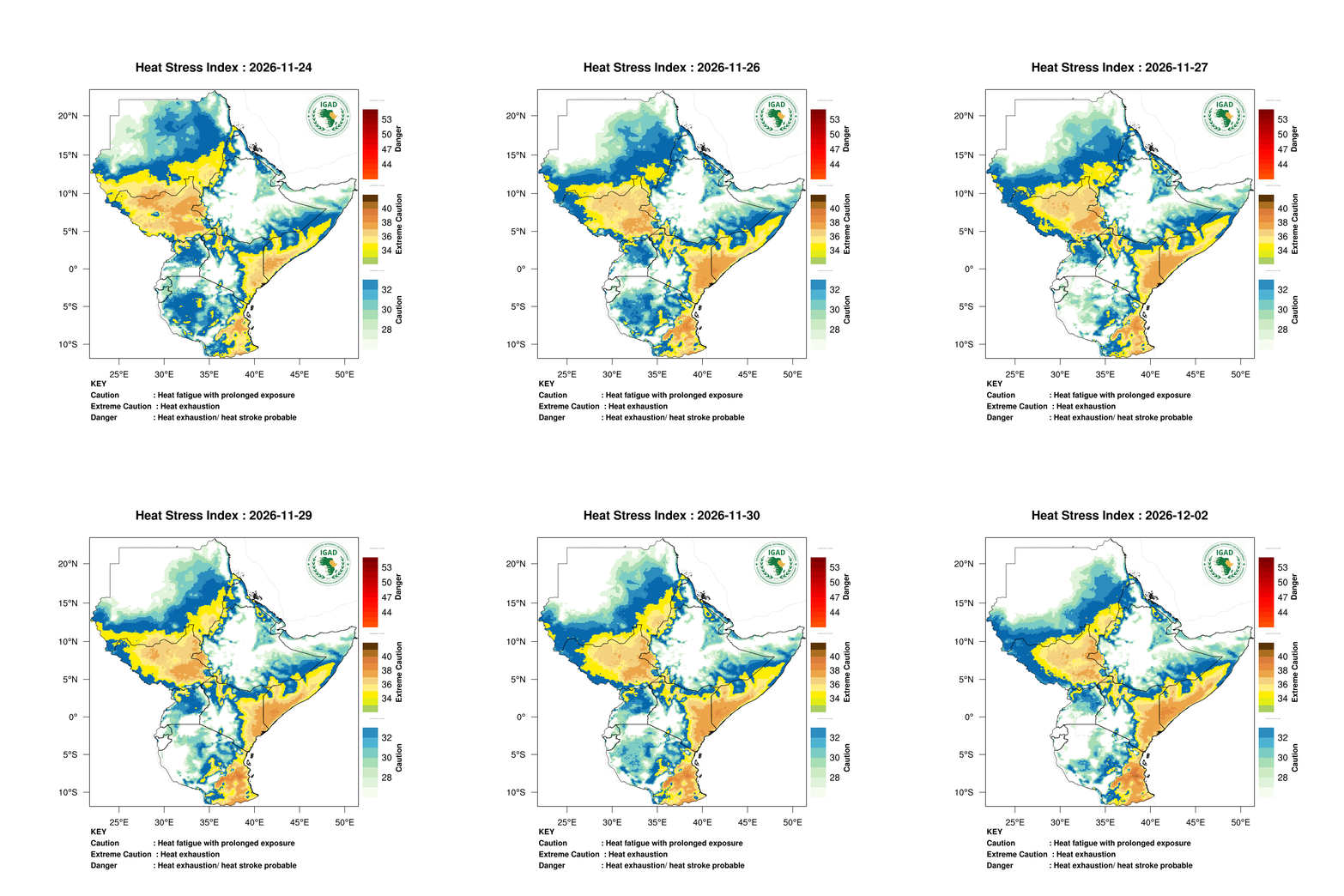
Elevated heat stress within the ‘Extreme Caution’ category is also forecast across most parts of South Sudan, eastern and southern Sudan, central and southern Somalia, selected areas of eastern, coastal and north-western Kenya, and parts of southern Tanzania.
These conditions could increase heat exposure among people engaged in outdoor activities, including farmers and pastoralists, reinforcing the importance of accessible climate information and appropriate heat-risk preparedness.
Turning climate forecasts into preparedness
The regional outlook emphasises the importance of interpreting total rainfall, rainfall anomalies and exceptional rainfall forecasts together.
Each product provides a different understanding of expected conditions. Total rainfall estimates the amount of precipitation anticipated, rainfall anomalies indicate whether expected rainfall is above or below historical averages, while exceptional rainfall forecasts identify locations where precipitation could exceed the 90th percentile.
Combining the three provides a more comprehensive picture of potential climate risks and supports decision-making across agriculture, pastoralism, disaster risk management and water resources.
For Rwanda and Burundi, where widespread flooding is anticipated, timely preparedness and access to early-warning information will be particularly important during the forecast period.
More broadly, the contrasting rainfall conditions across East Africa demonstrate why regional climate preparedness must account for both excessive rainfall and rainfall deficits, alongside rising temperatures.
As the region approaches December, translating seasonal and weekly climate information into practical action remains essential to protecting livelihoods, strengthening resilience and reducing the impacts of weather-related hazards.
Author Profile

-
Seeker.
Inspire AFRIKA.
Latest entries
 Adaptation27 November 2026Agbor James Ayamba’s Case for Community-Led Conservation in COP17
 Weather Forecasts26 November 2026Rwanda, Burundi Face Widespread Flooding Risks as East Africa Records Uneven Rainfall
 Energy25 November 2026Kenya Teams Up with Fossil Fuel Treaty Initiative to Chart a Fair Exit from Fossil Fuels
 Fisheries25 November 2026ARBEC III: Bridging Science, Investment and Livelihoods in Africa’s Blue Economy