
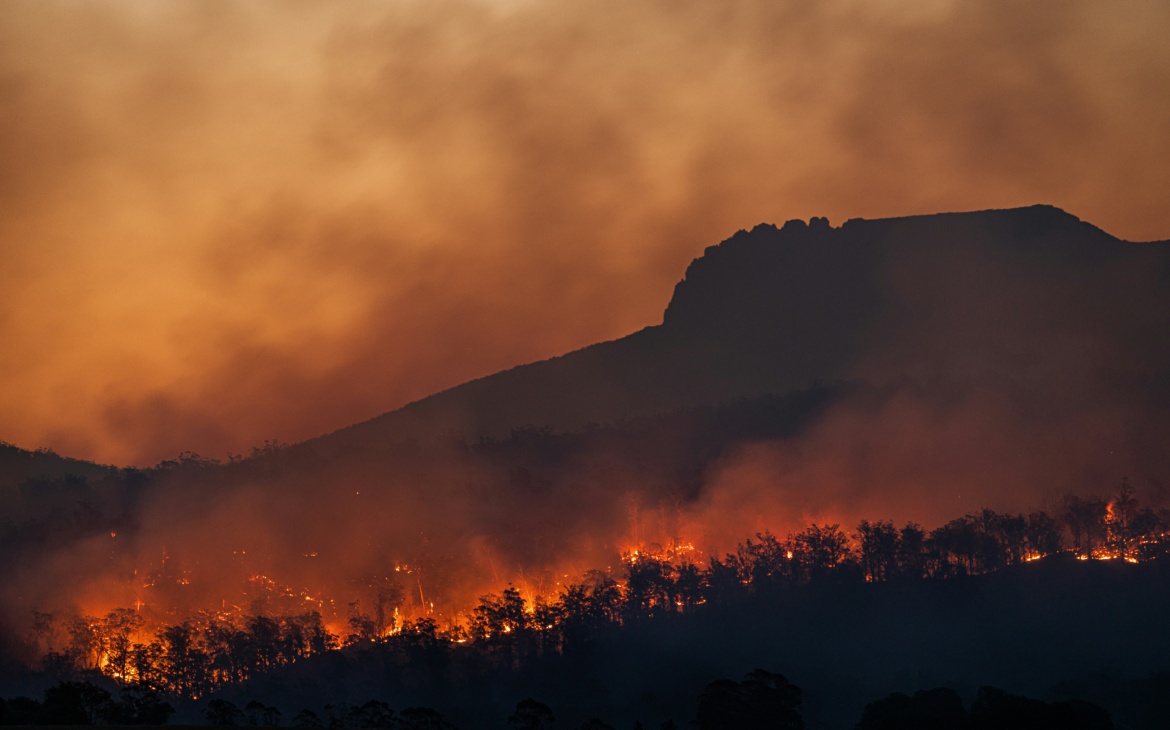
Last week, a team of climate scientists announced that the extreme fire weather behind Canada’s summer wildfires was made roughly twice as likely by human-caused climate change. These summer wildfires were the kind that turned the skies over Ontario and the Northwest Territories toxic, which led to thousands being forced out of their homes.
Such fire conditions, that at one time would have struck less than once every forty years, are now predicted to happen every two to six years in the Northwest Territories, and every six to fifteen years in Ontario.
This finding comes from the World Weather Attribution (WWA), a scientific collaboration that has spent the last decade building a fast-response answer to a question that has been asked on several occasions: how much of this specific disaster belongs to climate change, and how much would have happened anyway? This is referred to as extreme event attribution.
While reading this Canadian study, you might take it as just another Canadian story. However, this is not the case. It is a story about a method, and that method has already spent years being tested and refined before being applied here. Canada is not the only place where scientists have applied this methodology.
In East Africa, attribution studies have already linked human-caused warming to some of the region’s most severe recent droughts and floods, including events that affected Kenya.
What exactly is attribution science?
When we look at the history of climate science, one of the most frequently asked questions is: was this disaster caused by climate change? This question was treated as a category error.
Climate change does not cause every flood, drought or heatwave on its own. Climate is the pattern over decades, while weather is the single event. Weather is influenced by many factors, including natural climate variability and regional weather patterns.
Attribution science tries to separate these influences. Researchers take a real event such as a flood, drought, heatwave and so on, and run two versions of the world through climate models: the one we actually live in, and a hypothetical one without the roughly 1.4°C of warming humans have added since the industrial era.
If the event shows up far more often in the warmed world than the hypothetical one, scientists can put a number on it, such as twice as likely, five times as likely, or twenty times as likely.
It’s not a perfect instrument, as getting the results can be challenging. Rainfall-driven events are easier to pin down than wildfires, which depend on vegetation, ignition sources, and land management as much as weather.
The World Weather Attribution’s own scientists have been candid that the science is still maturing, and that attribution findings alone aren’t yet built to carry the full legal or financial weight that loss-and-damage negotiators sometimes want to put on them. But the method has gotten fast, and it has gotten good. And Kenya has been one of its proving grounds.
Kenya’s own attribution story
For Kenya and its neighbours within East Africa, attribution science studies are not a distant exercise.
A 2016-17 drought study was one of the earliest attempts at attribution science within the region. Unfortunately, this study was inconclusive. The researchers did not find any clear trend linking the failed rains to climate change. They, however, did not rule out a small effect. This served as a useful reminder that attribution science does not always deliver a dramatic verdict.
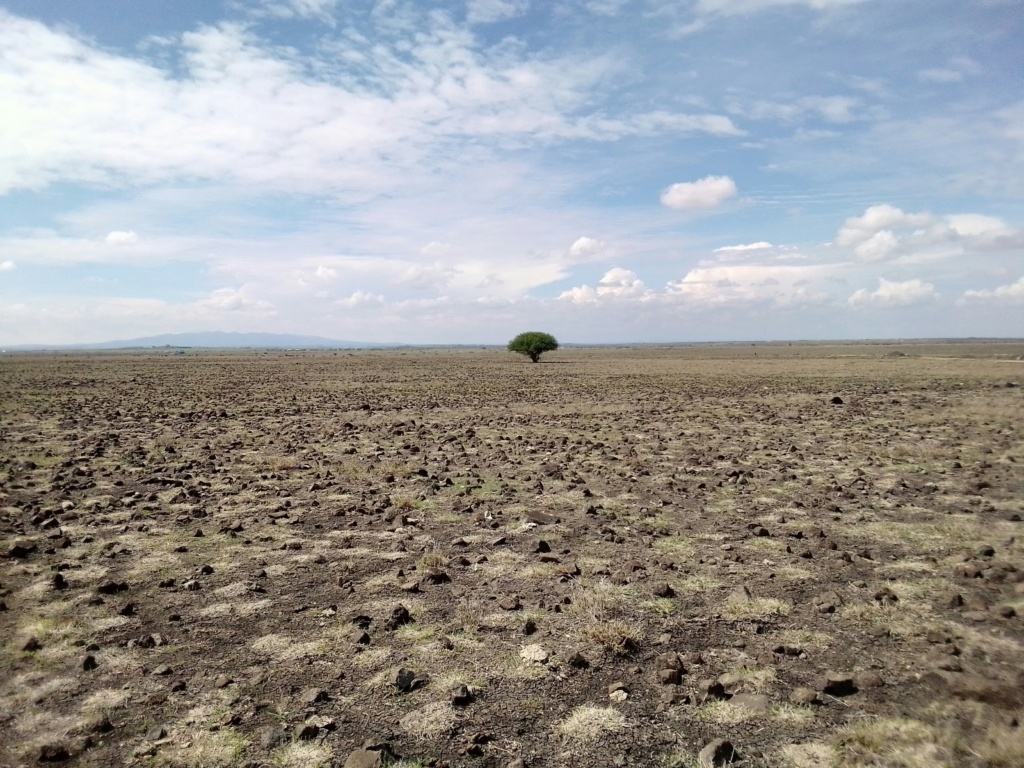
In 2023, World Weather Attribution researchers examined the prolonged drought that affected large parts of the Horn of Africa, including Kenya, Ethiopia and Somalia, resulting in five consecutive failed rainy seasons. This was the worst drought seen in the region in 40 years, which left more than 20 million people across the area in need of help.
In late 2023, after years of drought, exceptionally heavy rainfall affected parts of Ethiopia, eastern Kenya and Somalia during the October–December short-rains season.
The World Weather Attribution found that human-caused climate change had increased the intensity of the heavy rainfall by up to a factor of two, alongside the influence of a positive Indian Ocean Dipole. The researchers also pointed to factors beyond the weather itself, including land-use practices, rapid urbanisation and gaps in early warning and early action. This increased communities’ exposure to flooding.
Why the science matters
Being able to identify the climate contribution to an extreme event is more than a scientific exercise. The real significance of attribution science lies in what the numbers in the findings allow you to do.
For countries repeatedly dealing with droughts, floods and other climate hazards, understanding how the risks are changing can help inform adaptation planning. And as countries debate who should pay for the growing impacts of climate change, attribution science can contribute to a clearer understanding of the relationship between global warming and specific extreme events.
For years, the argument that climate change was driving certain disasters rested on pattern and plausibility: droughts and floods seemed to be getting worse, and warming seemed like the obvious suspect. While that is a reasonable inference, it is not proof, and international climate finance negotiations tend to want more than inference.
Dr Kimutai’s own research has explicitly explored how attribution findings could feed into climate litigation and the loss-and-damage architecture, which the UNFCCC has only recently begun to fund.
As global temperatures rise, the question is increasingly moving from “Did climate change cause this?” to a more useful one: “How did climate change change the odds of this happening?”
Canada’s wildfires offer the latest example. The climate baseline itself is changing, and knowing how much that change is affecting extreme weather could become increasingly important. This will not only help us understand disasters after they happen, but also help communities decide how to best prepare for the next one.
Author Profile

Latest entries
 Energy21 September 2026Egypt wants to manufacture its wind-energy transition. Can the model work across Africa?
 Climate16 September 2026What Happens When Climate Change Has Schools Closed? A Growing Education Crisis
 Agriculture8 September 2026More Than Half of Nigeria’s Cocoa Farmers Could Lose EU Market Access as Deforestation Law Nears
 Events25 August 2026Kenya triples its clean energy ambitions: Will power get any cheaper?

