
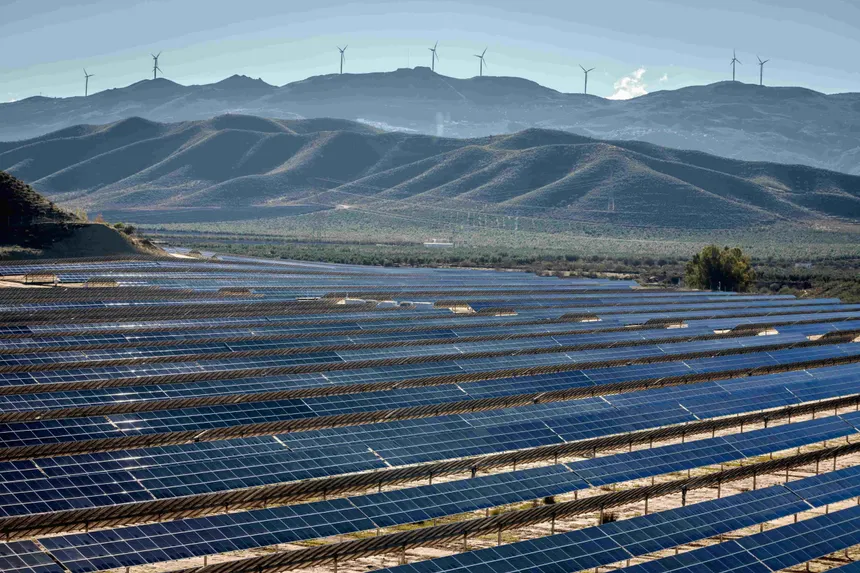
As the world grapples with escalating climate impacts and growing energy insecurity, a stark contradiction lies at the heart of the global energy transition.
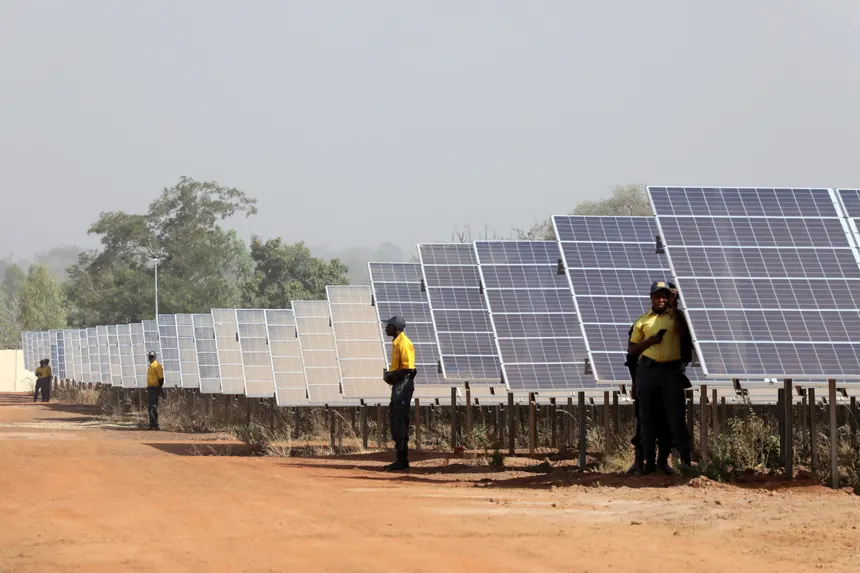
Africa possesses some of the world’s most abundant renewable energy resources, yet remains home to the largest population without access to electricity.
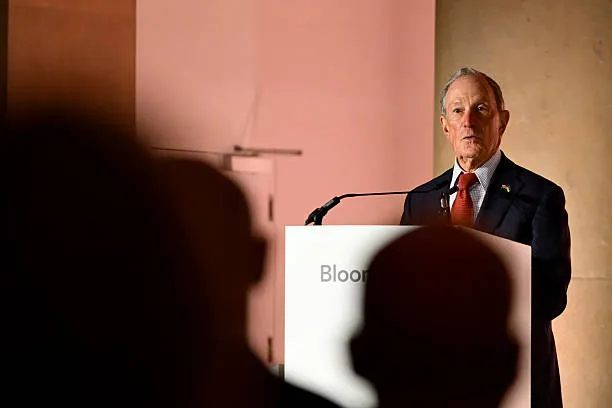
That paradox took center stage in London during Climate Action Week, where Bloomberg Philanthropies announced a $285 million commitment to help accelerate clean energy deployment in emerging and developing economies.
Announcing the initiative, Michael Bloomberg said clean energy has already won the economic argument.
“Clean energy is now cheaper than fossil fuels in virtually every part of the world, and as a result, its share of global power production is growing,” he said.
“But fixable obstacles are still slowing down deployment, and with energy demand rising at an unprecedented speed, we can’t allow those obstacles to continue standing in the way.”
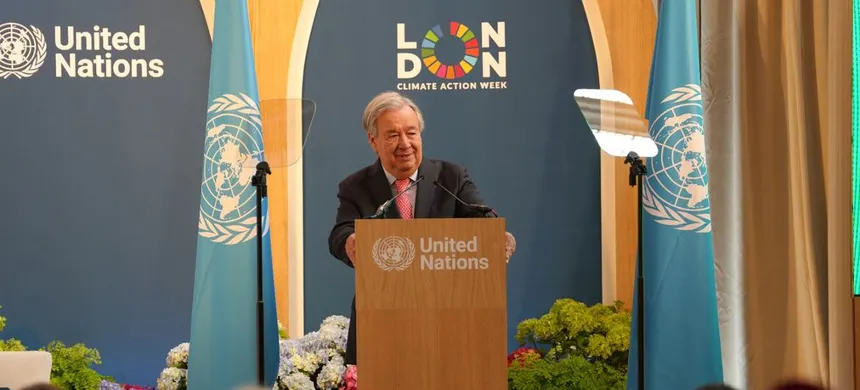
The announcement preceded a landmark address by United Nations Secretary-General António Guterres at the London Climate Action Week, who argued that the world now faces twin crises, climate chaos and energy insecurity, both rooted in dependence on fossil fuels.
For Africa, the message carried particular significance.
The continent is home to 60 percent of the world’s best solar resources, 30 percent of critical minerals needed for the clean energy transition, and nearly one-fifth of humanity.
Yet according to Guterres, Africa attracts just 2 percent of global clean energy investment. At the same time, more than 600 million Africans still lack access to electricity.
“This is unjust and a lost opportunity for Africa and the world,” Guterres said.
His remarks come at a time when energy demand is rising rapidly across developing economies. Population growth, industrialization, urbanization, electrification and the expansion of digital technologies are placing unprecedented pressure on power systems.
Across Africa, governments are seeking ways to expand access to reliable electricity while simultaneously pursuing climate goals and economic development.
The challenge is no longer whether renewable energy can meet those needs. Increasingly, the economics are on its side.
According to the UN chief, solar costs have fallen by nearly 90 percent since 2010, while battery storage costs have dropped by 95 percent. Renewables generated 34 percent of global electricity in 2025, surpassing coal’s share for the first time in roughly a century. More than 90 percent of new renewable power added globally is now cheaper than fossil fuel alternatives.
“There are no embargoes on sunlight and no blockades on the wind,” Guterres remarked, describing renewable energy as the cornerstone of genuine energy security.
Bloomberg argued that these economic realities are increasingly shaping investment decisions around the world.
During Climate Action Week, he noted that businesses and investors increasingly recognize that climate action is not simply an environmental imperative but an economic one.
“Businesses and investors recognize the steps that fight climate change also drive economic growth and create jobs,” he said.
Yet despite these advances, investment and deployment remain unevenly distributed. While many developed and emerging economies are rapidly expanding renewable energy capacity, Africa continues to struggle with financing gaps, weak infrastructure, and institutional barriers that slow progress.
Beyond Technology: The Missing Piece in Africa’s Energy Transition
The Bloomberg Philanthropies initiative is notable for focusing less on financing power plants and more on strengthening the institutions that enable clean energy deployment.
The programme aims to strengthen industry associations, improve technical expertise, support policy development, and help unlock private investment.
Bloomberg argued that many of the barriers slowing renewable energy growth today are no longer technological but structural.
“This new investment will help ensure those obstacles don’t continue standing in the way of lower energy costs for households and businesses, and cleaner air and water for communities,” he said.
This approach reflects a growing recognition among energy experts that Africa’s renewable energy challenge is no longer primarily technological.
“What has been missing is not the potential, but the institutional infrastructure and capabilities to unlock it,” said Saliem Fakir, Executive Director of the African Climate Foundation.
According to Fakir, Africa requires an ecosystem of organizations capable of participating effectively in energy planning, engaging regulators, conducting technical analysis, and mobilizing finance at scale.
For decades, fossil fuel industries have benefited from established financing networks, strong political influence, technical expertise, and mature regulatory frameworks. Renewable energy industries, particularly in developing economies, are still building those capabilities.
As a result, many renewable projects face lengthy approval processes, financing hurdles, grid connection delays, and regulatory uncertainty.
The issue is not unique to Africa, but its consequences are particularly acute on a continent where access to electricity remains one of the most pressing development challenges.
Experts increasingly argue that successful energy transitions require more than solar panels, wind turbines, and batteries. They also require institutions capable of translating ambition into implementation.
Barbara Buchner, Chief Executive Officer of Climate Policy Initiative, noted that markets with enormous renewable potential often struggle because the foundational elements of growth, including strong policy frameworks, reliable data, institutional capacity, and industry coordination, remain underdeveloped.
Directing resources toward these gaps, she argued, is what transforms potential into bankable investment opportunities.
Turning Potential into Projects
Kenya’s Special Envoy for Climate Change, Ali Mohamed, echoed that assessment.
“For countries across Africa, renewable energy potential is enormous,” he said. “What has held back deployment is not a lack of ambition or resources on the ground. It is the gap between that potential and the capacity to translate it into investment, projects, and power on the grid.”
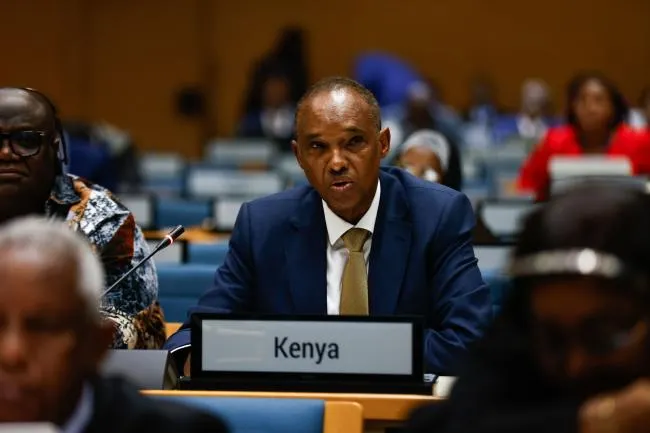
His comments highlight a persistent challenge facing African energy markets. While renewable resources are abundant, investors often perceive projects as risky due to concerns about policy consistency, regulatory frameworks, financing structures, and long-term revenue certainty.
Addressing these concerns requires more than technology deployment. It requires creating conditions that make projects attractive to investors.
Long-term power purchase agreements, innovative financing mechanisms, credit guarantees, and improved regulatory certainty are among the tools frequently cited as essential to unlocking larger volumes of private capital.
The need for stronger systems is also evident in countries that have already made significant progress.
South Africa, for example, has emerged as one of Africa’s leading solar markets. Yet even there, industry leaders warn that rapid deployment must be accompanied by institutional development.
Rethabile Melamu, Chief Executive Officer of the South African Photovoltaic Industry Association, noted that eight of South Africa’s ten gigawatts of solar capacity were installed within the past few years.
Such rapid growth, she said, leaves little time to simultaneously build the supporting infrastructure needed for long-term success.
Grid planning, regulatory engagement, and technical expertise are not optional extras. Without them, projects stall, energy security weakens, and economic opportunities are lost.
Her experience offers an important lesson for the rest of the continent: scaling renewable energy requires scaling institutions as well.
A Defining Decade for Africa
The coming decade may determine whether Africa becomes a global clean energy leader or remains trapped by energy poverty despite its extraordinary natural advantages.
The continent’s renewable energy resources are vast. Electricity demand is growing rapidly. Global investors are increasingly seeking opportunities in clean energy markets. Meanwhile, technological costs continue to fall.
Yet unlocking this opportunity will require unprecedented cooperation between governments, industry, financiers, development institutions, and civil society.
Guterres has called for greater financial support for developing countries, expanded lending from multilateral development banks, and reforms that lower the cost of capital for clean energy projects.
Bloomberg Philanthropies’ latest commitment represents one effort to help bridge those gaps by strengthening the institutions that underpin energy markets.
Whether such initiatives succeed could have implications far beyond Africa.
As global electricity demand rises and nations seek secure, affordable, and sustainable energy sources, the world cannot afford to leave Africa’s renewable energy potential untapped.
Read Also: The Blue Trillion
Author Profile

- How can we learn if we don't question?
Latest entries
 Agriculture16 October 2026“There Is No Shortcut”: A Kiambu Grower’s Decade in Mushrooms
 COP3115 October 2026Pacific Leaders Call for Urgent Climate Action Ahead of COP31
 Agriculture13 October 2026Can the buffalo fix Kenya’s milk problem? Farmers say start with the feed bill
 Events12 October 2026Cybersecurity in the Floriculture Industry


