Despite growing recognition of the ocean in national climate plans, countries struggle to secure the financing, technical support, and institutional coordination needed to turn commitments into action.
The ocean is increasingly finding its place in national climate strategies, but translating these commitments into meaningful action remains a major challenge, with countries facing persistent financing gaps, fragmented governance and limited implementation capacity.
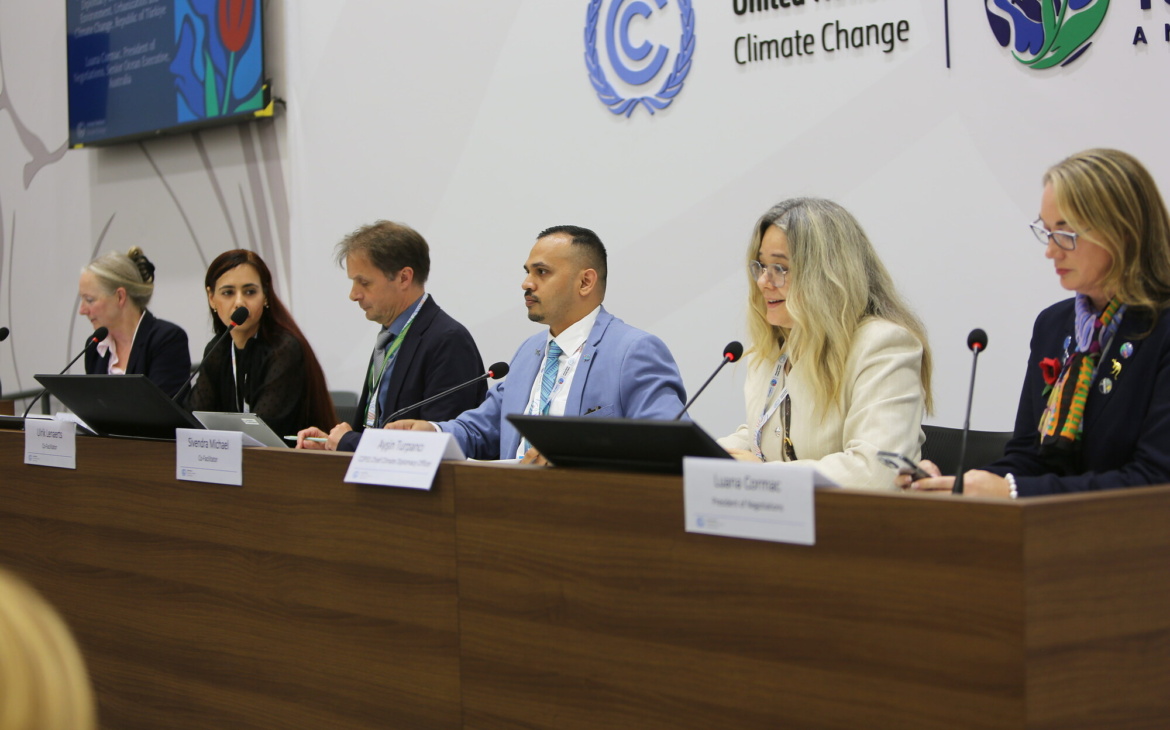
This was a central concern emerging from the seventh Ocean and Climate Change Dialogue, held in Bonn, Germany, on 10–11 June 2026, where governments, scientists and international organizations examined how ocean priorities could be strengthened under the Paris Agreement and inform outcomes at the upcoming 31st UN Climate Change Conference (COP31).
Presenting the dialogue’s informal summary report, Ulrik Lenaerts, Dialogue Co-Facilitator from Belgium, highlighted growing recognition of the ocean in national climate commitments. He noted that 78 per cent of countries’ Nationally Determined Contributions (NDCs) now included at least one explicit reference to the ocean, reflecting an increase from previous submissions.
However, the discussions pointed to a persistent gap between ambition and implementation, with participants calling for stronger access to finance, technology transfer and capacity-building to support ocean-based climate action.
Lenaerts identified three priority areas for advancing progress: strengthening climate ambition through ocean-based priorities in NDCs; improving access to implementation support and tracking ocean-related climate finance; and building stronger connections between NDCs, National Adaptation Plans (NAPs) and National Biodiversity Strategies and Action Plans (NBSAPs).
He also called for a multiyear roadmap for the Ocean Dialogue to ensure continuity between successive discussions, strengthen implementation of the Glasgow mandate and feed ocean priorities into the second Global Stocktake under the Paris Agreement.
Financing Remains a Major Obstacle
The availability of finance emerged as one of the most pressing challenges facing countries seeking to implement ocean-related climate commitments.
Reporting on the UNFCCC Standing Committee on Finance Forum on Financing Climate Action in Water Systems and the Ocean, held in September 2026, Davi Bonavides, Forum Co-Facilitator from Brazil, identified insufficient financing, fragmented governance and limited project preparation capacity as major barriers to progress.
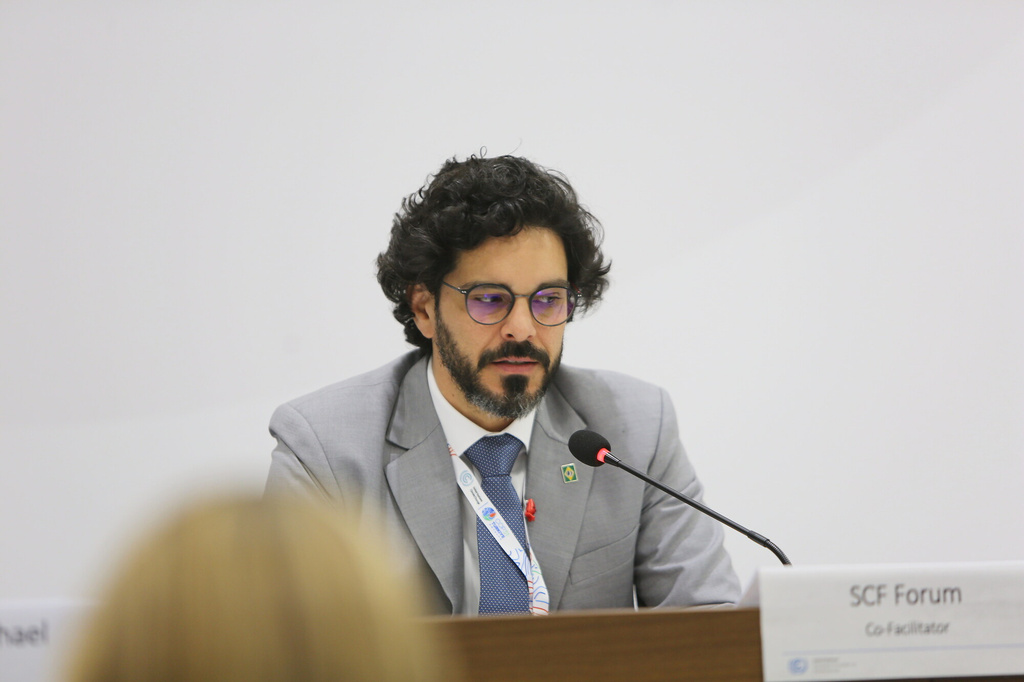
He observed that the wider benefits of healthy marine ecosystems are often inadequately recognized in financing decisions, particularly where projects generate significant public and environmental benefits but offer limited immediate commercial returns.
Mangrove restoration illustrates this challenge. Beyond storing carbon, mangroves protect coastlines, support fisheries and provide livelihoods for coastal communities. Yet these multiple benefits do not always translate into investment opportunities that attract conventional commercial financing.
Bonavides highlighted blended finance, guarantees and risk-sharing instruments as potential approaches to mobilizing investment in projects whose environmental and social benefits extend beyond direct financial returns.
The discussions also pointed to the need to improve access to existing funding mechanisms by addressing complicated application procedures, limited project preparation capacity and difficulties in developing bankable projects.
Africa’s Commitments Need Implementation Support
For African countries, the implementation challenge carries particular significance given the importance of marine and coastal ecosystems to food security, livelihoods, biodiversity and economic development.
The African Group supported developing a multi-year roadmap for the Ocean Dialogue, while calling for a shift from commitments contained in national climate plans towards practical implementation.
The dialogue’s discussions also highlighted several ocean-based priorities already reflected in African NDCs. These include coastal resilience measures in Liberia and Mozambique, sustainable fisheries in Mauritania, blue-carbon ecosystem restoration in Nigeria and Guinea, and coral reef protection in Comoros and Djibouti.
Kenya’s National Mangrove Ecosystem Restoration Guidelines were also referenced as an example of efforts to advance nature-based approaches to coastal resilience.
However, the African Group of Negotiators emphasized that many ocean-related commitments remain dependent on external support. Predictable concessional public finance and dedicated funding channels will therefore be important in enabling countries to move beyond policy commitments and implement projects on the ground.
The challenge is not simply identifying ocean priorities but ensuring that countries have the financial resources, technical capacity and institutional support to deliver them.
Small Island States Warn of Irreversible Losses
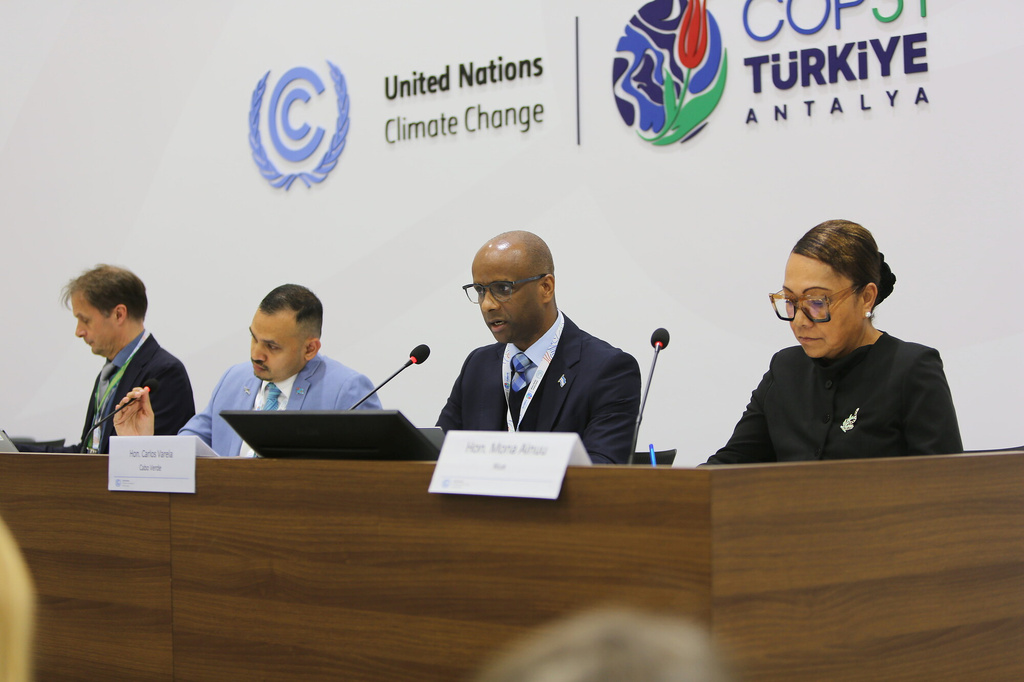
The urgency of implementation was particularly evident in interventions by small island developing states, whose economies and communities are closely tied to the health of marine ecosystems.
Speaking on behalf of the Alliance of Small Island States (AOSIS), Carlos Alberto Varela, Minister of Environment, Climate Action and Energy of Cabo Verde, called for systematic integration of ocean priorities across the UNFCCC process.
He urged countries to ensure that ocean-related climate finance needs are reflected in COP31 decisions and that ocean considerations are incorporated into the technical assessment of the second Global Stocktake.
Varela also warned that rising global temperatures and the overshooting of the 1.5°C threshold threatened irreversible losses to coral reefs and other marine ecosystems.
Similarly, Mona Ainu’u, Minister for Natural Resources of Niue, speaking on behalf of Pacific Small Island Developing States, called for ocean action to be mainstreamed across UNFCCC workstreams.
She highlighted that all 14 Pacific small island developing states had included ocean action in their NDCs, but implementation remained constrained by inadequate support.
Indonesia’s Vice Minister of Marine Affairs and Fisheries, Irwan Meilano, also called for greater recognition of ocean ecosystems as climate solutions across financing, adaptation and loss and damage discussions.
He highlighted mangroves, seagrasses and coral reefs as natural infrastructure supporting coastal resilience, food security and livelihoods, advocating for their stronger integration into climate action.
Turning Dialogue into Lasting Action
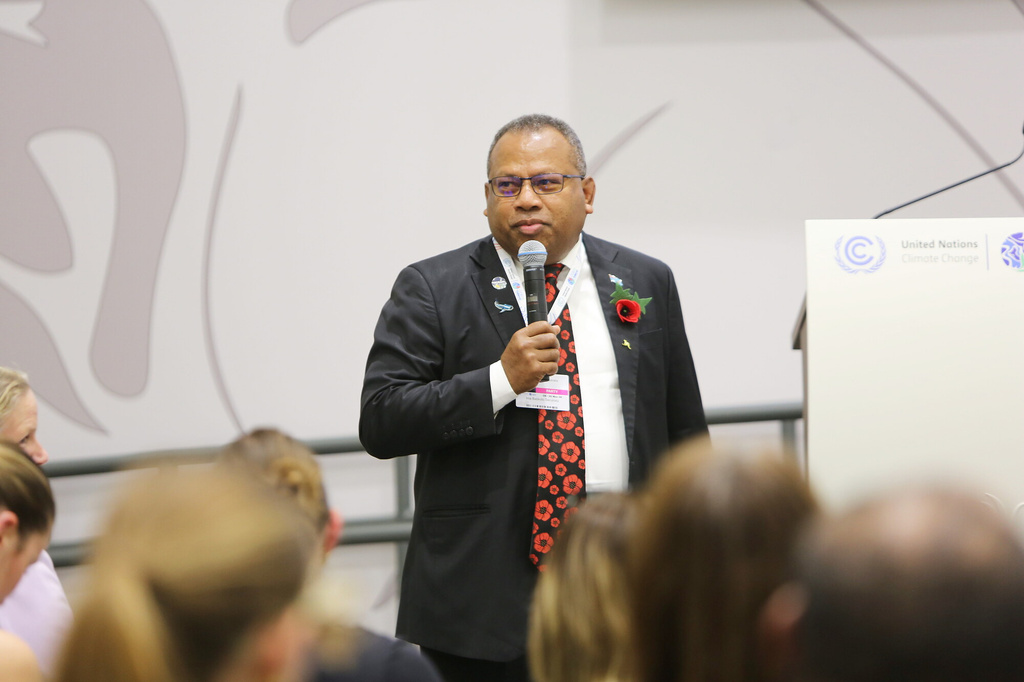
Inia Seruiratu, COP 31 Pacific Climate Envoy for the Ocean
Beyond financing and national commitments, participants stressed the importance of strengthening cooperation between climate, biodiversity and ocean governance processes.
These connections are particularly important as countries pursue commitments under the Paris Agreement, the Kunming-Montreal Global Biodiversity Framework and the Agreement on Marine Biological Diversity of Areas beyond National Jurisdiction.
Peter Thomson, UN Secretary-General’s Special Envoy for the Ocean, welcomed the momentum generated by the Turkish and Australian COP31 Presidencies, including the Pacific Pre-COP, while urging governments to translate political commitments into implementation.
Encouraging delegates to advocate strongly for the ocean-climate connection at COP31, he said: “Don’t hold back on your punches; the times demand action.”
COP31 Chief Climate Diplomacy Officer Ayşin Turpancı of Türkiye also called for support mechanisms that recognize the long recovery periods of marine ecosystems, stronger cooperation through regional seas conventions and a continuous learning process linking successive Ocean Dialogues to implementation.
Meanwhile, Luana Cormac, COP31 President of Negotiations and Senior Ocean Executive from Australia, emphasized the need to integrate ocean priorities across climate negotiations, accelerate action through NDCs and NAPs, and improve access to implementation support.
The dialogue also highlighted the importance of sustained investment in ocean science, research and systematic observations, with participants calling for stronger links between scientific evidence, policymaking and accountability.
As COP31 approaches, the central challenge will be ensuring that the growing recognition of the ocean in climate commitments translates into measurable action. A multiyear roadmap, stronger financing arrangements and closer coordination across international processes could help sustain momentum beyond individual climate conferences.
For coastal nations and communities whose food security, livelihoods and resilience depend on healthy marine ecosystems, the transition from dialogue to delivery is becoming increasingly urgent.
Read Also: COP31: Health Must Become a Central Pillar of Climate Adaptation, Stiell Says
Author Profile

- How can we learn if we don't question?
Latest entries
 COP3111 November 2026COP31 Ocean Dialogue Calls for Urgent Shift from Commitments to Action
 COP3110 November 2026COP31: Health Must Become a Central Pillar of Climate Adaptation, Stiell Says
 Cities6 November 2026The Hidden Inequality Behind the World’s Urban Heat Crisis
 Floriculture3 November 2026aak-GROW, KFC Partner to Advance Sustainable Floriculture