A global study finds that conventional assessments underestimate the heat burden facing poorer countries, highlighting the need for urban adaptation strategies that address inequalities in housing, infrastructure and access to cooling.
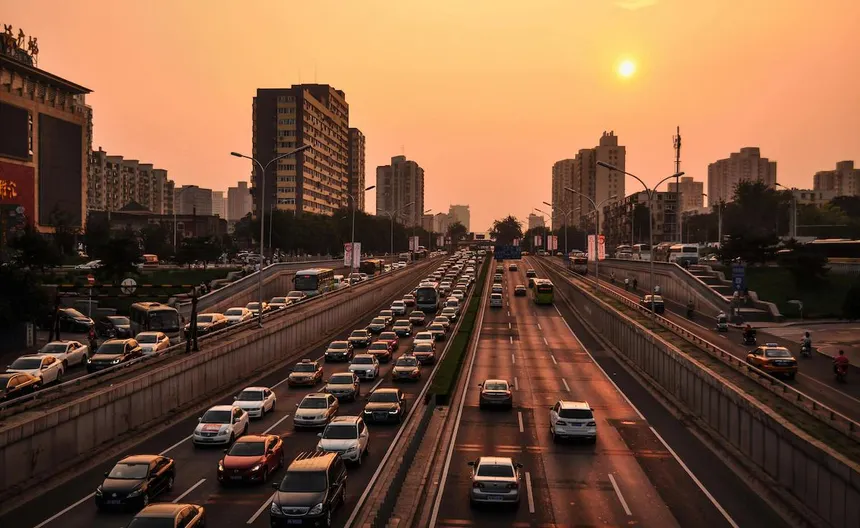
Extreme heat is becoming an increasingly serious challenge for cities, but its consequences are far from evenly distributed. While rising temperatures expose urban populations worldwide to heatwaves, the ability to withstand them depends heavily on where people live, the quality of their housing, their economic circumstances, and access to essential services.
For millions living in poorer communities, a heatwave means more than uncomfortable temperatures. It can mean working in unsafe conditions, living in poorly ventilated homes and facing greater health risks without adequate protection.
A study published in Communications Earth & Environment, titled Social vulnerability amplifies global inequality in urban heat risk, finds that conventional approaches to measuring urban heat risk significantly underestimate the burden experienced by populations in the Global South.
Assessing 1,029 cities worldwide between 2000 and 2019, researchers found that average urban heat risk in the Global South was 203 per cent higher than in the Global North. More significantly, assessments that assume populations have similar capacities to cope with heat underestimate this inequality by approximately 65 per cent.
The findings show that measuring temperatures and the number of people exposed to heatwaves does not tell the whole story. Social and economic conditions influence how severely communities experience the same climatic hazard.
A growing and unequal heat burden
The researchers examined compound daytime and nighttime heatwaves, defined as periods when maximum and minimum temperatures exceeded historical thresholds for at least three consecutive days.
More than 84.4 per cent of the cities assessed experienced increasing heat-risk trends during the study period, with 38.8 per cent recording statistically significant increases. These increases affected nearly 398 million urban residents.
South Asia, Southeast Asia, Central Africa and West Africa emerged as regions experiencing particularly acute heat-risk pressures. Cities including Delhi, Dhaka, Jakarta and Bangkok featured among those facing substantial risks.
The study distinguishes between heat exposure and heat risk. Its exposure-based measure considers heatwave frequency and the population exposed, while its broader risk measure incorporates social vulnerability.
This distinction matters because people do not have equal resources to cope with extreme temperatures. Residents who cannot afford cooling, live in poorly ventilated housing or have limited access to healthcare may face considerably greater consequences.
The disparity is particularly pronounced across income groups. The Global South recorded an average urban heat risk of 3.13 million person-events, compared with 1.03 million in the Global North.
The annual increase in risk was also nearly five times higher in the Global South.
Low-income countries recorded an annual increase of about 376,000 person-events, compared with 24,000 in high-income countries, about 15.7 times higher.
The researchers use person-events to describe population exposure adjusted for social vulnerability. It is not a count of deaths, hospital admissions, or confirmed cases of heat-related illness.
United Nations Secretary-General António Guterres captured the inequality in his July 2024 Call to Action on Extreme Heat, observing that: “Crippling heat is everywhere, but it doesn’t affect everyone equally.”
He added that extreme heat “amplifies inequality, inflames food insecurity and pushes people further into poverty.”
The social conditions behind vulnerability
The researchers developed a social vulnerability index incorporating eight indicators across economic, environmental and demographic dimensions. These include economic capacity, access to air conditioning, green spaces and water bodies, air pollution, and the proportions of children, older people and women within urban populations.
These indicators illustrate why the ability to cope with heat is inseparable from broader development conditions.
Access to air conditioning, for instance, depends on household income, electricity availability and energy costs. The researchers highlight the contrast between India, where approximately five per cent of households had air conditioning around 2018, and the United States, where the proportion was about 90 per cent.
Green spaces and water bodies can help moderate urban temperatures, while air pollution can compound the health pressures associated with extreme heat. Children and older people are also particularly vulnerable to heat-related health effects.
These inequalities are reflected in the experiences of residents in informal settlements.
In a statement developed during a 2023 community dialogue in Nairobi’s Mukuru settlement, residents described the conditions inside their homes:
“When the temperature rises, as it now often does in Nairobi, our homes heat up like ovens and we get sick because we have nowhere else to go.”
They added: “In our homes in Mukuru, all that stands between us and climate change are thin iron sheets.”
Although the statement was not part of the global research, it illustrates how housing conditions and limited resources can heighten vulnerability to extreme heat.
Africa’s urban development challenge
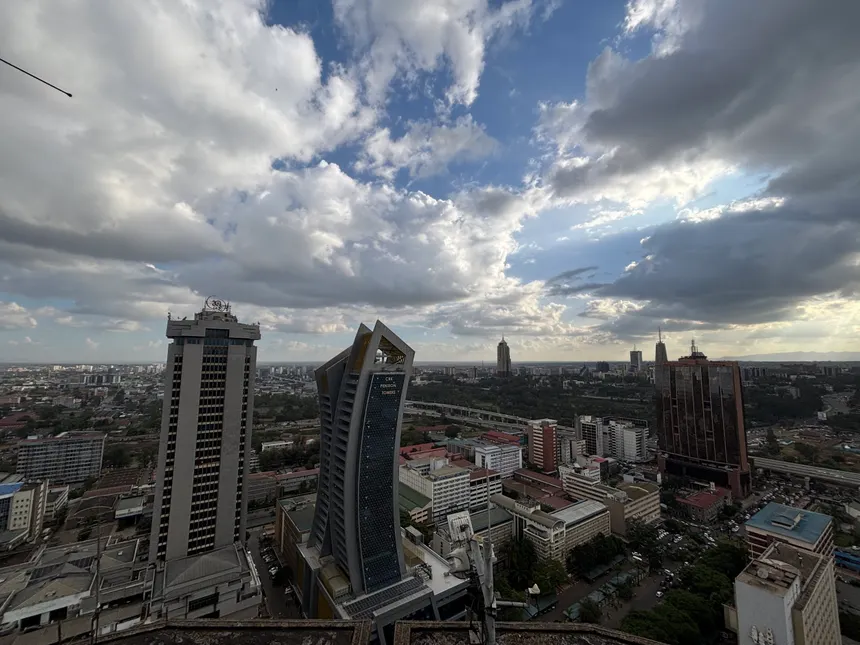
The study identifies Central and West Africa among the regions facing acute urban heat-risk pressures. Africa accounted for 14.3 per cent of the nearly 398 million urban residents affected by statistically significant increases in heat risk during the study period.
The findings are relevant as African cities contend with rapid urbanization, growing infrastructure demands and inequalities in access to adequate housing and essential services.
The challenge extends beyond immediate health effects. High temperatures can affect outdoor workers, disrupt transport and energy systems, reduce labour productivity and increase pressure on public services.
Eric Fernstrom, the World Bank’s Regional Practice Director for Infrastructure in Eastern and Southern Africa, highlighted these wider consequences during the October 2025 launch of the Handbook on Urban Heat Management in the Global South.
He said extreme heat was “quietly cutting into the foundation of growth, jobs and productivity and performance of our infrastructure”.
“When it gets too hot, people can’t work, power grids and transport infrastructure fail or slow down,” he added.
His remarks underline why heat management must become part of urban development and infrastructure planning. Protecting people requires more than weather warnings; it also means building cities that can withstand higher temperatures while safeguarding vulnerable residents.
The study does not provide individual heat-risk estimates for Kenyan cities. Its findings should therefore not be interpreted as a ranking of Nairobi, Mombasa or other urban centres. However, they offer a useful framework for examining how housing, infrastructure and household resources shape vulnerability across the region.
Rethinking urban heat adaptation
The researchers argue that heat assessments and adaptation strategies must account for differences in social vulnerability. Approaches developed in wealthier countries cannot simply be transferred to lower-income settings without considering local economic, environmental and institutional conditions.
This also means that expanding access to cooling cannot depend exclusively on air conditioning.
At the October 2025 Nairobi discussion, UNEP’s Martin Krause warned: “We cannot air condition our way out of the climate crisis.”
Instead, cities need a combination of measures to reduce heat exposure and strengthen people’s ability to cope. These include urban greening, better building design, improved ventilation, accessible public cooling spaces, heat-health warning systems and stronger protections for outdoor workers.
For African cities, such interventions must also address the underlying conditions that leave low-income communities disproportionately exposed. Better housing, accessible healthcare, affordable energy and the protection of green spaces are integral to heat adaptation.
The researchers acknowledge limitations, including the spatial scale of their analysis, which uses grid cells of approximately 10 kilometers and cannot capture every neighbourhood-level difference. The findings cover 2000–2019 and should be understood as an assessment of historical trends, not a measurement of current heat risk.
Nevertheless, the central message is clear: urban heat risk is not determined by temperature alone. It is also shaped by the resources, infrastructure, and social conditions available to the people experiencing it.
As cities expand and heatwaves intensify, adaptation policies that overlook these inequalities risk leaving the most vulnerable further exposed. Addressing urban heat requires more than making cities cooler. It requires making them more equitable and resilient.
Read Also: Shipping Emissions Have Cost the World Nearly $1 Trillion, Study Finds
Author Profile

- How can we learn if we don't question?
Latest entries
 Cities6 November 2026The Hidden Inequality Behind the World’s Urban Heat Crisis
 Floriculture3 November 2026aak-GROW, KFC Partner to Advance Sustainable Floriculture
 COP172 November 2026The Yerevan Roadmap: Turning Global Biodiversity Pledges into Action
 Agriculture30 October 2026Kenya Turns to Research and Investment to Build a Climate-Resilient Potato Sector