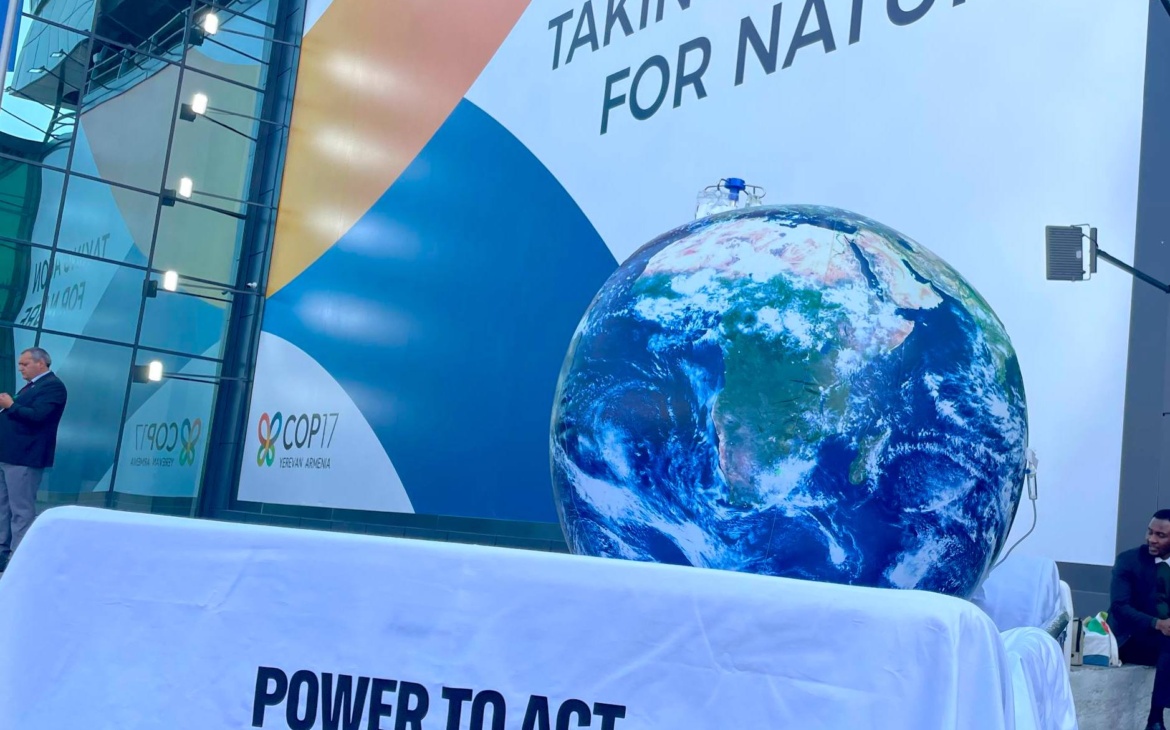
On this fateful day, towards the close of COP17’s second week of negotiations in Yerevan, Armenia, one is brought to a halt by the significant and majestic art set up by Greenpeace International at the entrance to the venue.
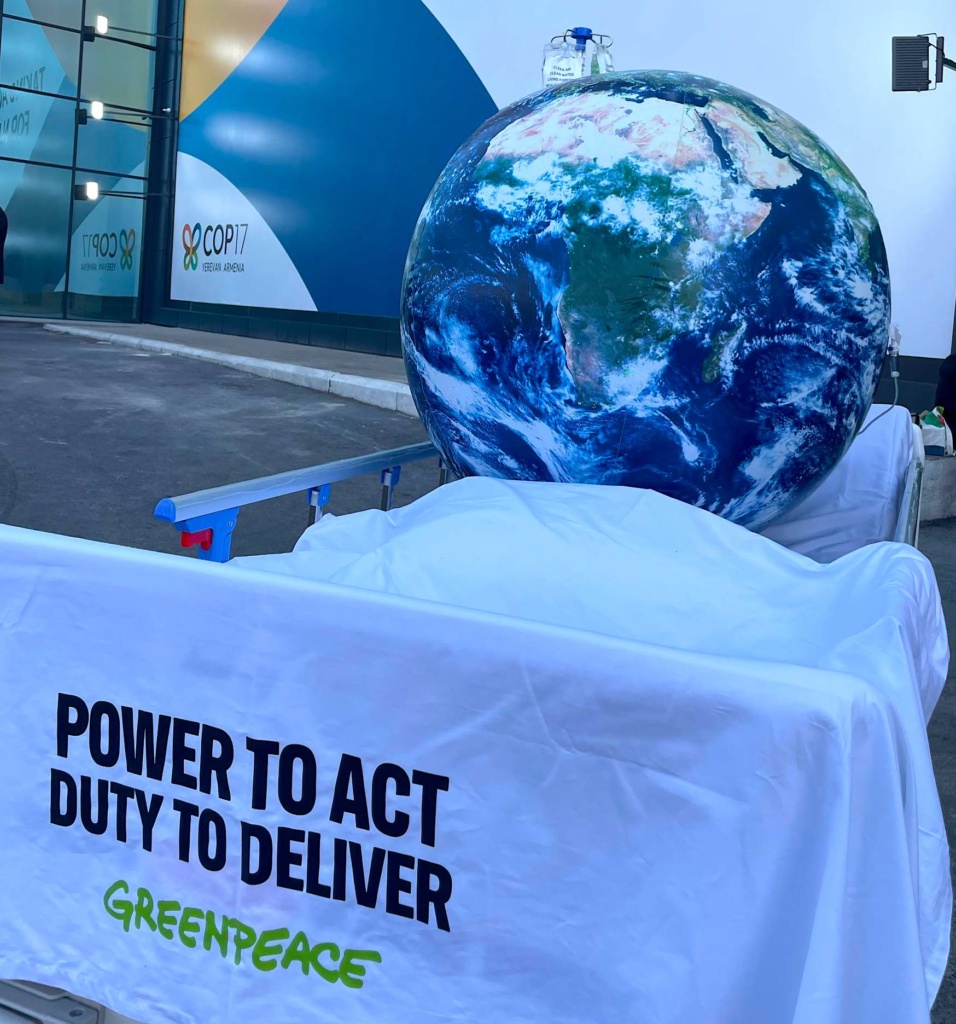
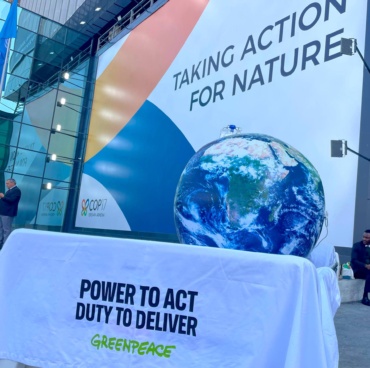
There lies a globe on a hospital bed at the Convention on Biological Diversity (CBD) COP, connected to drips labelled clean air, clean water, living forests and healthy oceans.
On the bed set up is a stethoscope that keeps inviting delegates to listen to the heartbeat of a patient whose condition depends on the decisions being made inside the conference halls.
The installation, created by Greenpeace Creative Actions Coordinator Sam Daniel, brings an urgent message to biodiversity negotiators: humanity is contributing to the planet’s sickness, but it also has the power and responsibility to help it recover.
In a conversation with Climate Lens News at the venue of COP17, Sam Daniel gives us an in-depth analysis of the artistic form that has gripped everyone’s attention, from the delegates, party members to civil society and local staff members.
“If we don’t look after the earth, it’s going to get sicker and sicker,” Daniel says. “Humans are what’s causing the sickness. We can also be the cure.”
Art that Speaks to Decision-Makers
Daniel from Greenpeace says the installation was designed to reach delegates through a creative approach that makes the need for action not only tangible but also visible.
The team rented a hospital bed and brought it to the venue, then sourced a globe to serve as the patient. The medical imagery was intended to remind delegates that the planet’s deteriorating condition requires urgent attention and that those negotiating biodiversity agreements have a role in its recovery.
“They have the power to make the change, and they have a duty to make this change as well,” Daniel says.
The installation’s details reinforce that responsibility. Drips labelled with the essentials of a healthy planet hang beside the bed, while stethoscopes allow visitors to listen to what Daniel describes as the heartbeat of Mother Earth.
A banner across the front by Greenpeace carries the message: Power to act, duty to serve, with actors fully dressed as doctors also part of the installation, bringing the medical metaphor to life.
Listening for Change
The stethoscopes have become a focal point for visitors, many of whom have stopped to listen, touch and even hug the globe, as he stands aside and observes in admiration of what a simple art can do in terms of touching people.
Daniel says the response has been encouraging, with visitors describing the installation and its message as powerful. He hopes the experience will stay with delegates as they return to negotiations and consider the decisions needed to protect biodiversity.
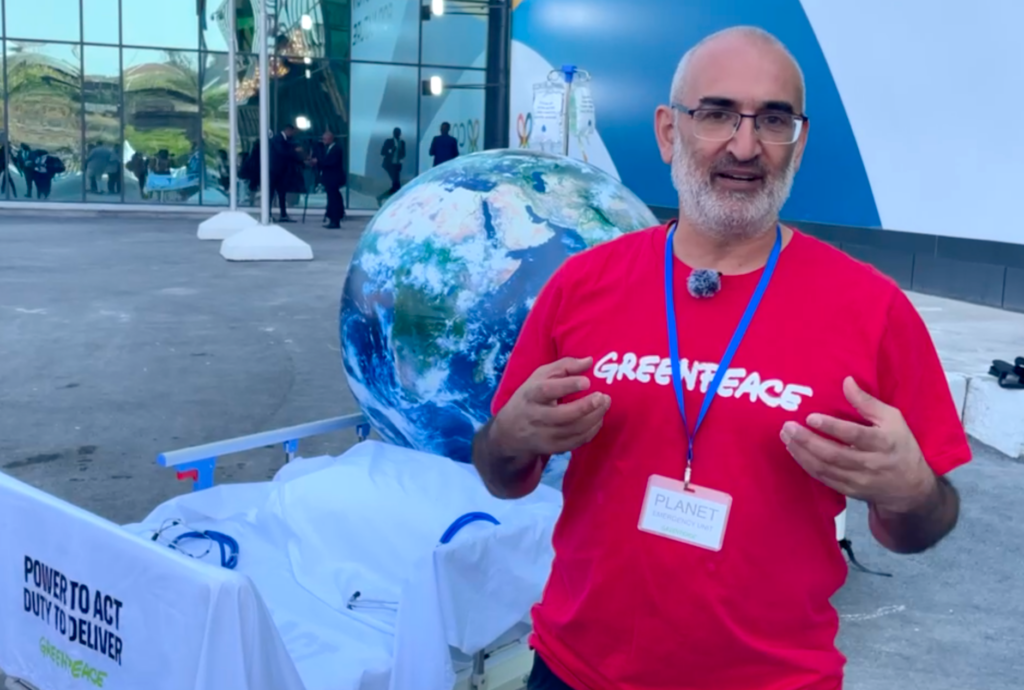
“This is art with a purpose,” he says. “The purpose is to inspire people, to influence people, to change people.“
For Greenpeace, the installation is more than a creative display. It is a call for delegates to deliver agreements capable of safeguarding biodiversity.
Whether the installation will influence the final decisions remains to be seen. But its message is unmistakable: the planet needs treatment, and the people with the power to prescribe it are already in the room.
This story was produced as part of the 2026 CBD COP17 Fellowship, operated by Informed Earth in collaboration with Internews’ Earth Journalism Network.
Author Profile

-
Seeker.
Inspire AFRIKA.
Latest entries
 Agriculture4 November 2026From Kenya’s Counties to Yerevan, Agroecology Advocates Challenge “False Solutions” at COP17
 Biodiversity2 November 2026Earth on a Hospital Bed: Greenpeace Urges Biodiversity Delegates to Heal a Sick Planet
 Biodiversity29 October 2026From Indigenous Territories to the UN: The Growing Movement for the Rights of Nature
 Biodiversity28 October 2026From Buffalo to Orangutans, Indigenous Leaders Challenge the Business of Wildlife Offsets