
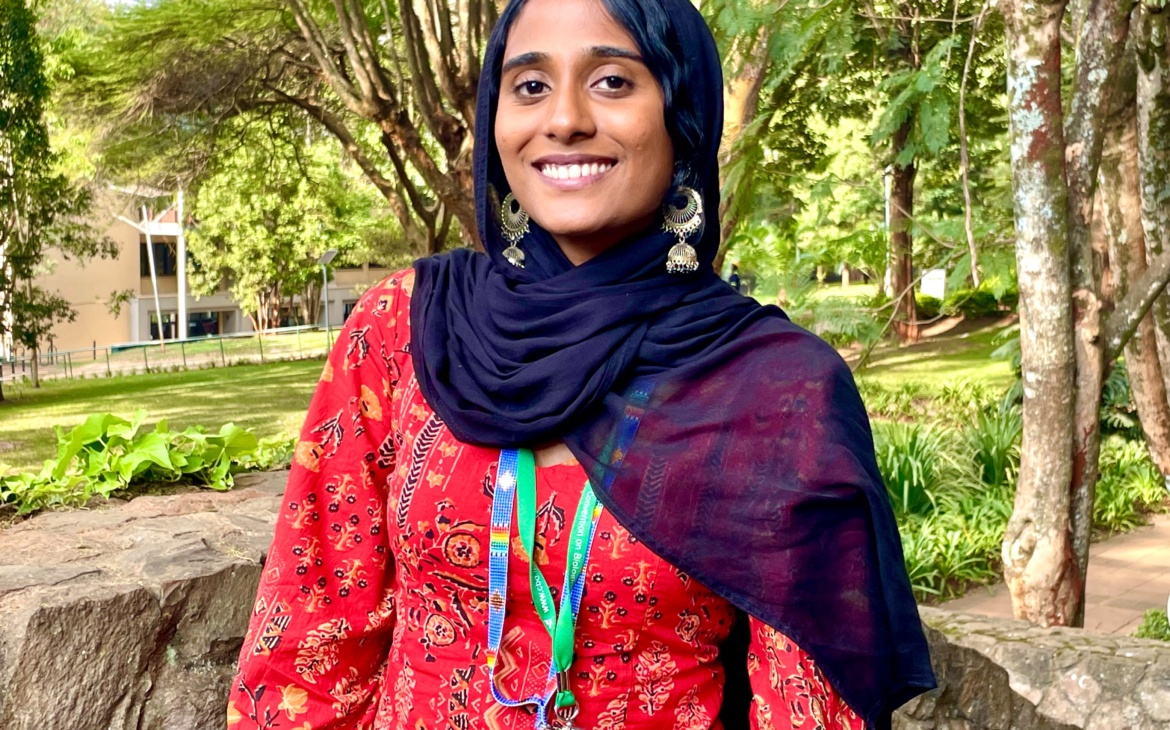
As governments negotiate the future of global biodiversity in Nairobi, one of the strongest appeals for protecting oceans comes from a country whose future depends on them.
Representing the Global Youth Biodiversity Network (GYBN) at the 28th meeting of the Subsidiary Body on Scientific, Technical and Technological Advice (SBSTTA-28), Sri Lankan youth advocate Simra Riyaz carried a message that resonated far beyond her country’s borders: young people must not simply observe biodiversity negotiations; they must help shape them.
“As part of the GYBN policy team, I’m very closely following the marine and coastal biodiversity agenda,” she says.
For Riyaz, attending the United Nations biodiversity meeting is about ensuring that the realities facing vulnerable island nations are reflected in global decisions that will determine the future of oceans, ecosystems and communities.
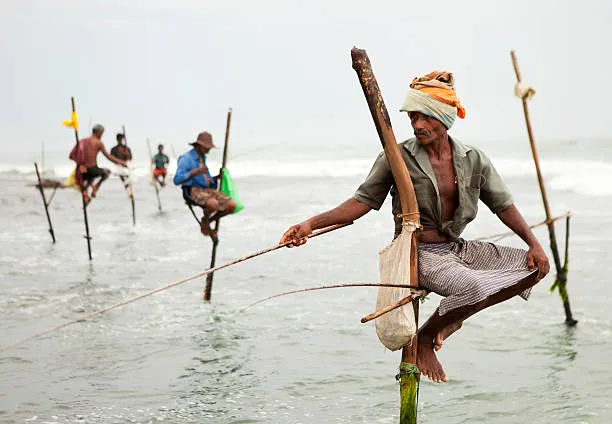
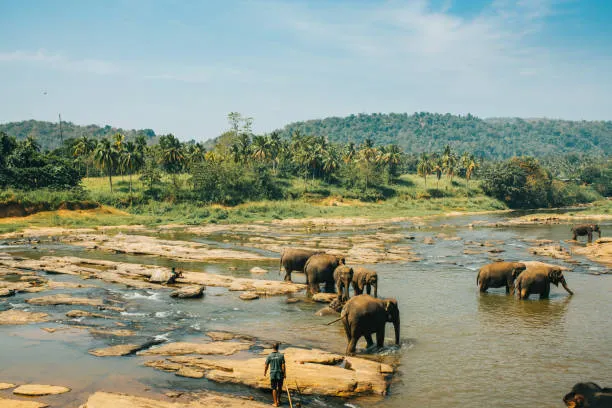
Sri Lanka, an island nation in the Indian Ocean, depends heavily on healthy marine ecosystems for fisheries, tourism, coastal livelihoods and climate resilience.
Yet these ecosystems face increasing pressure from climate change, pollution, habitat destruction and overexploitation. Rising ocean temperatures have contributed to coral bleaching, while coastal communities continue to face growing risks from sea-level rise and extreme weather events.
It is these realities that drive Riyaz’s advocacy. Currently studying law, Riyaz has built a diverse background in policy, research and conservation while championing rights-based approaches to environmental governance.
“I also have a background in research related to conservation as well as climate work,” she explains.
She is also the co-founder of the Climate Intelligence Network and serves as the chapter coordinator of GYBN Sri Lanka, one of the network’s earliest national chapters established in 2012.
Although Sri Lanka may be geographically small, Riyaz believes its young people have demonstrated that influence is not measured by size.
“Sri Lanka is a tiny island in South Asia, and the youth there are doing a lot with what we have,” she says.
That work extends well beyond awareness campaigns. Under GYBN Sri Lanka, young people have become active participants in national biodiversity planning, contributing directly to the country’s National Biodiversity Strategy and Action Plan (NBSAP), the blueprint guiding biodiversity conservation under the Convention on Biological Diversity.
“We’ve been closely following the country’s NBSAP processes and pushing for youth priorities like transformative education and equity for future and older generations, while advocating for rights-based approaches that include Indigenous Peoples and Local Communities,” Riyaz explains.
One initiative stands out as an example of meaningful youth participation.
“One solid example is that we did a nationwide youth consultation on the NBSAPs in consultation with Indigenous communities in Sri Lanka, one of the first youth networks to do so.”
Rather than working outside government structures, the youth network has sought constructive engagement with policymakers.
“We also monitor national biodiversity processes and have a good relationship with our Ministry of Environment, which allows us to come to these forums and make sure our representation is there as a small nation.”
This collaborative approach reflects a broader shift taking place within international environmental governance. Increasingly, youth organisations are moving beyond advocacy campaigns to contribute directly to policy design, monitoring and implementation.
At SBSTTA-28, those experiences informed GYBN’s contribution to negotiations on marine and coastal biodiversity.
“We made an intervention for GYBN on that agenda item at SBSTTA-28 that was supported by many countries,” Riyaz says.
For her, however, representation goes beyond having a seat in the room. It is about ensuring that the people most affected by biodiversity loss help shape the decisions intended to address it.
“Overall, we want to make sure youth, Indigenous communities and women have a voice at the table—not just in policy but also through networking with others doing similar work across Africa.”
That emphasis on inclusion reflects one of the central ambitions of the Kunming-Montreal Global Biodiversity Framework, which recognises that achieving global biodiversity targets requires participation from governments, Indigenous Peoples, local communities, women and young people alike.
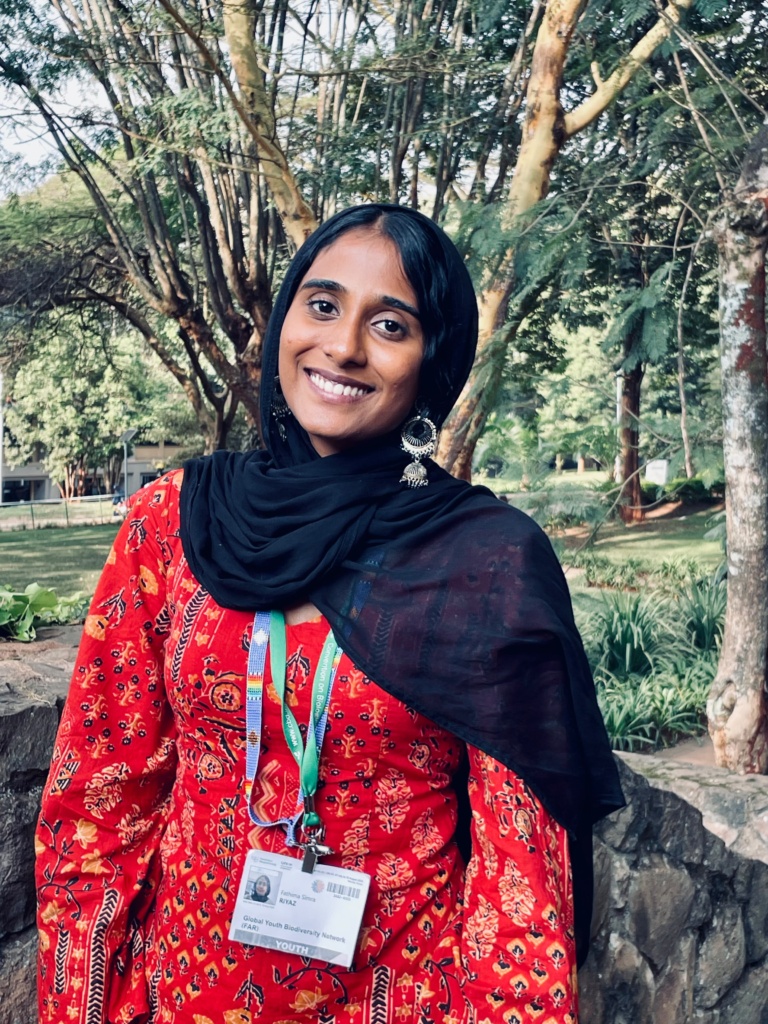
Yet Riyaz believes participation does not happen automatically. It requires young people to understand how national and international processes work—and to actively engage with them.
“For youth wanting to get involved, follow your country’s processes, show up where conversations are happening, and build relationships with your national delegates so they recognise you and push for you.”
She also encourages young advocates to communicate their work confidently and focus on evidence rather than volume.
“Share the work you do and take up space in these rooms,” she says. “Sometimes less text in negotiations is more if you stay focused on clear priorities with evidence.”
The advice reflects lessons learned through years of engaging with biodiversity negotiations, where carefully negotiated language can influence national policies and international commitments.
For many young environmental advocates, particularly those from developing countries, attending global negotiations can appear out of reach. Financial barriers, limited access to information and a lack of opportunities often discourage participation.
Riyaz hopes her own journey demonstrates that these obstacles can be overcome through persistence, collaboration and engagement at the national level.
Her message is especially relevant for young people living in countries already experiencing the impacts of biodiversity loss and climate change.
“My message to youth back home in Sri Lanka is to be proud of who you are and don’t think you’re too small to be heard.”
It is a simple statement, but one that captures the wider significance of youth participation in biodiversity governance.
“We are in one of the most vulnerable regions, and these conversations directly affect us, so our voices need to be heard at these forums.”
As governments work towards implementing the global biodiversity goals by 2030, voices like Riyaz’s are helping reshape who participates in those conversations. Her story is a reminder that meaningful environmental leadership is not determined by age, geography or the size of a country. Sometimes, the most influential voices emerge from the places with the most at stake.
From a small island in South Asia to the negotiating halls of Nairobi, Simra Riyaz is showing that when young people are allowed to participate, they do far more than represent the next generation; they help shape the future of the planet itself.
Read Also: Our World is Trying to Count Its Biodiversity and Finding Its Technical


