
The Greater Horn of Africa is entering another week of contrasting weather conditions, with enhanced rainfall expected across parts of Ethiopia, Uganda, Sudan and South Sudan while warmer-than-average temperatures continue across most of the region.
The forecast for 05 to 12 August 2026 points to a combination of heavy rainfall, potential flooding and persistent heat, highlighting the need for communities and climate-sensitive sectors to prepare for multiple hazards occurring at the same time.
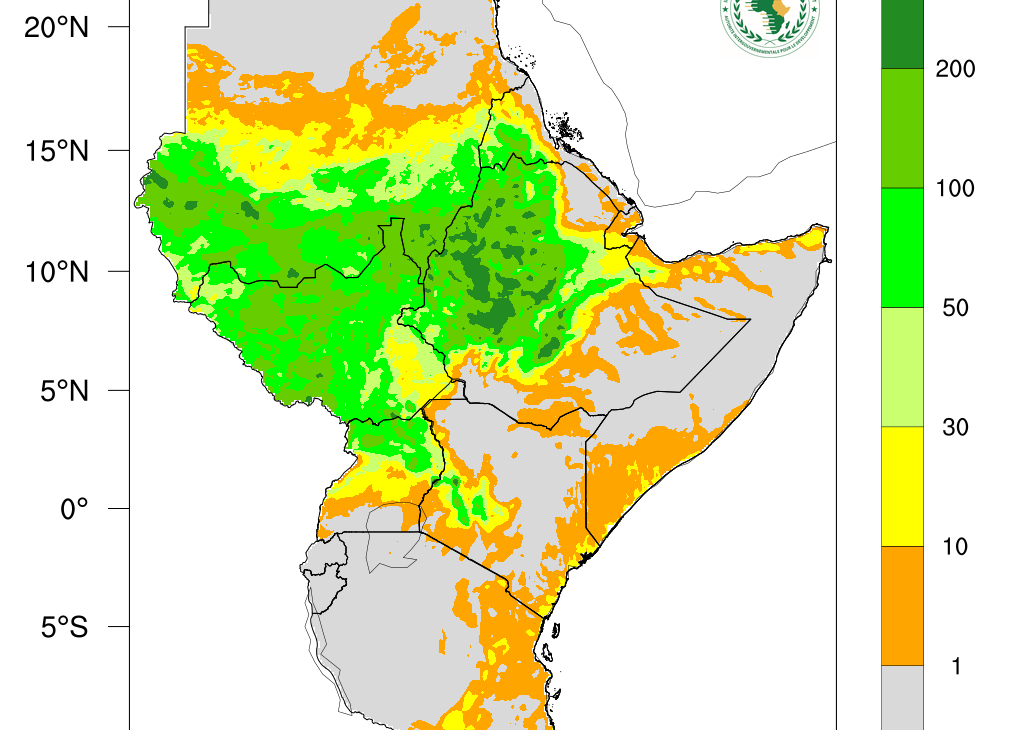
Western and central Ethiopia are expected to receive the heaviest rainfall, with totals exceeding 200 millimetres forecast in parts of the region. Isolated areas of south-western Sudan could also record similarly high rainfall.
Moderate rainfall of between 50 and 200 millimetres is expected across southern Sudan, most parts of South Sudan, northern Uganda, western Kenya, western Eritrea and central to northern Ethiopia.
Meanwhile, rainfall totals of less than 50 millimetres are expected across eastern and southern Tanzania, western and coastal Kenya, northern and southern coastal Somalia, central Sudan and parts of eastern Ethiopia.
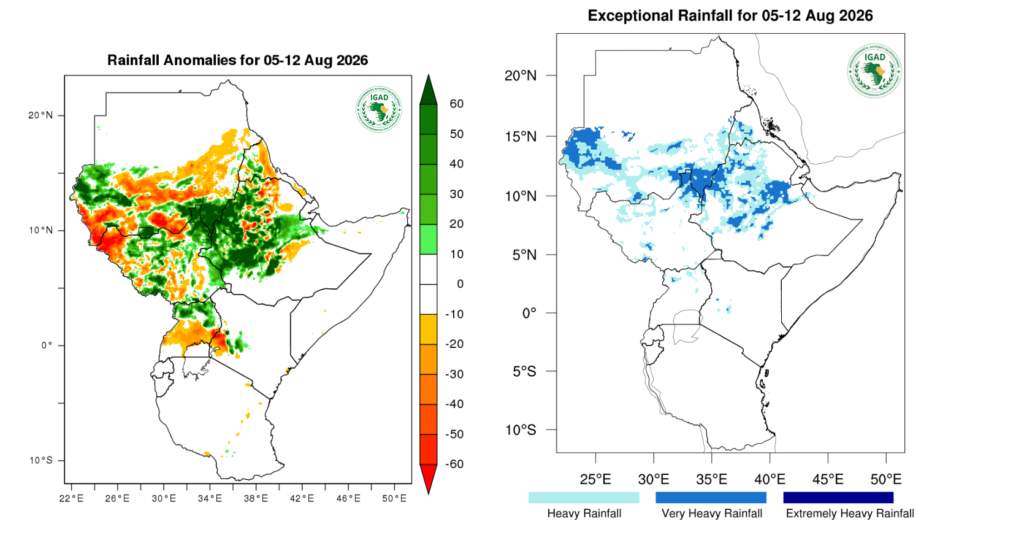
The rainfall outlook also points to significant departures from normal conditions. More-than-usual rainfall is expected over western to northern Ethiopia, northern Uganda, central Kenya, parts of south-western Sudan and several areas of South Sudan.
At the same time, below-average rainfall is forecast across southern Sudan, central to western South Sudan, western Eritrea, central to south-western Uganda and western Kenya, underscoring the uneven distribution of rainfall across the region.
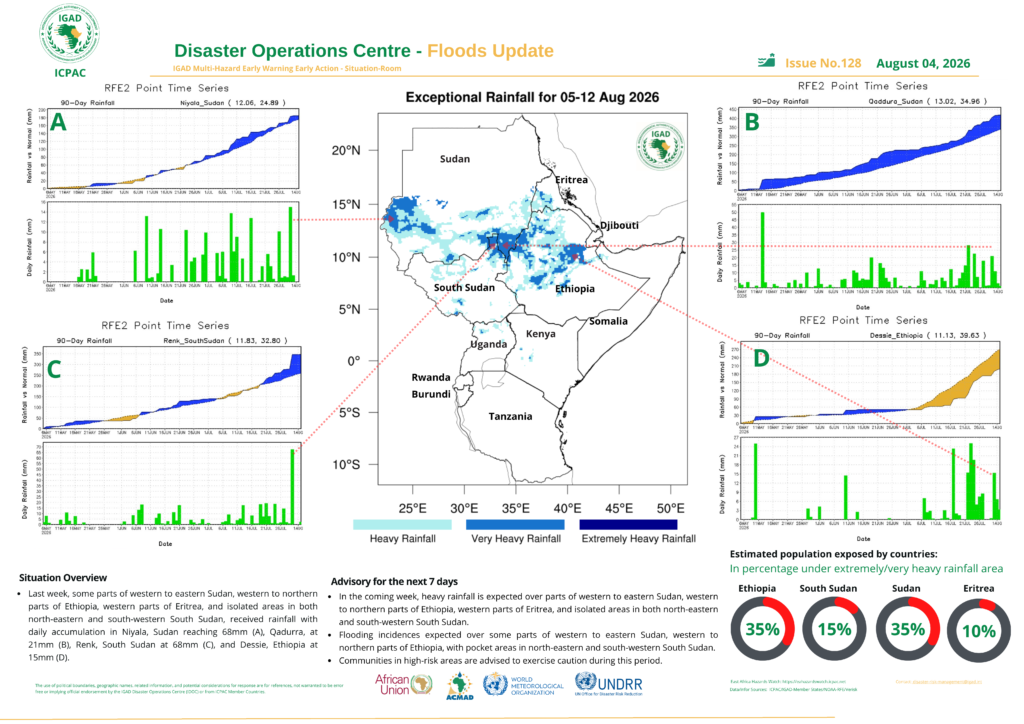
Some areas could experience particularly intense rainfall. Precipitation exceeding the 90th percentile is expected across parts of western to eastern Sudan, western to northern Ethiopia, western Eritrea and isolated areas of north-eastern and south-western South Sudan.
The combination of heavy and exceptional rainfall is expected to raise flood risks. Flooding incidents are forecast in parts of western to eastern Sudan and western to northern Ethiopia, with additional pockets of risk in north-eastern and south-western South Sudan.
Communities in high-risk areas have been advised to exercise caution during the forecast period.
The rainfall picture contrasts sharply with the temperature outlook.
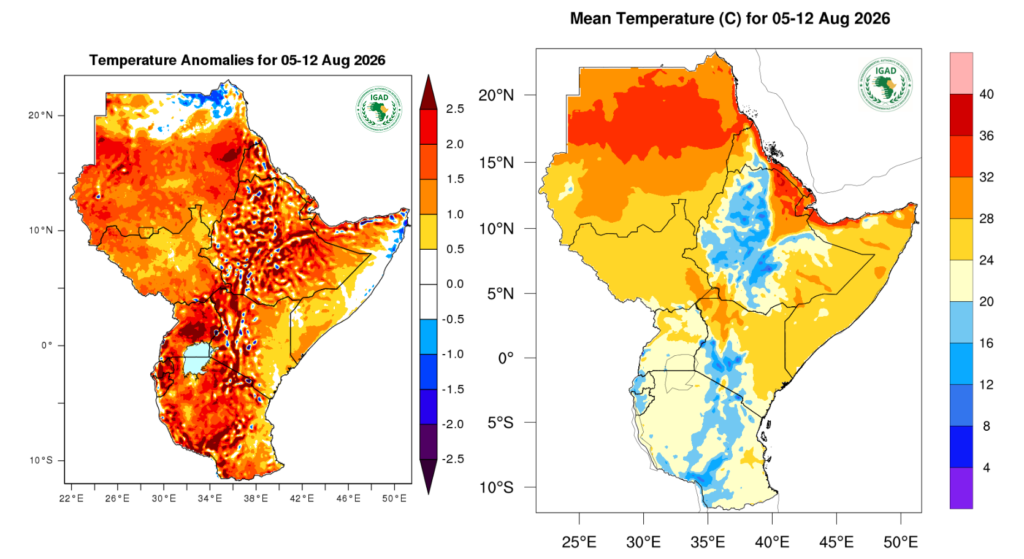
Temperatures exceeding 32°C are expected over Djibouti, northern Sudan, coastal Eritrea, northern coastal Somalia and north-eastern Ethiopia. Most of the Greater Horn is expected to experience moderate to high temperatures ranging between 20°C and 32°C.
Milder conditions below 20°C are forecast over central and western Kenya, central to southern Tanzania, central to northern Ethiopia and western Rwanda and Uganda.
Despite these pockets of cooler conditions, most parts of the region are expected to experience warmer-than-usual temperatures, with only isolated areas likely to record cooler-than-average conditions.
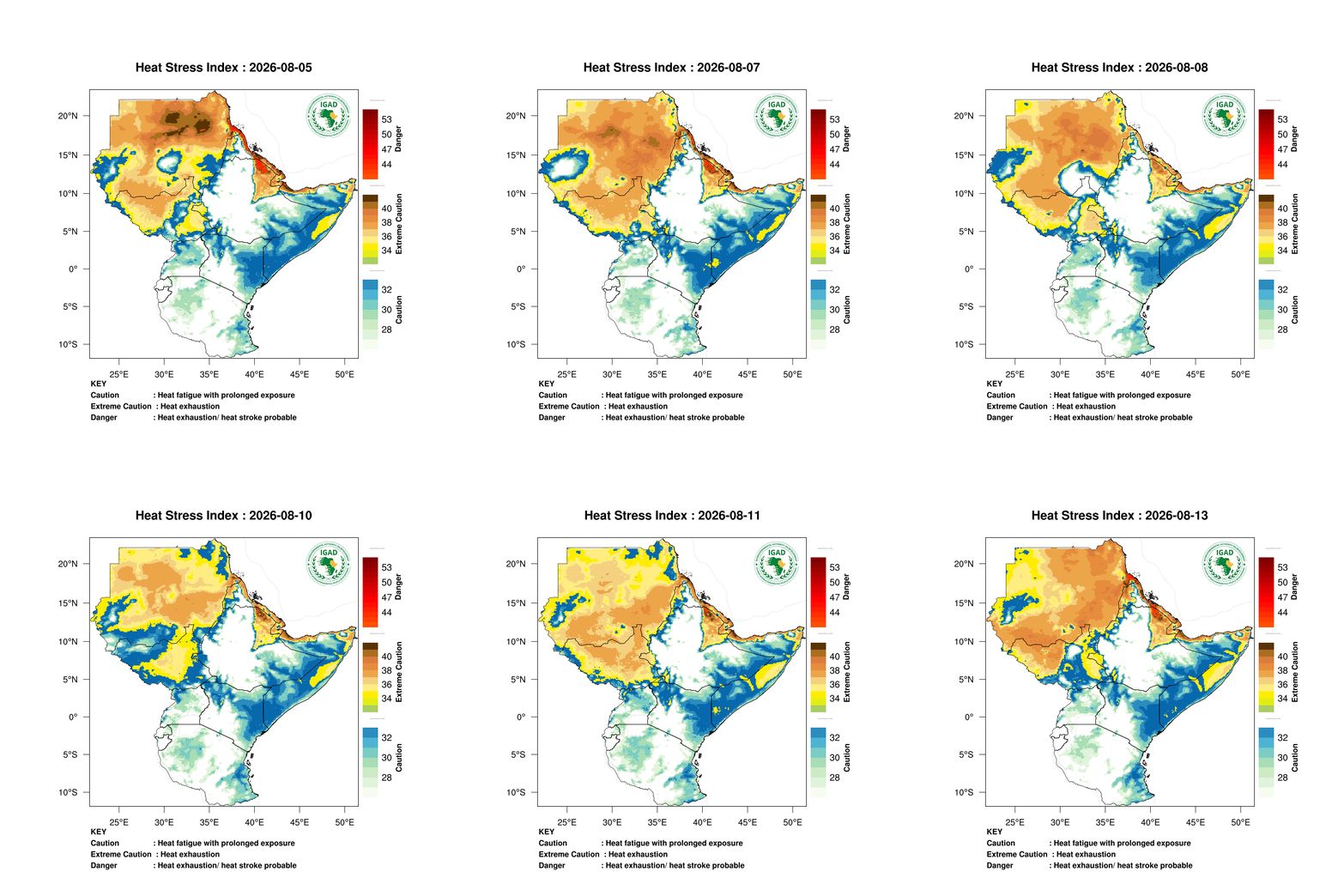
The heat is expected to produce significant stress across several countries. Most of South Sudan, Sudan, Eritrea, Djibouti, central to northern Somalia and north-eastern Ethiopia are forecast to experience heat stress within the ‘Extreme Caution’ category.
More severe conditions are expected across parts of Ethiopia’s Afar region extending into central Eritrea, isolated coastal areas of Eritrea and pockets of northern Sudan, where heat stress could reach the ‘Danger’ category.
The week ahead therefore presents a complex weather picture for the Greater Horn, where intense rainfall and flood risks are developing alongside persistent heat.
The forecast highlights the importance of considering rainfall totals, rainfall anomalies and exceptional rainfall indicators together when making decisions on agriculture, pastoralism, water management and disaster preparedness.
For communities in areas exposed to flooding or extreme heat, early awareness and preparedness will remain critical as the region navigates another week of overlapping weather hazards.


