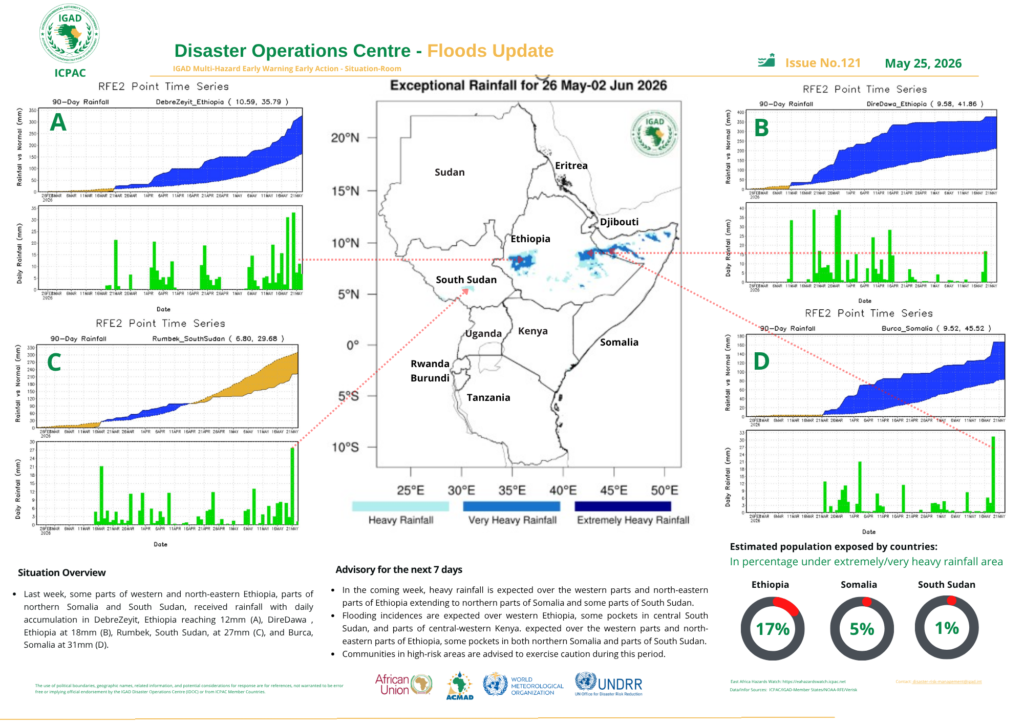
Enhanced rainfall is expected across parts of East Africa between May 26 and June 2, 2026, with south-western South Sudan, isolated areas of northern Uganda, southern Tanzania, and western to south-eastern Ethiopia forecast to receive above-normal precipitation amid continuing climate variability across the Greater Horn of Africa.
The latest outlook from the IGAD Climate Prediction and Applications Centre (ICPAC) points to a weather pattern characterized by localized heavy rainfall, flood risks, and persistent heat stress, even as several regions continue to experience uneven rainfall distribution.
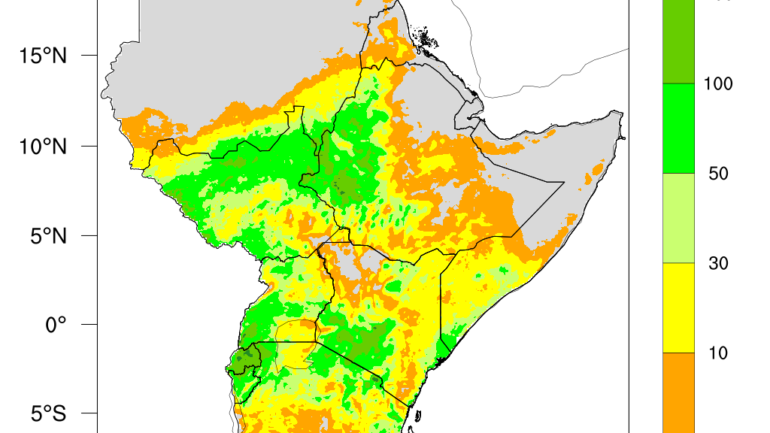
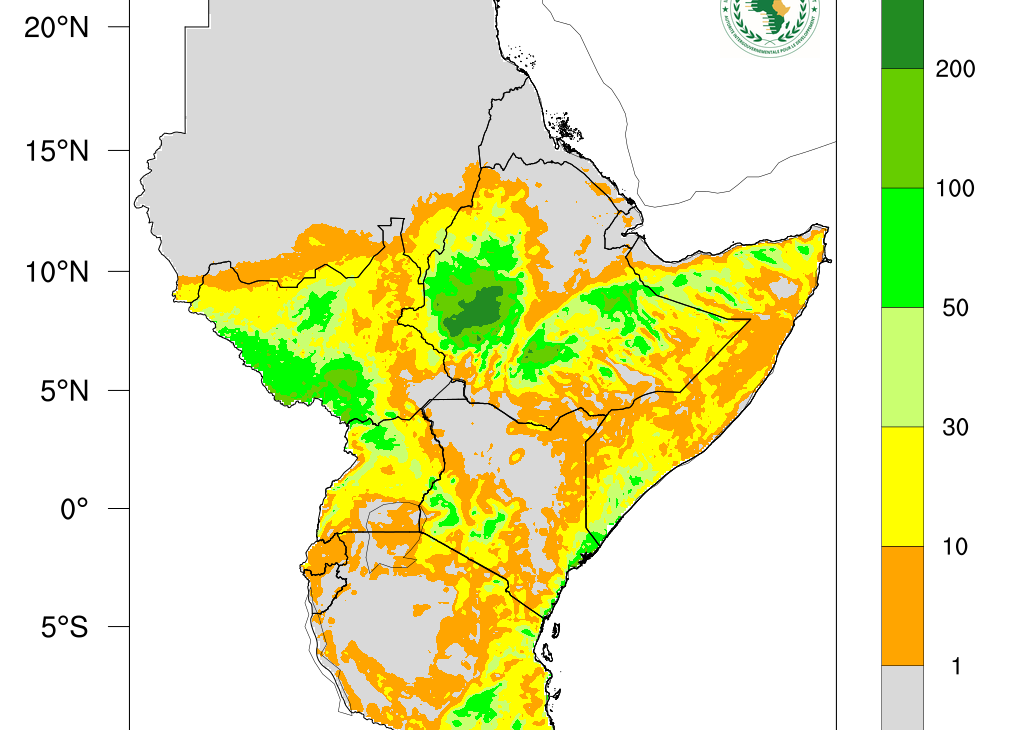
Forecasts indicate moderate rainfall ranging between 50 and 200 millimeters across western South Sudan, parts of northern Uganda, western and eastern Ethiopia, isolated areas of northern and southern Somalia, and southern Tanzania.
Meanwhile, light rainfall below 50 millimeters is expected across most parts of central to eastern Tanzania, western Kenya, Somalia, southern Ethiopia, and parts of south-eastern Ethiopia.
Meteorologists note that 1 millimeter of rainfall is equivalent to one litre of water per square meter, highlighting the varying rainfall intensity expected across the region.
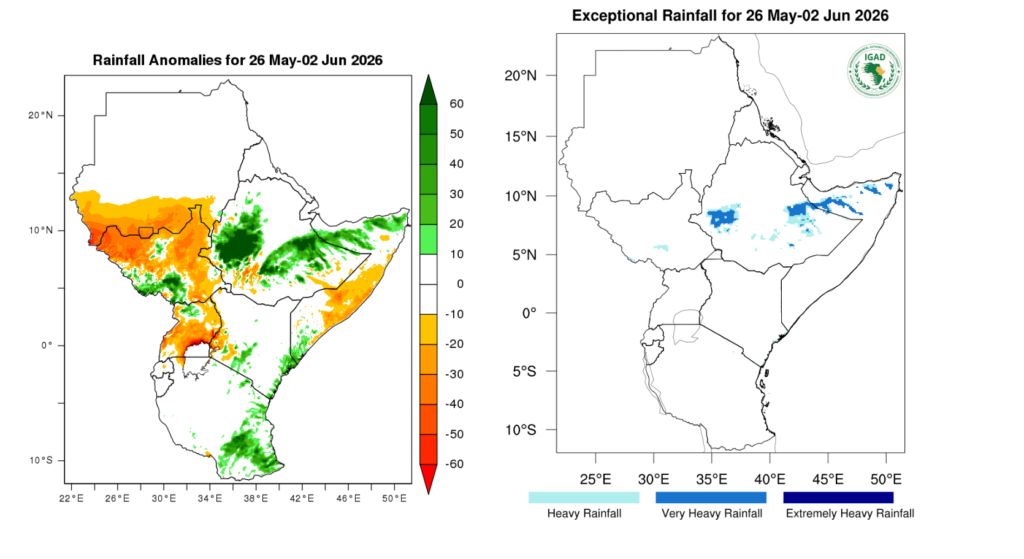
Rainfall anomaly forecasts further indicate above-average precipitation across most parts of Ethiopia, northern Somalia, south-western South Sudan, southern Tanzania, central Kenya, and the Somalia-Kenya coastal border.
However, below-normal rainfall is expected over parts of Somalia, southern Sudan, South Sudan, and Uganda, underscoring the increasingly fragmented nature of rainfall systems across East Africa.
The intense rainfall raises the likelihood of flooding incidents, particularly across western and north-eastern Ethiopia, northern Somalia, and parts of South Sudan, where communities in high-risk and low-lying areas are encouraged to remain cautious.
Flooding during this period could disrupt transport infrastructure, settlements, and agricultural activities, especially in areas vulnerable to flash floods and waterlogging.
Temperatures Remain Elevated Across the Region
Alongside the rainfall, temperatures are expected to remain moderately high across most parts of the Greater Horn of Africa.
Temperatures exceeding 32°C are forecast over southern Sudan, Djibouti, and north-eastern Ethiopia, while moderate to high temperatures between 20°C and 32°C are expected across much of the region.
Meanwhile, milder conditions below 20°C are likely over Rwanda, Burundi, central to western Kenya, Tanzania, and most highland areas across the Greater Horn, largely influenced by elevation and cloud cover associated with rainfall activity.
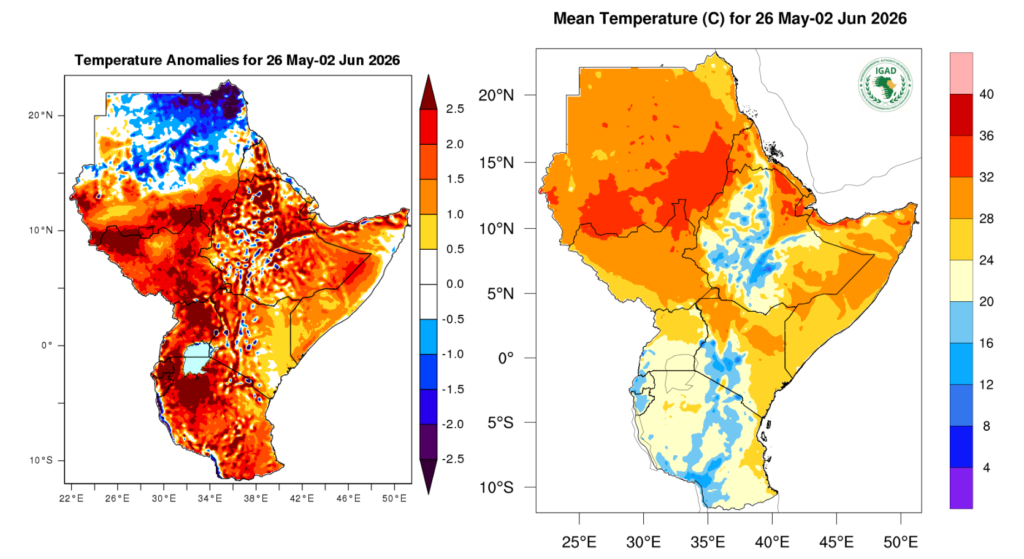
The broader outlook points to warmer-than-usual temperatures across most parts of the region, although parts of northern Sudan and isolated areas across the Greater Horn may experience slightly cooler-than-normal conditions.
Despite enhanced rainfall in some areas, heat stress remains a concern, with conditions within the “Extreme Caution” category expected across most parts of South Sudan, Sudan, Eritrea, Djibouti, eastern and northern Kenya, central to southern Somalia, and north-eastern Ethiopia.
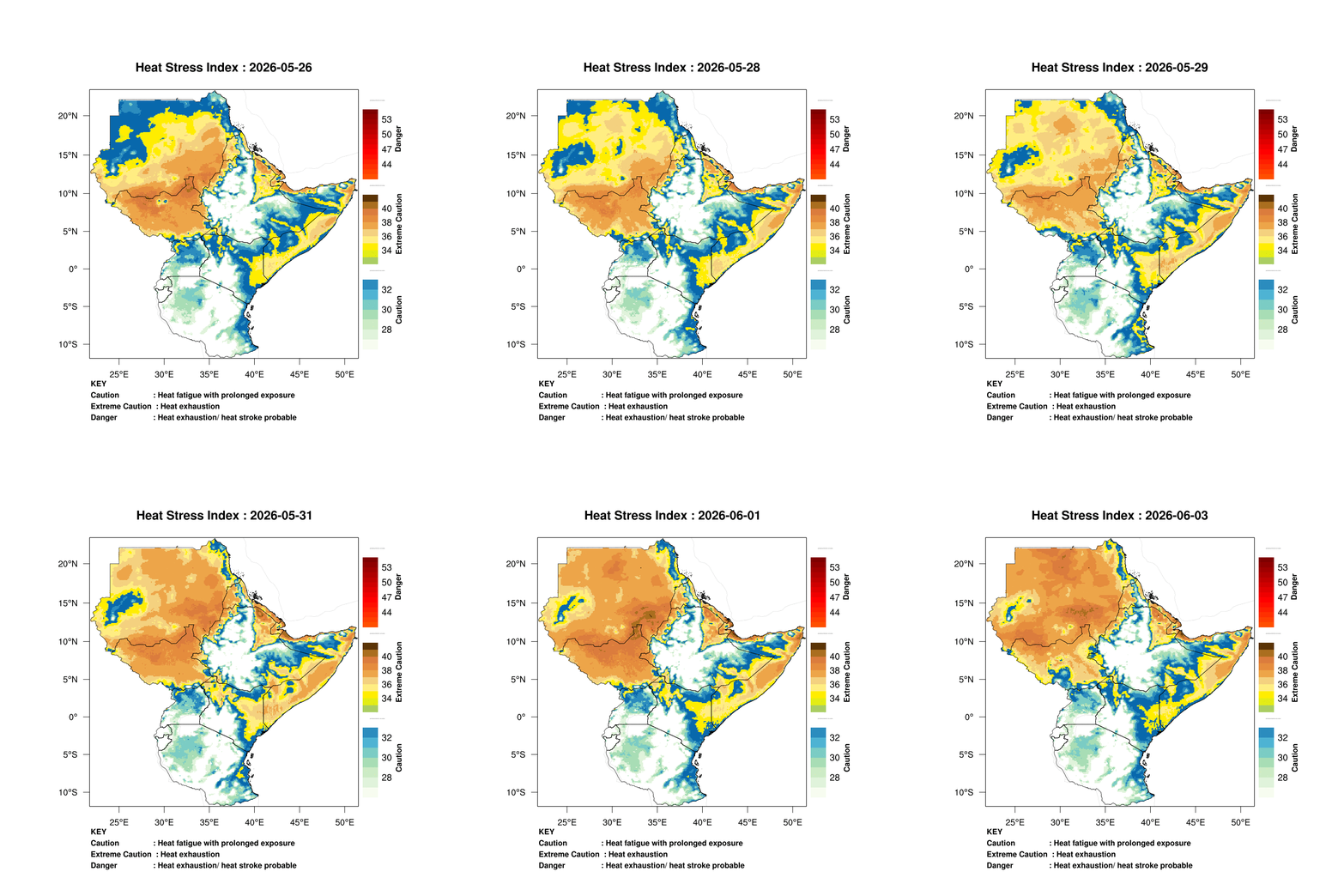
The latest forecast highlights the increasingly contrasting weather conditions shaping East Africa, where localized heavy rains and flood risks continue to occur alongside persistent heat and uneven rainfall distribution, reinforcing the growing influence of climate variability across the region.
Author Profile

-
Seeker.
Inspire AFRIKA.
Latest entries
 Weather Forecasts13 October 2026Rain and Rising Temperatures Forecast Across the Greater Horn of Africa
 Climate9 October 2026Beyond Negotiations: Africa Expects Concrete Outcomes from Antalya
 Animals7 October 2026In Kajiado’s Drylands, Collective Selling of Small Herds Is Changing the Livestock Trade
 Oceans6 October 202640 Years of Ocean Cooperation: The Western Indian Ocean’s Next Test Is Implementation