The Greater Horn of Africa is facing another week of contrasting weather conditions, with heavy and potentially exceptional rainfall expected across parts of Ethiopia, Sudan and South Sudan as warmer-than-average temperatures persist across most of the region.
The forecast for 11–18 August 2026 points to a complex mix of rainfall extremes and heat stress, creating overlapping risks for communities, agriculture, pastoralism and water resources.
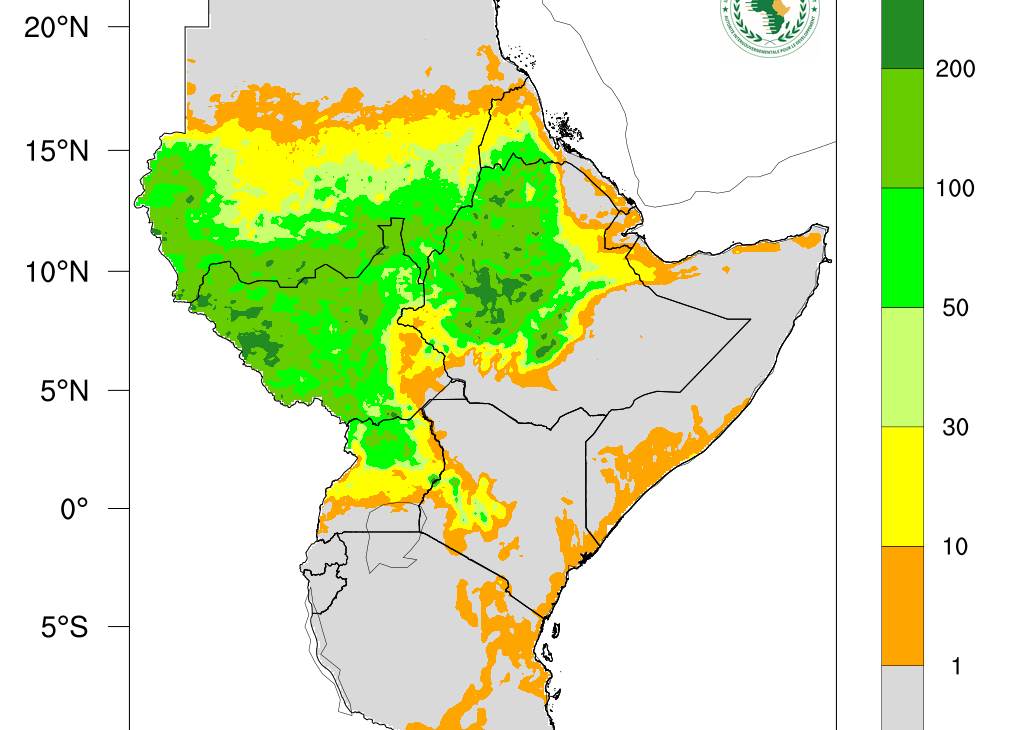
Western Ethiopia, western South Sudan and isolated areas of south-western Sudan are expected to receive more than 200 millimetres of rainfall, while moderate rainfall of between 50 and 200 millimetres is forecast across southern Sudan, most of South Sudan, northern Uganda, parts of western Kenya and central to northern Ethiopia.
Lighter rainfall of less than 50 millimetres is expected over eastern and southern Tanzania, western and coastal Kenya, central and eastern Uganda, south-eastern South Sudan, parts of Somalia, central Sudan and eastern Ethiopia.
The rainfall distribution is expected to remain uneven. More-than-usual rainfall is forecast over western Ethiopia, northern Uganda, isolated areas of central Kenya, parts of south-western Sudan and several parts of South Sudan.
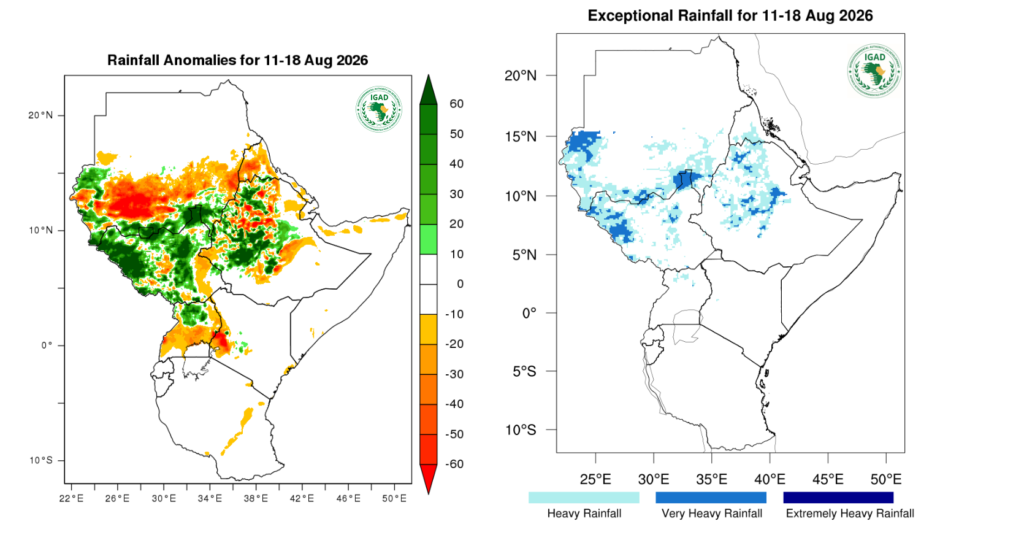
The contrast highlights why rainfall totals alone may not provide the full picture. Forecasts for total rainfall, rainfall anomalies and exceptional rainfall are intended to be considered together, offering a broader assessment of how much rain is expected, how it compares with normal conditions and where rainfall could become extreme.
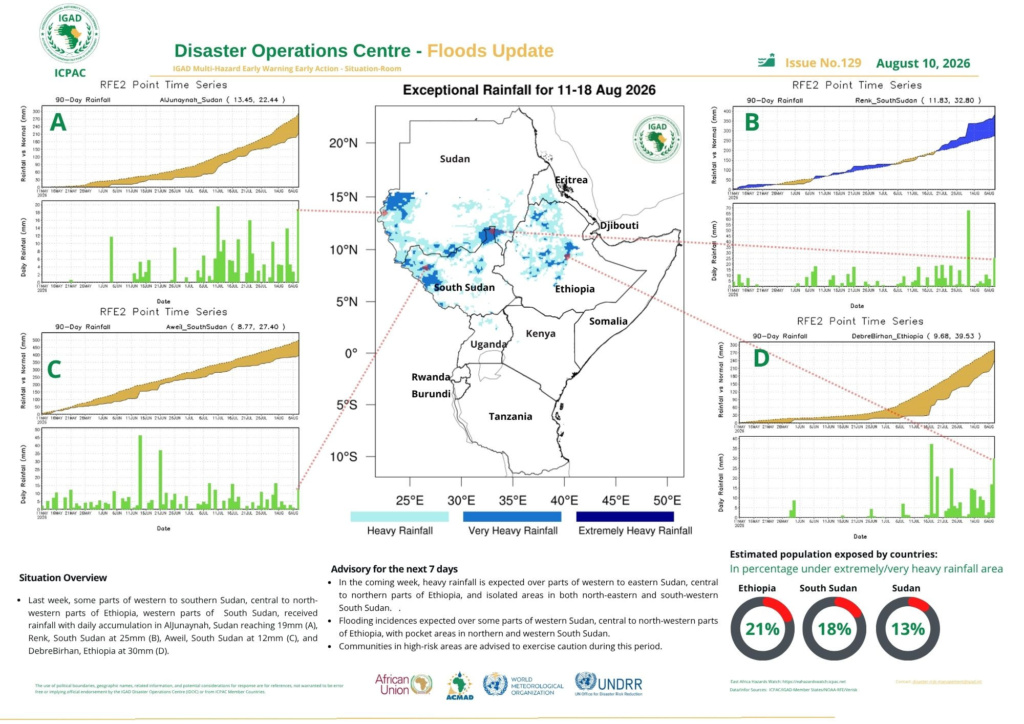
That risk is particularly evident in the exceptional rainfall outlook. Rainfall exceeding the 90th percentile is expected across parts of western and southern Sudan, central to northern Ethiopia and isolated areas of north-eastern and western South Sudan.
The intense rainfall could translate into flooding in parts of western Sudan, central to north-western Ethiopia and pockets of northern and western South Sudan. Communities in high-risk areas have been advised to exercise caution during the forecast period.
While rainfall dominates parts of the northern and western Greater Horn of Africa, heat remains a major regional concern which is also faced globally.
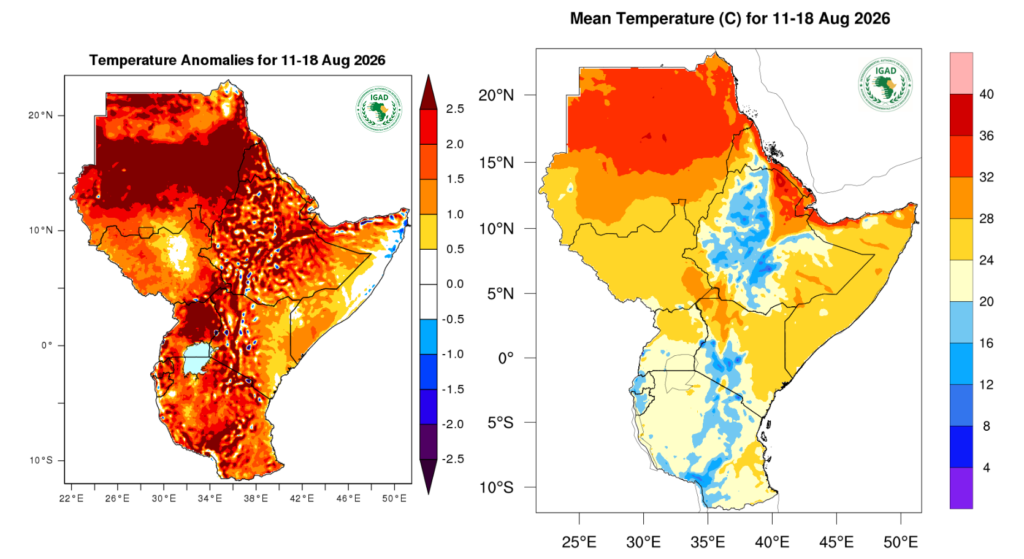
Temperatures exceeding 32°C are expected across Djibouti, northern Sudan, coastal Eritrea, northern coastal Somalia and north-eastern Ethiopia.
Most of the Greater Horn will experience temperatures between 20°C and 32°C, while milder conditions below 20°C are expected over central and western Kenya, central to southern Tanzania, central to northern Ethiopia and western Rwanda and Burundi.
Most of the region is expected to remain warmer than usual, with only isolated areas forecast to experience cooler-than-average conditions.
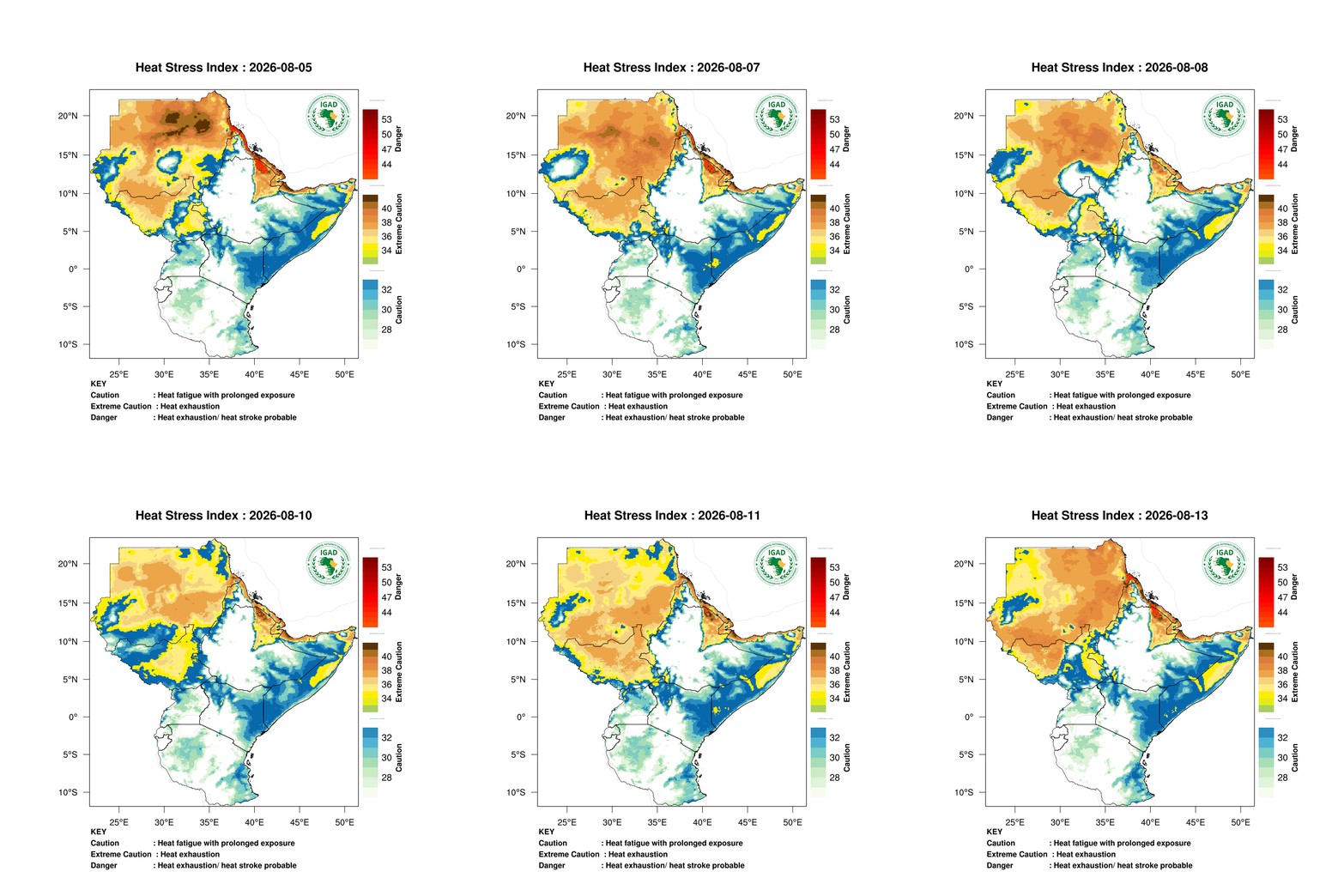
The heat could become particularly challenging across the northern and eastern parts of the region. Extreme caution: heat-stress conditions are expected across most of South Sudan, Sudan, Eritrea, Djibouti, central to northern Somalia and north-eastern Ethiopia.
More severe conditions are forecast in parts of Ethiopia’s Afar region extending into central Eritrea, isolated areas along the Eritrean coastline and pockets of northern Sudan, as well as areas around the southern Djibouti–northern Somalia border, where heat stress could reach the Danger category.
The forecast therefore presents the Greater Horn with two major and simultaneous weather pressures: intense rainfall and flood risk in some areas, alongside persistent heat and elevated heat stress across much of the region.
For decision-makers, the overlapping hazards reinforce the importance of using the full range of rainfall and temperature information when planning for the week ahead.
Agriculture, pastoralism, water management and disaster-risk reduction efforts will all need to account for both the areas expecting excess rainfall and those facing continued heat and rainfall deficits.
As August progresses, the latest outlook underscores the increasingly uneven nature of weather conditions across the Greater Horn, where heavy rainfall and extreme heat can occur across relatively close geographic areas at the same time.