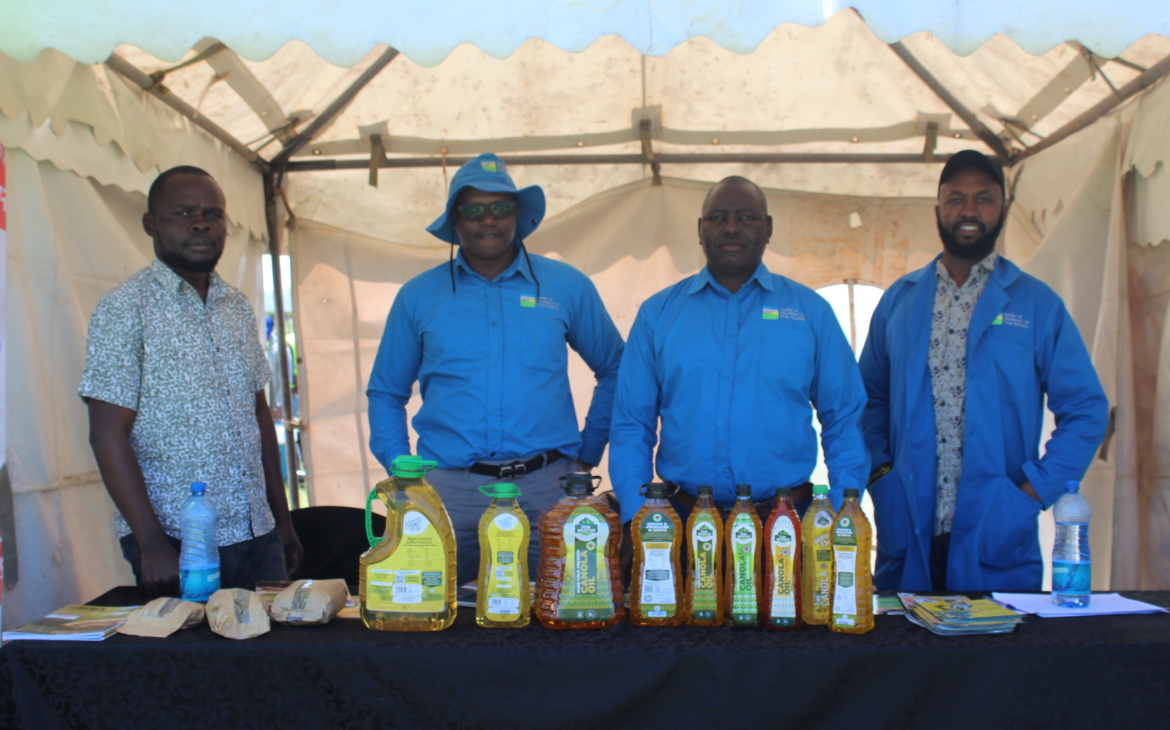
“Today, they will learn about the product from their produce. They’ll witness their hard work in a bottle,” said Shadrack Koech from Agventure Limited’s Centre of Excellence as he arranged products from their Pure Mountain brand.
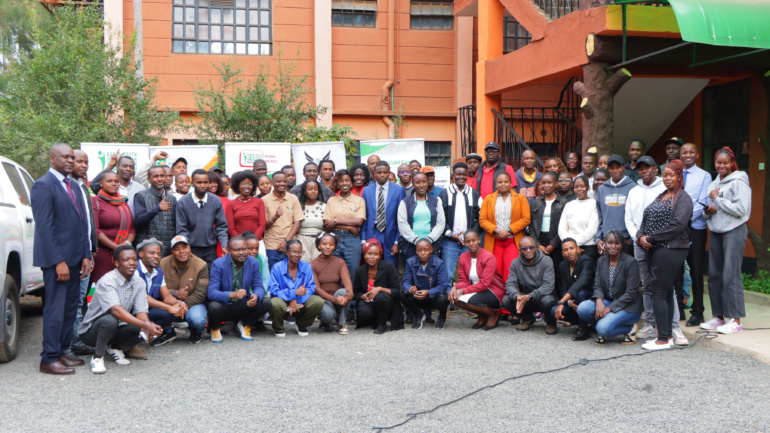
Bottles of canola oil, jars of canola honey, and sacks of canola cake were displayed in their booth to kick off a day of interaction with cereal farmers during the Cereal Growers Association’s open day at Ntulele, Narok County.
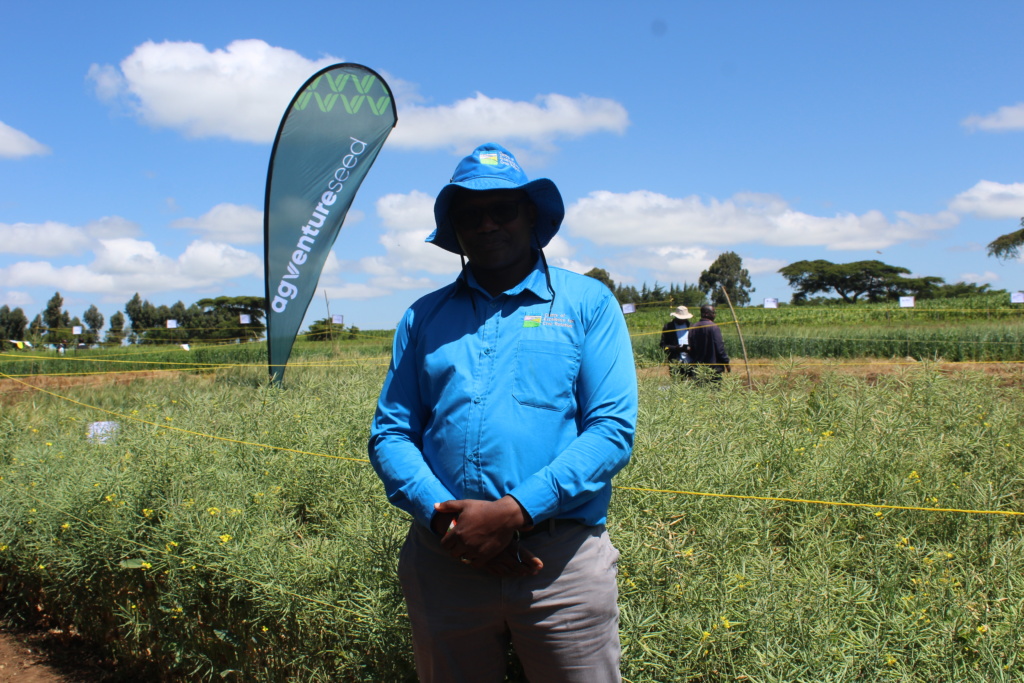
Agventure Limited, through its department, the Centre of Excellence, is revolutionizing cereal farming in the Rift Valley by promoting canola farming, crop rotation, and organic processing.
“All this is done by empowering smallholder farmers through contract farming and farmer education,” says Koech.
The Centre of Excellence trains farmers on the benefits of crop rotation and soil conservation through hands-on, farm-based visits and community engagement.
Through these community engagements, Koech says, “We contract farmers to plant canola, and they are assured of market as we’ll purchase the canola seeds upon harvest.”
Canola seeds are then crushed and processed to produce the canola seed oil and a byproduct called canola seed cake.
“Our product is raw. No additive, no preservative, just crushed and sieved,” he says.
Products:
Canola Seed Oil – Pure Mountain and Mega Fry
- Pure Mountain: Cold-pressed canola oil, darker in color, retains more natural nutrients and flavor.
- Mega Fry: Heat-pressed canola oil, lighter in color, ideal for high-temperature cooking and frying.
2. Herb-Infused Canola Oils
- Rosemary & Black Pepper Blend: Infused for enhanced flavor and aroma, suited for gourmet and health-conscious consumers.
- Cayenne Pepper Blend: Boosted with cayenne for a spicy kick and nutritional value.
3. Canola Seed Cake for Livestock
- Byproduct of oil crushing: High-protein feed (approx. 32% protein), ideal for dairy cattle and livestock fattening.
- Value-add for contract farmers: Supports a circular farming model.
4. Canola Honey
- Harvested on farms practicing conservation agriculture.
“The bees are an essential part of production for the farmer’s crops, whilst giving us delicious honey. It is the canola plant honey a raw, distinct, mild flavour,” Koech shares.
Emphasizing the value of quality produce, he explains that their department actively engages in an on-ground approach. This is initiated through workshops, barazas, farm visits, and training sessions.
Having been in the industry for over a decade, Koech shares that farmers who attend workshops and get expert advice have their farming ventures considerably improve.
“There is a lot of improvement in the farming practices, and this can be seen even in the use of agrochemicals as farmers seek to adhere to set guidelines,” he says.
Koech confesses that the canola industry is also faced with market challenges and policy gaps.
“Small-scale farmers are competing with imported seeds,” he notes.
He highlights scenarios where big companies import massive canola seeds from international markets, for instance, South Africa, denying local farmers opportunities.
“To ensure the growth of the local industry, it is vital that the government offer incentives like cushioning small processors, promoting smallholder farmers,” he says.
He adds that regulations should be tightened on imports to promote local industries.
Koech is optimistic that through on-ground engagement like open days and continued farmer education, the industry will continue to grow, demanding the need for fair competition.
“Let the government promote small industries doing contract farming, so we allow farmers to produce,” he concludes.
Read Also: End to Bottom Trawling in Kenya
Author Profile

- How can we learn if we don't question?
Latest entries
 Events12 October 2026Cybersecurity in the Floriculture Industry
 Opinion & Analysis8 October 2026Why Africa Must Look to What Already Exists in Its Blue Economy
 Agriculture5 October 2026The Search for a Smarter Way to Feed Crops
 Events30 September 2026The Goat, the Market and the Dryland: Heifer International’s Push for Livestock Resilience