
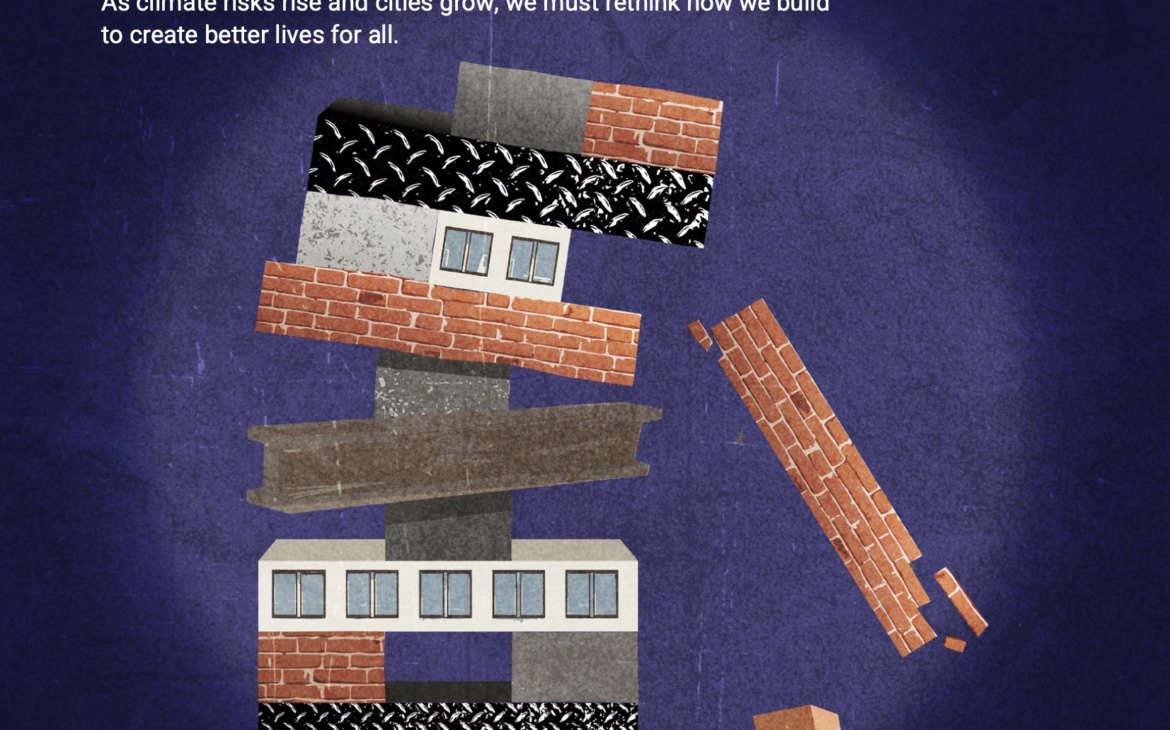
The world is building at an extraordinary speed, but not fast enough in the direction the climate demands, decarbonizing, as the building materials with action undertaken are reportedly causing huge emissions.
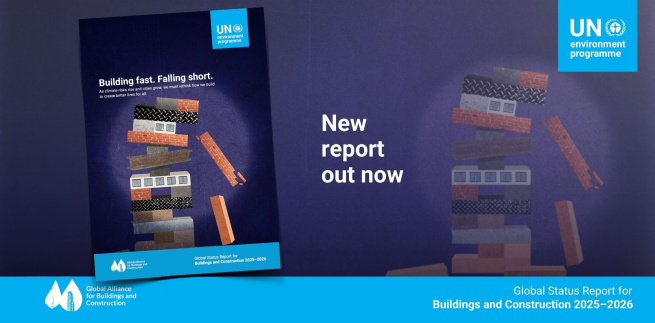
Launched during the 13th session of the World Urban Forum, a new report by the United Nations Environment Programme and the Global Alliance for Buildings and Construction warns that the decarbonisation of the buildings and construction sector has slowed sharply, leaving one of the world’s largest industries both highly polluting and increasingly vulnerable to climate and energy shocks.
The tenth edition of the Global Status Report for Buildings and Construction 2025–2026 examines what it describes as one of the defining challenges of this decade: transforming a rapidly expanding, emissions-intensive sector into one capable of delivering climate action, resilience, and affordable living.
Buildings and construction remain central to the global economy, representing between 11 and 13 per cent of global GDP while employing roughly 9 per cent of the world’s workforce across construction, renovation, demolition, and civil engineering. Yet the sector’s environmental footprint is equally vast, accounting for around 37 per cent of global CO₂ emissions and nearly half of global material extraction worldwide.
Published amid a global housing and energy affordability crisis, the report argues that climate action in buildings can lower energy costs, improve living conditions, and strengthen resilience against intensifying climate impacts.
“From homes and schools to hospitals and workplaces, buildings play a fundamental role in our lives,” said Inger Andersen. “Buildings can either lock in climate risks or deliver safer, healthier, and more affordable living conditions.”
With nearly half of the buildings expected to exist by 2050 still yet to be built or renovated, Andersen said governments now face a critical opportunity to shape future emissions trajectories through stronger policies, building codes, and investment in zero-emission and climate-resilient construction.
Every day, the world adds an estimated 12.7 million square metres of floor area, nearly the equivalent of constructing a city the size of Paris every week.
Decarbonizing Progress Slows as Construction Outpaces Green Transition
Tracking policies, technologies, finance, and investment against a 2050 net-zero pathway, the report finds that while progress has been recorded over the last decade, momentum has slowed since 2020 as the green transition struggles to keep pace with the sheer scale of construction growth.
Since 2015, global building energy intensity, measuring annual energy consumption relative to building size, has declined by 8.5 per cent, while green building certifications have nearly tripled worldwide.
Investment in energy efficiency reached USD 275 billion in 2024, contributing to cumulative spending of USD 2.3 trillion over the last decade. Yet the report warns these gains remain insufficient.
Renewables supplied just 17.3 per cent of buildings’ energy demand in 2024, far below what is needed to align the sector with a net-zero emissions pathway. To remain within climate goals, investment in building energy efficiency must more than double, reaching nearly USD 5.9 trillion by 2030, equivalent to around USD 592 billion annually.
The report highlights pockets of progress across multiple regions globally despite the increasing challenge of decarbonizing to meet the set targets and goals.
The European Union has strengthened policies targeting both operational emissions and embodied carbon released during construction, while Japan and Switzerland have advanced building energy performance standards.
Growth in on-site renewable energy systems has also accelerated in Australia, Germany, India, and Pakistan, while countries including the Bahamas, Cambodia, and Colombia have expanded building sector commitments within their national climate plans.
Updated building energy codes have emerged in California, Kenya, Japan, and Singapore, alongside expanding green building certification programmes in China, Colombia, India, and Türkiye.
Across Africa and Asia, countries such as Ghana, Senegal, Bangladesh, Indonesia, Jordan, and India are also developing national roadmaps aimed at decarbonizing as they steer the sector toward low-carbon and resilient construction.
UNEP and GlobalABC say they will continue supporting governments with data, methodologies, and policy guidance intended to accelerate climate action while addressing affordability and equity concerns.
The report ultimately frames buildings not only as one of the world’s largest climate liabilities, but also as one of its greatest transition opportunities, a sector capable of cutting emissions, lowering energy costs, and reshaping how rapidly urbanising societies live in a warming world.


