

As the second Africa Urban Forum (AUF2) commenced in Nairobi, attention has turned to the continent’s accelerating urban growth, with an estimated 40,000 people moving into African cities each day and about 4.5 million added to informal settlements annually.
The forum comes at a critical moment, considering Africa’s urban population is projected to double from 700 million to 1.4 billion by 2050, with nearly two-thirds of the population expected to live in cities. This rapid expansion is intensifying pressure on housing systems, infrastructure, and basic services.
According to the Stocktaking of the Housing Sector in Sub-Saharan Africa report by the World Bank, the continent faces a housing deficit of about 51 million units, which could rise to 130 million by 2030 if current trends persist. The shortage is largely driven by unplanned urbanisation, limited infrastructure, and constrained access to affordable housing.
In many cities, inadequate access to essential services such as water, electricity, and road networks continues to hinder the development of formal housing. At the same time, high inflation and unemployment are further limiting the ability of households to secure decent and affordable homes.
Leaders at the forum are calling for a shift from dialogue to implementation. Speaking during the opening, Prime Cabinet Secretary H.E. Musalia Mudavadi emphasised the need for practical action and investment.
“When we invest in housing, we do not simply provide shelter; we stimulate industries, generate employment, and anchor communities,” he said, urging stakeholders to prioritise bankable projects and implementable policies.

The Africa Urban Forum, established by the African Union, serves as a platform to coordinate efforts on sustainable urbanisation and human settlements across the continent. It brings together governments, development partners, the private sector, and civil society to shape a shared urban agenda.
Echoing these sentiments, Ms. Patience Zanelie Chiradza of the African Union Commission noted that urbanisation is increasingly linked to governance and stability.
“Africa’s urban transition is no longer a future scenario; it is a political reality that requires leadership, vision, and decisive action,” she said, emphasizing the role of housing in promoting dignity, equity, and social stability.
Kenya’s Cabinet Secretary for Housing, Alice Wahome, added that cities will play a defining role in determining whether Africa achieves inclusive growth and sustainable development.
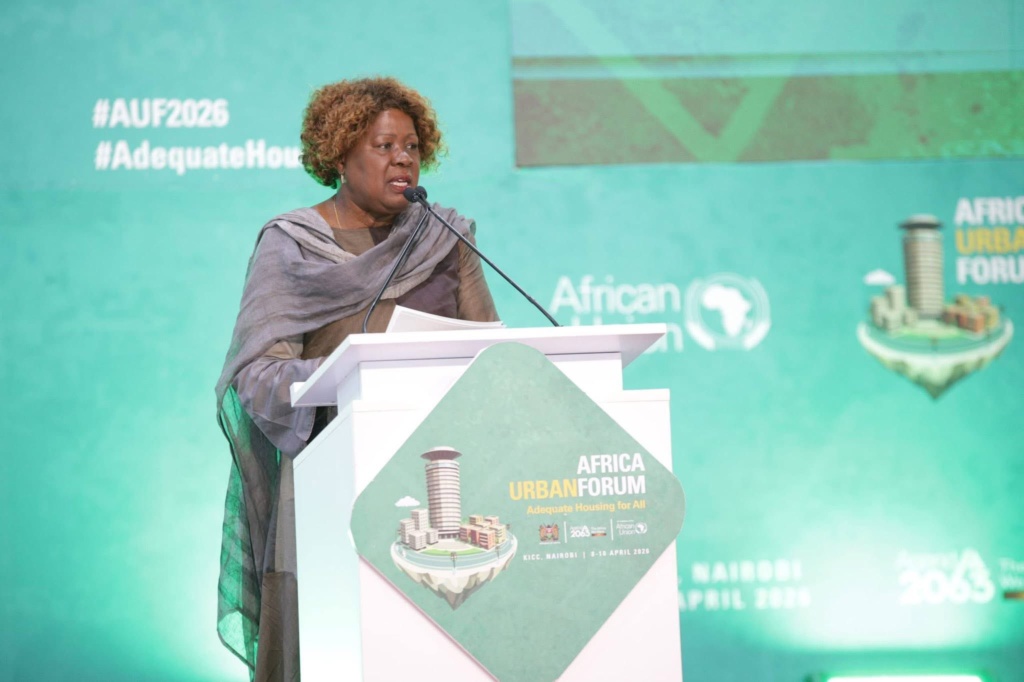
AUF2 also takes place just weeks ahead of the World Urban Forum 13, positioning it as a key moment for Africa to consolidate a unified voice on global urban development.
Under-Secretary-General and Executive Director of the United Nations Human Settlements Programme Anaclaudia Rossbach emphasized that capital is essential in advancing the housing conversation since they have to be dignified places for human settlement.
She urged advancing financing for Africa’s housing gap through blended finance and stronger city systems, also highlighting how tech can work for people-centred cities, linking Africa’s voice to the World Urban Forum on the horizon.
“We must move from project by project to systemic change on financing urban needs,” said Rossbach.

As discussions continue, the forum is expected to outline actionable pathways centred on policy coherence, institutional collaboration, and investment in sustainable housing.
With urban populations rising rapidly, the choices made now will shape whether Africa’s cities become engines of opportunity or centres of deepening inequality.
Author Profile

-
Seeker.
Inspire AFRIKA.
Latest entries
 Agriculture14 October 2026Africa’s Food Systems Future Depends on Listening to Farmers
 Weather Forecasts13 October 2026Rain and Rising Temperatures Forecast Across the Greater Horn of Africa
 Climate9 October 2026Beyond Negotiations: Africa Expects Concrete Outcomes from Antalya
 Animals7 October 2026In Kajiado’s Drylands, Collective Selling of Small Herds Is Changing the Livestock Trade


