
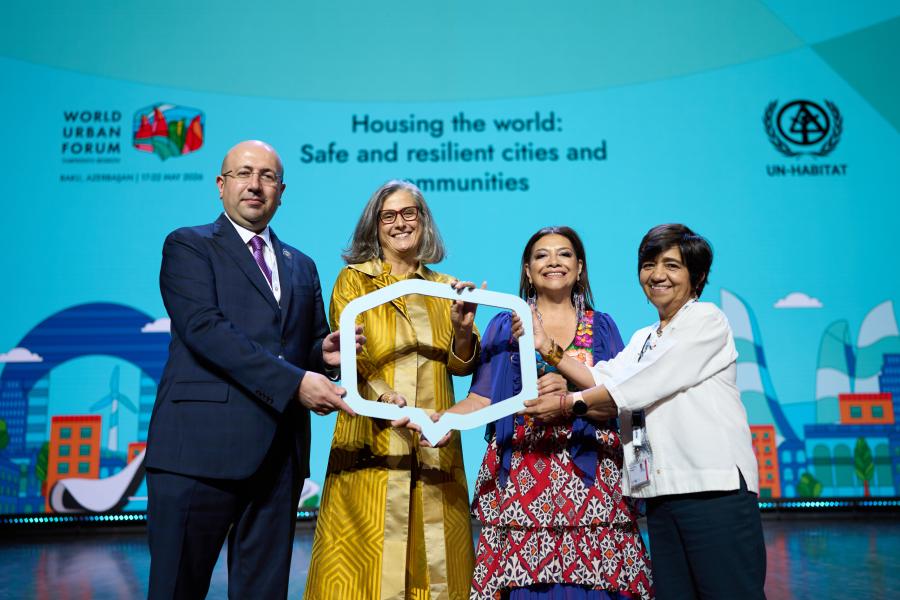
The 13th World Urban Forum concluded in Baku on Thursday with a forceful message: housing is a human right, and governments must move from marginal progress to systemic transformation.
The adoption of the Baku Call to Action capped a week of negotiations, roundtables, and political commitments aimed at reshaping the future of cities and urban housing.
Closing with an immersive ceremony of Azerbaijani dance and music, WUF13 ended as it had begun, with urgency. The final day distilled a week of deliberations into a shared agenda that forum leaders hope will shape urban policy trajectories well beyond Baku.
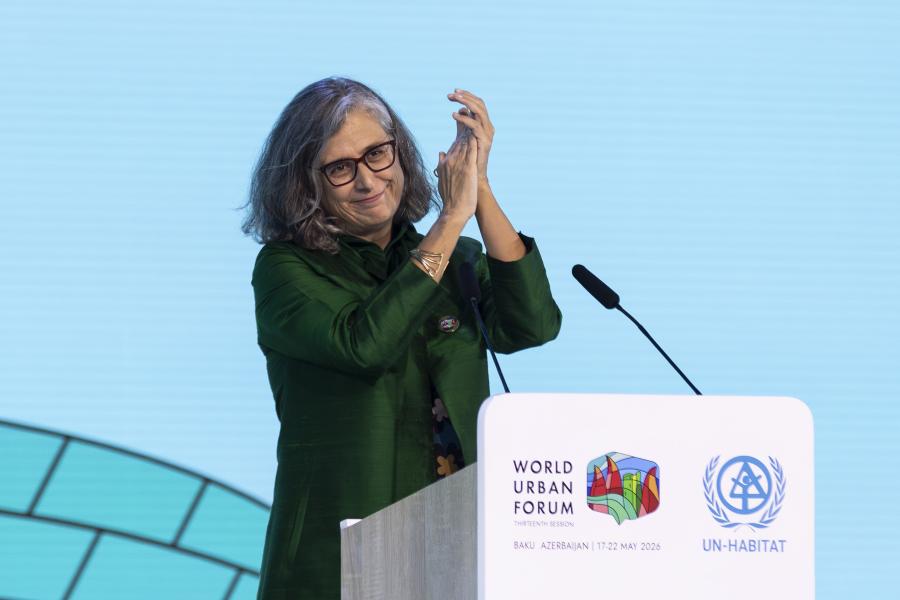
UN-Habitat Executive Director Anacláudia Rossbach set the tone in her closing address, declaring that WUF13 stakeholders had come together around a fundamental truth.
“We must move from marginal progress to systematic transformation,” she said, outlining the forum’s central messages: restoring housing as a public responsibility, empowering cities, ending forced evictions, transforming housing finance, and strengthening implementation systems built on co-creation, clear targets, and accountability.
It was a closing that matched the scale of the challenge the forum had been convened to address.
Rights at the Centre: Women, Indigenous Peoples, and the Home
The morning of the final day opened with two landmark roundtables that placed the human right to adequate housing within a broader rights framework, one focused on women, the other on Indigenous Peoples.
The roundtable on women examined how housing policies can advance gender equality and empower women across the full spectrum of their diversity. Bahar Muradova, Chairperson of Azerbaijan’s State Committee for Family, Women, and Children Affairs, gave voice to a painful reality facing women in cities worldwide: the devastating choice between remaining in violent households or facing homelessness.
Delegates emphasised the importance of securing land tenure, property titles, and access to finance for women, warning that housing and urban policies risk entrenching existing inequalities if those rights remain inaccessible.
Rebeca Grynspan, Secretary-General of UNCTAD, offered a rallying call in summarising the session, urging all actors to work toward a world in which every woman can look at her home and say: “This is mine!”
In what organisers described as the first-ever roundtable dedicated to the rights of Indigenous Peoples at a World Urban Forum, participants addressed key issues for ensuring Indigenous concerns sit at the heart of urban housing policy. These included decolonising urban planning, consistent application of the right to prior and informed consent, and the meaningful participation of Indigenous Peoples in planning and governance processes.
The session marked a notable shift in how the Forum engages historically excluded voices, and reflected growing recognition that sustainable urbanisation cannot be achieved without centring those most often marginalised by it.
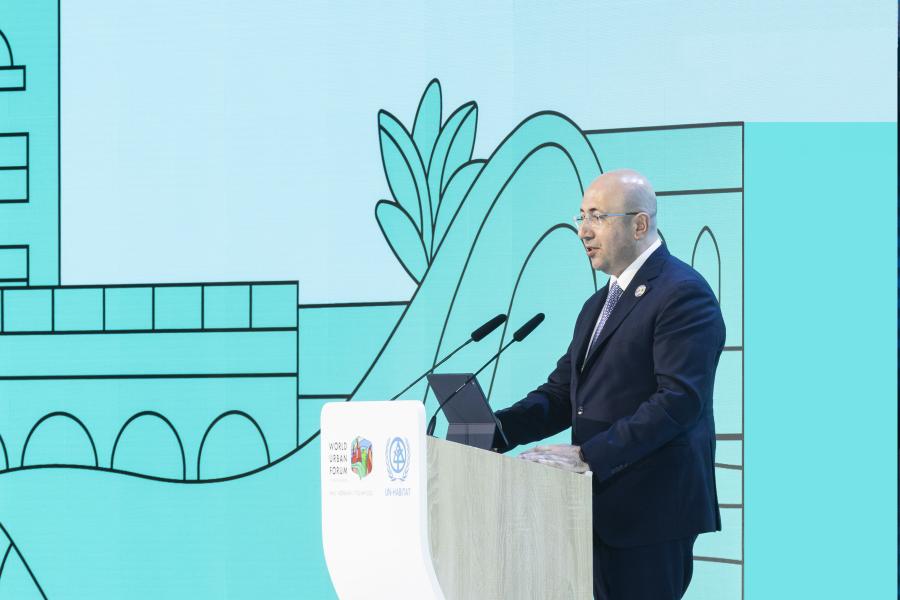
In his closing remarks, Anar Guliyev, National WUF13 Coordinator and Chairman of Azerbaijan’s State Committee for Urban Planning and Architecture, highlighted the historic scale of the gathering.
Several “One UN” events during the final day highlighted efforts to localise the Global Digital Compact at the city level. Adopted nearly two years ago, the Compact commits governments to uphold international and human rights standards in digital spaces.
Participants acknowledged that the transition toward digital services can generate major efficiencies and financial savings for cities, but cautioned that it must remain inclusive and grounded in the lived realities of communities already facing barriers to access and participation.
WUF13 became the largest edition of the forum ever convened, drawing more than 58,000 participants from 176 countries. Guliyev also noted the successful inauguration of the Business-Innovation Hub, which created new dialogue spaces around urban solutions, while underscoring that sustainable urban futures require solidarity, cooperation, and shared responsibility.
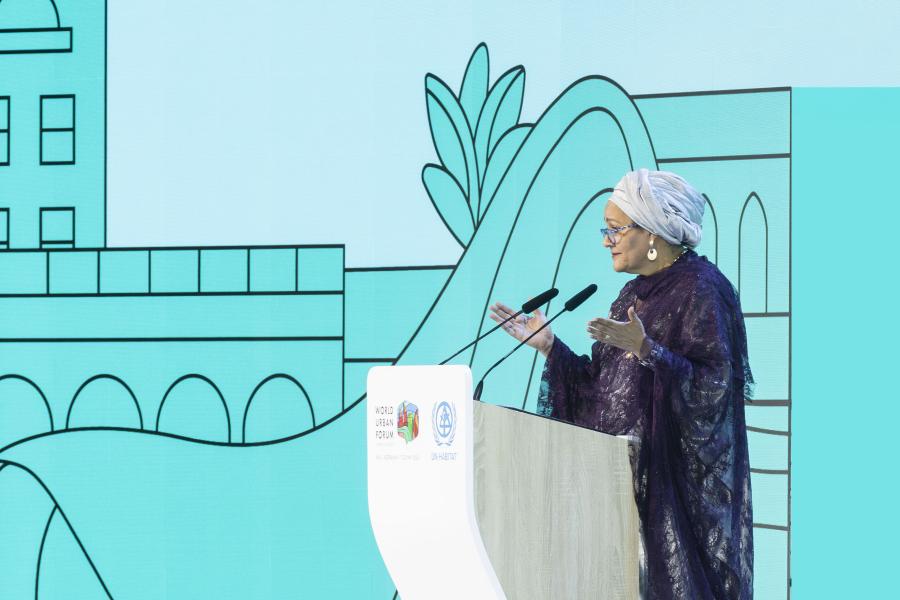
Amina Mohammed, the UN Deputy Secretary-General, acknowledged the Forum’s resilience in the face of record-breaking torrential rain on its opening day, an almost symbolic reminder of the climate realities driving the forum’s agenda.
While welcoming what she described as “remarkable progress” in cooperation among governments, civil society, and the private sector, she stressed that far greater investment in resilient territorial planning is urgently needed, particularly in an era of escalating conflict and climate disruption.
Voices from the Ground: Civil Society, Local Government, and Youth
The closing ceremony brought together constituencies whose voices are often absent from high-level policy spaces, and whose demands were unambiguous.
Rohey Malick Lowe, Mayor of Banjul, The Gambia, speaking on behalf of the Local and Regional Governments constituency, underscored that adequate housing requires universal, accessible, and fair public services.
She called for local and regional governments to be included in the political decisions that shape commitments communities are ultimately expected to deliver.
“This is not only about policy; this is about trust, democracy, and multilateralism itself,” she said.
Ana Falú of the Women and Habitat Network of Latin America celebrated the contributions of women at WUF13, emphasising that housing policy must be designed around women’s central roles in society.
Lajana Manandhar of Lumanti Support Group for Shelter outlined civil society’s core demands: ending forced evictions, prioritising inclusive and climate-resilient approaches, increasing housing finance, and ensuring women- and community-led housing policies.
Jonathan Oriki, representing the UN-Habitat Youth Advisory Board, delivered perhaps the forum’s most striking statistic: one in four urban children globally grows up in a slum, and reminded delegates that ambition alone cannot build the housing needed to change that reality.
Anar Valiyev of ADA University presented the key pillars of the Baku Call to Action, the forum’s defining outcome document.
These include trackable commitments and shared implementation pathways, the explicit prioritisation of housing as a human right, challenges to discriminatory housing practices, and an unequivocal call to end forced evictions.

The document consolidates the week’s major priorities into a shared implementation framework. These include housing finance reform, informal settlement upgrading, climate-responsive planning, and more inclusive urban governance.
Mexico City Beckons for WUF14
Following a short handover video, Rocío Lombera of the Municipality of Mexico City formally invited participants to attend WUF14 in 2028. She pledged commitment to participatory spaces and inclusivity, promising to help transform ideas into action.
It was a forward-looking note on which to close a forum that had spent the week grappling with what remains undone. Anacláudia Rossbach officially declared WUF13 closed, and delegates attending in thousands would start trickling out of the city from the evening.
Although the only challenge now passes from the halls of Baku to the streets, settlements, and city halls of 176 countries, where commitments either take root or fade into the long record of words without walls.


