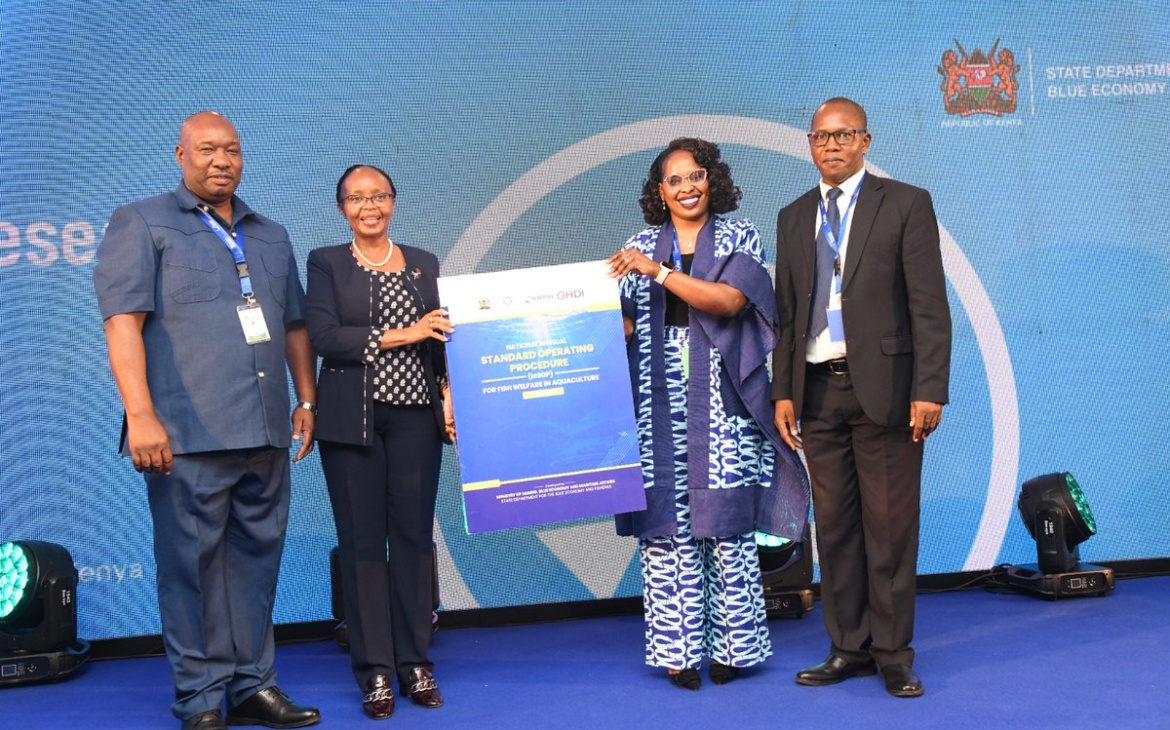
Kenya has made a major milestone in advancing sustainable aquaculture with the launch of the National Fish Welfare Manual Standard Operating Procedures (FW-MSOP), the first framework of its kind in Africa dedicated to fish welfare in aquaculture systems.
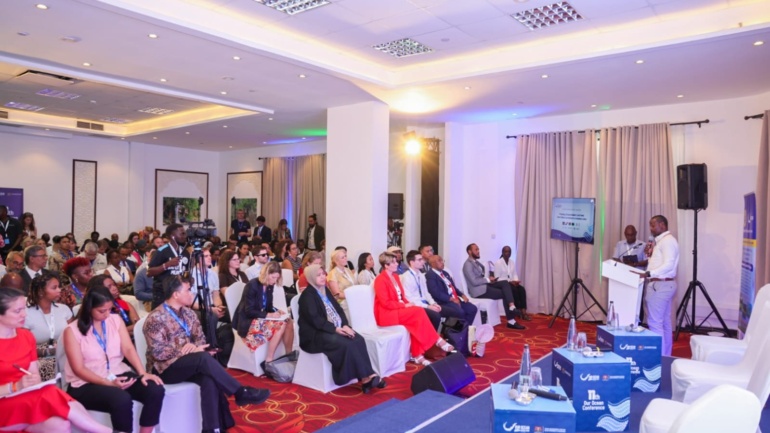
The manual was unveiled during the Scientific and Research Pre-Conference Symposium ahead of the 11th Our Ocean Conference (OOC11) 2026, which brought together government institutions, researchers, and development partners focused on strengthening Kenya’s Blue Economy agenda.
Developed through a multi-agency collaboration involving the Ministry of Mining, Blue Economy and Maritime Affairs, the Kenya Fisheries Service (KeFS), the Kenya Marine and Fisheries Research Institute (KMFRI), and the One Health and Development Initiative (OHDI) under the Africa Fish Welfare (AFIWEL) Programme, the framework offers science-based guidelines for fish welfare across both freshwater aquaculture and mariculture systems.
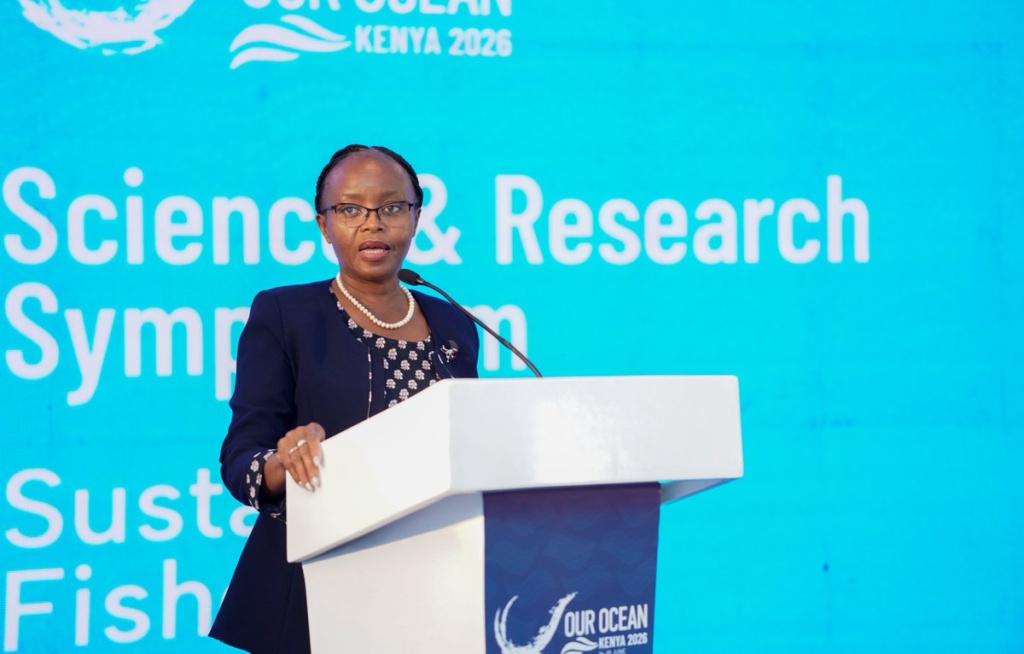
KeFS Director General Dr. Daisy Muriuki described the manual as a transformative instrument for the sector, linking improved fish welfare practices to broader goals of economic growth, food security, and climate resilience.
“I am pleased to announce the official launch of Kenya’s National Manual Standard Operating Procedure for Fish Welfare in Aquaculture. This framework is a transformative tool designed to drive economic growth while safeguarding our food and climate security,” she said.
Dr Muriuki noted that the manual establishes guidelines for governance, digitization, welfare standards and capacity building, while serving as an inspector’s handbook to support implementation across the industry.
KMFRI described the launch as a landmark moment for Kenya’s aquaculture sector, emphasizing that the framework will help improve aquatic animal health, support sustainable production systems and strengthen responsible Blue Economy development.
The initiative comes at a time when aquaculture is increasingly being promoted as a sustainable source of protein capable of reducing pressure on wild fish stocks while enhancing food security for a growing population. Improved fish welfare standards are also expected to contribute to healthier production systems and greater resilience to environmental and climate-related challenges.
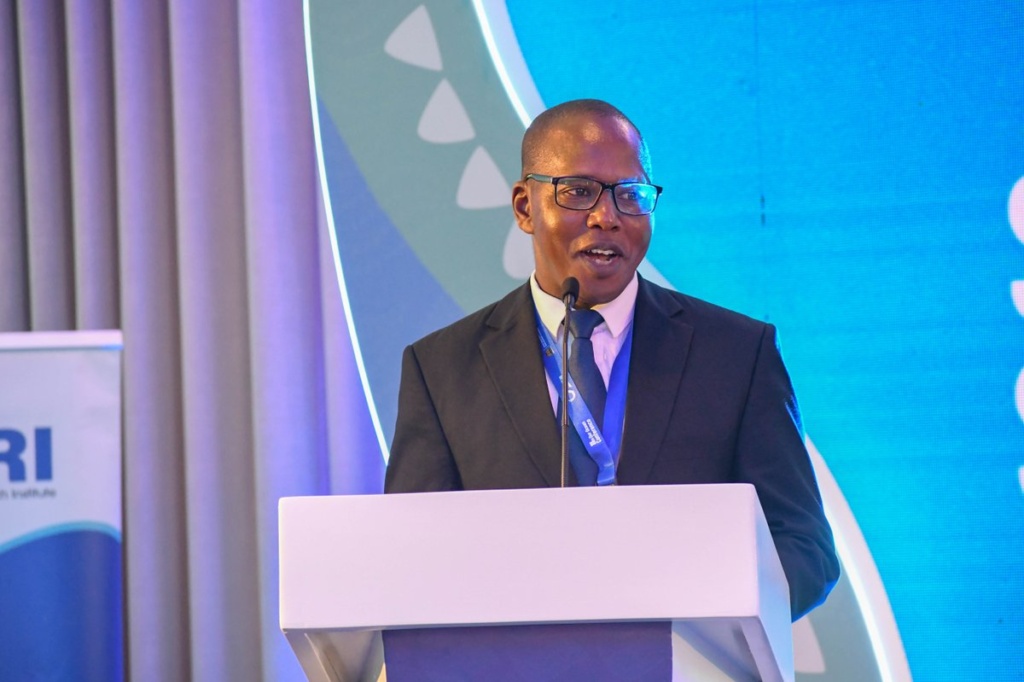
Speaking during the conference, KMFRI Director General Dr Paul Orina highlighted the role of science in safeguarding marine and aquatic resources.
“We, as KMFRI, will continue to grow the next generation of marine scientists, with particular attention to young researchers and women in science. The Ocean is our heritage and our future, but it is also our laboratory and our responsibility,” he said.
As the 11th Our Ocean Conference commences, the launch positions Kenya among the global leaders advancing welfare-centred aquaculture and marks a new chapter in the development of sustainable food systems across Africa.
Read Also: Our Ocean Conference Opens in Kenya With Focus on Africa’s Blue Economy Potential