Much of the Greater Horn of Africa is expected to experience drier-than-normal conditions between July and September 2026, with forecasts also pointing to warmer-than-average temperatures across most parts of the region, according to the latest seasonal outlook from the IGAD Climate Prediction and Applications Centre (ICPAC).
The forecast signals a continuation of increasingly uneven climate conditions across East Africa, where suppressed rainfall and rising temperatures are expected to dominate several countries during the second half of the year.
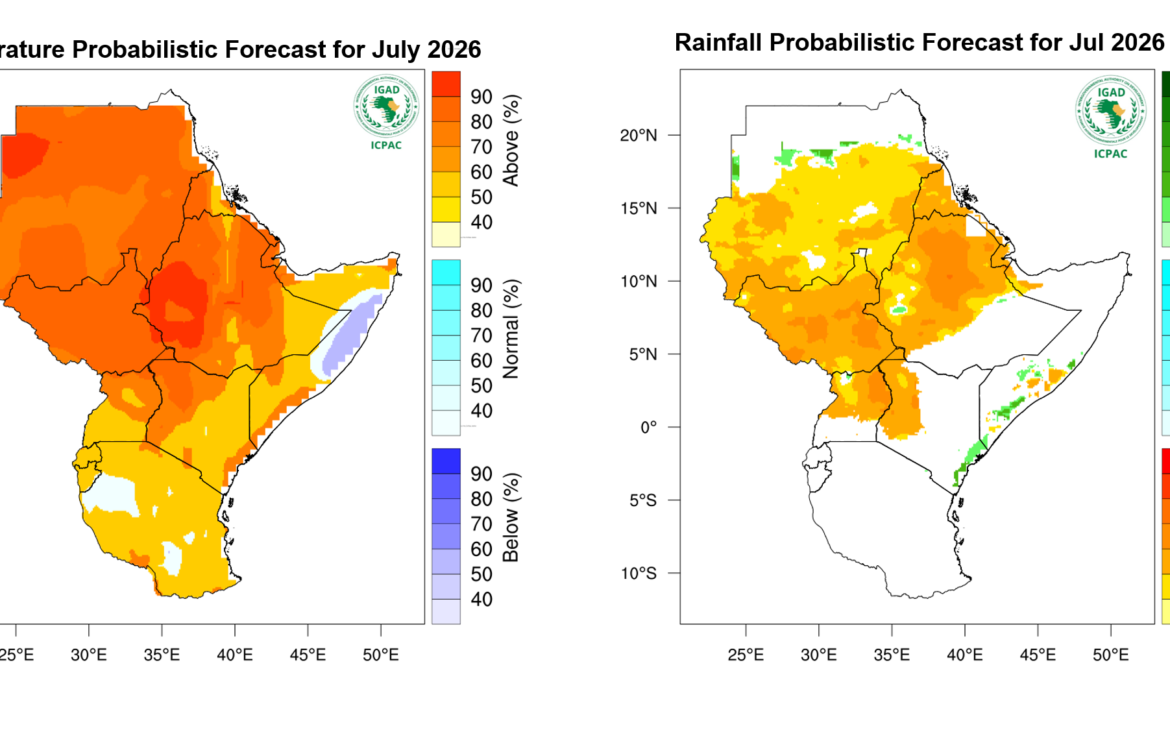
ICPAC projects below-normal rainfall during July 2026 across large parts of Ethiopia, Djibouti, Eritrea, Sudan, South Sudan, northern Uganda, western Kenya, and north-western Somalia, with only isolated areas expected to record wetter-than-usual conditions.
The outlook indicates that parts of southern Somalia and sections of coastal Kenya could experience relatively wetter conditions during the month, standing out against a broader regional drying trend.
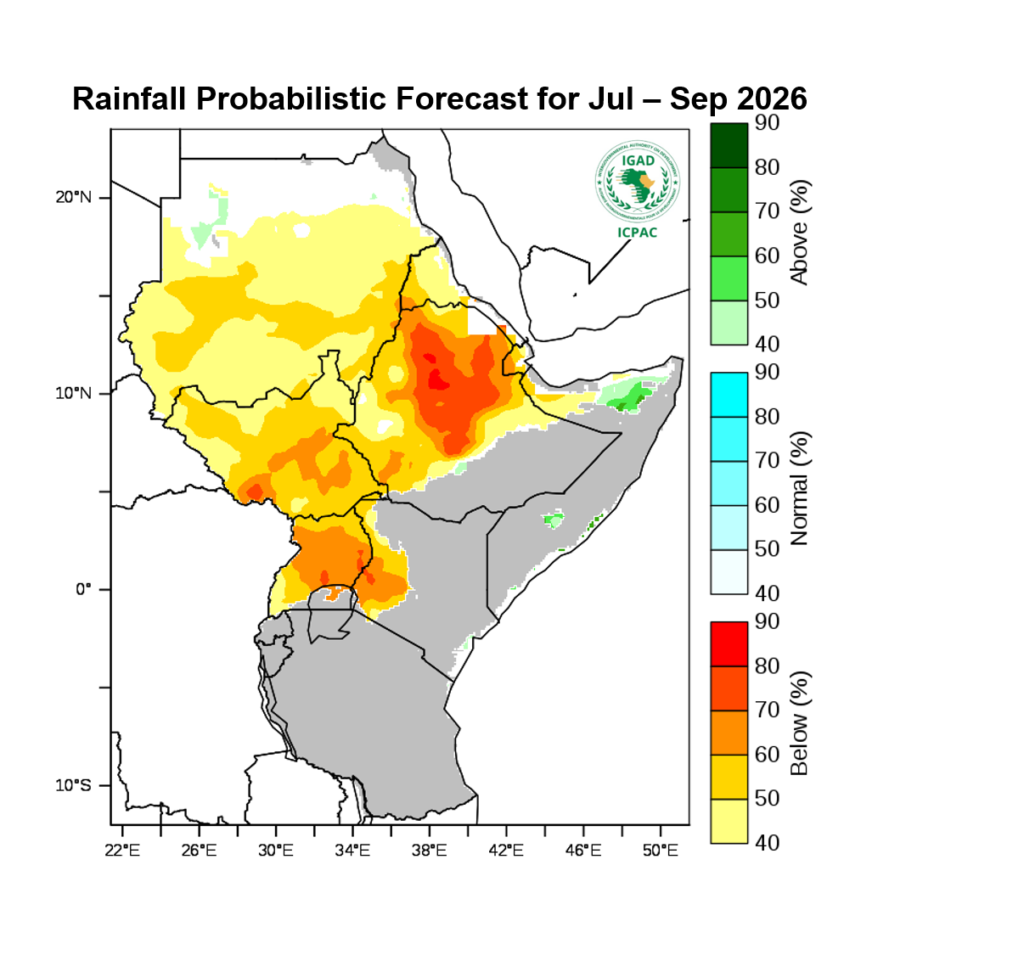
The seasonal forecast for July to September 2026 further reinforces the likelihood of suppressed rainfall across much of the Greater Horn of Africa.
According to ICPAC, Sudan, Eritrea, Djibouti, Ethiopia, north-western Somalia, South Sudan, Uganda, and western Kenya are all expected to experience drier-than-normal conditions, with the highest probabilities of rainfall deficits projected over Ethiopia.
Despite the predominantly dry outlook, some areas are forecast to receive relatively wetter conditions during the broader July-to-September period, including:
- Western and coastal parts of Kenya
- Southern and northern Uganda
- Southern and north-western Somalia
- Southern and north-eastern Ethiopia
- Central Eritrea
- Southern and north-western Sudan
The contrasting rainfall patterns highlight the increasingly fragmented nature of seasonal weather systems across East Africa, where localized wetter conditions continue to emerge within a generally drier regional outlook.
Warmer-Than-Normal Temperatures Expected
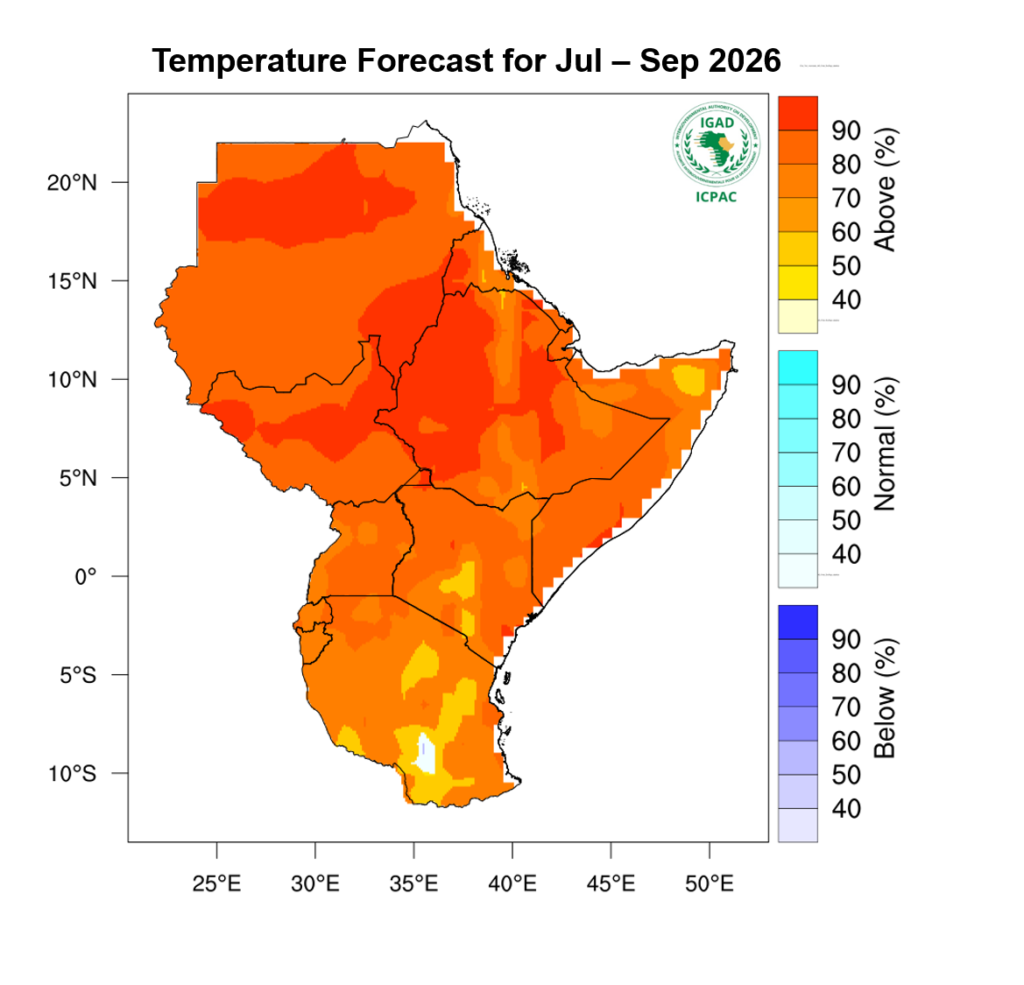
Alongside the rainfall outlook, temperatures are projected to remain warmer than average across most parts of the Greater Horn of Africa during both July and the broader July-to-September season.
The forecast indicates the highest probabilities of above-normal temperatures over north-western Sudan and parts of western Ethiopia during July, while the seasonal outlook highlights elevated warmth across Sudan, South Sudan, and Ethiopia.
Only central parts of Somalia are expected to experience relatively cooler-than-normal temperatures during July.
The combination of reduced rainfall and rising temperatures is likely to increase pressure on water resources, agriculture, pasture conditions, and livelihoods, particularly in already climate-vulnerable areas dependent on rain-fed systems.
The latest seasonal outlook underscores the growing influence of climate variability across East Africa, where increasingly erratic rainfall patterns and persistent warming continue to shape environmental and socio-economic conditions across the region.
Author Profile

-
Seeker.
Inspire AFRIKA.
Latest entries
 Biodiversity23 October 2026Inside Kobe’s Grassroots Effort to Train the Next Generation of Biodiversity Leaders
 Animals23 October 2026As COP17 Meets, World’s Rarest Great Ape Faces a Make-or-Break Test in Indonesia
 Biodiversity22 October 2026One in Five Tropical Biodiversity Sites Overlapped by Mining Concessions, COP17 Report Finds
 Biodiversity21 October 2026COP17 Opens in Armenia with Global Biodiversity Progress Under Scrutiny