A shifting weather pattern is expected across the Greater Horn of Africa in the week of March 31 to April 7, 2026, with rainfall intensifying over southern zones while dangerous heat stress builds across northern areas.
According to the IGAD Climate Prediction and Applications Centre (ICPAC), enhanced rainfall will be concentrated over the southern parts of Tanzania, even as rising temperatures push heat stress to near-danger levels across northern South Sudan and south-eastern Sudan.
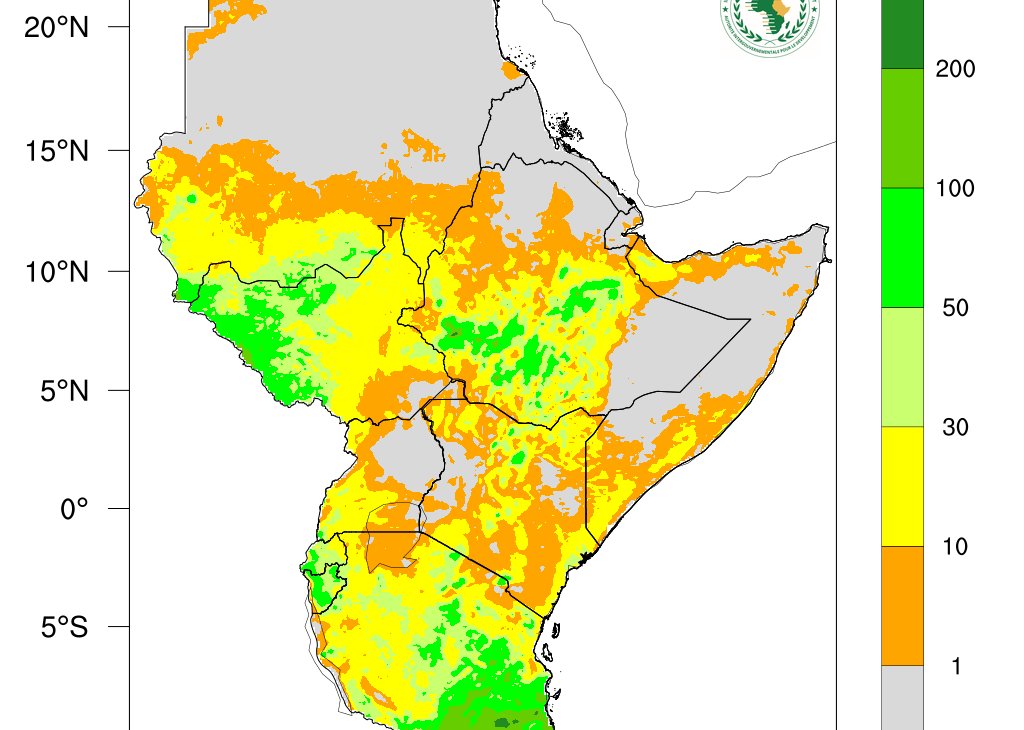
The forecast points to moderate rainfall, ranging between 50 and 200mm, over southern Tanzania, southern Ethiopia, and western regions of South Sudan, Rwanda, and Burundi. These conditions signal a strengthening of rainfall systems in the southern sector of the region, while rainfall remains limited elsewhere in the region.
Elsewhere, much of Kenya, central to northern Tanzania, and large parts of South Sudan are expected to receive light rainfall of less than 50mm.
Similar conditions are projected across southern and northern Somalia, parts of Sudan, and western Uganda, highlighting a continued uneven distribution of rainfall.
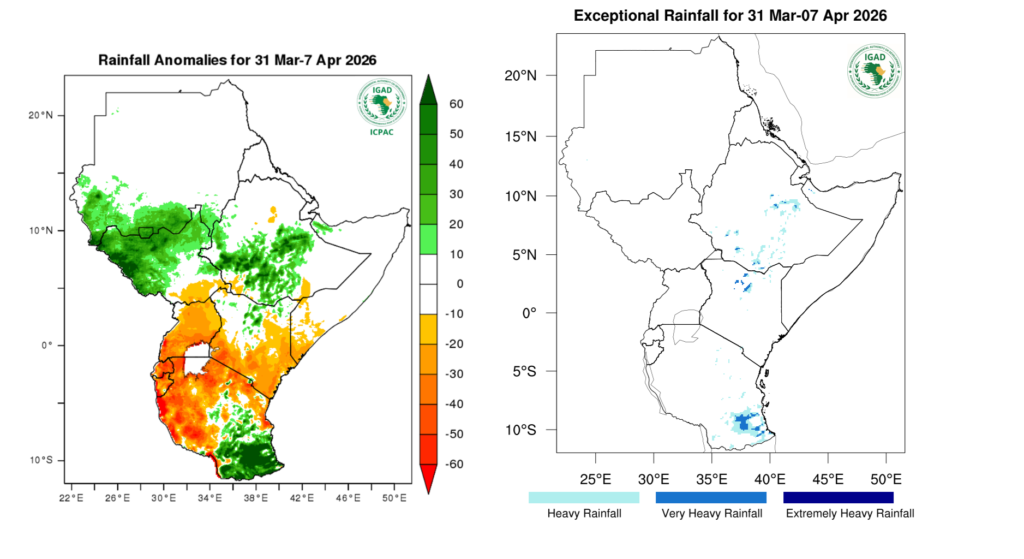
Rainfall anomalies further reinforce this divide for the Greater Horn of Africa, with Wetter-than-usual conditions likely over southern Tanzania, central to southern Ethiopia, and across western to northern South Sudan, extending into southern Sudan.
In contrast, drier-than-usual conditions are expected across most parts of Uganda, Rwanda, Burundi, western and northern Tanzania, and southern and eastern Kenya.
Notably, some areas could see extreme rainfall. “Rainfall exceeding the 90th percentile is expected over parts of southern Tanzania and isolated areas in central to southern Ethiopia,” ICPAC notes, raising the likelihood of localized extremes.
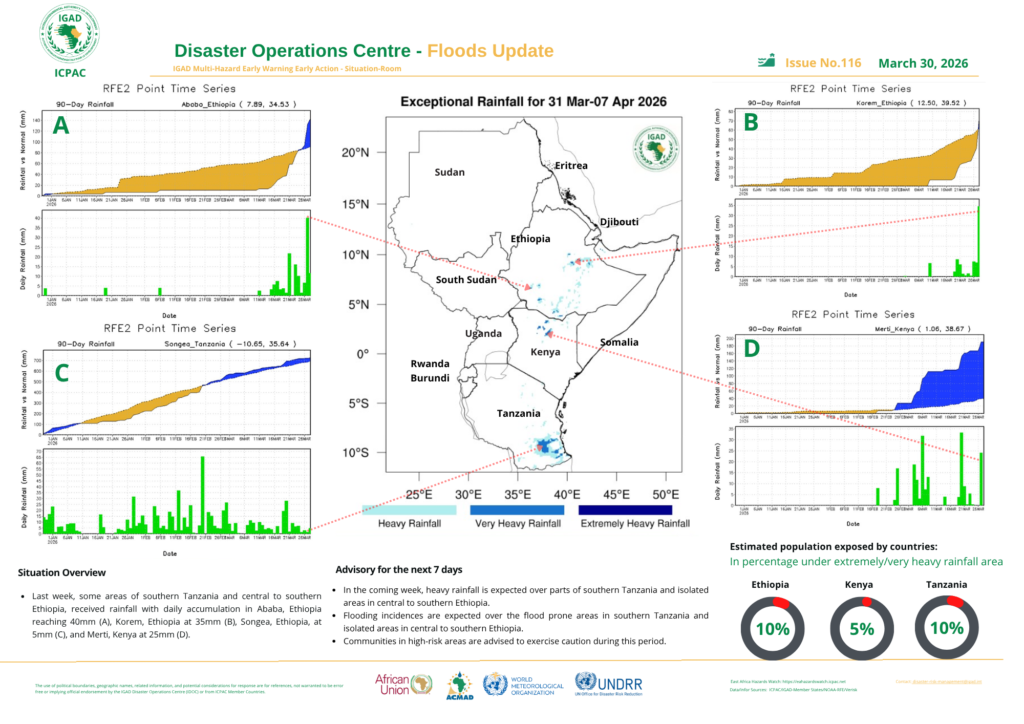
This increases the risk of flooding, particularly in southern Tanzania and parts of central to southern Ethiopia. Communities in flood-prone zones are being urged to remain cautious as water levels could rise quickly during the week.
At the same time, temperatures are expected to climb across much of the greater horn of Africa. Daytime temperatures exceeding 32°C are forecast over central to eastern South Sudan and south-eastern Sudan, while most of the Greater Horn will experience moderate to high temperatures ranging between 20°C and 32°C.
Cooler conditions, below 20°C, are likely to persist in highland areas, including parts of the Ethiopian highlands, central to western Kenya, western Rwanda and Burundi, as well as sections of south-western Tanzania.
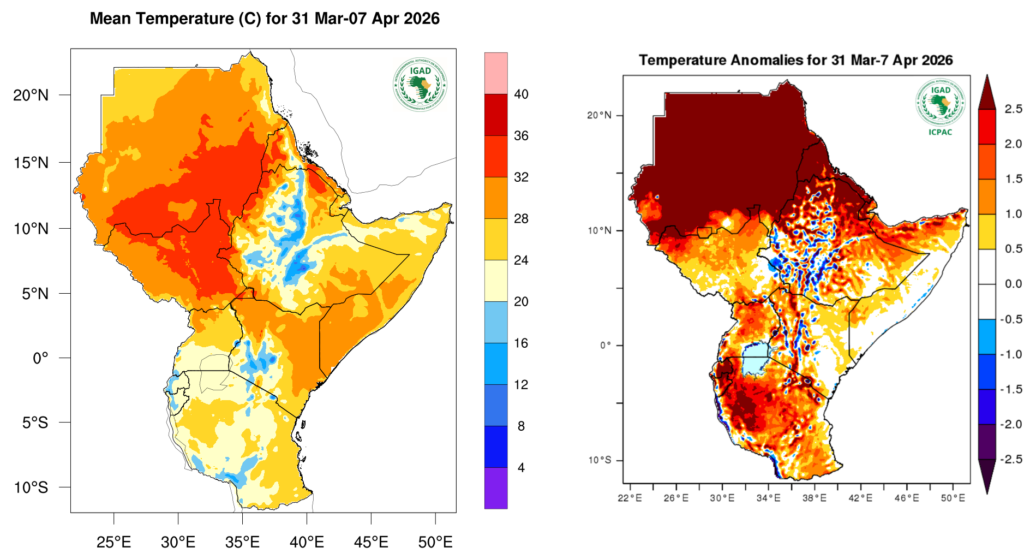
Despite these cooler areas, the broader trend points to warmer-than-usual conditions across most of the region, with only highland areas expected to experience relatively cooler anomalies.
Heat stress remains a growing concern, with ICPAC warning that conditions could reach the ‘danger’ category over northern South Sudan and south-eastern Sudan.
This is to be witnessed in additional hotspots emerging across eastern Tanzania, eastern Kenya, and south-western Somalia.
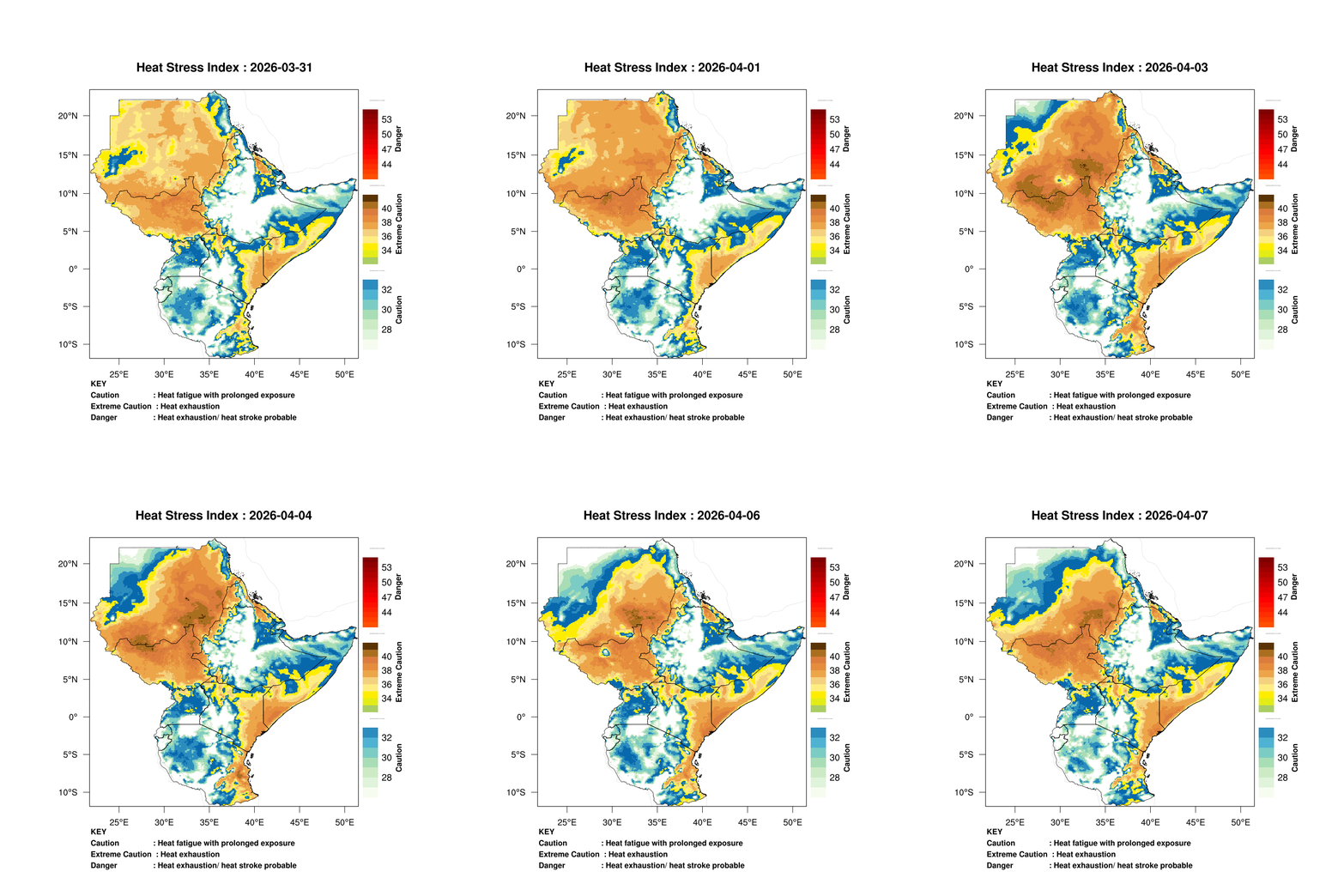
The convergence of intense rainfall in some areas and dangerous heat in others reflects the complex and often contrasting climate signals shaping the Greater Horn of Africa this season.
As the region navigates these extremes, ICPAC continues to emphasize the importance of localized forecasts and preparedness measures, particularly for communities exposed to floods and heat-related risks.
Recent flood events across the region, including in Nairobi, have already highlighted the human and infrastructural toll of extreme weather, underscoring the urgency of preparedness as these conditions persist.