
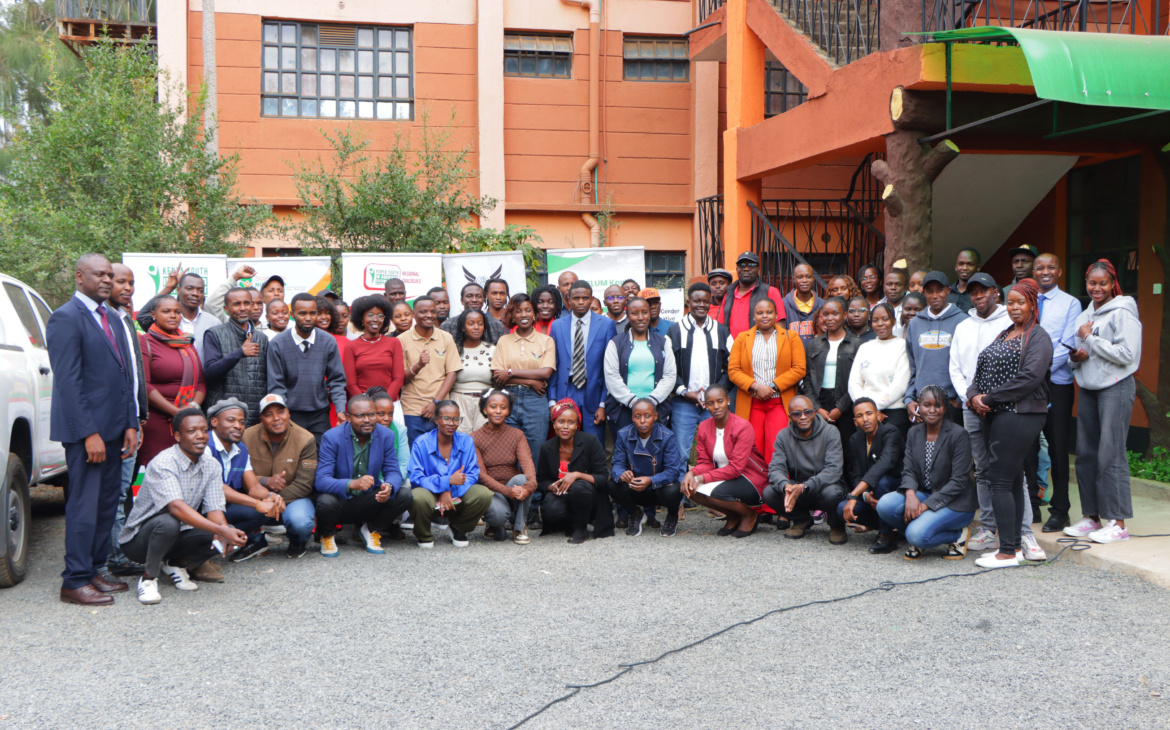
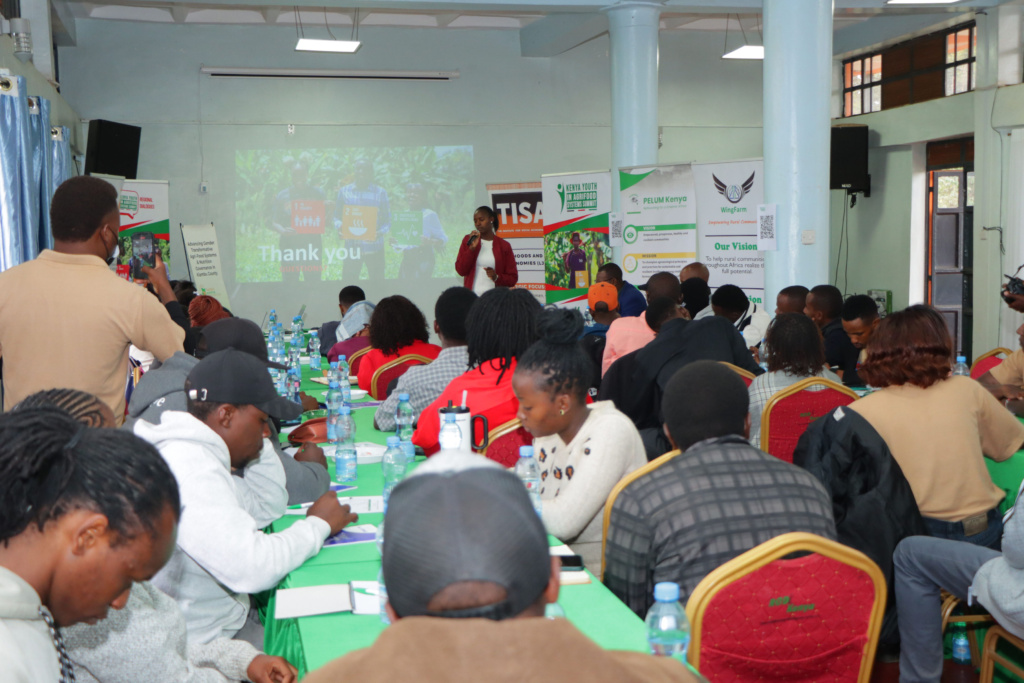
On a cool morning in Kiambu County, at RODI in Ruiru Bypass, the room was largely filled with young people gathered for the Pre-Summit Regional Youth Dialogue, the first in a series of conversations feeding into the Kenya Youth Agrifood Systems Summit, scheduled for August 12–14, 2026, deliberately timed to open on International Youth Day.
The Kiambu meeting, representing the wider Mt. Kenya region, marked the opening chapter of a national push to move youth participation in food systems from symbolic inclusion to meaningful influence at the policy table.
The dialogue was convened by WingFarm, alongside the Ministry of Agriculture and Livestock, the Institute for Social Accountability (TISA), PELUM Kenya, Project Shambani, World Food Forum, Tendet Foundation, comrades for food justice, IFJAD, Welthungerhilfe, and other youth-led organizations advocating for deeper youth representation in agriculture.
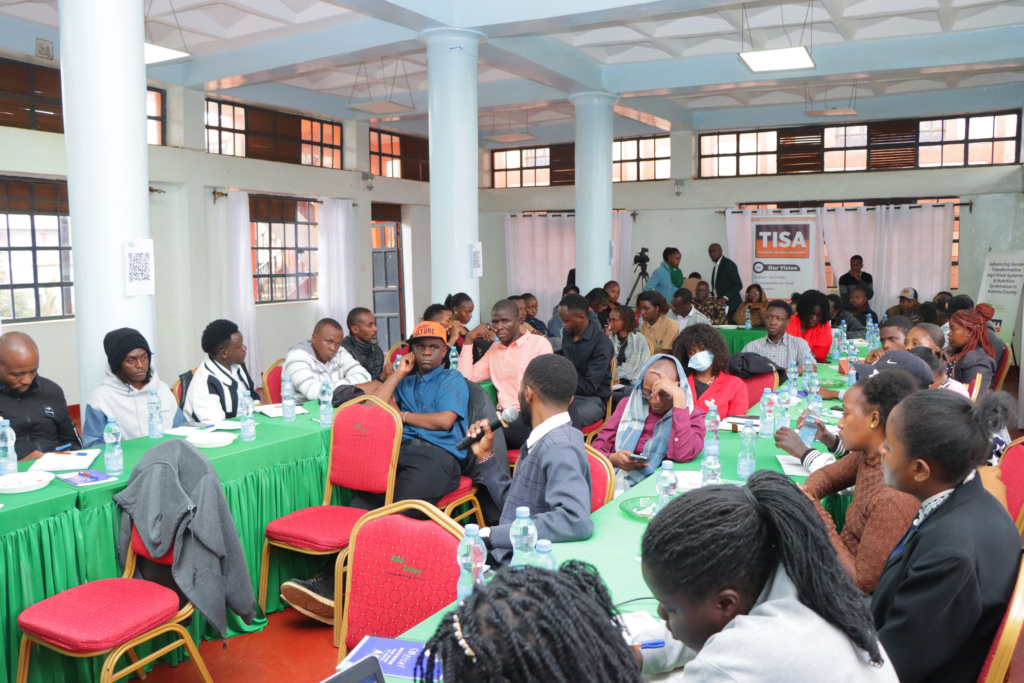
WingFarm founder Kamau Njoroge opened the session with a blunt assessment of what often goes wrong in youth engagement spaces. “Most of these conferences, we find that they have a set event for the youth, maybe a session for the youth,” he said. “Then after that, what happens?”
He argued that many institutions stop at appointing youth representatives or creating youth desks without ensuring meaningful participation or measurable impact.
According to Kamau, the Agrifood Systems Summit aims to break from that pattern by being fully youth-oriented, youth-organized and youth-led.
Agriculture remains Kenya’s largest economic sector and sustains millions of livelihoods, yet many young people still struggle to access land, finance and markets. He cited Kenya’s placement at 103 out of 123 countries in the Global Hunger Index as a reflection of how food insecurity and unemployment continue to reinforce one another.
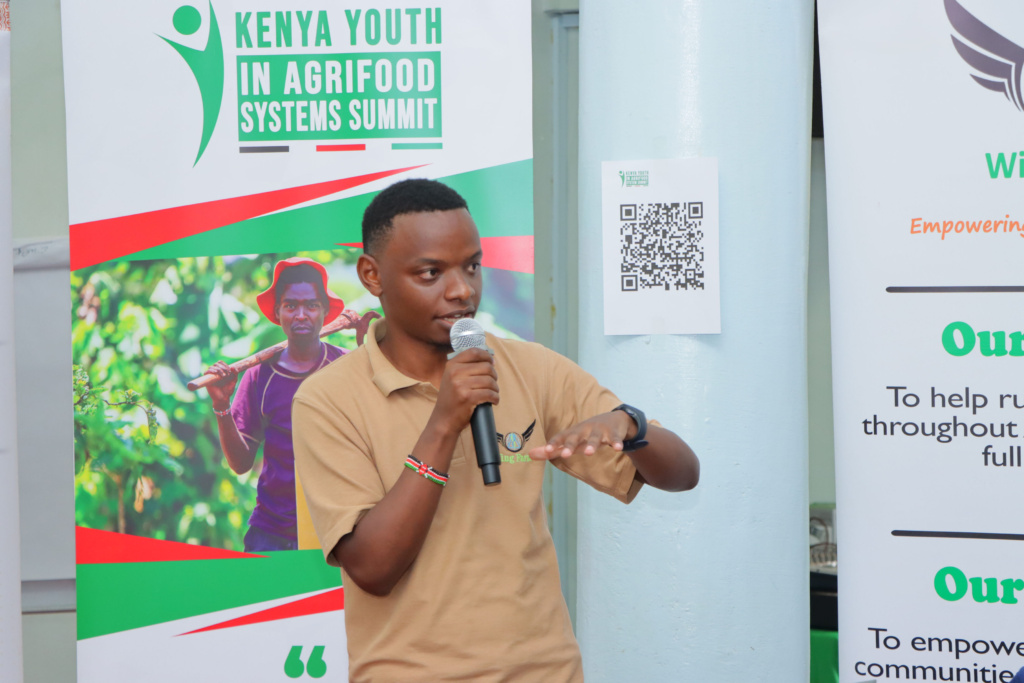
Kamau also criticized what he described as a fragmented development landscape where the same small pool of young people repeatedly cycle through trainings while deeper structural barriers remain unresolved. “There is a group of young people that cannot access these programs,” he said, warning that even youth-led organizations often compete instead of collaborating.
The summit, organizers said, will also launch a Food Systems Awards program recognizing young farmers, agripreneurs and content creators, alongside a tracking mechanism designed to monitor whether commitments made at the summit are actually implemented. That emphasis on accountability became a recurring theme throughout the dialogue.
Moderating the session, Brian Seroney noted that despite young people making up roughly three-quarters of Kenya’s population and playing a major role across agricultural value chains, unemployment remains persistently high.
“We can see the opportunity there, we can see the patterns that there are, the policies that there are,” he said, “but why is it that we still have a very high unemployment rate for the youth?”
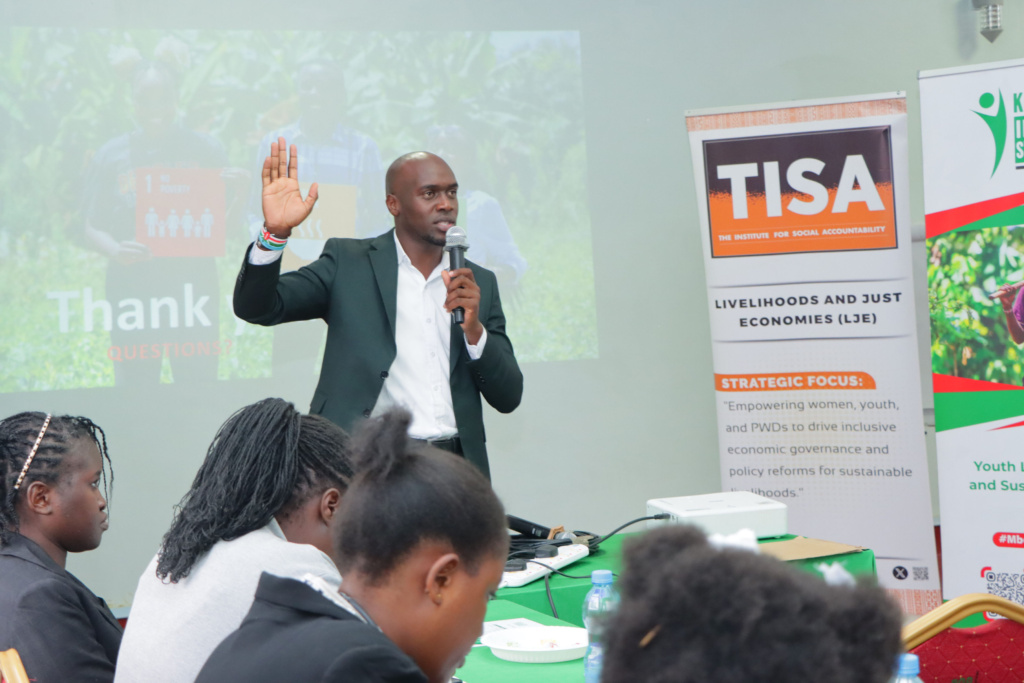
He pointed to another gap: Kenya’s youth-in-agribusiness strategy expired in 2022 and has yet to be renewed, leaving what many participants described as a growing policy vacuum. While the morning’s opening conversations focused heavily on representation and policy, later discussions expanded into nutrition, digital advocacy, agroecology and food justice.
Geofrey Akong’o, finance officer with the Scaling Up Nutrition Civil Society Alliance (SUN CSA), urged participants to think beyond farming alone and embrace digital platforms as tools for advocacy, awareness and market access.
“We have to be innovators as far as digital space is concerned,” he said, pointing to platforms such as TikTok, WhatsApp and Facebook as important tools for reaching consumers and building visibility.
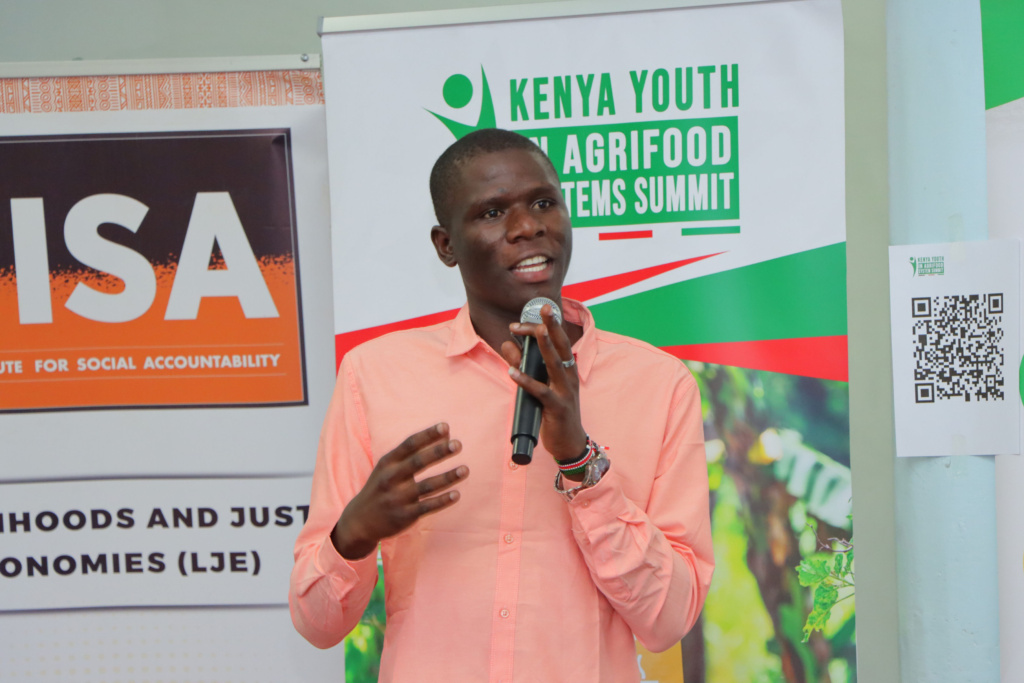
Akong’o also distinguished between food security and food justice, concepts he said are often treated as interchangeable. “Food security is that aspect that gives me confidence in producing sufficient food for consumption now and for the future,” he explained.
“Food justice is to ensure that we consume healthy food, that it is affordable, and that it respects the traditions and culture of various communities.”
For Kelvin Malimo, a livestock research scientist from KALRO, informed decision-making remains critical for young people entering agriculture for the sustainability of Agrifood Systems. He emphasized the importance of understanding local environmental conditions, opportunities and risks before investing in a project.
“We are advocating for planting and growing indigenous vegetables mainly since they are important for our nutritional well-being,” he said.
The conversation repeatedly returned to the political dimensions of food systems.
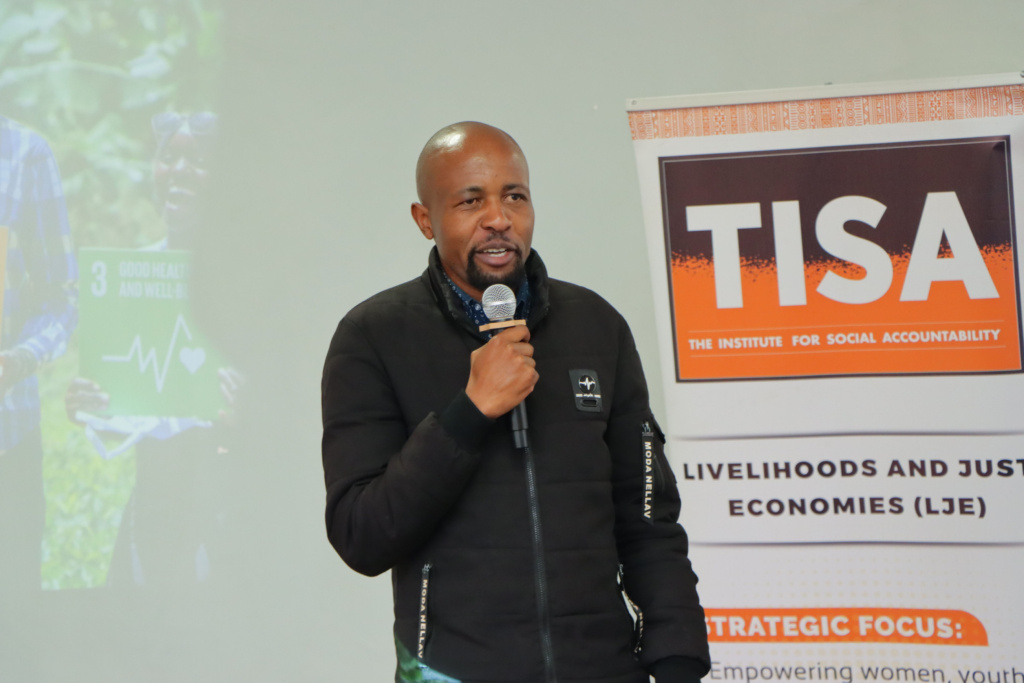
Maria Anne from TISA reminded participants that agriculture and governance cannot be separated, especially as the country moves toward the 2027 elections. “Food is politics,” she said.
“We as the youth, we must show that food is politics, is part of the agenda in 2027. We must come out boldly; we must be counted.”
She also challenged participants to align their personal choices with the food systems they advocate for. “It won’t be in our lap if we come here and discuss food systems, but when we go out there, we’re the first people to consume fancy foods. It must start with us.”
The discussion later shifted toward agroecology and sustainable farming systems.
Amos Okola, a program assistant with the youth-focused agroecology network PELUM Kenya, described agroecology as a pathway for making agriculture more attractive to younger generations beyond primary production alone. According to Okola, the approach also opens opportunities in value addition, market access and policy engagement.
“We are being told that we are the future leaders,” he said, “but we are not the only future leaders in the political arena; it starts from the farmer.”
The pre- Agrifood Systems summit dialogue’s most direct engagement with government came from Charles Mamati Lusweti, Technical Advisor to the Cabinet Secretary for Agriculture, Livestock, Fisheries and Irrigation.
“You are here not by coincidence, but because you are the people who matter in terms of development in this country,” he told participants.
Lusweti outlined a forthcoming AgriConnect Compact, a government-led and private sector-driven initiative expected to mobilize nearly $11 billion through a mix of public and private financing.
“Private sector is not any other factor, it’s not any other company,” he said. “Private sector includes you.”
At the same time, he cautioned participants against expecting direct financial handouts. “Not even a dollar might get to you directly,” he said, arguing instead that young people would benefit through the wider opportunities and investments generated by their initiatives.
He urged young people to organize strategically, communicate effectively and develop collective solutions to the challenges facing the sector.
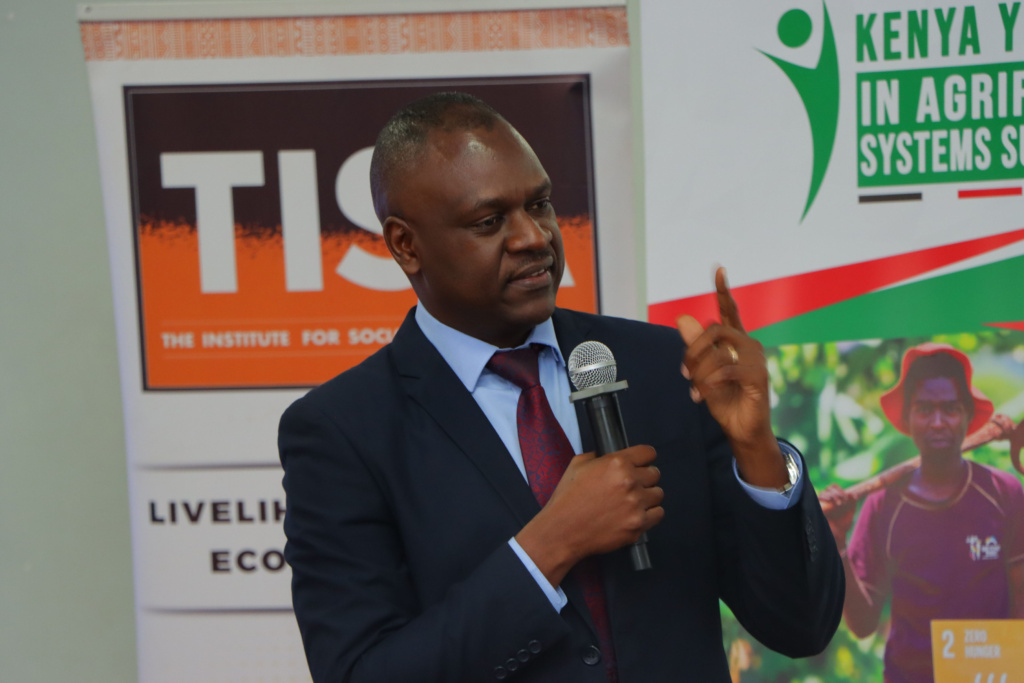
Land access, one of the most sensitive issues raised throughout the dialogue, also featured prominently in his remarks. Lusweti pointed to a Land Commercialization Initiative aimed at bringing nearly 500,000 acres of idle public land into productive use through public-private partnerships and collaboration with the International Finance Corporation.
He also referenced a GIZ-supported land-leasing model operating in five counties in western Kenya, where legally registered lease agreements are being used to rebuild trust between landowners and young farmers. Those agreements, he noted, are formally deposited in legal offices to reduce the risk of disputes or arbitrary changes.
His final message to aspiring young farmers was practical: develop long-term business plans that they could persuade family members when accessing the family land is a problem. “Not one year, do five years,” he advised. “Show them how to get losses. And show them how to get profits.”

By the end of the Agrifood Systems dialogue, one message had become unmistakably clear: Kenya does not lack youth interest in agriculture, nor does it lack policies describing young people as a national priority. What participants repeatedly argued is missing is follow-through.
Speaker after speaker pointed to the need for coordinated programs instead of duplicated initiatives, accessible land and financing systems, and mechanisms that publicly track promises made to young people rather than allowing them to quietly disappear after conferences end.
The Kiambu recommendations will now feed into similar regional dialogues planned for Nakuru, the Coast and another region before converging at the national summit in August.
Organizers say the ultimate goal is to produce youth-authored policy commitments, including renewed calls to revive Kenya’s expired youth-in-agribusiness strategy, that can be publicly tracked rather than filed away.
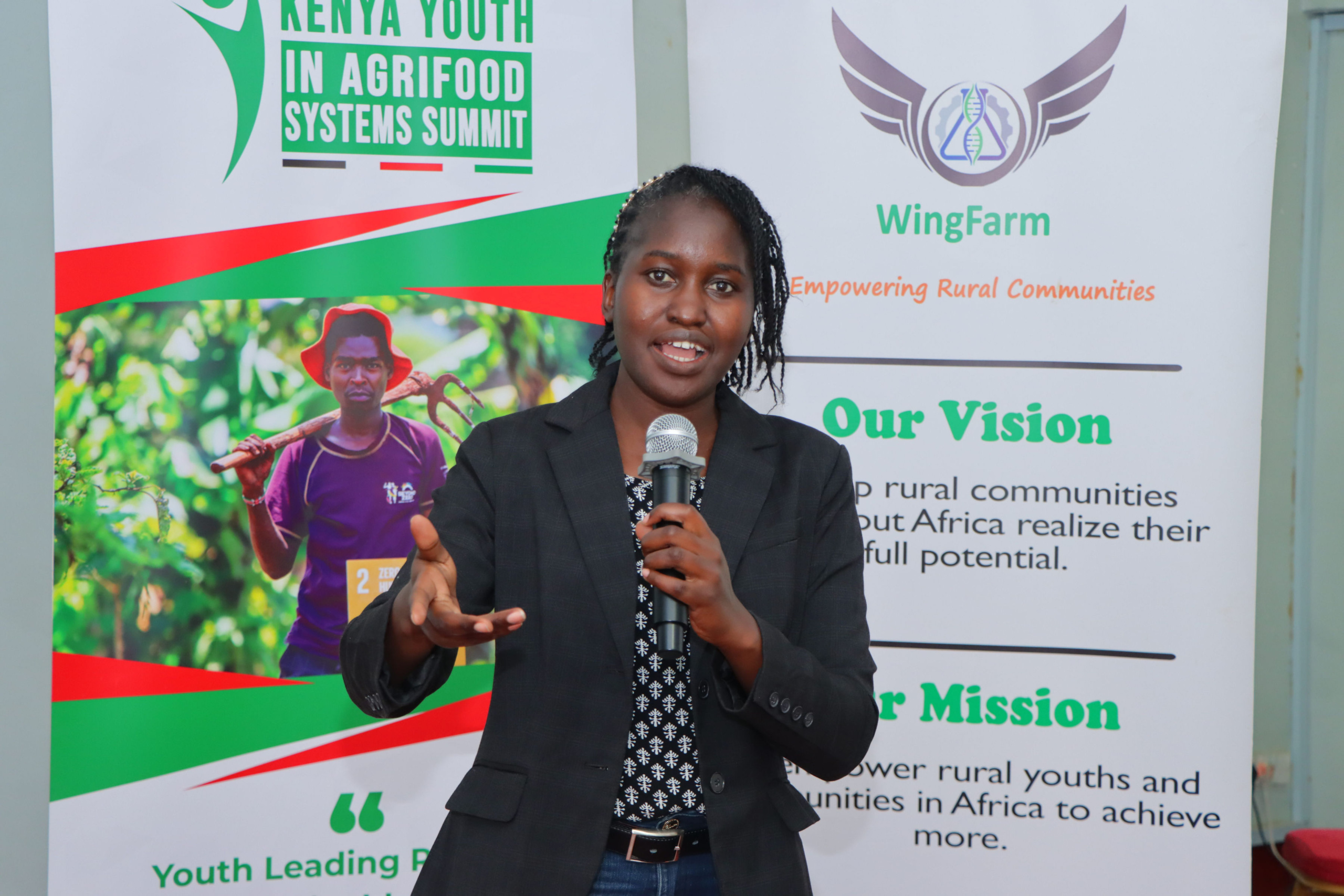
“I want us all to know this will be used to guide us in coming up with the Youth Declaration as well as the pre-stocktaking for the United Nations Food Systems Summit 2027 (UNFSSS),” she said.


