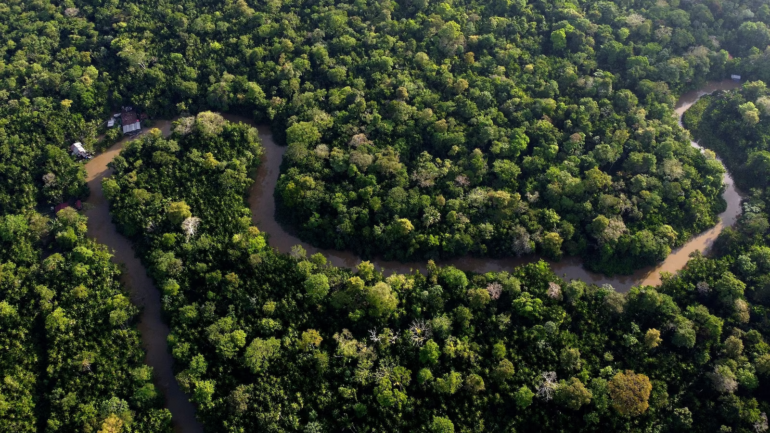
The Democratic Republic of the Congo (DRC) is facing a pivotal decision that could shape the future of the Congo Basin, the world’s second-largest tropical rainforest.
Government plans to lift a 24-year moratorium on new industrial logging concessions have triggered concern among environmental organisations, Indigenous groups and forest governance experts, who warn that the move could undermine climate action, biodiversity conservation and community rights.
More than 70 environmental and human rights organisations have urged the government to halt efforts to remove the moratorium, arguing that the legal and governance conditions required to do so have not yet been met.
The coalition warns that reopening tens of millions of hectares of forest to industrial logging risks accelerating forest degradation, increasing land-use conflicts and weakening the DRC’s growing reputation as a global climate leader.
The debate comes at a time when the country is positioning itself as a “solutions country” in addressing climate change through initiatives such as the Kivu-Kinshasa Green Corridor, expanded community forestry and reforms aimed at strengthening Indigenous Peoples’ rights and land governance.
Why the Moratorium Matters
The logging moratorium was introduced in 2002 to address widespread concerns over poor governance, illegal concession allocations and weak oversight of the forestry sector. It did not ban logging altogether but suspended the allocation of new industrial concessions while the government reformed forest governance.
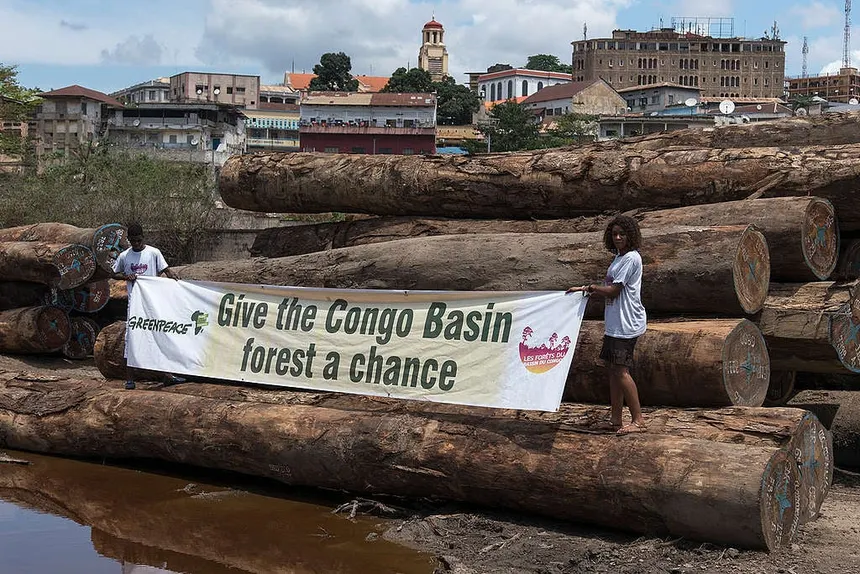
Under legislation adopted in 2005, the moratorium could only be lifted after completing the conversion of existing forest titles and adopting a participatory geographical plan for future concession allocations.
According to a technical briefing by Rainforest Foundation UK (RFUK), these conditions remain unmet. The organization argues that current proposals are being advanced before key reforms, including the National Forestry Policy, a revised Forest Code, and integrated land-use planning, have been completed.
Critics fear that lifting the moratorium prematurely could recreate many of the governance challenges that prompted its introduction more than two decades ago.
Development Versus Conservation
The debate reflects a broader challenge facing many resource-rich African countries: how to pursue economic growth while protecting globally significant ecosystems.
Supporters of expanding industrial logging argue that the forestry sector could attract investment, create employment and generate government revenue. With the DRC holding roughly 60 percent of the Congo Basin forest, timber represents an important natural resource.
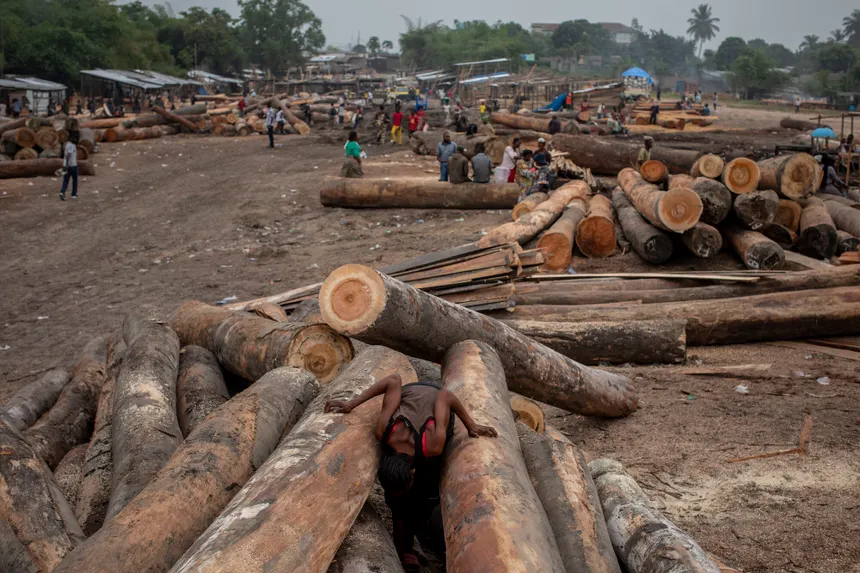
However, RFUK questions whether industrial logging has delivered meaningful economic benefits. According to the organisation, the sector contributes only about 0.6 percent of the country’s Gross Domestic Product and less than one percent of public revenue. Much of the timber is exported without processing, limiting value addition and job creation within the country.
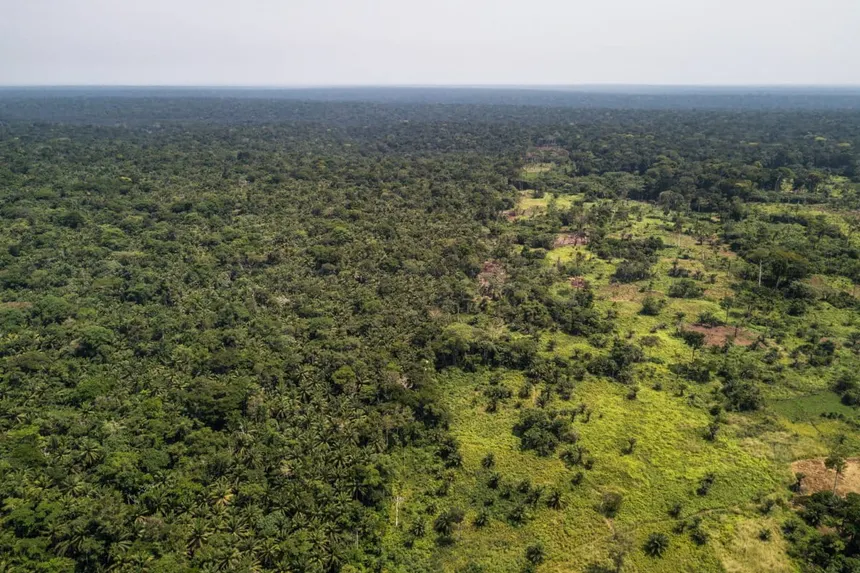
The report also notes that several concession holders have shifted towards conservation projects and voluntary carbon markets, suggesting that the long-term economics of industrial logging may be changing.
These findings have prompted conservation groups to ask whether expanding logging is the most effective pathway for economic development.
A Forest of Global Importance
The significance of the Congo Basin extends far beyond the DRC.
Covering vast areas of Central Africa, the rainforest is one of the world’s largest carbon sinks, absorbing enormous quantities of carbon dioxide while regulating regional rainfall and supporting globally important biodiversity.
It is also home to thousands of Indigenous Peoples and local communities whose livelihoods depend on healthy forests for food, medicine, water and cultural identity.
Environmental groups argue that allocating new industrial concessions could increase forest fragmentation as roads built for logging open previously intact forests to illegal timber harvesting, mining, agricultural expansion and settlement.
Although agriculture and fuelwood remain the primary drivers of deforestation in the DRC, conservationists warn that expanding industrial access could intensify these pressures.
Communities at the Heart of Conservation
One of the strongest arguments against lifting the moratorium centres on Indigenous Peoples and local communities.
Over the past decade, the DRC has introduced reforms recognising community forestry and strengthening legal protections for Indigenous Peoples, including the principle of Free, Prior and Informed Consent (FPIC). These reforms increasingly acknowledge communities as custodians of the country’s forests.

Instead, they advocate expanding community forestry, improving forest governance and strengthening law enforcement before considering new industrial concessions.
A Test of Climate Leadership
The proposed policy also raises questions about the DRC’s international climate commitments.
The country has emerged as an influential voice in global climate negotiations, promoting nature-based solutions while committing to biodiversity conservation, improved land tenure and sustainable forest management.
Critics argue that opening large areas of intact rainforest to industrial logging could undermine these commitments and weaken confidence among international partners supporting conservation and climate finance initiatives.
For environmental organisations, maintaining the moratorium until governance reforms are complete would reinforce the country’s position as a leader in sustainable forest management rather than an exporter of raw timber.
What Now?
The debate over the logging moratorium is ultimately about more than timber. It reflects competing visions of development for one of the world’s most important forest landscapes.
On one hand lies the prospect of expanding industrial forestry in pursuit of economic growth. On the other is a model centred on stronger governance, community forestry, biodiversity conservation and climate resilience.
Finding the right balance will determine not only the future of the DRC’s forests but also the health of the Congo Basin, an ecosystem whose importance extends far beyond national borders.
As governments seek solutions to the interconnected climate and biodiversity crises, the choices made in the Congo Basin will resonate across Africa and the wider world. Whether the DRC maintains its logging moratorium or opens its forests to new industrial concessions, the decision will become a defining test of whether economic development and environmental stewardship can advance together.
Source: Greenpeace
Read Also: WorldFish Charts a Sustainable Future for Aquatic Food Systems
Author Profile

- How can we learn if we don't question?
Latest entries
 COP3115 October 2026Pacific Leaders Call for Urgent Climate Action Ahead of COP31
 Agriculture13 October 2026Can the buffalo fix Kenya’s milk problem? Farmers say start with the feed bill
 Events12 October 2026Cybersecurity in the Floriculture Industry
 Opinion & Analysis8 October 2026Why Africa Must Look to What Already Exists in Its Blue Economy