
A side event by the International Indigenous Forum on Biodiversity (IIFB) brought together custodians of coral reefs, mangroves, turtle nesting grounds and open oceans from four continents with one clear message: Indigenous peoples and local communities (IPLC) are not waiting for global biodiversity frameworks to recognise what they have practised for generations.
Moderated by Viviana Figueroa, the discussion moved from Panama to Antigua and Barbuda, Cameroon, Indonesia, Australia and Senegal, illustrating how Indigenous knowledge continues to shape marine conservation despite growing environmental and development pressures.
The first presentation came from the Guna people of Panama, whose traditional knowledge guides when and where fishing can take place and how marine species are protected. Community rules include seasonal lobster closures during breeding months, minimum catch sizes, protection of egg-bearing females and a ban on tank diving. Local youth also monitor turtle nesting beaches, while community sanctions help enforce these rules.
Speakers also described a newer challenge: the spread of invasive lionfish into Guna waters. Beyond threatening marine ecosystems, the species presents cultural questions for a community whose relationship with the sea is shaped by long-held traditions and beliefs. The message was simple: Indigenous governance is not an alternative to conservation; it has always been part of it.
Representing the Antigua and Barbuda Fishermen’s Society, Ruth Spencer highlighted another reality facing coastal communities. Although small-scale fishers have depended on mangrove forests for generations, they were excluded from national Blue Economy discussions. The clearing of mangroves for marina development has removed natural protection from storms while increasing costs for fishing communities.
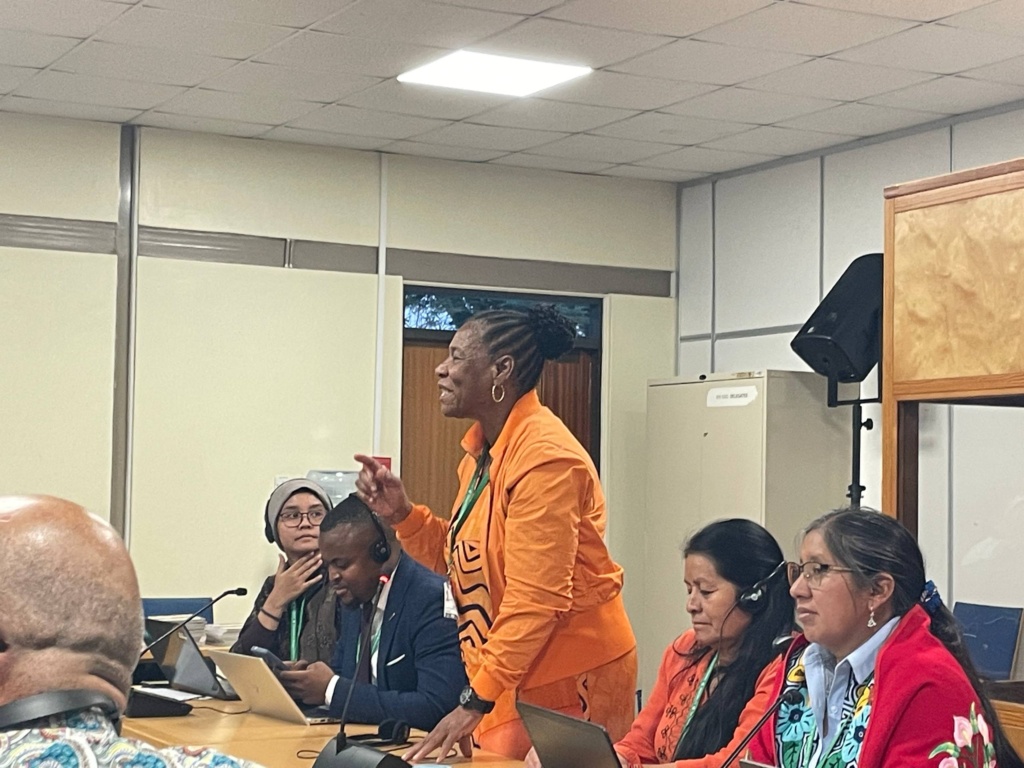
Spencer warned that biodiversity targets will remain out of reach if governments fail to include those who observe changes in reefs, fisheries and coastal ecosystems every day. Conservation policies, she argued, must be developed with communities rather than for them.
From Cameroon’s Atlantic coast came the story of the Iyasa community, custodians of the Lobe Kribi marine and coastal Territory of Life. Their sacred forest provides both ecological and cultural value but now faces mounting pressure from urban expansion, a growing deepwater port and proposals for a government-controlled marine protected area that could displace the community from land it has protected for generations.
Coastal waters are divided into zones with different uses, while seasonal closures allow fish, lobsters and sea cucumbers to reproduce before harvesting resumes. The system combines customary leadership, local government and church institutions to guide resource management.
Lestari also outlined the challenges of expanding recognition of Indigenous conservation areas, citing limited infrastructure, unreliable electricity and difficult travel between islands. Despite these obstacles, communities continue documenting and registering their territories.
In Australia, John Locke of the Chuulangun Aboriginal Corporation described how Indigenous ranger programmes have grown into a key part of the country’s conservation efforts.
Supported by legislation and employment policies, the programme is expected to include nearly 3,800 Indigenous rangers by the end of the decade.
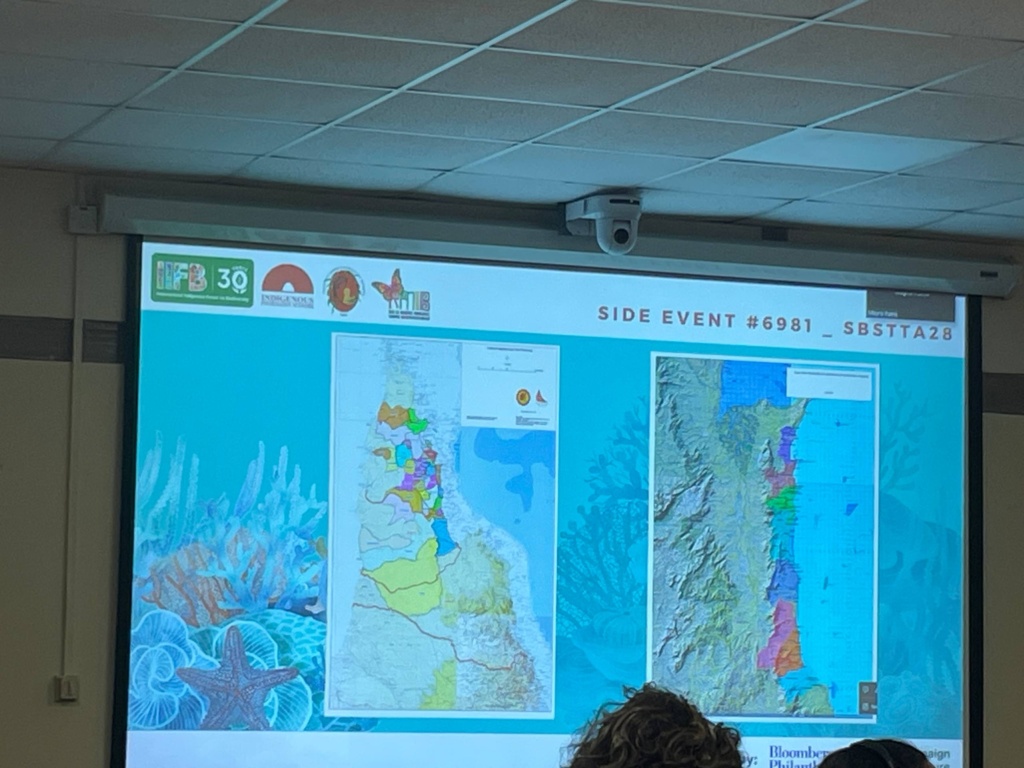
Locke also showed how Indigenous knowledge extends beneath today’s coastline. While modern maps identify open water, his community still recognises submerged landscapes that existed before sea levels rose. Rangers have guided researchers to underwater wetlands using knowledge passed down through generations, demonstrating that cultural memory remains an important conservation tool.
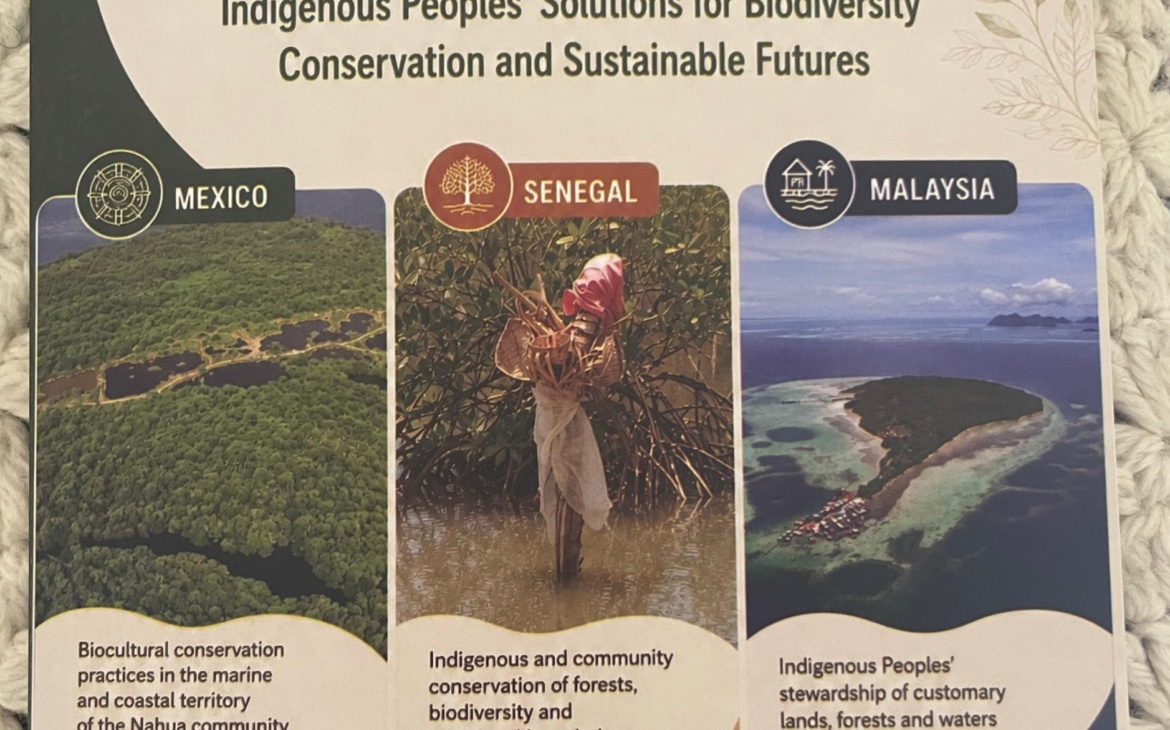
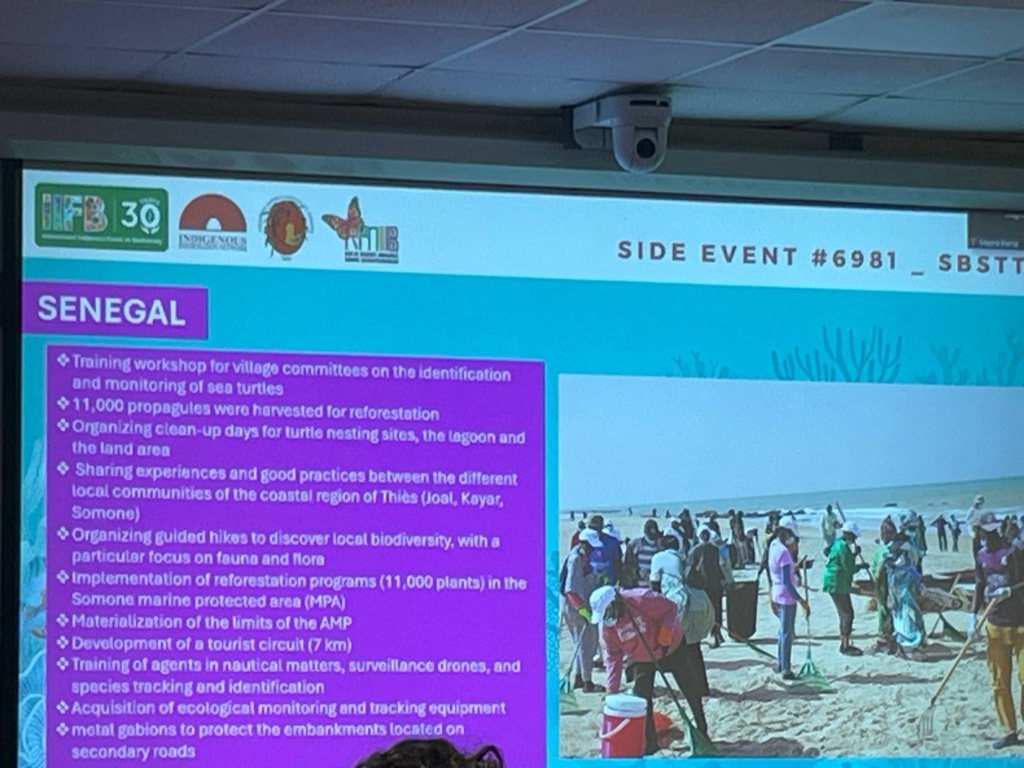
The final technical presentation focused on community-led projects supported through small grants. Olga Tzec of the International Indigenous Forum on Biodiversity highlighted work in Senegal’s Simal Community National Reserve, where local communities have restored mangroves, monitored sea turtles, used drones for surveillance and strengthened cooperation across neighbouring villages.
More than 11,000 mangrove seedlings were planted by volunteers from three communities, while local teams received training in biodiversity monitoring and shoreline protection. Tzec said these projects show that when communities directly benefit from conservation, they become its strongest stewards.
Closing the event, IIFB co-chair Lucy Melenkei stressed the importance of documenting Indigenous conservation efforts through community case studies. Such records, she said, help ensure that governments, donors and international negotiators recognise local knowledge while respecting the principle of free, prior and informed consent.
Her final message echoed the discussion throughout the session: removing Indigenous peoples from their lands does not only threaten biodiversity. It also erodes cultures, traditions and knowledge systems that have protected oceans and coastal ecosystems for centuries.


