
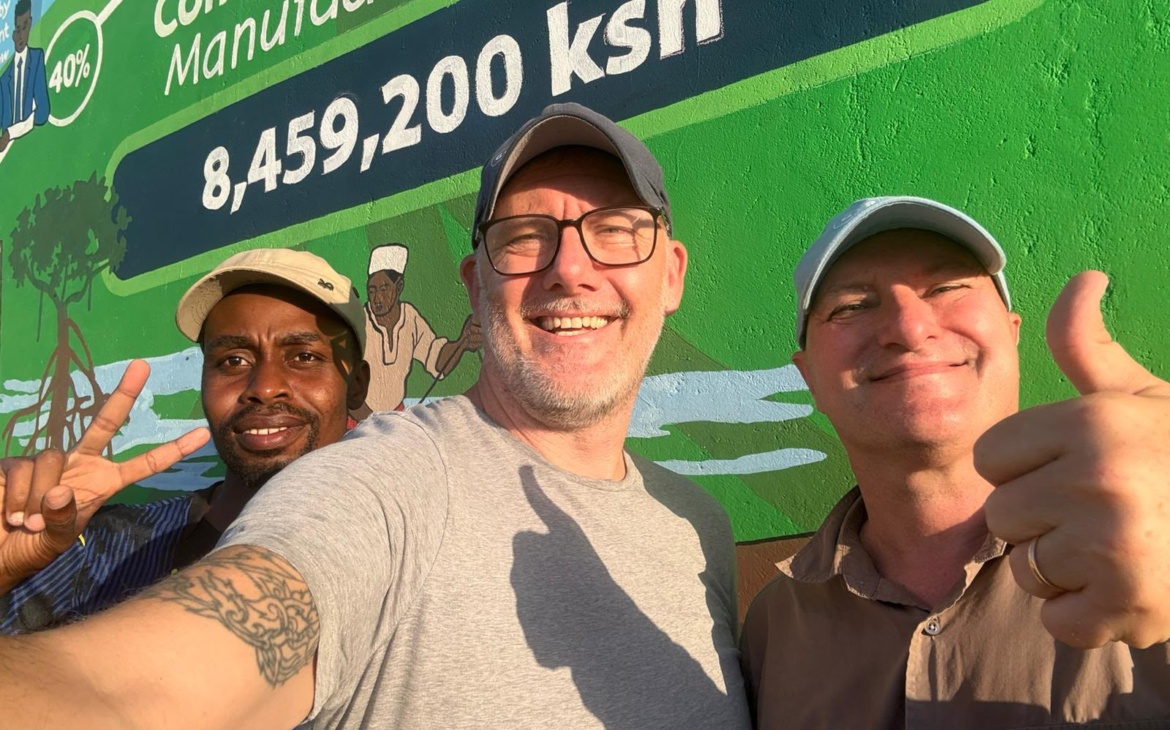
How a week-long exchange between Kenya and Indonesia, and a community mural in Vanga Bay, is redefining trust in the global Blue Carbon market
Along the Kenyan coast, where mangrove roots twist through the tidal mud of Gazi Bay and Vanga, a quiet experiment is reshaping how the world thinks about climate finance.
It’s not happening in a boardroom in Geneva or a negotiating hall in New York; it’s happening in fishing communities that have spent the last decade partaking in carbon credit actions, revealing that it can be both environmentally sound and radically transparent.
That story brought a delegation from Indonesia’s Ministry of Marine Affairs and Fisheries to Kenya last week, in a technical exchange supported by the government of Norway and facilitated by GRID-Arendal, the Norwegian foundation and collaborating centre with the United Nations Environment Programme.
In a conversation with Climate Lens News on the sidelines of the eleventh Our Ocean Conference in Mombasa, Kenya, Steven Lutz, Blue Carbon Lead at GRID-Arendal, pointed out that the center of it all is blue carbon, the carbon stored and sequestered by coastal ecosystems like mangroves, and a simple but powerful idea: if you want climate projects to work, put communities first.
“For us, the importance of Africa and the Our Ocean Conference is the ability for Africa to demonstrate its leadership on global ocean issues,” said Steven Lutz, Blue Carbon Lead at GRID-Arendal. “And this is really embedded with one of the topics that we work on, blue carbon.”
A Week of Governance, Top to Bottom on Blue Carbon
The Indonesian delegation’s visit was designed to explore blue carbon from every angle: governance, finance, technical implementation, and community benefit-sharing.
Officials met with Kenya’s leading institutions on the subject: the Kenya Marine and Fisheries Research Institute (KEMFRI), the Kenya Forest Service, the Ministry of Environment and Blue Economy, and the National Environment Management Authority (NEMA).
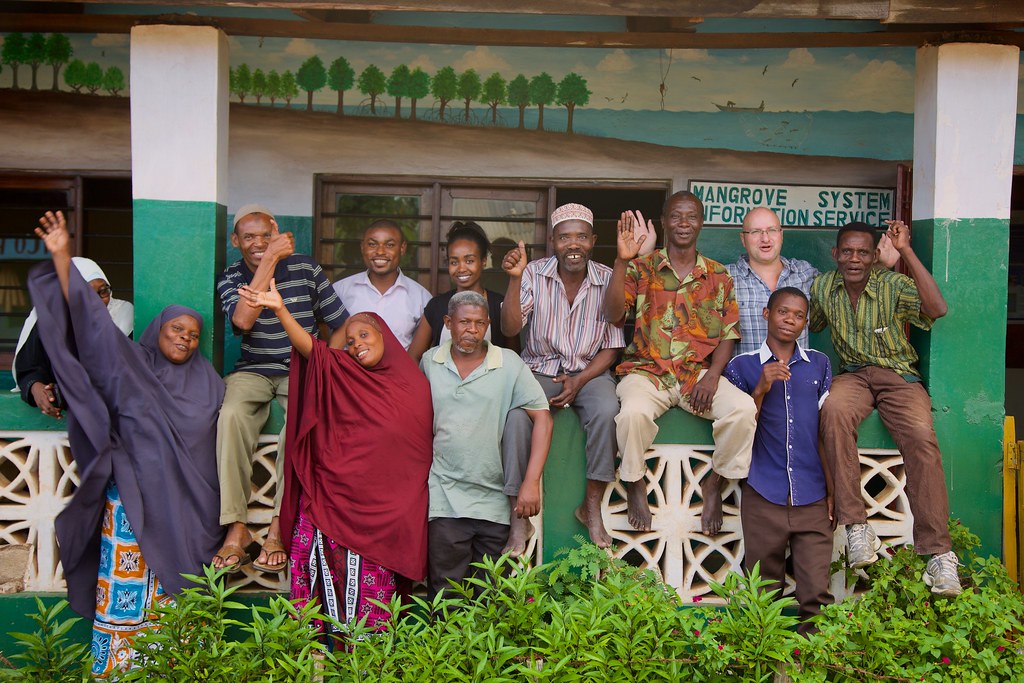
Then the Indonesian delegation left the offices behind. They travelled down the coast toward the Tanzanian border, spending several nights in Gazi Bay and visiting the community-run project sites in Vanga.
“It was a full range of governance exchange from the top to the bottom, and from the bottom to the top,” Lutz said.
What made Kenya the right place for this exchange is its track record. Two community-based mangrove projects, Mikoko Pamoja and Vanga Blue Forests, have operated successfully in the voluntary carbon market for over six and over ten years, respectively, generating income through mangrove conservation and restoration.
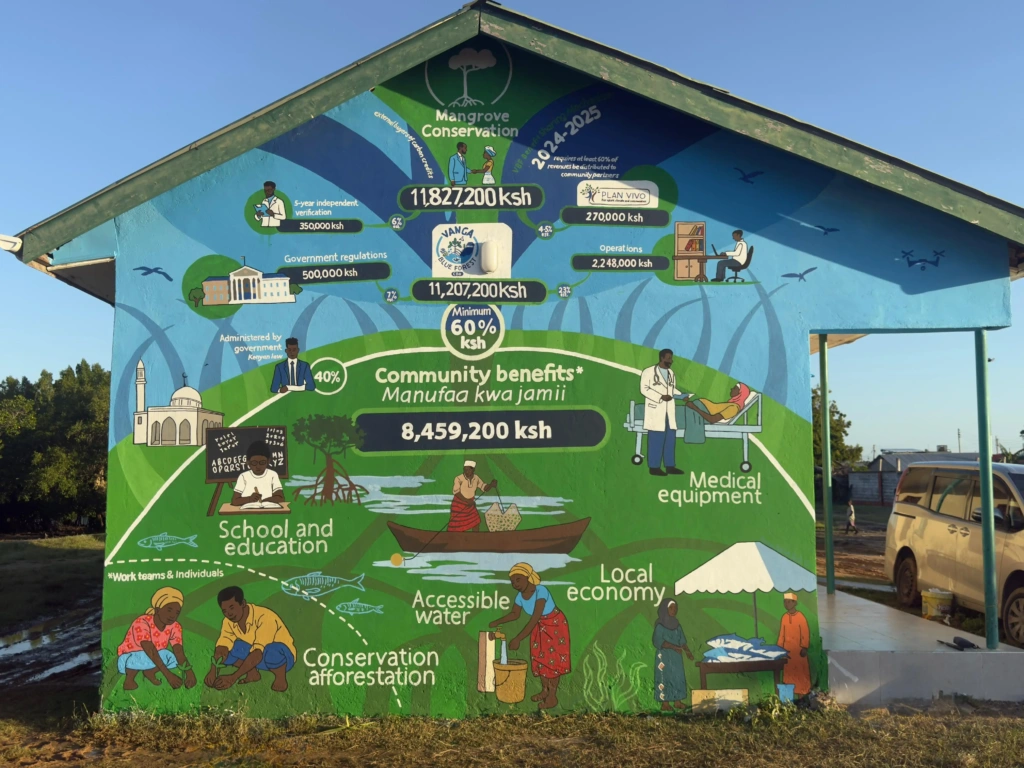
Lutz calls them “high-integrity” blue carbon projects, and the reason comes down to one number: communities receive a minimum of 60% of the revenue generated from carbon offset sales.
That model has made Kenya, in Lutz’s view, a genuine test case for how nature-based carbon offsetting can work, at a time when the voluntary carbon market broadly has struggled with credibility.
“Nature-based offsetting in the voluntary carbon market has faced integrity challenges. Kenya is illustrating how these challenges can be addressed and how high-integrity approaches can be put into practice.”
The Mural That Changed the Math
If there was a single moment that captured the trip’s core lesson, it happened on a wall in Vanga.
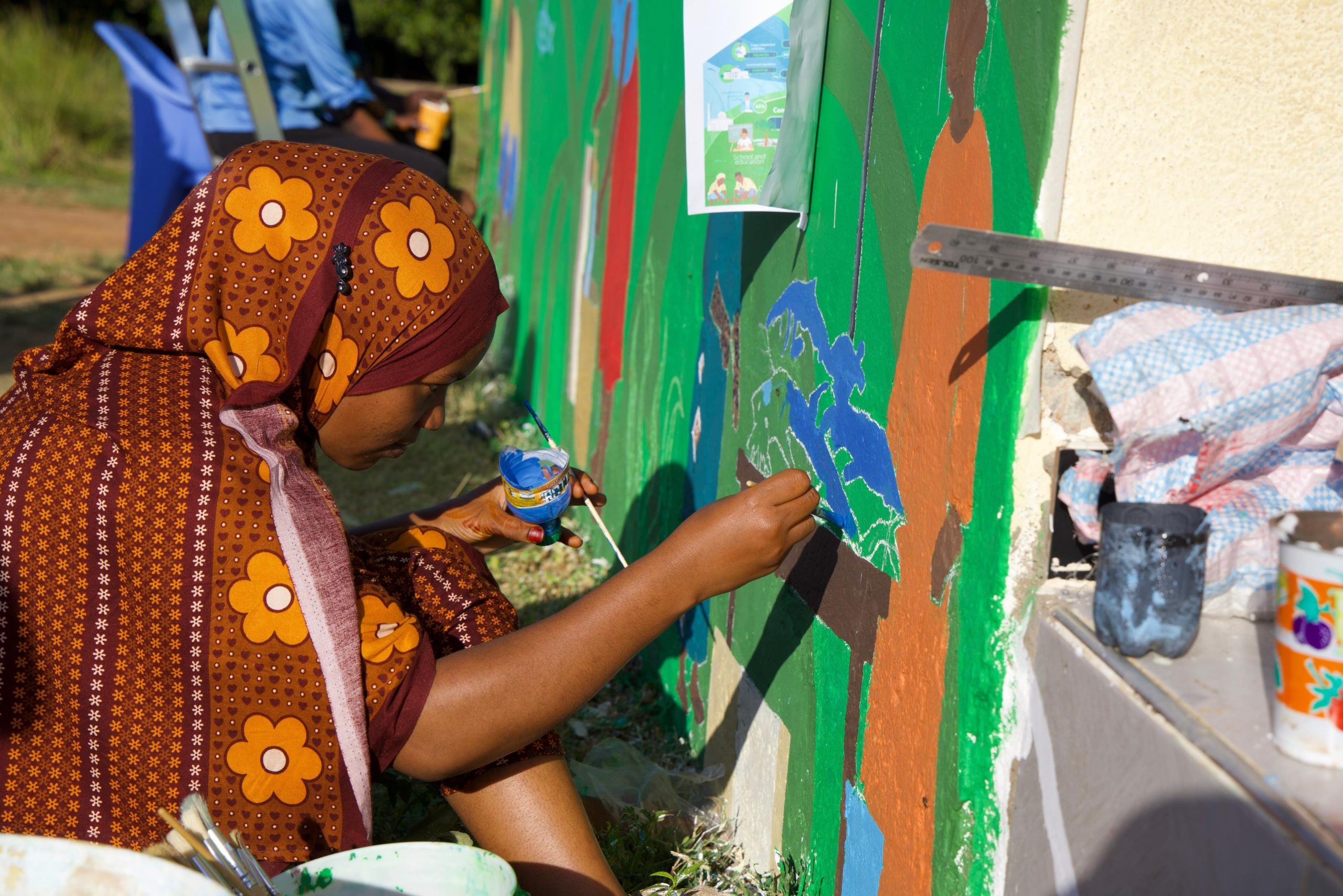
When the Indonesian delegation arrived in Vanga, they didn’t just view the mural. They picked up brushes and painted it themselves.
The result, according to Lutz, is significant beyond the symbolism: Vanga Blue Forests is now the world’s first blue carbon project on the international market with full financial transparency, meaning the carbon credits it sells can be independently verified as directly benefiting the community that protects the mangroves.
“What that means is that the credits that they sell are unlike any other blue carbon credits on the voluntary carbon market,” Lutz said, “because they can verify by metrics that these finances are going towards the community.”
Why Indonesia Is Watching Closely
The stakes for Indonesia are high since it holds the largest mangrove and seagrass ecosystems on the planet, meaning the largest blue carbon reserves in the world.
A credible, community-anchored financial model for protecting those ecosystems could be transformative, both for climate goals and for the coastal communities who depend on them.
For Lutz, the most encouraging sign of the trip’s success wasn’t a policy document or a signed agreement; it was watching the delegation’s confidence grow.
“We helped facilitate and guide the conversation at the beginning,” he said, “however, as the mission progressed, it was very encouraging to see the Indonesian delegation strengthen their understanding and confidence, and increasingly take the lead in asking the key questions. By the end of the exchange, they were driving those conversations themselves.”
From the Field to the Stage
The exchange culminated at the Our Ocean Conference, where a more senior Indonesian delegation, a director from the Ministry of Marine Affairs and Fisheries, joined a Norwegian government representative for a breakfast session in Gazi Bay.
There, project leads and community members walked participants through how the projects are structured, run, and what’s been learned along the way.
The timing lined up with another milestone: Kenya’s release of its NDC Blue Carbon Investment Strategy, further cementing the country’s position as a reference point for the field.
“I think Kenya has demonstrated important leadership in the field of blue carbon. There is valuable experience here that other countries can draw on as they consider their own legislation, strategies and approaches.”
As the visit wound down, Lutz offered a simple sign-off, borrowing from his hosts with an Asante sana for Thank you very much.
Author Profile

-
Seeker.
Inspire AFRIKA.
Latest entries
 Agriculture14 October 2026Africa’s Food Systems Future Depends on Listening to Farmers
 Weather Forecasts13 October 2026Rain and Rising Temperatures Forecast Across the Greater Horn of Africa
 Climate9 October 2026Beyond Negotiations: Africa Expects Concrete Outcomes from Antalya
 Animals7 October 2026In Kajiado’s Drylands, Collective Selling of Small Herds Is Changing the Livestock Trade


