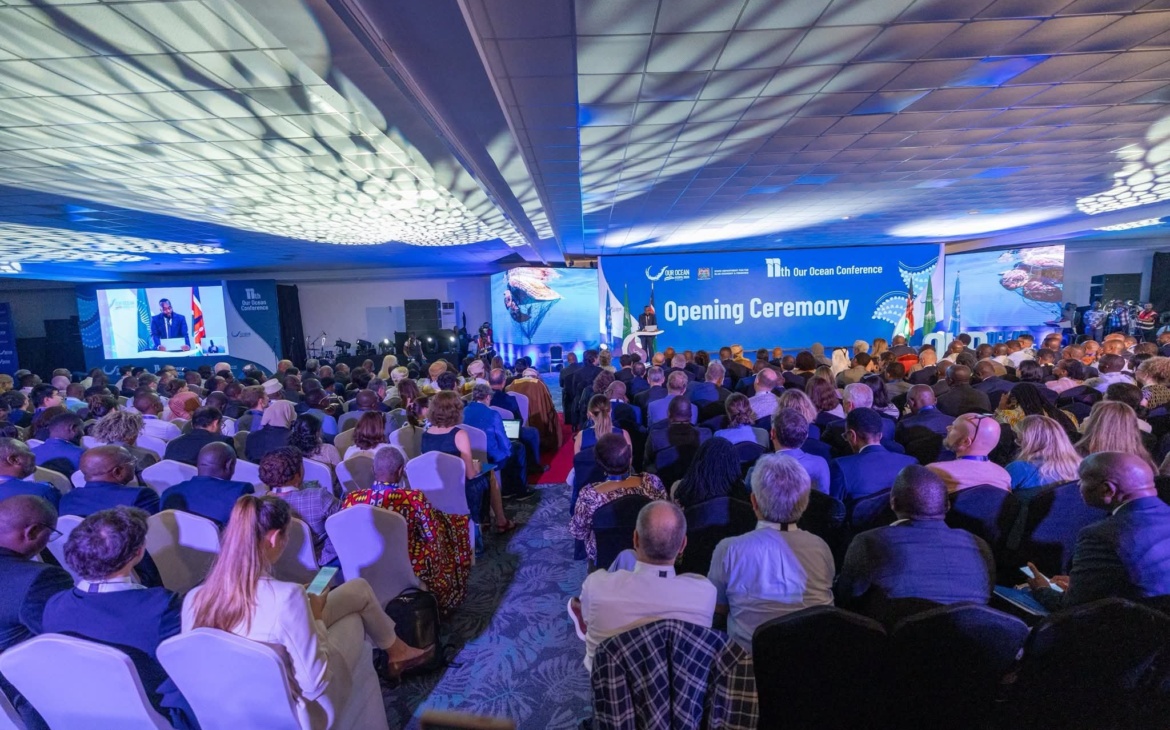
The 11th Our Ocean Conference (OOC11) officially opened in Mombasa, bringing together more than 3,000 delegates from governments, international organizations, scientists, investors, and civil society to advance global action on ocean protection and the blue economy.
It is the first time the conference is being held in Africa, marking a significant moment for the continent’s growing influence in global ocean governance.
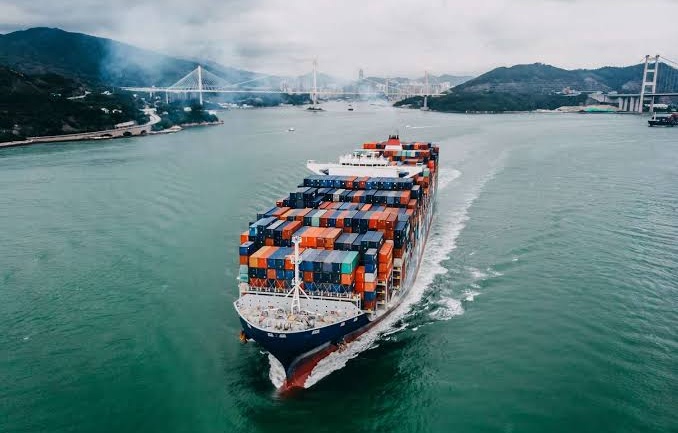
The conference was officially opened by Deputy President Prof. Kithure Kindiki, who represented President William Ruto. He highlighted the strategic importance of the Port of Mombasa in driving regional trade and integration, hence the importance of driving ocean protection and conservation in a collective approach.
“Every container handled at the Port of Mombasa is not just a logistical statistic; it represents livelihoods and connects millions of people across East Africa,” he said.
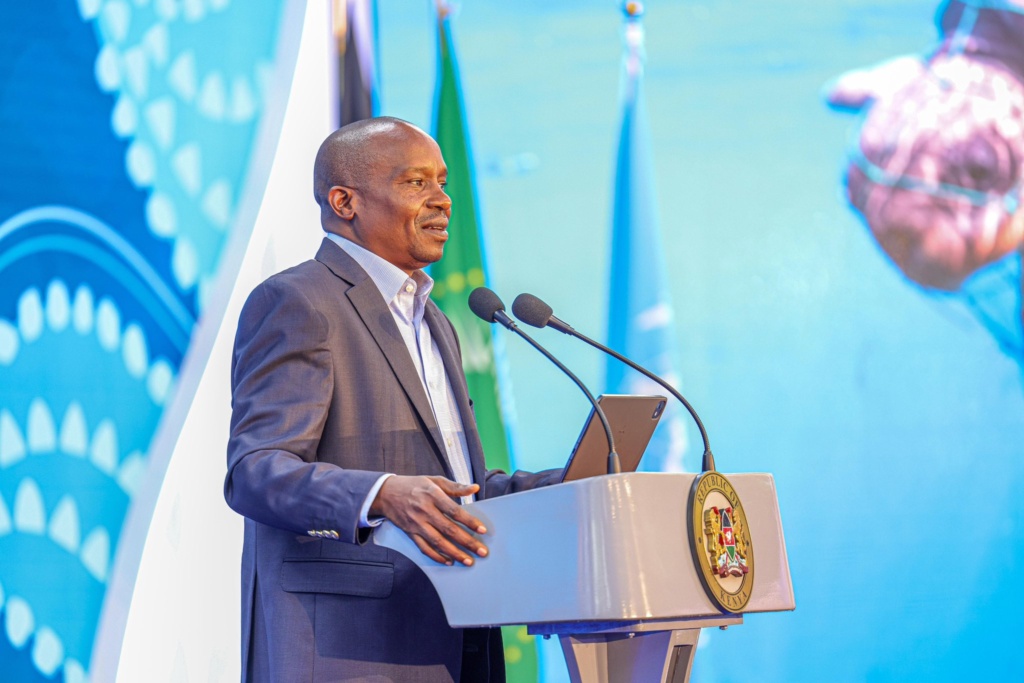
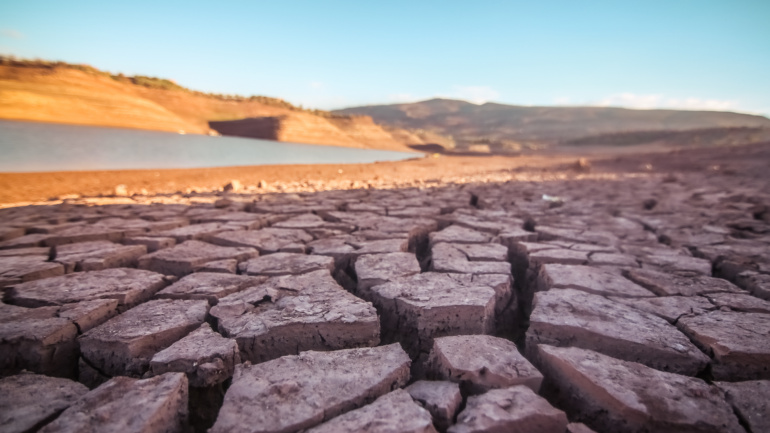
He warned that oceans are under growing pressure from climate change, pollution, biodiversity loss, and overexploitation, calling for urgent and coordinated global action.
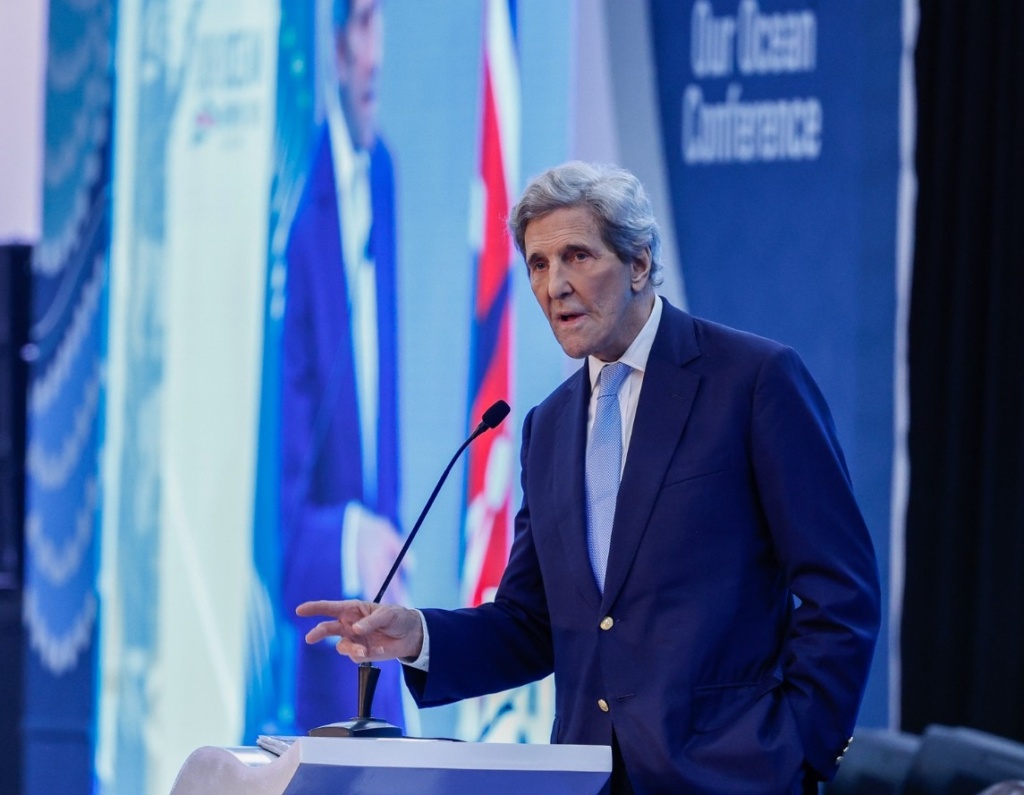
Former United States Secretary of State and founder of the Our Ocean Conference, John Kerry, joined global leaders in calling for stronger international cooperation to protect marine ecosystems and strengthen ocean governance. Reiterating a statement he shared years back that we can’t have a healthy planet unless we have a healthy ocean.
As the man behind the ideology, he emphasized that the ocean has actually been acting as Earth’s life support system, and it’s been protecting us. With a question to the audience being before the audience, whether there is a willingness to protect the ocean in return.
John Kerry emphasised the critical role oceans play in sustaining life on Earth. From producing half the oxygen we breathe to absorbing excess heat and carbon emissions, the ocean remains our planet’s life support system.
“The ocean has to become central to global climate solutions, as it can no longer be treated as an afterthought in climate policy,” he added.
Cabinet Secretary for Mining, Blue Economy and Maritime Affairs Hassan Ali Joho, alongside Cabinet Secretary for Investments, Trade and Industry Lee Kinyanjui, said Kenya is positioning itself to fully harness the potential of its coastline while strengthening sustainable ocean use.
Kinyanjui noted that Kenya’s over 600-kilometre coastline presents major opportunities for trade, tourism, investment and long-term economic growth anchored in the blue economy.
Joho called for deeper global partnerships to tackle marine pollution, illegal fishing, biodiversity loss, and the impacts of climate change on coastal communities.
“As Africa continues to harness the immense potential of its oceans and marine resources, we must position ourselves not merely as beneficiaries of global ocean initiatives but as leaders shaping the future of ocean governance and stewardship,” he said.
Mombasa Governor Abdulswamad Nassir also used the platform to outline the county’s efforts to strengthen environmental protection, particularly through improved waste and sewer management systems aimed at reducing marine pollution.
He said Mombasa is investing in an integrated waste management project designed to improve recycling, strengthen waste collection and reduce pressure on the marine environment.
“Successful waste management requires ownership, innovation and collaboration among all stakeholders,” he said.
Nassir reflected on the changing state of the ocean, noting the loss of marine life and coral ecosystems he once experienced growing up.
“We used to swim and see coral fish in the ocean. That’s no longer possible. My children now have to pay to see what I used to see for free,” he said.
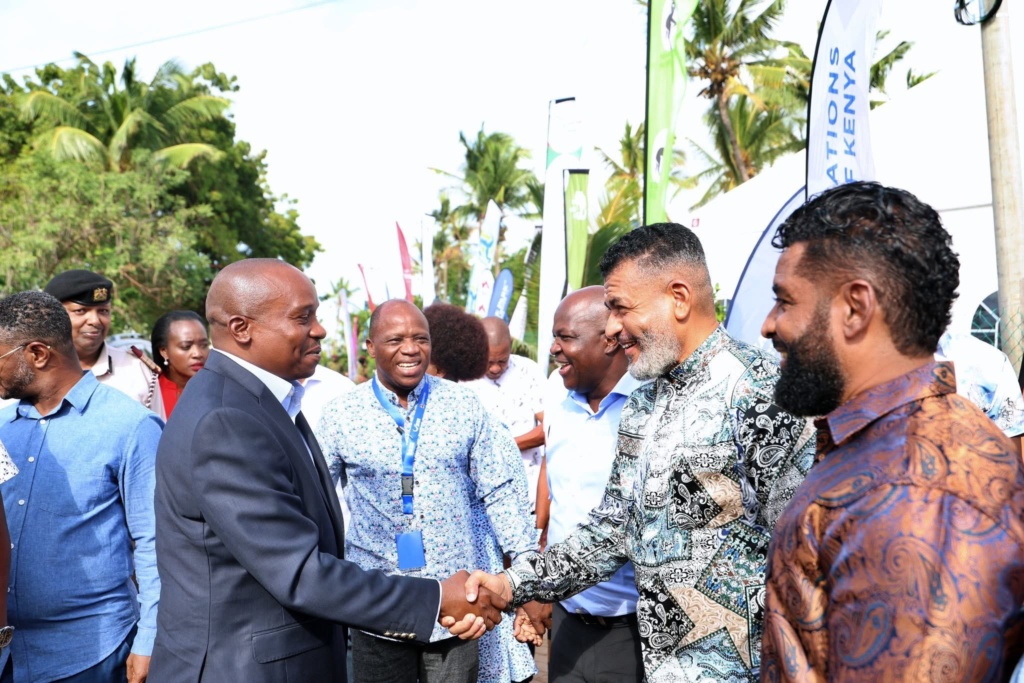
Echoing what the science says that it’s human activities that have caused this, the governor added that it is something that can be controlled and addressed collectively.
“We do not inherit the ocean from our ancestors; we borrow it from our children,” he added.
One of the notable voices at the conference was actress and Oceana Ambassador Kate Walsh, who highlighted the experiences of coastal communities and small-scale fishers whose livelihoods depend directly on healthy oceans.
Kate pointed to a consistent finding from conservation efforts across the Philippines, Chile, and Kenya: protection is most effective when indigenous peoples, coastal communities, artisanal fishers, and local leaders are part of the process from the start.
From the region, Somalia’s Deputy Prime Minister Salah Jama stressed that ocean challenges cannot be addressed in isolation.
“Our ocean is our identity, our heritage, and our frontier for security, prosperity and a shared blue future,” he said, calling for stronger regional cooperation.
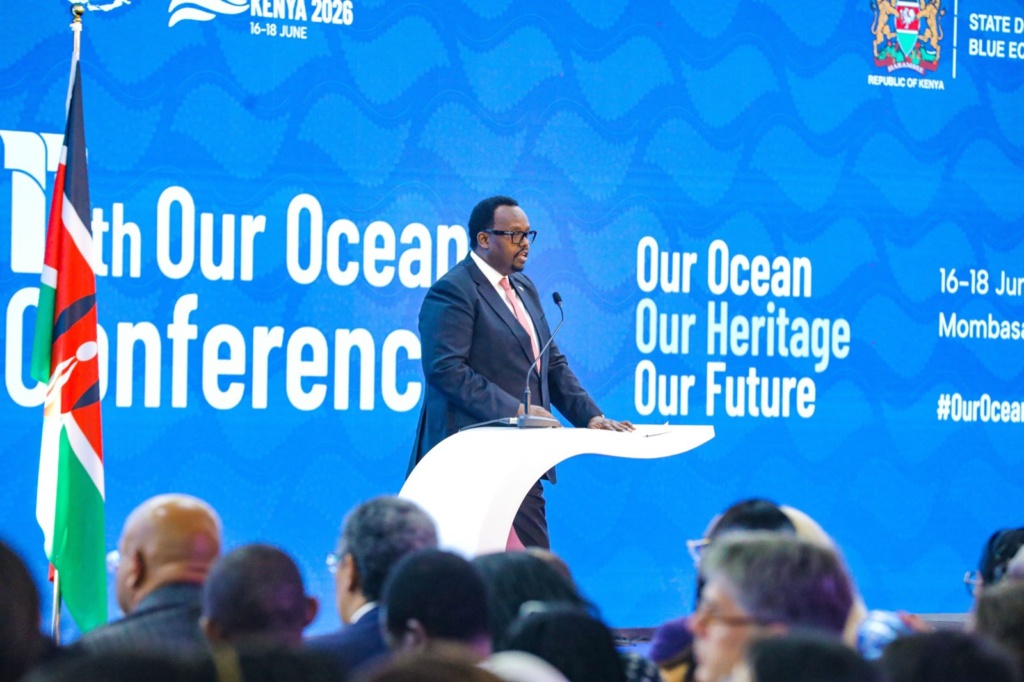
In a virtual address, President William Ruto urged countries to move beyond commitments and focus on implementation, innovation and investment in ocean protection.
The conference, held under the theme Our Ocean, Our Heritage, Our Future, comes at a time when countries are under pressure to translate climate and ocean pledges into real action, especially for coastal communities already feeling the effects of a warming and degraded ocean.
Author Profile

-
Seeker.
Inspire AFRIKA.
Latest entries
 Climate9 October 2026Beyond Negotiations: Africa Expects Concrete Outcomes from Antalya
 Animals7 October 2026In Kajiado’s Drylands, Collective Selling of Small Herds Is Changing the Livestock Trade
 Oceans6 October 202640 Years of Ocean Cooperation: The Western Indian Ocean’s Next Test Is Implementation
 Adaptation5 October 2026Africa Is Financing Its Own Survival as Climate Adaptation Money Falls Short