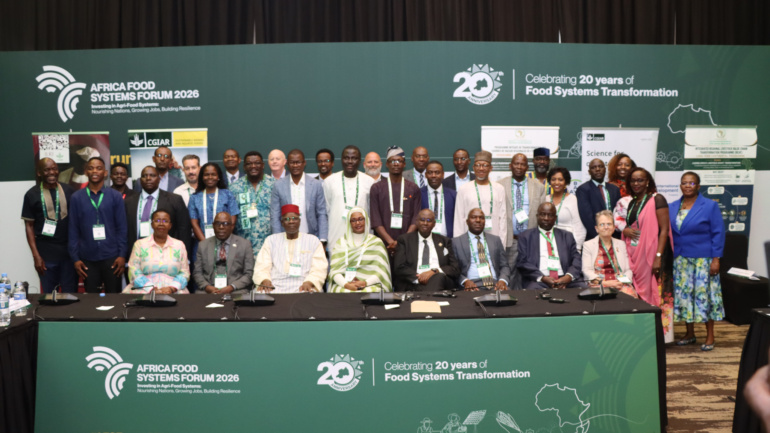
At the 20th Africa Food Systems Forum in Kigali, the World Farmers’ Organisation called for farmers to help shape agricultural policies and access climate finance, warning that Africa’s challenge is turning long-standing commitments into results.
Africa has spent decades developing strategies to transform its agricultural sector. Yet many farmers continue to struggle with access to finance, reliable climate information and effective agricultural extension services.
At the 20th Africa Food Systems Forum in Kigali, Rwanda, the World Farmers’ Organisation (WFO) argued that farmers must have a greater role in designing the policies and investments that affect their livelihoods.
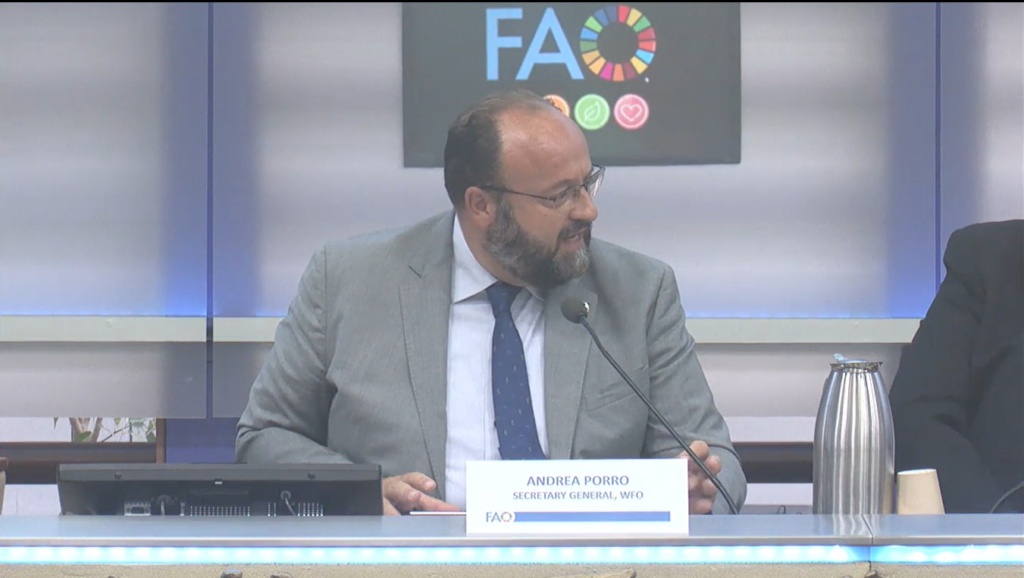
“Farmers are no longer beneficiaries. They are agripreneurs,” said Andrea Porro, WFO secretary-general, in an interview with Climate Lens News during the forum. “They have all the right to listen and co-design the solution that they need and fit their needs, not accepting some silver bullet that comes from somewhere else.”
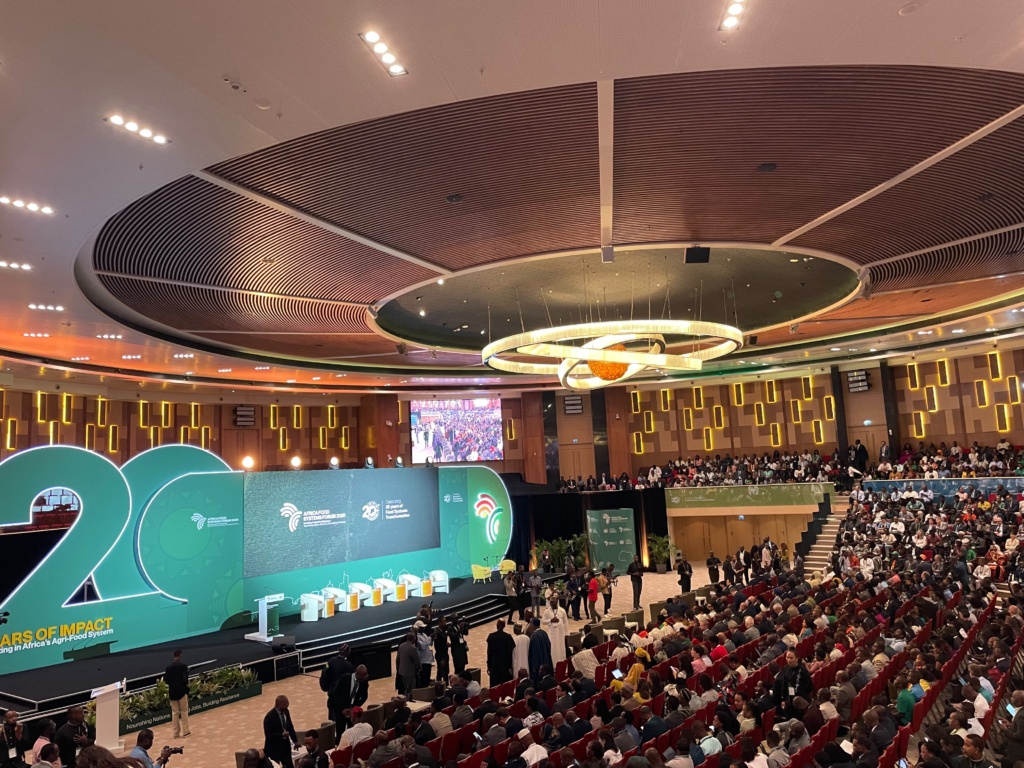
The forum brought together more than 5,000 participants from over 50 countries to discuss investment, employment, food security and resilience across Africa’s agri-food systems. Its discussions highlighted the need to connect agricultural ambitions with financing and practical delivery.
For Porro, the gap between ambition and implementation is particularly evident in the limited financing reaching farmers, many of whom are expected to adapt to increasingly difficult production conditions without sufficient support.
Climate finance that does not reach farmers
Climate finance can help farmers respond to droughts, floods and changing weather patterns. However, funding reaching small-scale agricultural producers remains limited.
A Climate Policy Initiative analysis published through the Food and Agriculture Organisation of the United Nations (FAO) found that small-scale agrifood systems received approximately $5.53 billion in tracked climate finance in 2019–20, equivalent to just 0.8% of the $660.2 billion tracked across all sectors. The research also estimated an annual financing gap of about $170 billion for smallholder farmers. (FAO)
Porro said existing financial instruments often fail to account for farmers’ needs and the realities of agricultural businesses. “When we are talking about climate finance, in that funds, in that money, there is the livelihood of people,” he said. “But today, too little of this money is reaching farmers.”
He argued that farmers are frequently considered too risky to finance because lending models do not adequately account for their circumstances.
“These tools are not designed for the needs of farmers,” he said, describing a system that views farmers and farming systems as “non-bankable”.
Without affordable capital, farmers can struggle to invest in resilient production methods, irrigation and improved storage, particularly when climate pressures and rising input costs threaten their incomes. “We need a government that imagines a renewed way to bring extension services to farmers,” Porro said. “We need the banking system to make it, to consider farming and farmers bankable, investable.”
The challenge reflects a wider gap in African agricultural policy. Under the Maputo and Malabo frameworks, African Union member states committed to allocating at least 10% of public expenditure to agriculture. However, commitments alone do not guarantee that farmers receive the resources and services they need.
The test is whether national budgets, financial institutions and agricultural programmes translate these ambitions into accessible funding and support.
When early warnings fail
Farmers also need reliable information to make decisions about planting, harvesting and protecting their livelihoods against climate risks. Porro, an agronomist who began his career in agricultural extension and later worked with FAO, identified weaknesses in data collection and communication as major obstacles to effective early-warning systems.
He said mobile coverage and internet access remain uneven, meaning that digital applications cannot reach every farming community. In his experience, local radio in Africa and religious leaders in Central Asia have helped communicate information to communities.
However, accessibility is only part of the challenge. Information must also be reliable. “The main risk today of not having reliable data on early warning is that you create a cry wall scenario in which you are disseminating information about things that are not occurring and people lose trust in the system,” he said.
Repeated inaccurate warnings can undermine public confidence, potentially causing farmers to ignore future alerts that signal genuine threats.
Reliable early-warning systems can also support agricultural insurance by helping farmers and financial institutions assess risks. However, access to insurance additionally depends on affordability and the availability of suitable products.
Porro said farmers need dependable information to plan investments in resilience and prepare for changing weather conditions.
Local solutions and the next generation
Porro urged governments and development partners to learn from approaches already working in communities instead of relying on solutions imported from elsewhere.
“Look at local solutions, make it work, and especially listen to the needs of the farmers,” he said.
He argued that farmers possess practical knowledge of how changing weather, crop diseases and farming practices affect production, even when they may not use the technical terminology employed by researchers.
That experience should inform agricultural research, extension services and investment decisions. Porro said extension services need renewal through approaches that connect public institutions, private-sector actors and farmers.
Young farmers are equally important to this transformation. Although uncertain earnings, demanding work and limited market access can discourage young people from entering agriculture, Porro said they are well placed to contribute to innovation and future food production.
“Young farmers are keen to adopt innovation,” he said. Through its WFO Young programme, the organisation develops young farmers’ leadership and negotiation skills while connecting them to international peer networks. Porro also emphasised the need to support young women farmers, who continue to face barriers to credit, land tenure and recognition.
Discussing future food demand, Porro emphasised that the world would need to feed between 8 billion and 10 billion people by 2050, with demand increasing by 30%. These figures reflect his interview remarks; the United Nations projects a global population of approximately 9.7 billion by 2050.
“Who is going to produce this food? It will not be AI, it will be farmers,” he said. “The young farmer that we exclude today is a missed opportunity.”
From commitments to delivery
The Kigali forum brought together governments, farmers, investors and development partners around the future of African agriculture. Its central challenge now is ensuring that discussions translate into practical changes in how food systems are financed and managed.
For Porro, progress must be measured by whether farmers can access finance, obtain reliable information and influence decisions shaping their livelihoods.
He also warned that food producers themselves remain vulnerable to hunger. “Today still a quarter of farmers go to bed hungry in the evening,” he said. “And if the food producers are going to bed hungry, that means that our food system still needs to be repaired.”
The statistic requires independent verification, but Porro’s underlying concern is clear: food systems cannot be considered successful if those producing food remain unable to meet their own needs.
For Africa, transforming agriculture will require more than strategies and investment announcements. It will require financing that reaches farmers, information they can trust and policies shaped by the people expected to implement them.
Porro’s message was direct: “Listen to the farmers and involve the farmers as co-designers and not as beneficiaries.”
Author Profile

-
Seeker.
Inspire AFRIKA.
Latest entries
 Agriculture14 October 2026Africa’s Food Systems Future Depends on Listening to Farmers
 Weather Forecasts13 October 2026Rain and Rising Temperatures Forecast Across the Greater Horn of Africa
 Climate9 October 2026Beyond Negotiations: Africa Expects Concrete Outcomes from Antalya
 Animals7 October 2026In Kajiado’s Drylands, Collective Selling of Small Herds Is Changing the Livestock Trade