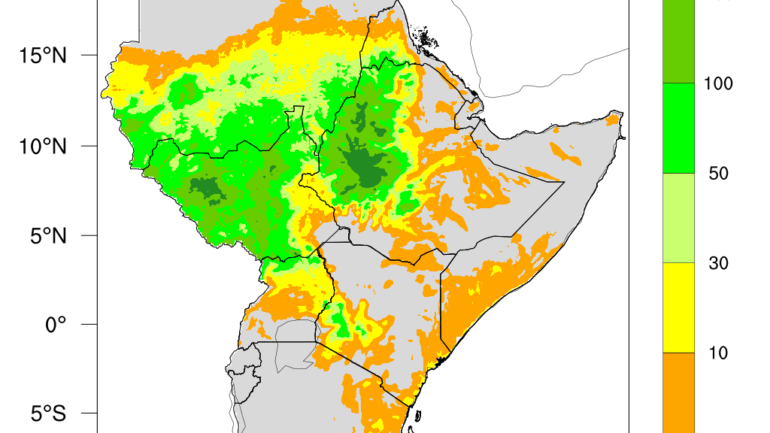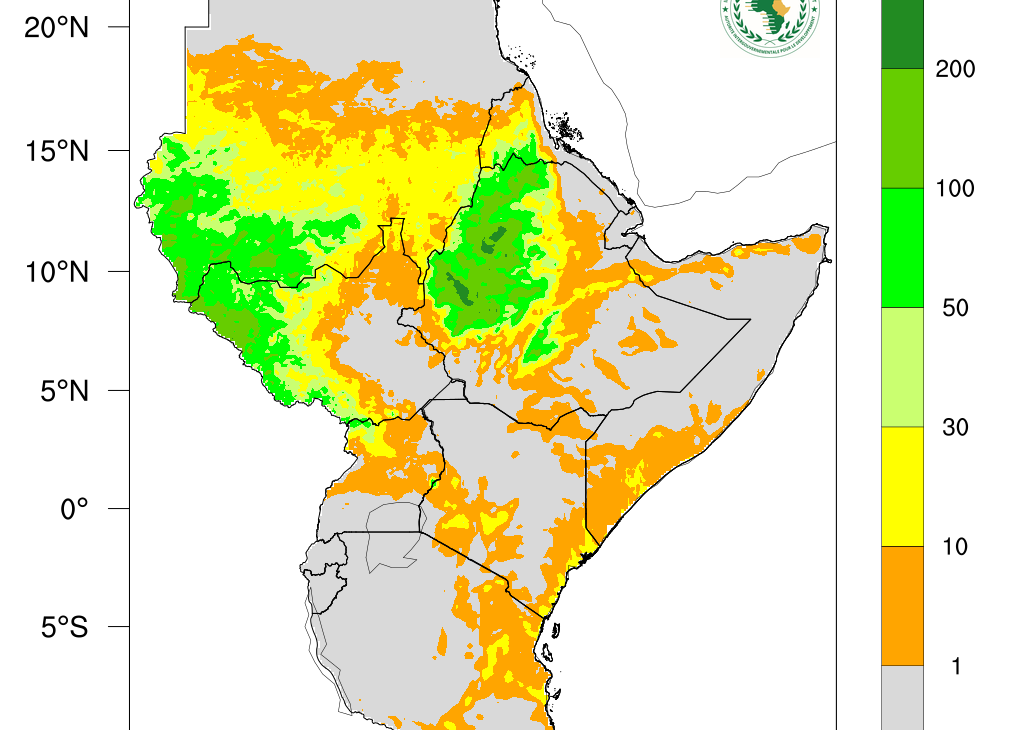
The Greater Horn of Africa is facing a week of uneven rainfall and persistent heat, with parts of Ethiopia, Sudan and South Sudan expecting intense downpours while several other areas continue to receive less rain than usual.
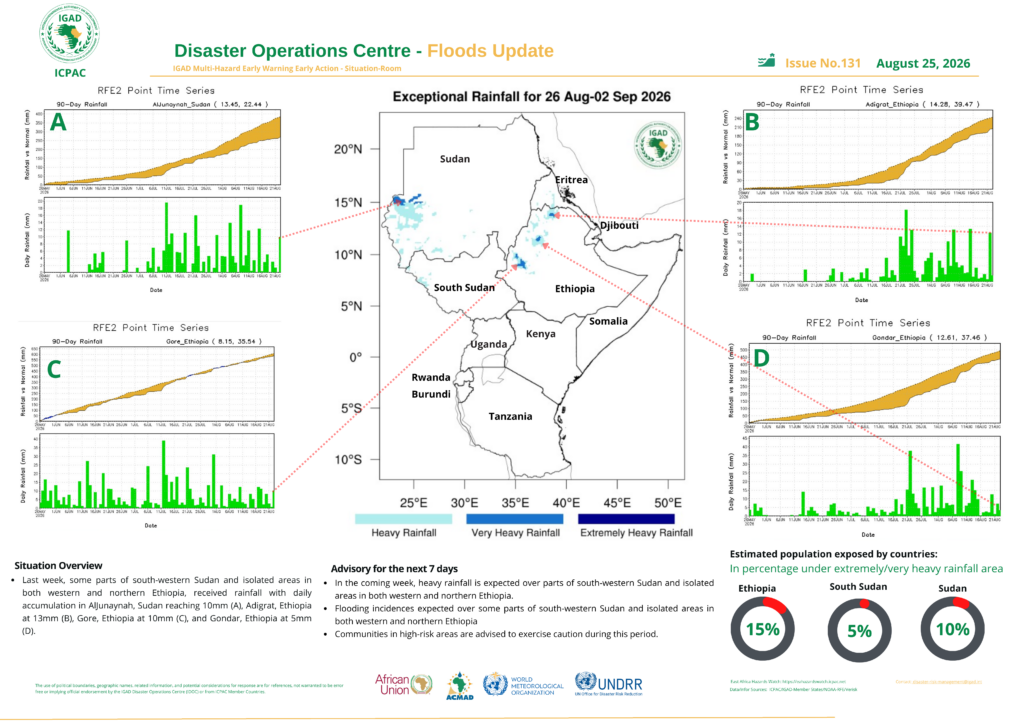
The forecast for 26 August to 2 September 2026 shows heavy rainfall of more than 200 millimetres in isolated parts of western Ethiopia, while moderate totals of 50–200 millimetres are expected across south-western Sudan, western South Sudan, western Eritrea and western to northern Ethiopia.
Elsewhere, rainfall is expected to remain below 50 millimetres, including across eastern and southern Tanzania, central to western and coastal Kenya, central to northern Uganda, parts of Somalia, central Sudan and eastern Ethiopia.
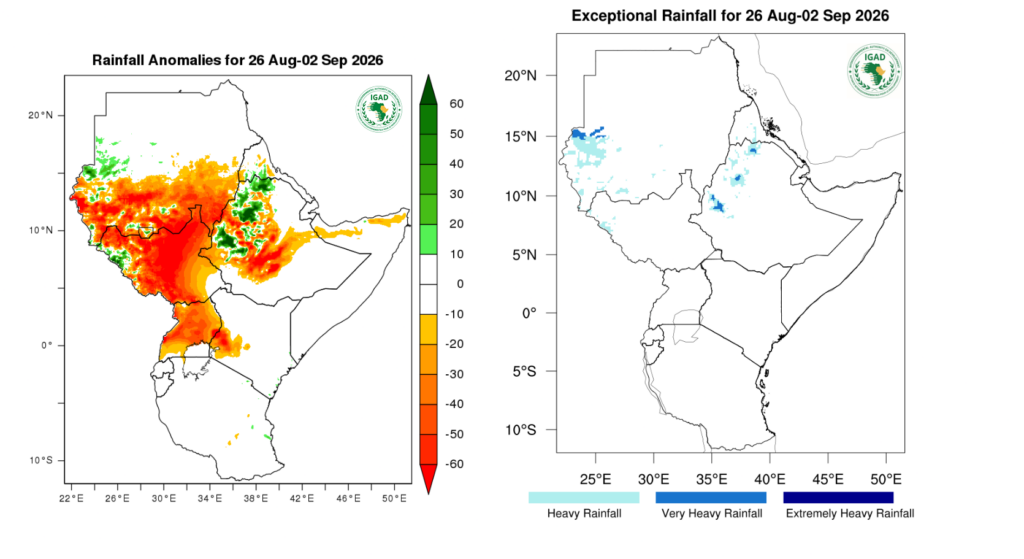
The contrast is also evident in the rainfall anomalies. While isolated parts of Ethiopia, Eritrea, Sudan and South Sudan could receive more rain than usual, central Sudan, most of South Sudan, central Ethiopia, much of Uganda and western Kenya are expected to record below-normal rainfall.
The risk of extreme rainfall remains concentrated in south-western Sudan and western and northern Ethiopia, where rainfall could exceed the 90th percentile.
Flooding is consequently expected in parts of south-western Sudan and isolated areas of western and northern Ethiopia.
Although some communities face too much water, much of the region is also contending with too much heat.
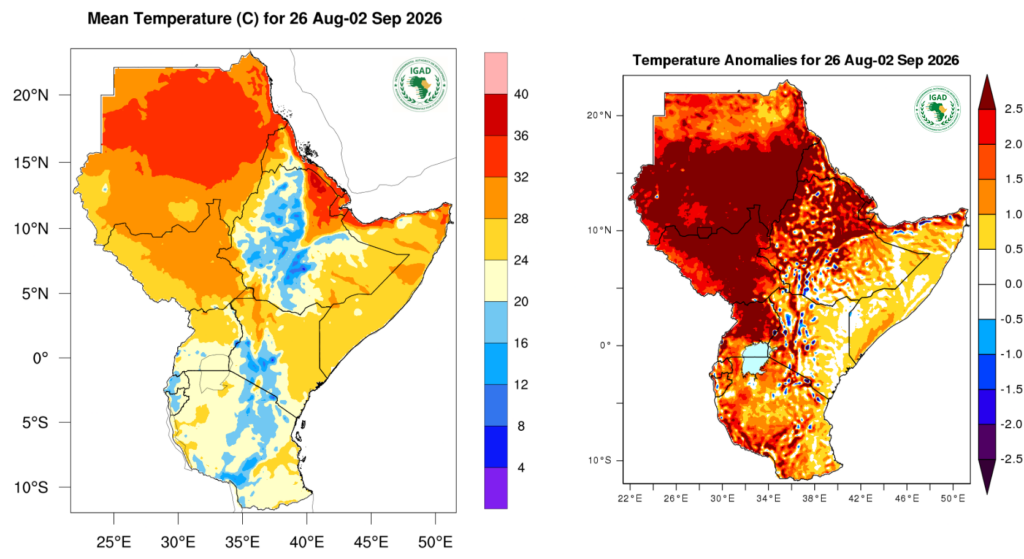
Temperatures above 32°C are forecast across Djibouti, northern Sudan, coastal Eritrea, northern coastal Somalia and north-eastern Ethiopia, while most of the GHA is expected to experience temperatures between 20°C and 32°C.
Most of the region is expected to remain warmer than usual, with only isolated areas experiencing cooler-than-average conditions.
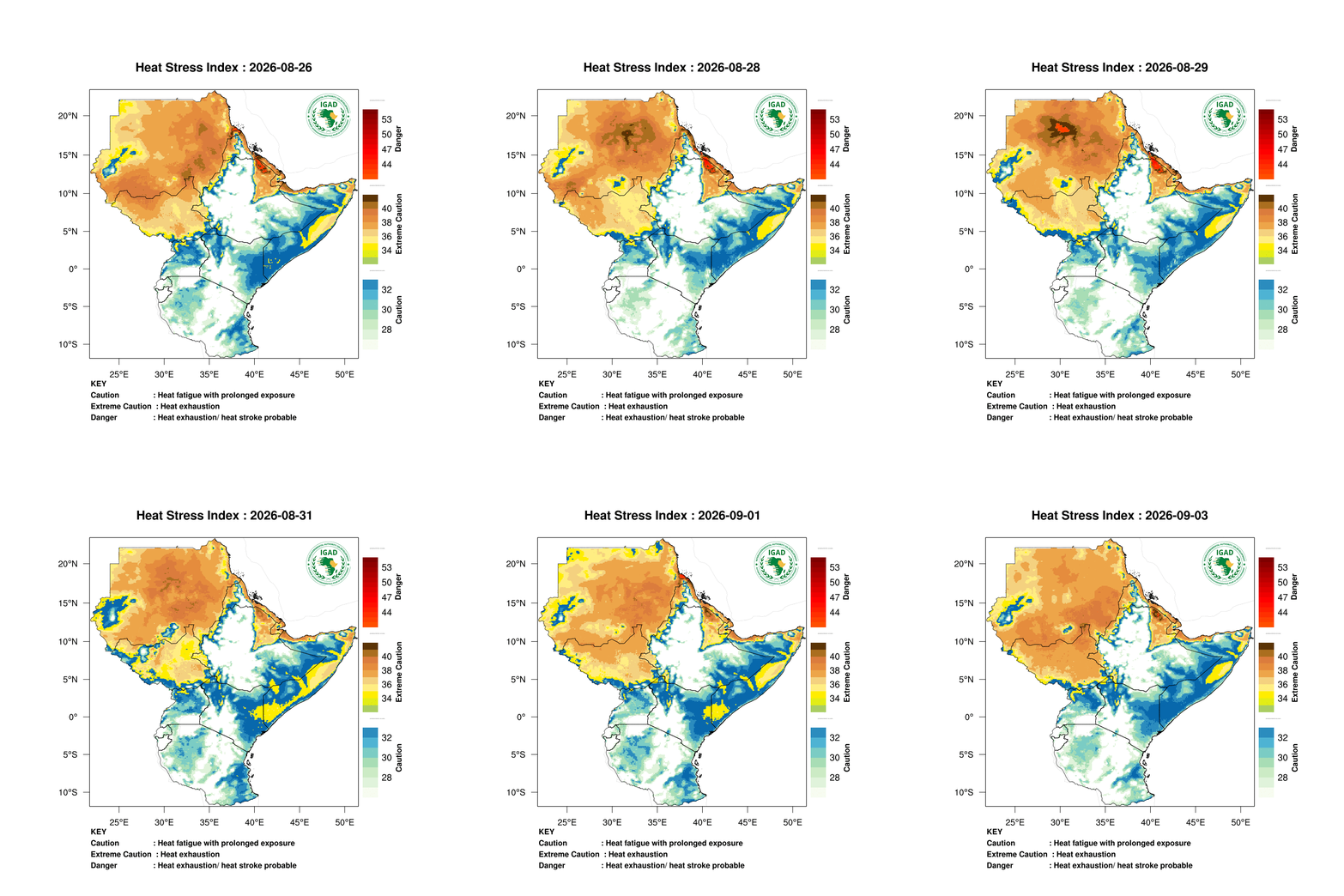
Heat stress is forecast to reach ‘Extreme Caution’ across much of South Sudan, Sudan, Eritrea, Djibouti, central to northern Somalia and north-eastern Ethiopia. Parts of Ethiopia’s Afar region, central Eritrea, Eritrea’s coastline and northern Sudan could reach the more severe ‘Danger’ category.
The outlook leaves the Greater Horn facing a complex week: flood risks in areas hit by intense rainfall, rainfall deficits elsewhere, and widespread above-average temperatures.
For decision-makers, the forecast reinforces the need to assess rainfall totals alongside anomalies and exceptional rainfall indicators.
Together, they provide a clearer picture of where communities may face water shortages, excessive rainfall or extreme events, information that can strengthen preparedness across agriculture, pastoralism, water management and disaster-risk reduction.