
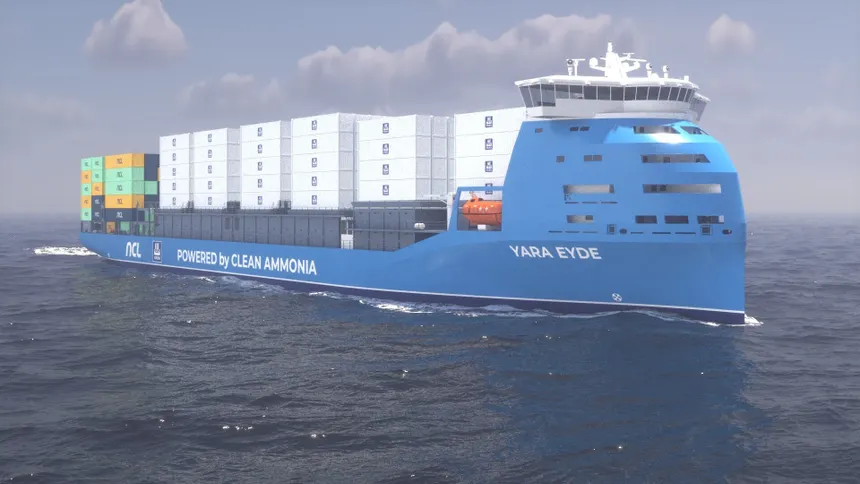
The shipping industry is under growing pressure to cut its greenhouse gas emissions. With shipping historically accounting for nearly 3% of global anthropogenic carbon dioxide emissions, the search for cleaner marine fuels has become increasingly urgent.
The International Maritime Organization (IMO) has since strengthened its climate ambitions. Its revised strategy calls for international shipping to reach net-zero greenhouse gas emissions by or around 2050, with interim targets for 2030 and 2040. The IMO is also developing a global framework that combines fuel-intensity requirements with economic measures to encourage the shift towards lower-emission fuels.
Among the alternatives being explored, ammonia has emerged as one of the potential fuels for the next generation of ships.
But as ammonia moves from trials towards commercial use, an important question remains: is ammonia really as green as it appears?
The Appeal of Ammonia as a Marine Fuel
Ammonia is attractive because it contains no carbon. When ammonia itself is used as a fuel, it does not produce carbon dioxide from the fuel during combustion.
It can also be produced using renewable electricity, creating what is commonly called green or e-ammonia. Because ammonia is already produced, transported and traded globally, mainly for use in fertiliser production, the industry has an existing foundation on which a marine-fuel supply chain could be built.
But being carbon-free at the point of combustion does not automatically make ammonia a zero-emission fuel.
How the ammonia is produced, transported, stored and burned all matter.
That distinction is becoming increasingly important as ammonia-powered vessels move closer to commercial operation.
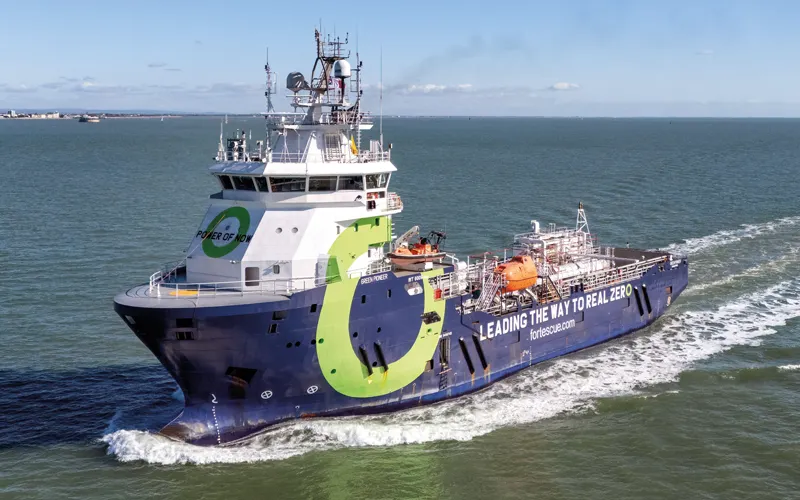
In March 2024, Singapore witnessed the world’s first use of ammonia as a marine fuel in a dual-fuelled vessel when Fortescue’s Green Pioneer underwent trials using ammonia alongside diesel. Since then, engine technology, safety systems and fuel infrastructure have continued to develop.
By 2025 and into 2026, ammonia had moved beyond being largely a concept. DNV reported around 40 ammonia-capable ships on order, with engine manufacturers developing and delivering dual-fuel systems. By September 2026, DNV data showed five ammonia-capable vessels in operation and 41 on order for delivery towards 2030.
The technology is therefore moving forward. The environmental question, however, has not gone away.
Environmental Challenges
Ammonia’s biggest attraction is also one of its biggest complications.
Although the fuel contains no carbon, burning ammonia can produce nitrogen oxides, nitrous oxide and unburned ammonia. Nitrous oxide is a particularly potent greenhouse gas, with a 100-year global warming potential of about 273 times that of carbon dioxide.
New research published in 2026 has highlighted just how important these emissions could become.
A study in Communications Sustainability found that ammonia marine fuel could either reduce or substantially increase reactive nitrogen pollution compared with conventional marine fuel, depending on how much ammonia is released throughout its production, storage and bunkering, and how effectively engines control emissions. Under the study’s scenarios, reactive nitrogen emissions ranged from about 66% lower to as much as 185% higher than those associated with conventional marine fuel oil for the same energy output.
The researchers warn that without strict controls, ammonia could become a significant source of reactive nitrogen pollution around ports and shipping routes.
This means the environmental performance of ammonia cannot be judged simply by looking at carbon dioxide emissions from the engine.
The entire fuel chain matters.
The Safety Question
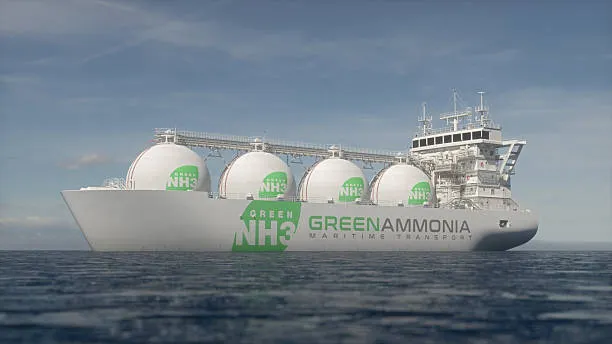
Ammonia also presents safety challenges because it is toxic to humans.
Large quantities of ammonia would need to be stored onboard ships, transferred through bunkering systems and handled by seafarers and port workers. Any leakage therefore presents a serious safety concern.
The industry and regulators are increasingly addressing this challenge. The IMO has made progress on safety guidelines for ships using ammonia as fuel, while its 2026 regulatory work continues to address emissions, safety and other environmental issues associated with alternative marine fuels.
But the development of safety rules does not remove the risks.
It means the industry is learning how those risks can be managed.
As Claus W. Graugaard, CTO at the Maersk Mc-Kinney Møller Centre for Zero Carbon Shipping, put it in the original discussion:
“To unlock the potential of sustainable ammonia as an alternative marine fuel, we must carefully address onboard safety and ensure a safe working environment for seafarers and port workers.”
That remains an important consideration as more ammonia-capable vessels enter service.
Bigger Tanks, Shorter Range
Ammonia also has a practical problem: it carries less energy per unit of volume than conventional marine fuels.
Ships powered by ammonia therefore require considerably more storage space to carry the same amount of energy. Larger tanks add weight and take up valuable space that could otherwise be used for cargo or other equipment.
This can reduce the range of a vessel or require larger fuel tanks and more frequent bunkering.
The challenge may be easier to manage on large deep-sea cargo vessels than on smaller ships, where space is more limited.
DNV notes that ammonia’s lower energy density remains one of the practical challenges facing shipowners, alongside its cost, toxicity and the availability of bunkering infrastructure.
So, Is Ammonia Green?
There is no simple answer.
Ammonia offers shipping something it badly needs: a fuel containing no carbon that can potentially be produced using renewable energy. Its existing global production and distribution network also gives it an advantage over fuels that would have to be built almost entirely from scratch.
But ammonia is not automatically clean.
Its environmental benefits depend on how the fuel is produced and how effectively emissions and leaks are controlled throughout its lifecycle. Recent research shows that nitrogen pollution, nitrous oxide and ammonia releases could undermine some of the expected environmental benefits if they are not properly managed.
The shipping industry has therefore moved beyond asking whether ships can run on ammonia.
The more important question now is whether ammonia can be produced, transported, stored and burned in a way that delivers genuine climate benefits without creating new environmental and safety problems.
As Fayas Malik Kanchiralla, a PhD student at the Department of Mechanics and Maritime Sciences at Chalmers University of Technology, observed in the original research:
“Even though green ammonia is a fossil-free and relatively clean fuel, it is probably not green enough for the environment as a whole. More risk assessments on the emissions of ammonia and the related nitrogen compounds need to be done before adopting this fuel for shipping.”
Two years on, ammonia is no longer simply a promising idea on paper. Ships are being built and operated, engines are being tested and regulations are catching up.
But the question remains much the same: if ammonia is to become a sustainable marine fuel, how green does the entire system need to be?
Read Also: Examining Potential of Ammonia as Sustainable Marine Fuel


