
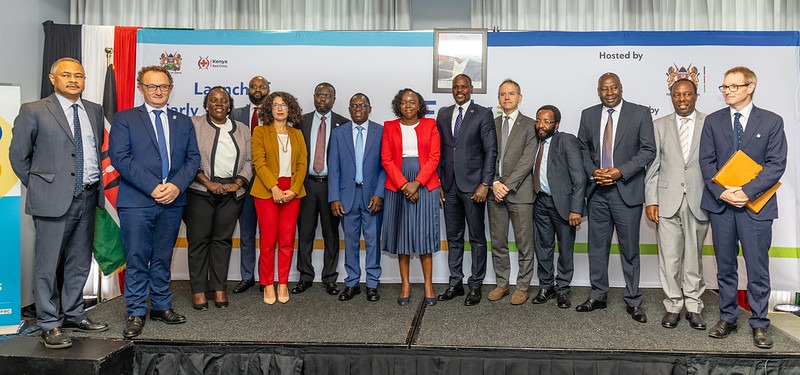
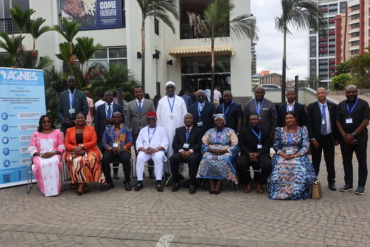
The Kenyan government has joined its neighboring countries, like Uganda, Burundi, and Rwanda, in launching the Early Warnings for All (EW4ALL) initiative. A move that is a significant step towards safeguarding vulnerable populations by enhancing community resilience.
Launched globally in 2022 by United Nations Secretary-General Antonio Guterres, EW4ALL aims to address the escalating frequency and intensity of climate and weather extremes. The unprecedented shifts in the weather then trigger climate-related disasters such as droughts and floods.
This championed global initiative envisions a world where everyone on the planet is protected by early warning that enables early preparedness by the year 2027. Recognizing the possibilities of protecting livelihoods through the adoption of early preparedness, stakeholders are calling for collaborations and partnerships. These are aimed at enhancing early warnings that mitigate the destruction of livelihoods, investments, and communities’ lives.
Kenya, faced by the prospect of hazards ranging from heat waves, heavy rainfall causing floods, and droughts, has evident urgency to make communities more resilient now more than ever. Recalling the 2024 floods, which affected approximately 410,000 people and tragically claimed 315 lives (UNDP). This was preceded by the 2020 to 2023 drought, considered the worst in East African history since the 1980s.
Beyond the human cost, the economic repercussions were substantial, with flood damage estimated at Kenya Shillings 187 billion, equivalent to USD 1.5 billion.
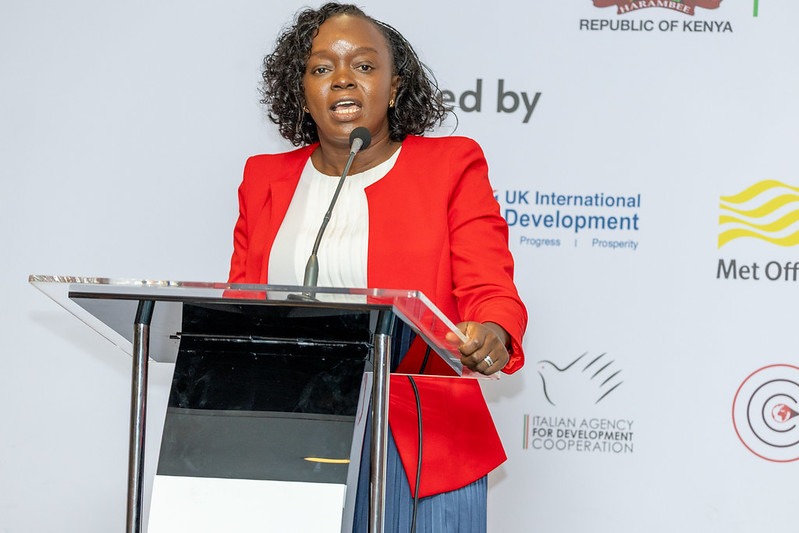
Hon Dr. Deborah Barasa, Cabinet Secretary for Environment, Climate Change, and Forestry, revealed that the initiative aligns with Kenya’s Climate Change Act (2016), Agenda 2063, and the newly launched National Framework for Climate Services (NFCS).
Pointing out that this indicates the need for a transformation in the approach to climate data and its integration into practical early warnings with an assured reach to even the most vulnerable communities.
During the launch, it was acknowledged that while early warning systems are already assisting communities in responding to climate shocks, improvements are needed. The pointers show particular emphasis regarding timeliness, which requires the involvement of multiple communication channels and the use of easily understandable language with clear instructions for action.
According to Hon. Eng Festus Ng’eno, Public Secretary for Environment, Climate Change and Forestry, the Early Warnings for All initiative represents a groundbreaking effort to ensure universal protection from hazardous weather and climate events through life-saving early warning systems.
He emphasized the now-evident reality that climate extremes are no longer isolated incidents but have become the new normal. Citing the increased occurrences of more severe climate-related disasters, from unprecedented flash floods to prolonged droughts, urged members to act decisively and collectively.
Based on statistics, proactive measures can minimize the extent of damage caused by climate events. However, setting up these observational data collection points in Africa is possible only with a significant increase in funding to bridge substantial gaps identifiable. These data gaps, combined with complex natural variability, create uncertainties about future climate evolution in the region.
This includes improving monitoring and forecasting capabilities, expanding data collection networks, and better integrating climate risk information into decision-making processes.

A call was amplified on the importance of a critical shift towards early preparedness by co-creating climate information with the most affected communities, rather than simply disseminating it.
This collaborative approach will enable scientists to incorporate local knowledge, resulting in interwoven information that is relatable and familiar. It’s anticipated that this step would enhance climate literacy and transform predictions and warnings into actionable data.
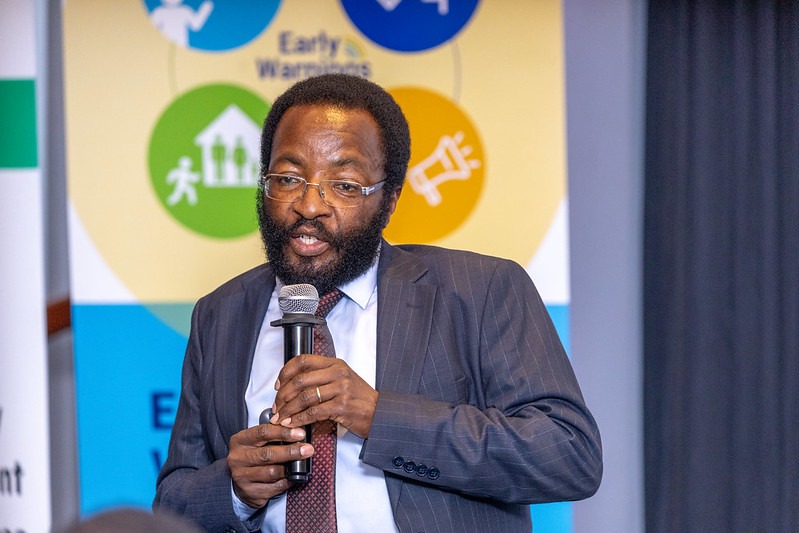
Dr. Gikungu David, Director of the Kenya Meteorological Department, specified that their existing monthly to three-month forecasts already serve as a form of early warning.
Nonetheless, he shares his conviction in the EW4ALL initiative as one that will help overcome challenges posed by sparse infrastructure, particularly in Arid and Semi-Arid Areas, as well as marginalized places. Highlighting that it’s essential for more consistent and improved data integration and forecasting capabilities.
“By increasing the number of observation stations, particularly in under-served regions such as the expansive ASAL counties and vulnerable coastal zones, we aim to meet global standards for early warning observational capabilities,” stated Dr. Gikungu.
The leaders from diverse sectors envision a resilient Kenya where every citizen, regardless of location, is protected by a reliable, responsive, and robust early warning system that is supposed to be a shared one.
How to Implement Early Warnings for All (EW4ALL) Effectively
The Kenyan government’s launch of the Early Warnings for All initiative has been commended by institutions, international partners, and the private sector as a thoughtful, timely, and essential step.
In unison, the move has seen partners like the Italian Agency for Development Cooperation, WISER, UK International Development, ICPAC, the Met Office, and the World Meteorological Organization, among others, join in to ensure the successful implementation of this initiative.
This collective approach is crucial for increasing the availability of resources vital in ways like capacity building, share of technology, and mobilization of adaptation finance. It is imperative that, alongside early warnings, communities are also provided with the resources to invest in climate-smart farming, flood defenses, and resilient infrastructure.
When adequately funded and connected, these EW4ALL tools can empower communities not only to anticipate and prepare for disasters but also to recover effectively from climate shocks. For instance, a farmer receiving an alert about an impending drought, coupled with financial support, can adjust planting schedules or go for other crop options.
Dr. Ahmed Idris, Secretary General of the Kenya Red Cross, highlighted existing challenges such as gaps in data systems and limited inclusion of youth, women, and persons with disabilities. Hastening for greater collective effort to protect more lives and livelihoods, he urges action.
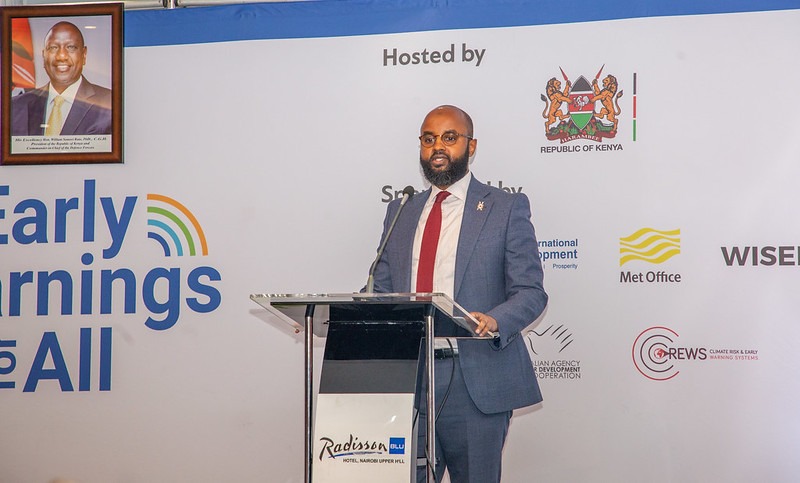
“At the Kenya Red Cross, we prioritize communities, strengthening their capacity to act early based on early warning information and advancing anticipatory action plans that make a tangible difference. We need all stakeholders involved to protect lives and livelihoods, which is why this Early Warning for All initiative is so critical. We must invest further in community awareness and strengthen local capacities to ensure no one is left behind,” he stated.
Reflecting on the global crises from increased heat waves that forced the closure of schools in South Sudan, wildfires that ravaged Los Angeles, and the Climate Risk Index 2025, which showcases the substantial economic losses from extreme weather events.
Building a resilient Kenya requires the concerted efforts of all actors, including the government, humanitarian and development partners, and communities.
This urgent call for collaboration was restated by Amjad Abbashar, Chief of the United Nations Office for Disaster Risk Reduction (UNDRR), Regional Office for Africa.
He affirmed that UNDRR supports countries in implementing the Sendai Framework for Disaster Risk Reduction (SFDRR), explaining that this involves fostering a culture of disaster risk reduction by promoting inclusive risk governance. A move capable of significantly reducing disaster risks and losses, and existing risks, and preventing the creation of new ones.
CS Dr. Barasa commended the development partners for their invaluable support towards this great cause, stressing a focus on having resilient communities. “I believe that as we work together, we will build a resilient Kenya where everyone has access to critical early warning information,” she added.
Author Profile

-
Seeker.
Inspire AFRIKA.
Latest entries
 Climate9 October 2026Beyond Negotiations: Africa Expects Concrete Outcomes from Antalya
 Animals7 October 2026In Kajiado’s Drylands, Collective Selling of Small Herds Is Changing the Livestock Trade
 Oceans6 October 202640 Years of Ocean Cooperation: The Western Indian Ocean’s Next Test Is Implementation
 Adaptation5 October 2026Africa Is Financing Its Own Survival as Climate Adaptation Money Falls Short


