
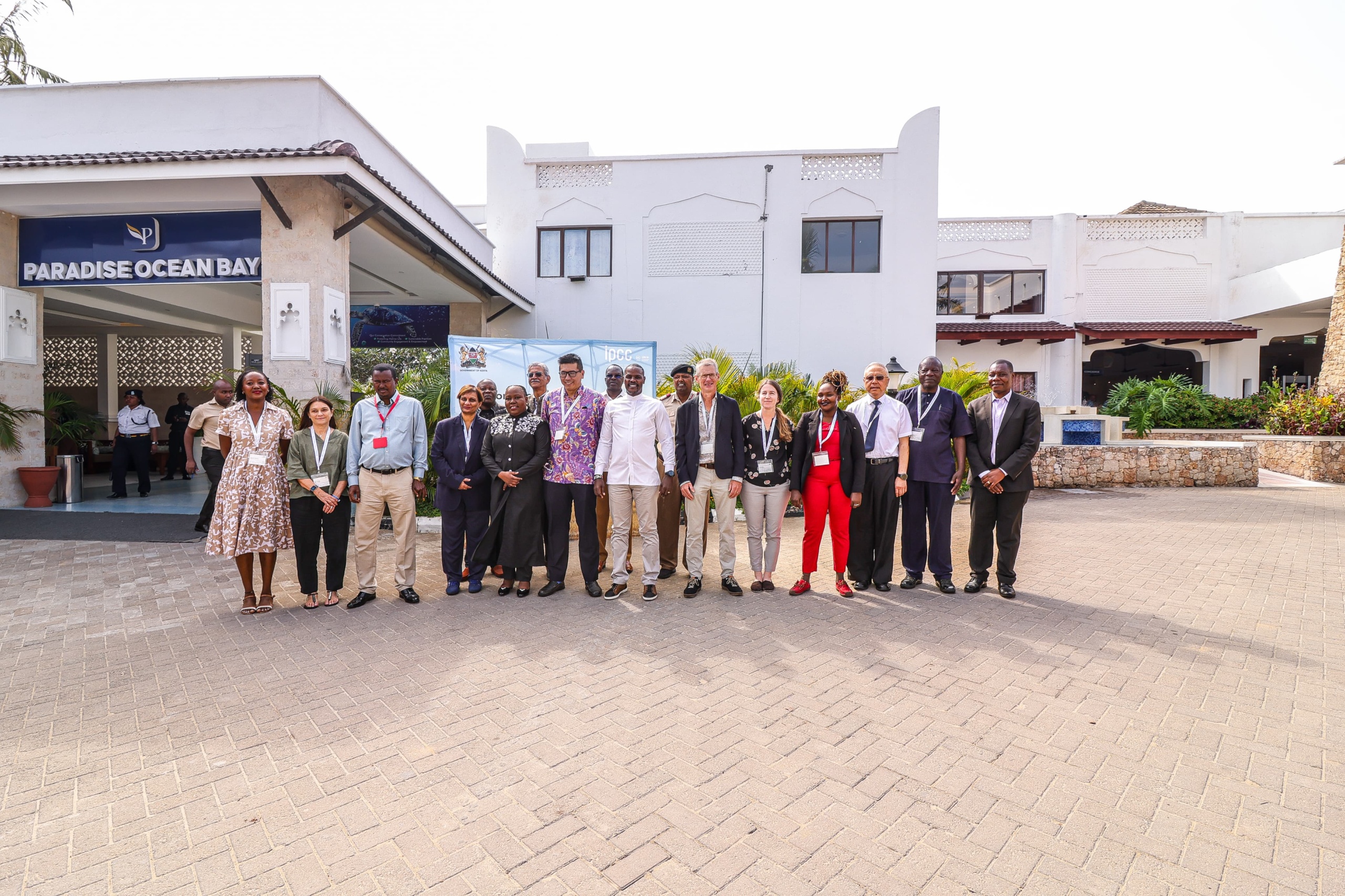
The Intergovernmental Panel on Climate Change (IPCC), the UN’s top scientific body on climate change, has convened over 100 experts from more than 50 countries in Mombasa, Kenya. The meeting, held to develop the first draft of a landmark Special Report on Climate Change and Cities, marks the first time Kenya is hosting an IPCC event, signaling a growing recognition of Africa’s urban climate leadership.
The week-long meeting, known as the Second Lead Author Meeting (LAM-2), will help shape the First Order Draft of what is set to be the IPCC’s first special report in the current (Seventh) Assessment Cycle. Scheduled for release in March 2027, the report is expected to guide city leaders, planners, and governments in building resilient, low-carbon urban futures.
Scheduled for release in March 2027, the Special Report on Climate Change and Cities will be the first report delivered by the IPCC in the current cycle. The report will be a vital tool for policymakers, urban planners, and stakeholders, providing scientific guidance on how cities can transition towards climate-resilient and low-carbon cities.
Public Secretary of the Ministry of Environment, Dr. Eng. Festus Ng’eno, praised the IPCC for their efforts in providing actionable science relevant to informal settlements and frontline communities, which are crucial in the context of urban climate change.
He further called for innovative urban adaptation finance, indigenous knowledge, and support for young African climate scientists through initiatives such as the IPCC Scholarship Program.

“Our experts have played an instrumental role in ensuring that the global assessments capture African perspectives and realities of cities such as Mombasa, where the impacts of sea level rise, flooding, and heatwaves increasingly threaten lives, livelihoods, and heritage,” said PS Ng’eno.
Scientists and experts volunteer their time as IPCC authors to assess thousands of scientific papers published each year; they provide a comprehensive summary of the drivers of climate change, its impacts and future risks, and how adaptation and mitigation can reduce those risks.
The drafting process for this Special Report began earlier this year with the First Lead Author Meeting in Osaka, Japan. Selected authors have been developing the report based on the outline agreed by the 195-member government Panel during its 61st Session held in Sofia, Bulgaria, from 27 July to 2 August 2024.
The Kenyan State Department for Environment and Climate Change is hosting this IPCC meeting, bringing together experts from the IPCC Working Group I (the physical science basis), Working Group II (impacts, adaptation and vulnerability), and Working Group III (mitigation of climate change).
Researchers and practitioners from urban communities have been selected by the Working Group I, II, and III Bureaus to serve as Coordinating Lead Authors and Lead Authors on the report.
Bart van den Hurk, IPCC Working Group II Co-Chair, pointed out that as authors draft the report, they know that their dynamic exchange of ideas throughout the week will be surrounded by numerous urban topics and stakeholders they want to address.

“We are grateful to be hosted by the Kenyan government and the city of Mombasa,” said Bart. “A city that has unique characteristics, such as being neighbors by the ocean, a rich cultural blend and history, and being a popular tourist destination, where people live, work, and enjoy. We look forward to this unique opportunity to engage with the beautiful city and its vibrant inhabitants. “
The Special Report on Climate Change and Cities aims to provide a timely assessment of the latest science related to climate change and cities, including climate impacts and risks, as well as solutions to minimize them.
During the previous assessment cycle, the panel decided to produce a Special Report on Climate Change and Cities, as well as a Methodology Report on Short-lived Climate Forcers for AR7.
Dr. Cromwel Lukorito, a climate scientist at the University of Nairobi Department of Earth and Climate Sciences and IPCC Working Group II Vice-Chair, based in Nairobi, Kenya, emphasized that African cities are vulnerable to climate change impacts but are also critical hubs for resilience and action.
“We must contribute to the Special Report and engage with the assessment cycle to develop crucial insights for decision-making in the region,” said Dr. Lukorito.
The author team of this Special Report includes a diverse set of experts who serve as authors or review editors, including 13 experts from Africa.


