
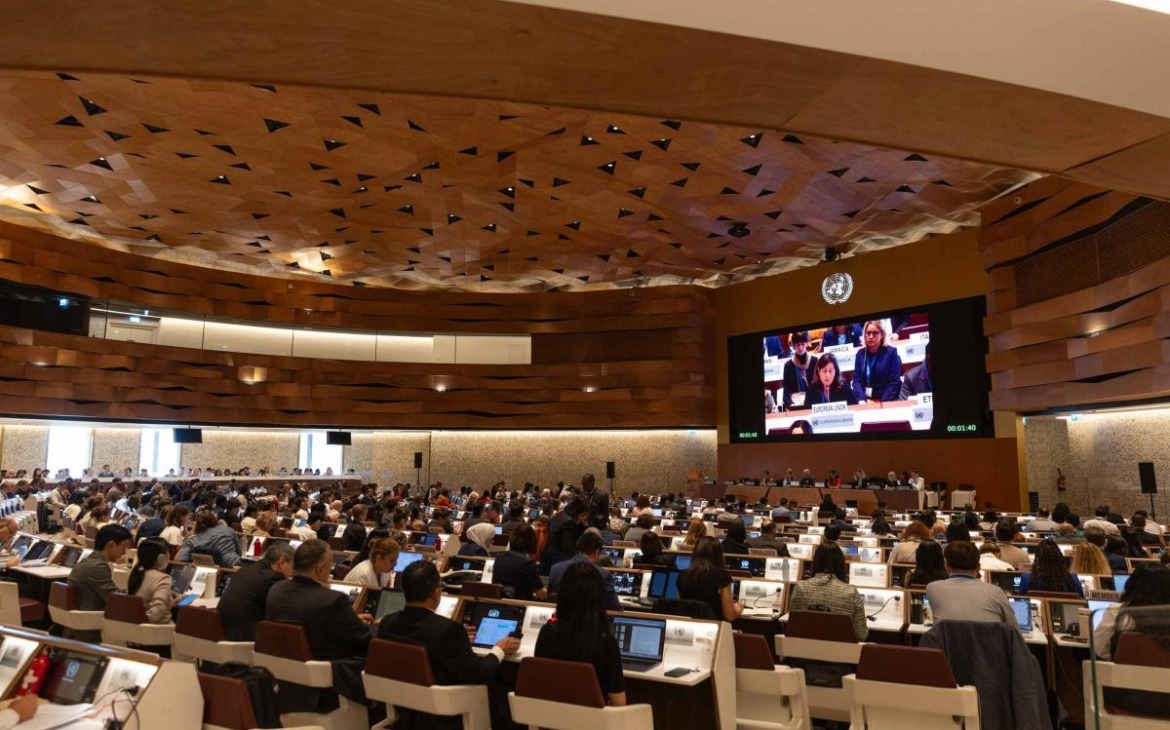
In December 2024, negotiations aimed at stemming the flow of plastic pollution stalled in Busan, Republic of Korea. The UN Environment Assembly’s Intergovernmental Negotiating Committee (INC) had been tasked with developing an international legally binding instrument (ILBI) on plastic pollution, including in the marine environment.
Talks have since resumed in Geneva, Switzerland, running from 5 to 14 August 2025. Delegates are now basing their discussions on a Chair’s Text issued on 1 December 2024, as agreed during the suspension of INC-5.
Key Points of Contention
The most debated elements of the Chair’s Text revolve around three critical issues:
- Whether the treaty should include caps on the production of primary plastic, the most ambitious goal on the table;
- How to address chemicals of concern in plastic products, particularly those not currently regulated by existing international conventions and instruments;
- And how to finance the treaty’s implementation in a way that is effective and equitable, especially given that some developing countries economically benefit from plastic production and manufacturing.
Environmental and Health Concerns Take Center Stage
During the opening sessions on August 5th, delegates acknowledged the escalating impacts of plastic pollution on marine ecosystems and coastal communities. Many expressed alarm over the growing accumulation of plastics in oceans, which threatens marine biodiversity and disrupts food chains.
A delegate from the Maldives warned, “We cannot ignore the silent invasion of microplastics into our oceans. They are infiltrating food chains and ecosystems, with consequences we are only beginning to understand.”
Some countries and observers emphasized that plastic pollution extends beyond a waste management issue—it is also a climate crisis multiplier. Delegates highlighted the links between plastic production and greenhouse gas emissions and called for measures that address the full life cycle of plastics, from extraction to disposal.
Voices from the Floor
With global plastic production exceeding 450 million tonnes annually, the environmental toll is undeniable. A delegate from Costa Rica painted a grim picture during the August 6th session:
“Sea turtles, seabirds, and whales are choking on our convenience. Plastic entanglement and ingestion are not abstract threats; they are wiping out species before our eyes.”
In addition to ecological concerns, several delegations and health-focused observers urged negotiators to prioritize the risks to human health from toxic additives, microplastics, and exposure during production and disposal processes.
Article 3: Defining the Treaty’s Core
A major point of divergence emerged in discussions around Article 3, which outlines the treaty’s scope and defines key terms such as “plastic products” and “chemicals of concern.” Delegates are split between those who advocate for bold language that prioritizes pollution control and production limits, and others who argue the treaty should focus primarily on waste management.
Some delegations are calling for explicit caps on the production of primary plastic polymers, while others insist that such measures overstep national prerogatives and feasibility. This clash is shaping the treaty’s foundation.
Geopolitical Alignments and Regional Positions
As negotiations intensify, regional blocs have begun to solidify. A coalition of African states, led by Rwanda and Senegal, is advocating for binding global measures, including limits on virgin plastic production and strong financing frameworks. The Latin American and Caribbean Group (GRULAC), meanwhile, stressed the principle of common but differentiated responsibilities and emphasized the need for producer accountability.
The High Ambition Coalition (HAC) continues to push for legally binding provisions across the full lifecycle of plastics, but faces resistance from oil-producing countries. Conversely, a bloc of large producer and exporter nations, including the US, China, and several Gulf States, is emphasizing national circumstances and favor voluntary approaches.
Finance and Compliance: The Other Battlefronts
Financial responsibility is proving to be another major sticking point. Developing countries are demanding new and additional resources, while some developed states propose reallocating existing funds. Delegates also highlighted the need for technology transfer and capacity building, particularly for low- and middle-income countries.
The debate over compliance mechanisms is growing tense. Developing nations are urging flexibility and capacity support, while others seek strong enforcement provisions. Some countries have raised concerns about creating what they term “plastic police,” warning against overreach and the potential erosion of national sovereignty.
Article 3 vs. Article 5: A Strategic Reframing?
As pressure mounts to make progress, some negotiators have floated a strategic pivot. Article 3, with its central definitions and foundational scope, has become a bottleneck. In response, a growing number of delegates are informally discussing whether Article 5, which originally focused on control measures, could be reinterpreted or expanded to house key provisions currently stuck in Article 3.
While this idea remains unofficial, it reflects the increasing tension between precision and progress. As one observer noted, “If we can’t agree on the front end of the treaty, maybe we make more happen in the middle.”
With just days left in INC-5.2, negotiators face a defining moment. Whether they finalize, fragment, or reframe these foundational articles will ultimately shape not just the treaty’s content, but its credibility and global impact.
Read Also: Plastic Pollution Treaty Meeting Postponed to 2025


