Africa, a continent of unparalleled potential, is poised to lead a green energy revolution, evidenced by the launch of the Grand Ethiopian Renaissance Dam (GERD). Boasting the world’s best solar resources, vast arable land, and a growing population, its future could be powered by clean, renewable energy. Yet a stark paradox remains: over 600 million people suffer from energy poverty, hindering economic growth and exacerbating food insecurity.
This contrast between potential and reality was the central theme of recent discussions surrounding Africa’s energy transition during the second Africa Climate Summit (ACS2). A new report, The Renewable Energy Investment Case for Africa, outlines that unlocking this potential depends on stronger policies and mechanisms to attract the necessary scale of investment.
The numbers reveal a significant challenge. While clean energy investment on the continent nearly doubled since 2020, Africa captured only $40 billion, a mere 2% of the global total.
“We need finance at scale,” said Ali Mohamed, Kenya’s Special Climate Envoy. “Yet current energy investment is around USD 90 billion a year, more than half of which still goes to fossil fuels. The cost of capital for renewables in Africa is two to three times higher than in Europe or China. Unless we reduce financing costs, the 300 GW target will remain out of reach.”
The report recommends that African governments enhance intra-African collaboration through initiatives like the Accelerated Partnership for Renewables in Africa (APRA), strengthen policy frameworks, and reduce financial risks to attract private capital.
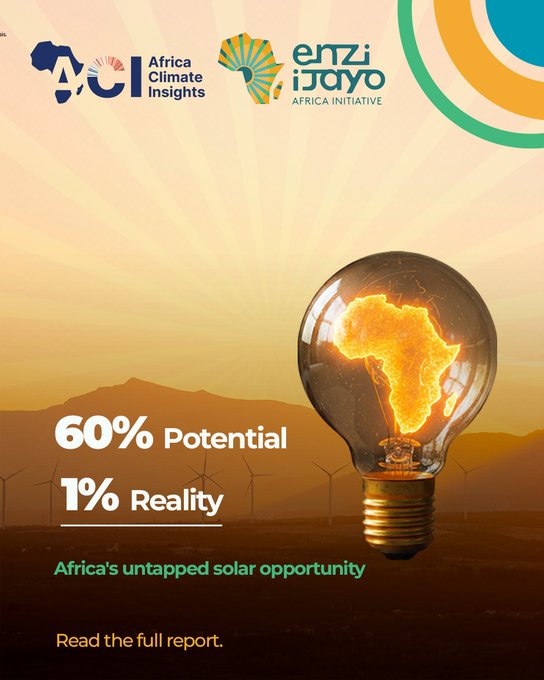
The investment shortfall is critical. Despite possessing 60% of the world’s best solar resources, Africa accounted for less than 1% of global renewable capacity additions last year. For every US$1 invested in fossil fuels in Africa, only about 92 cents go to clean energy.
Notably, the continent has some successful clean energy projects like Kenya’s use of blended finance for Africa’s largest wind farm, Morocco’s utility-scale solar project supported by a public-private partnership and concessional financing to cut energy imports, Nigeria’s rapid expansion of off-grid solar systems through financial instruments that reduce high capital costs, and private contracts to build battery storage systems in South Africa.
This financing gap has been seen to cause real-world consequences. Dr. Kevin Kariuki, Vice President for Power, Energy, Climate, and Green Growth at The African Development Bank Group, highlighted the paradox during a panel discussion: without sustainable energy, the continent cannot industrialize, forcing it to export raw minerals only to import finished products at a higher cost.
The ambition is clear. The Nairobi Declaration, emerging from the second African Climate Summit (ACS2), called for scaling renewable capacity to 300 GW by 2030. However, meeting this goal requires annual growth to surge from the current 6.2% to 23%, a threefold increase.
According to Wangari Muchiri, Africa Director at the Global Wind Energy Council (GWEC), the solution lies not in new policies, but in clarity and predictability for investors.
“Uniformity is essential as it gives investors confidence to bring large capital into the continent,” she said. “There is a need for Africa to build capacity to balance the transition. Unfortunately, Africa has to pay 30% more for the renewable transition. With its immense potential, Africa should attract 50% of renewable financing.”
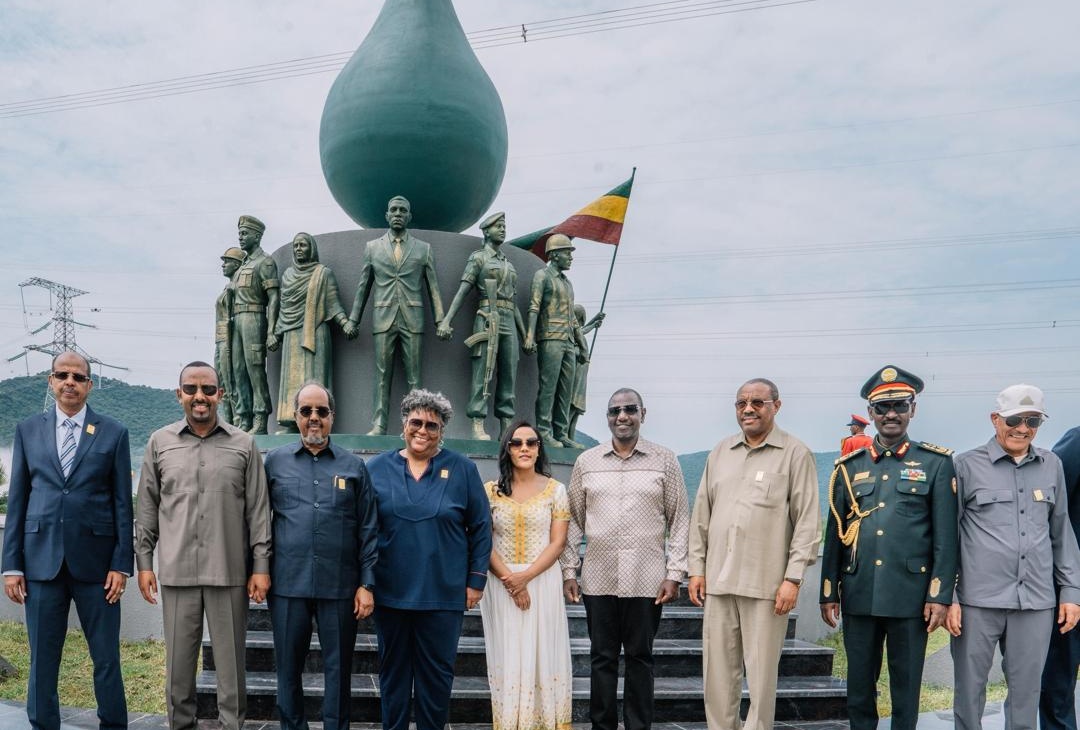
Amid these challenges, the launch of the Grand Ethiopian Renaissance Dam (GERD) stands as a powerful symbol of African resilience and ambition.
This monumental project, with its 5,150-megawatt hydropower potential, represents a significant stride in renewable adoption. GERD, whose construction began in 2011 on the Blue Nile River, showcases a profound commitment to an energy-secure future.
Ethiopian Prime Minister Abiy Ahmed has hailed the dam, designed to hold 74 billion cubic meters of water, as “the greatest achievement in the history of the Black Race.”

While the project has been a source of contention with downstream nations Egypt and Sudan over water rights, Abiy has reaffirmed Ethiopia’s commitment to regional cooperation.
“We are firm believers in collective advancement,” he said, assuring that the project “will not harm the downstream countries in any way.”
The GERD is more than a source of power; it is a metaphor for African sovereignty in the 21st century. As highlighted by H.E. Salva Kiir, President of South Sudan, in his statement at the launch, the dam (GERD) lights not only Ethiopia but also the hope of a united Africa.
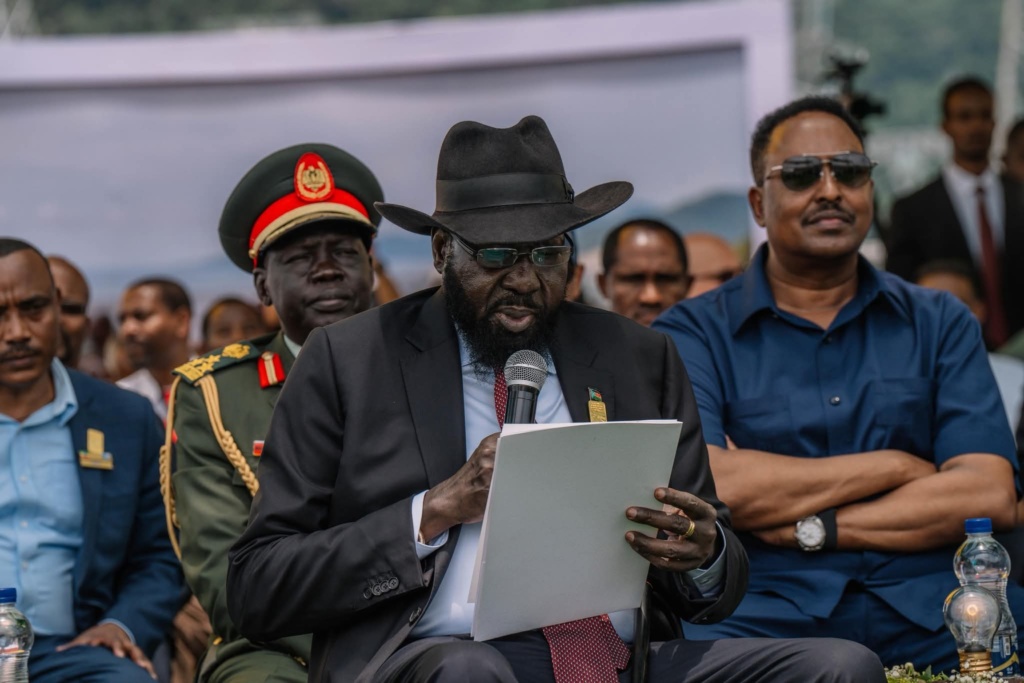
GERD embodies the continent’s resilience, its immense potential, and its determined stride toward a clean energy era, proving that its greatest achievements are yet to come.
H.E. William Ruto, President of Kenya, attending the launch, remarked that the Grand Ethiopian Renaissance Dam is a testament to Africa’s capacity to determine its own destiny, standing as a pan-African icon of collaboration and clean energy for all.