
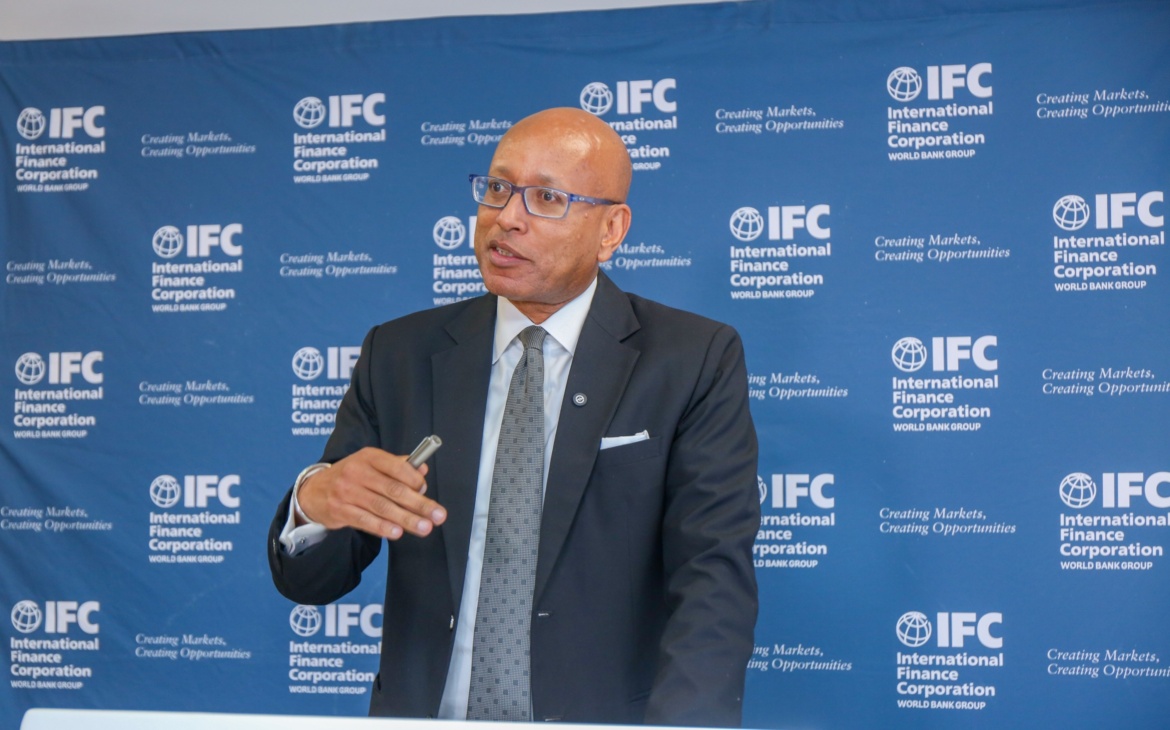
The International Finance Corporation (IFC) is sharpening its focus in Africa, not just on development, but on sustainable development, by unlocking and channeling domestic capital.
In the lead-up to the Africa Financial Summit (AFIS), co-hosted by IFC and Jeune Afrique Media Groupe on November 3–4 in Casablanca, Morocco, IFC’s Vice President for Africa, Ethiopis Tafara, emphasized the institution’s mission: “Across Africa, our priority is to unlock private capital at a scale that can truly transform economies.”
Backed by an African investment portfolio of $17 billion, the IFC is stepping up its efforts to unleash the private sector’s potential across the continent.
These efforts include expanding access to finance for MSMEs, accelerating renewable energy investments, scaling digital infrastructure to support microbusinesses, and strengthening agribusiness and food security as central drivers of inclusive growth.
“The need is urgent; millions of young people enter the workforce every year, and we must create more jobs faster than ever before,” Tafara noted.
Achieving this, he added, requires going beyond what development institutions can finance alone and creating conditions that encourage investors to back ventures driving inclusive growth.
That urgency is underscored by the continent’s heavy reliance on imports. According to Jes Chonzi, Regional Industry Manager for IFC’s Financial Institutions Group in Eastern and Southern Africa, “90–99% of products consumed in Africa are imported, despite the continent’s vast potential. The main cause is unfavorable financial policies in different markets. We are committed to identifying regional growth opportunities and working closely with governments to harmonize financial markets.”
So far, IFC’s partnerships with local banks, SACCOs, and other financial institutions have helped issue more than 3,200 loans and bonds, improving access to finance for local communities.
“By working with governments, the private sector, and partners, we can channel Africa’s own capital into high-impact sectors, from infrastructure and energy to agribusiness, tourism, and manufacturing, where investments ripple through local economies, creating jobs and building a more resilient future,” said Tafara.
Alongside efforts to create investable asset classes, IFC is also expanding its engagement in fragile and conflict-affected regions, advising governments on sustainable infrastructure and climate resilience.
As of August 31, 2025, IFC’s portfolio in Kenya stood at $1.3 billion, complemented by $65 million in advisory programs aimed at attracting private investment in agribusiness, affordable housing, manufacturing, and small businesses.
With these initiatives, IFC is signaling a broader shift: mobilizing Africa’s own resources to fuel growth, reduce reliance on imports, and lay the foundation for inclusive, sustainable development across the continent.
Read Also: Britam Foundation, Jumbo Charge, Partner Empowering Communities to Restore Mt. Elgon Ecosystem


