“As the ozone layer recovers, delegates of MOP 37 warn that data gaps, refrigerant banks, and rising HFC emissions could jeopardize hard-won gains.”
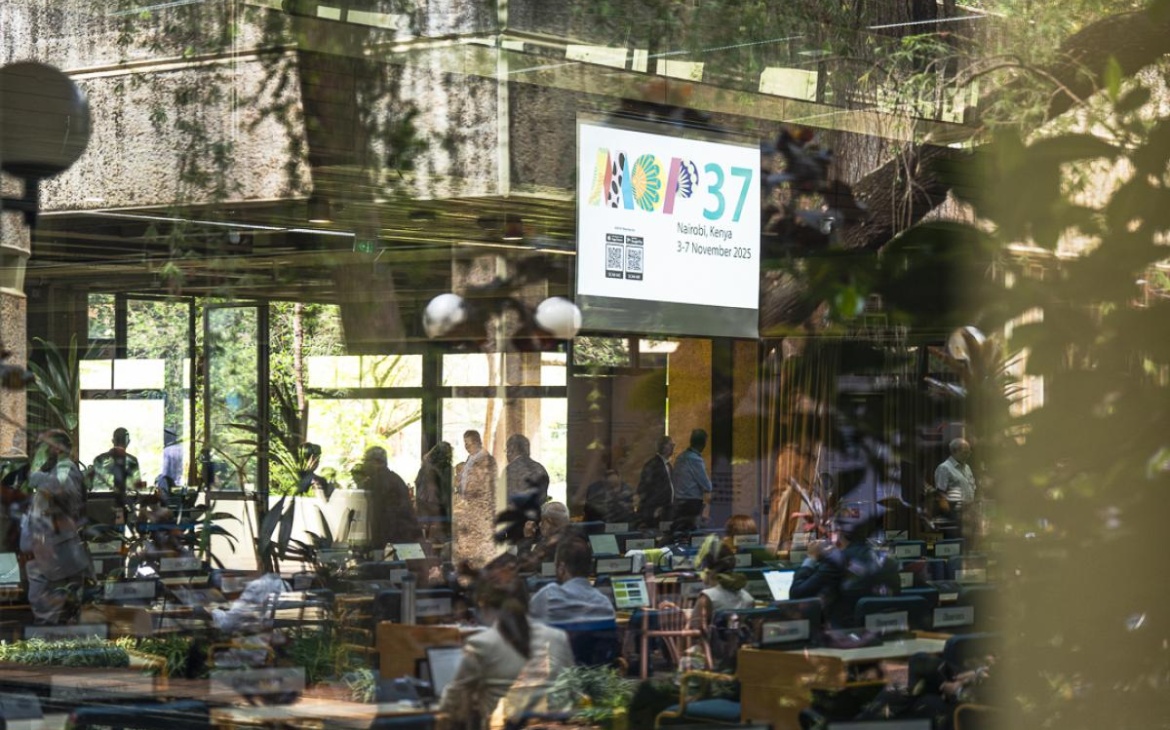
On a rainy Nairobi night, long after the scheduled close of the thirty-seventh Meeting of the Parties to the Montreal Protocol (MOP 37), delegates shuffled out of the UN complex, tired but satisfied.
The negotiators exchanged handshakes, acknowledging that even a tense dispute over a regional nomination could not overshadow what has become one of the most successful environmental stories in modern history.
“We are working harder than ever to keep the beacon of global cooperation shining,” exclaimed Megumi Seki, Executive Secretary of the Ozone Secretariat, at the opening of the preparatory segment of the thirty-seventh Meeting of the Parties (MOP 37) to the Montreal Protocol in Nairobi, Kenya.
This year marks forty years since the world united to protect the ozone layer, proving that when science and political will align, global cooperation can deliver real planetary healing.
The path to this moment began in the early 1970s when scientists discovered that chlorofluorocarbons (CFCs), once common in aerosols, foam production, and refrigerators, were damaging the ozone layer. The consequences were alarming: increased skin cancers, cataracts, weakened immune systems, reduced crop productivity, and harm to marine ecosystems.
In 1977, UNEP convened governments to adopt the first World Plan of Action on the Ozone Layer, paving the way for negotiations that led to the Vienna Convention in 1985. The Convention promoted scientific cooperation but imposed no binding limits on ozone-depleting substances.
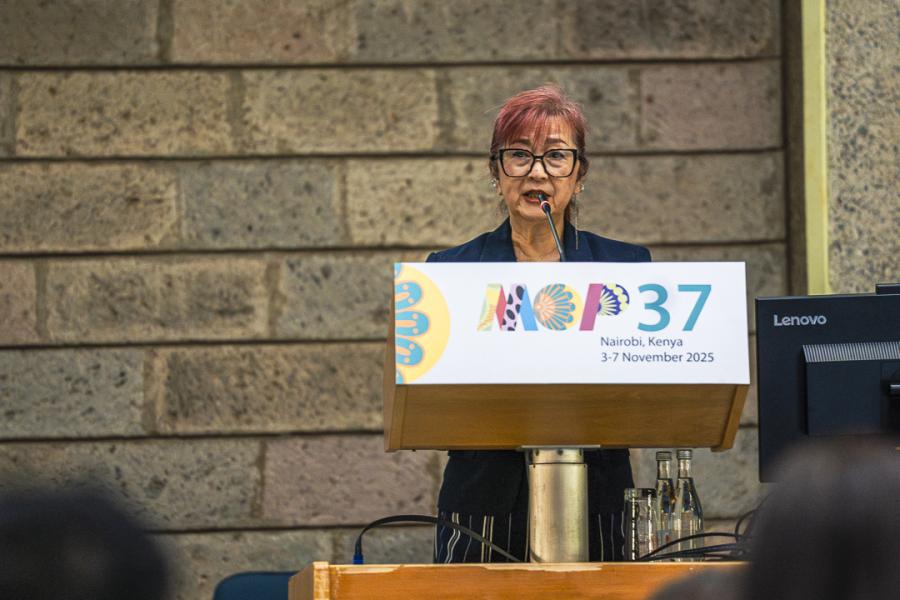
Image courtesy of IISD
Two years later, the world took a bolder step when, in 1987, the Montreal Protocol was adopted, introducing mandatory controls on CFCs. The treaty broke precedent in international environmental diplomacy, as it set clear phase-out schedules, acknowledged different capabilities between developed and developing countries, and established financial support mechanisms to ensure no country would be left behind.
The Montreal Protocol became and remains the only UN environmental treaty ever ratified by every country on Earth. Over the decades that have followed, the Protocol has gradually evolved as the climate change impacts have.
Notably, the London Amendment in 1990 tightened controls and established the Multilateral Fund to support developing countries. The Copenhagen, Montreal, and Beijing amendments further expanded controls, introduced compliance procedures, and strengthened reporting obligations.
The most transformative came in 2016 with the adoption of the Kigali Amendment. This amendment extended the treaty’s reach beyond ozone-depleting substances to hydrofluorocarbons (HFCs), which do not harm the ozone layer but are potent greenhouse gases. It’s remarkable that as of November 2025, 169 countries have ratified Kigali, leaving it with few members for its universal status.
Megumi Seki, Executive Secretary of the Ozone Secretariat, opened MOP 37 by reminding participants that “science remains the backbone of the Ozone Treaties’ success,” emphasizing the urgency of strengthening atmospheric monitoring.
Despite the Protocol’s achievements, troubling new challenges surfaced in Nairobi. Recent atmospheric measurements revealed discrepancies between reported and actual emissions of HFCs. Delegates acknowledged that vast geographic gaps still exist in the monitoring network, allowing emissions to go undetected.
Developing countries also face growing stockpiles of outdated refrigerant gases nearing end-of-life, including halons used in aviation fire suppression systems for which viable alternatives remain limited.
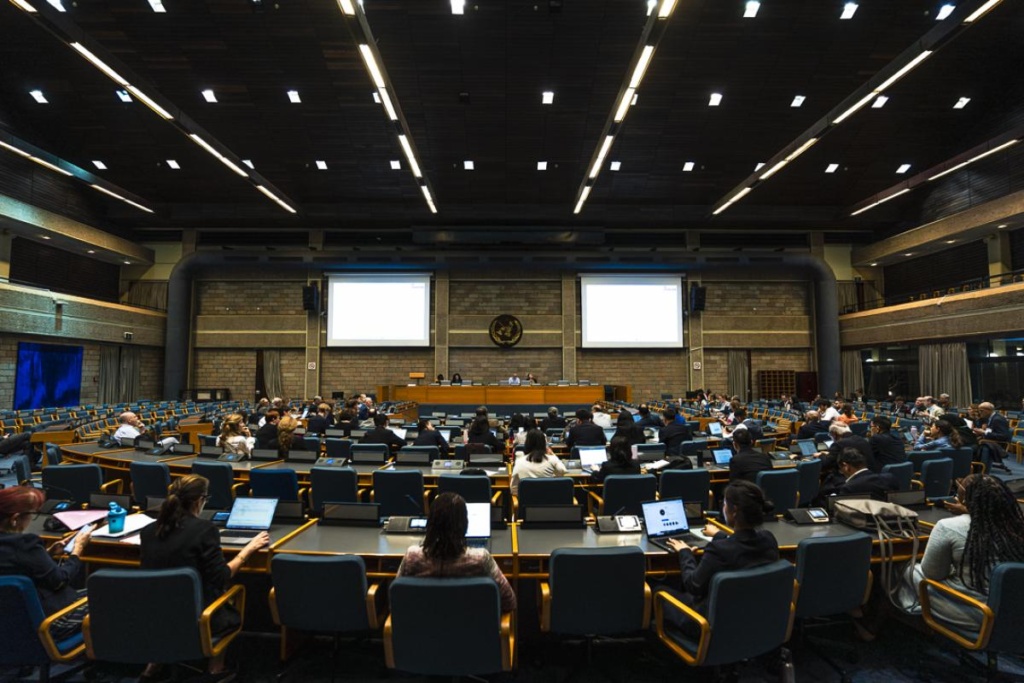
Negotiations were intense, yet productive, as parties were able to adopt twenty decisions during MOP 37, including terms of reference for the next replenishment of the Multilateral Fund for 2027–2029 and measures to sustain the Protocol’s long-term institutional effectiveness.
One decision invited countries to document and share their experiences implementing the Kigali Amendment, particularly in establishing sustainable cooling and energy efficiency centers. In the spirit of cooperation, the proposal was adjusted to remove the suggestion of a workshop, seen by some as too costly, and replaced with a more practical exchange of information through the Secretariat.
A brief stalemate late in the closing plenary, centered on a nomination to the Protocol’s Implementation Committee, threatened to derail the celebratory moment, but the tension dissolved as delegates agreed to push forward.
The incident reinforced what many refer to as the “ozone family”: a community that has, for decades, managed scientific uncertainty, industrial pressure, and political complexity without losing sight of its shared mission.
The Montreal Protocol’s impact continues to reverberate far beyond ozone recovery. The phase-down of HFCs under the Kigali Amendment alone is projected to avoid up to 1°C of global warming by 2050.
The treaty has prevented millions of cases of skin cancer and cataracts, protected ecosystems, and demonstrated that environmental action can be equitable and effective when supported by finance and technology transfer.
As the rain eased and the UN compound emptied, one truth lingered: the world once agreed to save the atmosphere, and it worked. In an era where climate negotiations are often gridlocked, the ozone treaties offer a rare narrative of hope. They are proof that multilateralism still has power, and that when guided by science and solidarity, humanity can solve the problems it creates.
Author Profile

-
Seeker.
Inspire AFRIKA.
Latest entries
 Biodiversity26 October 2026Beyond Biodiversity Finance, A Justice Gap Governments Must Confront
 Biodiversity24 October 2026Faith Leaders and Civil Society Call for Stronger Partnerships to Restore Nature
 Biodiversity23 October 2026Inside Kobe’s Grassroots Effort to Train the Next Generation of Biodiversity Leaders
 Animals23 October 2026As COP17 Meets, World’s Rarest Great Ape Faces a Make-or-Break Test in Indonesia