
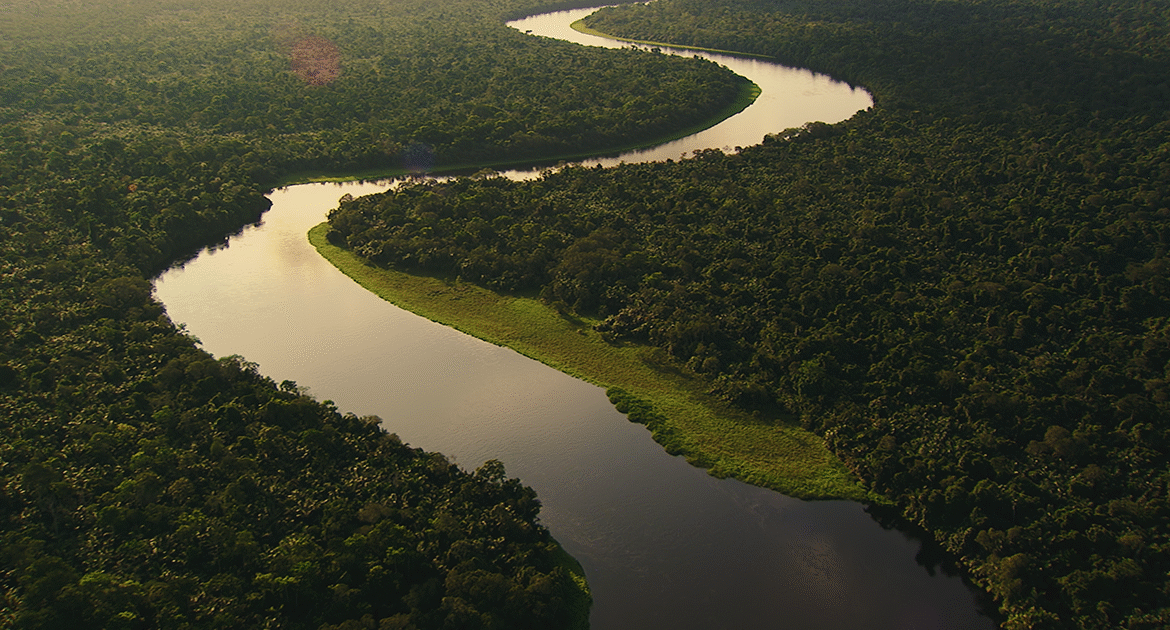
The Initiative, Belém Call for the Forests of the Congo Basin, is emerging as a major multilateral commitment to protect and sustainably manage the Congo Basin’s forests.
First reported on November 6, 2025, through a leaked document, and later confirmed by the French presidency during the COP30 high-level segment, the initiative is jointly championed by France and Gabon in their role as co-facilitators of the Congo Basin Forest Partnership (CBFP). Its formal launch is slated for November 18, 2025.
The Call mobilizes more than $2.5 billion in international financing by 2030, complemented by domestic resources from Central African states, to confront the accelerating loss of the world’s second-largest rainforest.
Spanning 1.5 million km² across the Democratic Republic of Congo (which holds 60% of the forest), the Republic of Congo, Gabon, Cameroon, the Central African Republic, and Equatorial Guinea, the Congo Basin stores an estimated 90.9 billion tons of carbon and supports some of the planet’s richest biodiversity.
Yet it is losing about 0.5 million hectares annually to agricultural expansion, logging, mining, and conflict-driven pressures such as charcoal production.
The Belém Call builds on earlier commitments, including the $1.5 billion COP26 Congo Basin Pledge and COMIFAC’s 2021 “Fair Deal” declaration, which sought fairer financing but faced delivery gaps. This new initiative aims to close those gaps through a more robust, enforceable framework.
A major shift in approach is its emphasis on cutting-edge satellite surveillance and AI-powered alerts to target illegal logging and mining.
Rather than relying on top-down conservation, the plan foregrounds rights-based, community-centered strategies, protecting Indigenous land tenure and directing funding into sustainable livelihoods like agroforestry, while explicitly guarding against forced evictions.
Capacity-building will reinforce technical expertise, strengthen climate-resilient agriculture, and improve infrastructure to counter drivers such as slash-and-burn farming in the DRC or conflict-linked exploitation by armed groups like the M23.
By aligning with REDD+ and emerging carbon markets, where Gabon has already removed an estimated one billion tons of CO₂-equivalent over the last decade, the coalition aims to boost ecosystem resilience, advance the UN’s 30×30 biodiversity target, and open new economic frontiers in eco-tourism and non-timber forest products.
This call to action comes at a critical moment. The Congo Basin remains the world’s largest tropical carbon sink, still absorbing more CO₂ than it emits, unlike parts of the Amazon, now a net emitter.
But a 2025 Science Panel assessment warns of a potential tipping point within a decade if current trends continue, driven by population pressures (notably the DRC’s 100M+ population) and chronic insecurity.
And as COP30 spotlights the Amazon, the need for a parallel, equally urgent response in Africa becomes even more pronounced.


