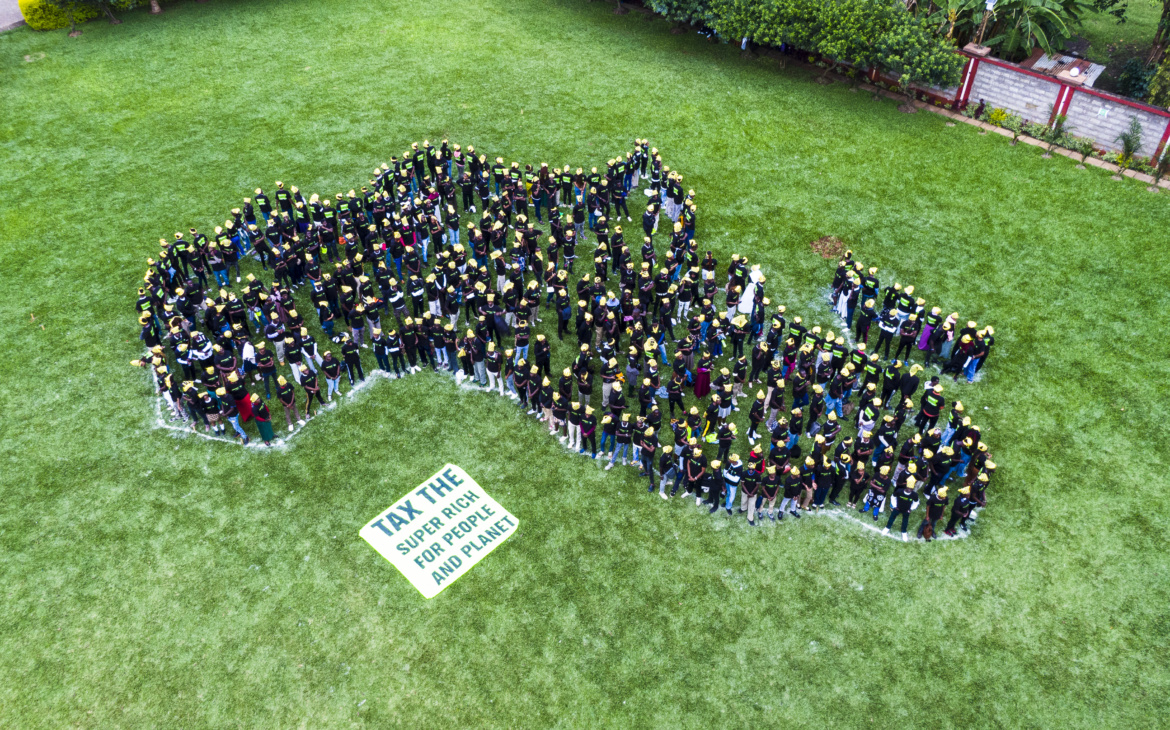
Under the vast African sky, hundreds of volunteers lay on the ground, their bodies meticulously arranged into a powerful symbol: the silhouette of their continent in a call for tax justice. From above, the message they held was unmistakable, a stark plea etched across the map: “Tax the Super-rich for People and Planet.”
This was more than just a protest as it embodied a visual anthem for a movement reaching a crescendo within the United Nations’ conference halls.
As diplomats from around the world gathered for the third round of UN Tax Convention (UNTC) negotiations, this human banner served as a living, breathing reminder of the stakes: a continent and a planet waiting for justice.
The gathering in Nairobi marks a pivotal moment in a global debate about who should pay for the escalating climate crisis. This discussion has been filled with contentions as the developing countries continually claim polluters pay, whereas developed nations are glued to offering loans with interest.
Even though, now the message from Greenpeace Africa and its allies is clear: the era of allowing billionaires and fossil fuel giants to profit while avoiding their fiscal responsibility must end.
An ‘Outdated and Unjust’ System
The financial architecture, as it was designed, didn’t have most of the global majority members on board, nor were their concerns placed in consideration. As such, it has remained a highly contested system due to its evident bias in operation.
“The current global tax system is outdated and unjust,” said Nina Stros, a policy expert at Greenpeace International, from the negotiation sidelines. “It allows the super-rich and polluting oil and gas corporations to profit while avoiding paying their fair share and fuelling the climate crisis through their excessive emissions. This has to change.”
The call for reform is rooted in staggering figures that activists say represent stolen futures. Countries lose an estimated $492 billion annually to tax havens used by multinational corporations and the ultra-wealthy.
The extractive industries alone, oil, gas, and mining, reportedly siphon $44 billion per year from government coffers through profit shifting.
“The world is not a billionaire’s playground, for them to get richer at the expense of our health, security, and democracy,” said Fred Njehu, Fair Share Global Political Lead for Greenpeace Africa.
His words cut to the heart of the activists’ frustration: that vast private wealth is accumulating while public funds for essential services, climate adaptation, and nature protection dry up.
A Convergence of Crises
The tax negotiations in Nairobi coincide with the latest UN climate talks (COP30), creating a powerful, parallel narrative. In one city, the world is debating how to fund the fight against climate change; in the other, how to make those most responsible finally pay their tab.
The numbers are daunting. COP29 secured a commitment to mobilise at least $300 billion per year by 2035, a figure that must scale up to $1.3 trillion to meet actual needs. For many, the UNTC is the key to unlocking this finance.
“These injustices are preventing many countries of the Global South from raising revenues that could support better public services, climate mitigation and adaptation, and nature protection,” said Murtala Touray, Programme Director at Greenpeace Africa.
“Africa is calling for a clear path to tax justice… Because tax justice isn’t charity, it’s a fundamental right and the essence of our sovereignty.”
The Price Tag of Change
The solutions proposed by Greenpeace come with their own compelling price tags, suggesting that the money needed is not missing, but deliberately untapped. Oxfam estimates suggest:
- A permanent tax on oil and gas corporation profits could raise $400 billion in its first year.
- A tax of just 5% on the world’s multimillionaires and billionaires could generate a staggering $1.7 trillion annually.
The human banner has been folded away, and the volunteers have dispersed. But the image they created remains, a continent-shaped question posed to the world’s leaders.
As the negotiations continue, the world watches to see if the message received in Nairobi will be met with the strong, binding commitments needed to tax extreme wealth and pollution, and fund a livable future for all.