
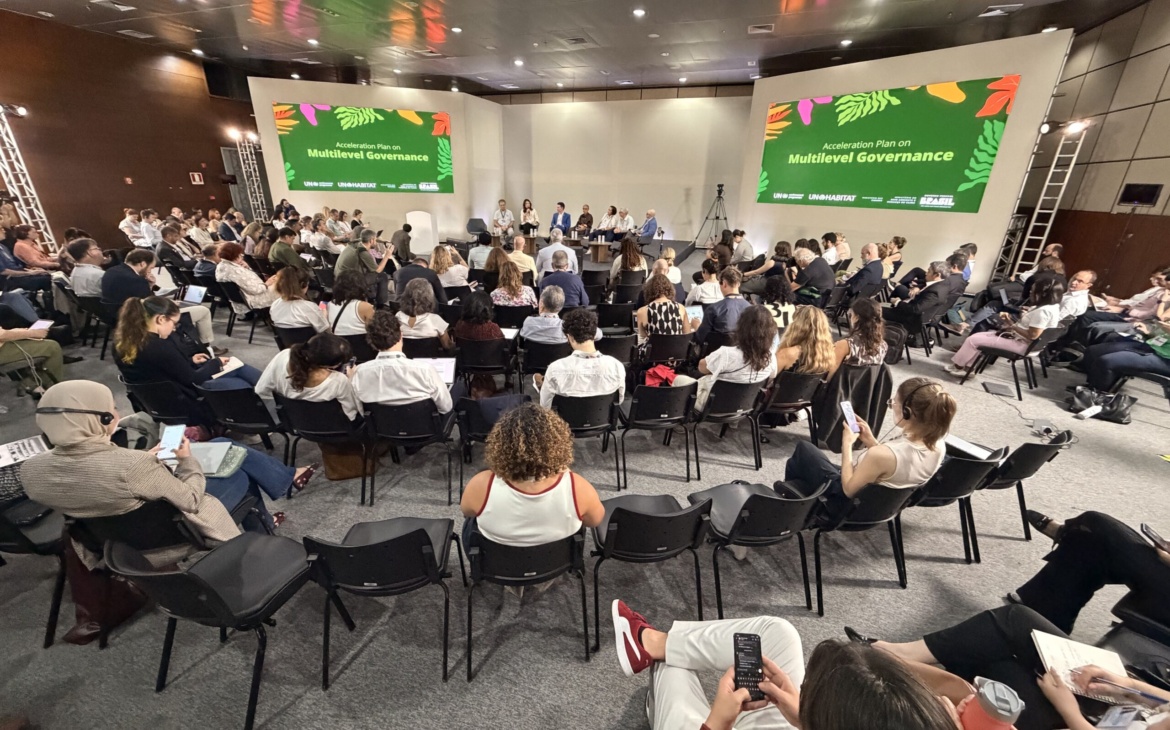
At the ministerial session of the Fourth Ministerial Meeting on Urbanization and Climate Change during COP30 in Belém, the Amazon Rainforest-edge host country, Brazil, unveiled two interconnected game-changers in the world of climate governance embracing multilevel governance.
The first milestone was the launch of the Plan to Accelerate the Solution (PAS) on multilevel governance, followed by the announcement of a new governance framework for the Coalition for High Ambition Multilevel Partnerships (CHAMP) that’s now jointly co-chaired by Brazil and Germany until 2027.
With 78 endorsing countries already, it has clearly indicated that global actors recognize that controlling climate change isn’t just about nations but also involves cities, states, provinces, and regions in their entirety.
In Brazil, the message from ambassador André Corrêa do Lago was clear as he welcomed not only the high-level presidents but also the township and city leaders, mayors, as well as governors.
In many countries, the gap between national commitments (e.g., NDCs) and local implementation remains wide, while other nations have undertaken this holistic approach of inclusion.
It’s notable that policies made in capital cities often never fully reach subnational levels, or, in cases where they do so, it’s in a fragmented form, without alignment.
“The presence of governors and mayors is extremely important, because subnational entities play a central role in implementing the decisions made at COPs. It is essential that the world sees the unity that exists in Brazil, across all levels of government, around an agenda that, as we know, will be extraordinary for growth, job creation, and improving people’s lives,” said Lago.
PAS attempts to bridge that by becoming the first-of-its-kind global effort to institutionalize multilevel climate governance as an enabling condition for effective implementation of the Paris Agreement.
This realization was emphasized by Christina Kitsos, Vice-Mayor of Geneva & President of Global Cities Hub, who gave a city-level perspective, voicing the importance of reinforcing this coordination for effectiveness.
“High-level climate goals remain abstract until they are implemented locally, and that implementation must be designed,” said Christina.

PAS in Action: From Framework to Delivery
The PAS (Plan to Accelerate the Solution) is intended to take the global idea of multilevel governance and turn it into measurable action.
As such, what’s envisioned in this case is a scenario where a provincial governor, a mayor of a mid-sized city, and the national environment minister all sit at one table early next decade, working from the same roadmap.
This is the ambition, with the logic behind it being that when the national government sets targets, local governments need to operationalize them. However, without that bridge, many plans remain words on paper.
One of the targets of the PAS includes training 6,000 public officials and practitioners in CHAMP-endorsing and other countries by 2028, focusing on multilevel governance and climate-action implementation.
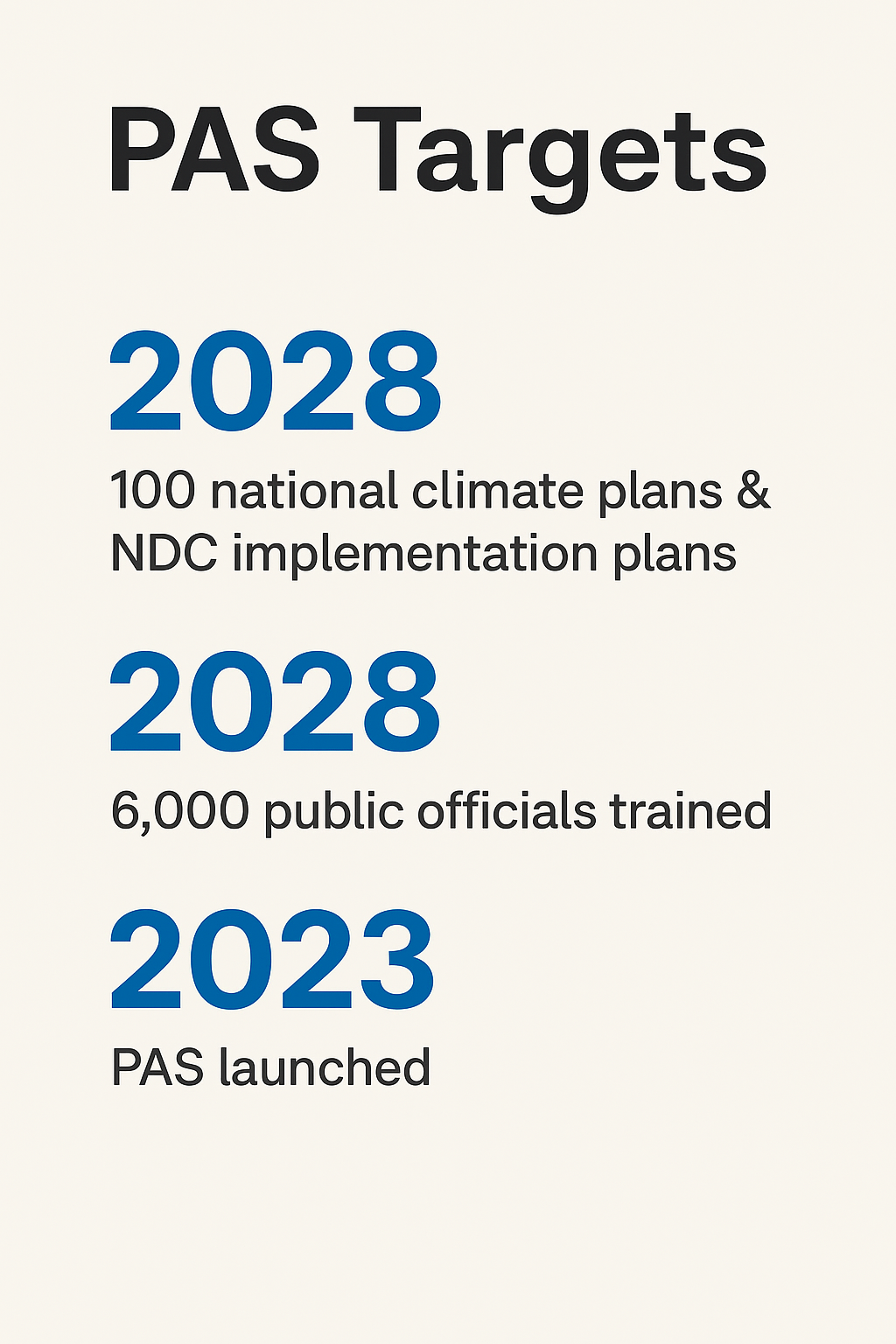
Another core target is that by 2028, 100 national climate plans and NDC-implementation plans officially include multilevel governance structures and mechanisms, aiming for 120 by 2030.
Without forgetting that it’s deeply in its nature to try and align policy, capacity-building, and finance across national, regional, and local levels, PAS aims to move from “commitment” to “delivery.”
The Governance Game-Changer: CHAMP’s New Chapter
As CHAMP evolves, evidenced by strides like having Brazil and Germany as co-chairs, we see the coalition entering its implementation phase rather than just being a policy sign-on.
The co-chair governance framework, announced at COP30, formalizes how the coalition will be governed, its steering group nominated, and decision-making reflecting national ownership and subnational voices.
This is significant, for it signals that multilevel governance is not just an add-on but central to national climate strategies, including in major players like Germany.
The other crucial stance it takes us to is the creation of a structured mechanism to bring subnational entities into international climate diplomacy, one of the most long-standing governance challenges.
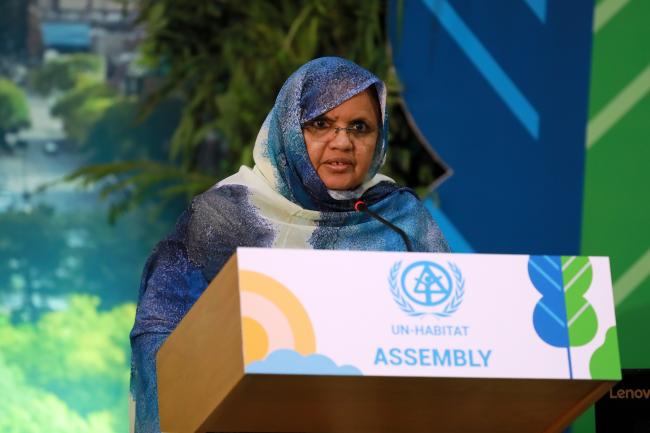
Fatimetou Mint Abdel Malick, President of Nouakchott Region, echoed this transformation’s capabilities, urging that CHAMP has tremendous capacity to deliver the change sought.
“Through genuine multilevel governance and frameworks like CHAMP, we can transform global ambition into grounded action ranging from restoring ecosystems to strengthening NDCs and delivering justice where it matters most,” said Fatimetou.
What This Means for Africa & Kenya
For Kenya and other African states, the implications are important since, despite national climate planning (NDCs, adaptation plans) often including cities or counties, it’s apparent there is a gap as implementation remains uneven.
The PAS and CHAMP framework is essential for us, as it can offer a model to insert multilevel governance as a condition detailing engagements that are meaningful and productive, rather than a side program.
In practice, this would mean that counties and municipalities in Kenya could be engaged as formal partners in NDC updates, not just implementers, which eases and shortens the journey to action.
Another measure would be having training programs under PAS that build capacity for local officials, in turn narrowing the gap between national strategy and local delivery.
Notably, access to climate finance might become easier for subnational actors if governed through multilevel frameworks that align with national commitments.
Thus, COP30’s announcement from Brazil isn’t just another policy statement. Rather, it’s an elevation of multilevel governance, one that aligns national ambition, local action, and international cooperation into a formidable frontline strategy for climate implementation.
According to Mayor Sefiani of Chefchaouen, Morocco, and GCoM, this COP must be the ‘COP of cities’, must be the COP of local implementation, and must be the COP of dialogue between national governments and local governments.

As the PAS moves from policy to action and CHAMP transitions into governance mode, we are witnessing a shift: the climate challenge is being reframed not only as global or national but deeply local and regional.
For us journalists, policymakers, and advocates alike, the message, which is that levels matter, is crystal clear. The success of the Paris Agreement will increasingly depend on how well the “spaces between” national capitals and community halls are bridged.
Author Profile

-
Seeker.
Inspire AFRIKA.
Latest entries
 Corporate15 October 2026Water, Sanitation and Digital Learning at the Centre of Garissa School Upgrade
 Agriculture14 October 2026Africa’s Food Systems Future Depends on Listening to Farmers
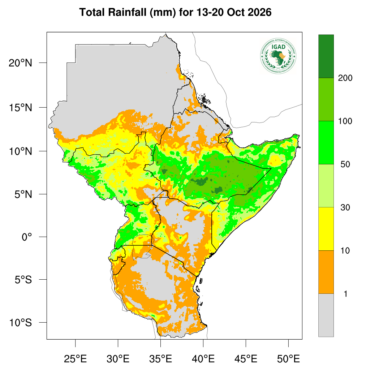 Weather Forecasts13 October 2026Rain and Rising Temperatures Forecast Across the Greater Horn of Africa
 Climate9 October 2026Beyond Negotiations: Africa Expects Concrete Outcomes from Antalya


