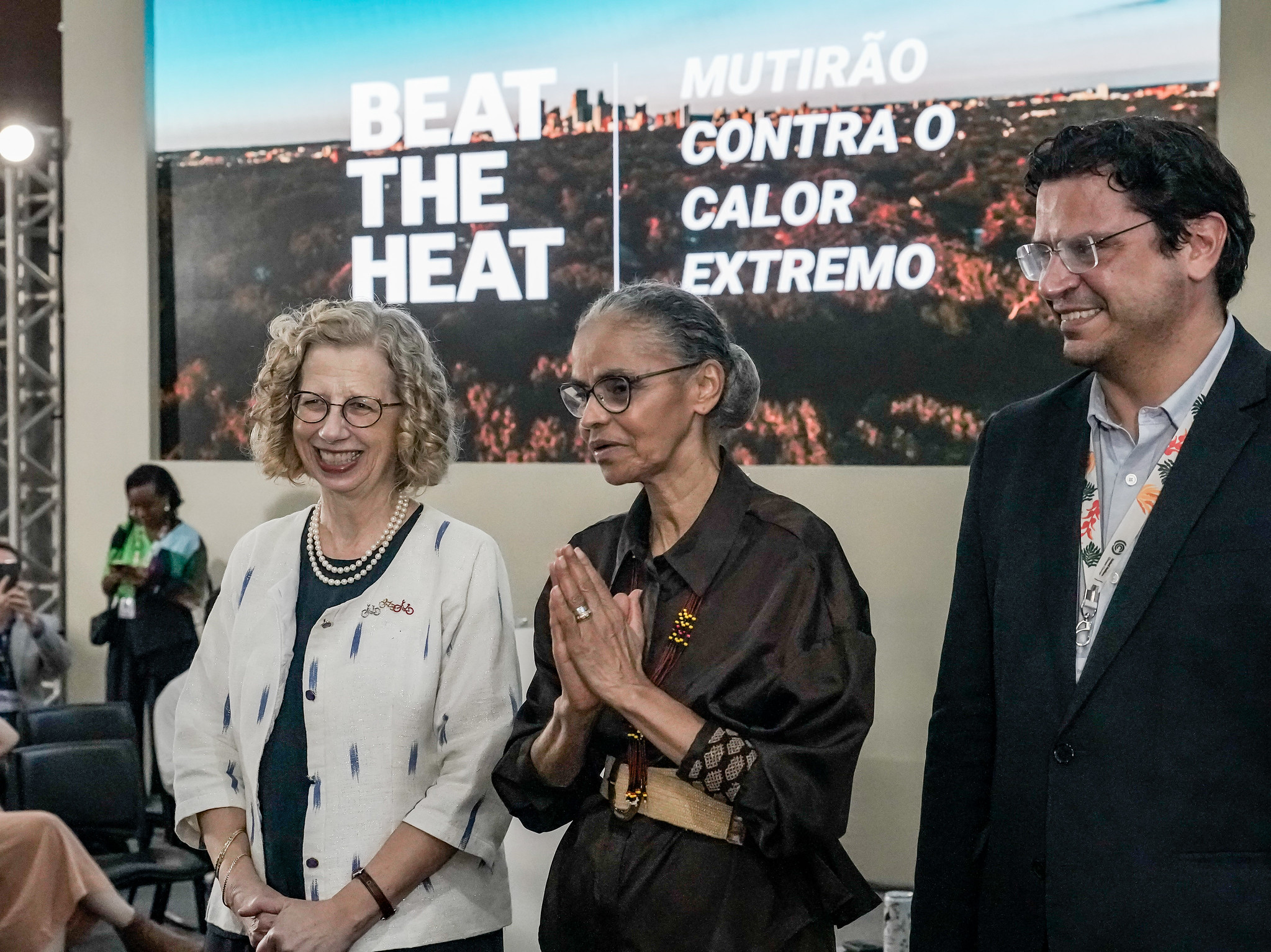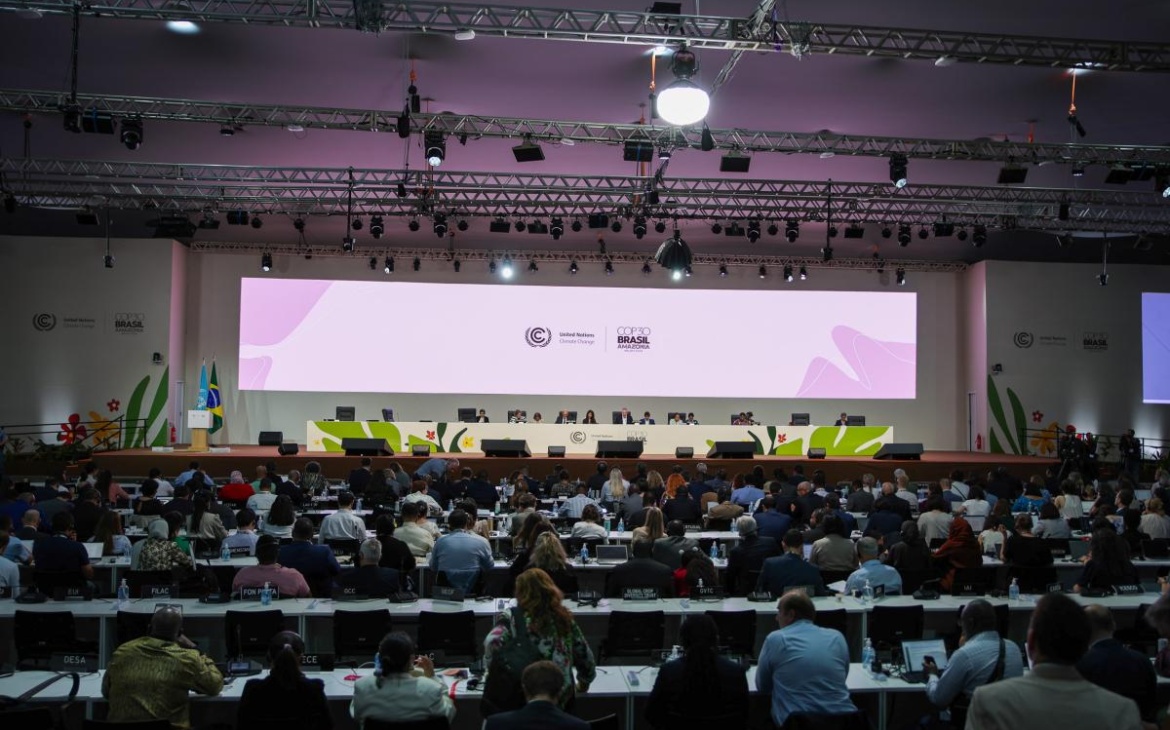
For the first time in history, the United Nations climate summit, Conference of the Parties (COP30), is being held in the world’s largest rainforest, in Belém, capital of the state of Pará. Setting it off in style, Indigenous groups opened the ceremony with songs and dance as they arrived in style by boat on the Amazon River.
Belém has embraced more than 50,000 delegates from over 190 countries, among them scientists, heads of state, indigenous leaders, and civil society, who streamed into the Hangar Convention Centre, welcomed by heavy rains that had most on their heels.
A powerful signature entry reminded us how environmental protection is inseparable from human rights. Events throughout the day would spotlight women-led adaptation projects, including the Local Adaptation Champions award, hosted by Brazil’s First Lady, Rosângela da Silva (Janja).
The 30th Conference of the Parties (COP30), officially convening in a city that’s a gateway to Brazil’s lower Amazon region, becomes a symbolic moment, remembering that the summit was born in the Rio conventions in 1992.
Secondly, this is a truly significant gesture for the planet as the vital meeting places the climate crisis convening at the doorstep of the ecosystems and communities most threatened by it.
The third intriguing move is undertaken by Brazil’s government by branding this year’s summit as the “COP of Truth” and the “COP of Implementation.” This was emphasized by Brazilian President Luiz Inácio Lula da Silva as he set the tone in a passionate opening address that combined urgency with frustration.
“The era of good intentions and fine speeches is over. COP30 must be the COP of truth, and throughout it all, let’s recognize that since we are moving in the right direction, we are doing it at the wrong speed,” he said.
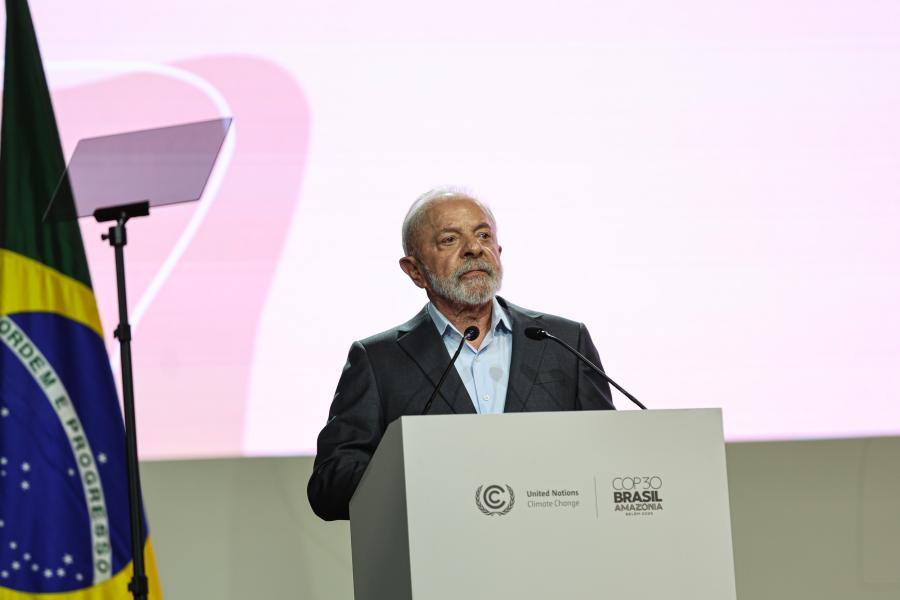
He warned that climate change is not a future threat but a current catastrophe, citing deadly floods in Brazil, the Philippines, and Jamaica.
“He pointed to COP 30 as an opportunity to reclaim the enthusiasm of the Rio Earth Summit that birthed the UNFCCC, underlining that the USD 1.3 trillion needed to address the climate crisis is less than the over USD 2.7 trillion in annual military spending,” he added.
Brazil would take a pragmatic step as it announced a $1 billion contribution to a new Tropical Forests Forever Facility (TFFF). A move that was immediately joined by pledges totaling $5.5 billion, including $3 billion from Norway, to protect rainforests around the world.
UNFCCC Executive Secretary Simon Stiell, in delivering his appeal he urged negotiators to shift from rhetoric to concrete implementation, reminding them that climate impacts are already crippling economies, devastating lives, and alarmingly intensifying. He would go ahead to laud Brazil for breaking the deadlock, as a move that showed leadership with optimism and consideration of all parties.
“In this arena of COP30, your job here is not to fight one another; your job here is to fight this climate crisis, together. Not one single nation among you can afford this, as climate disasters rip double-digits off GDP,” said Simon Stiell.
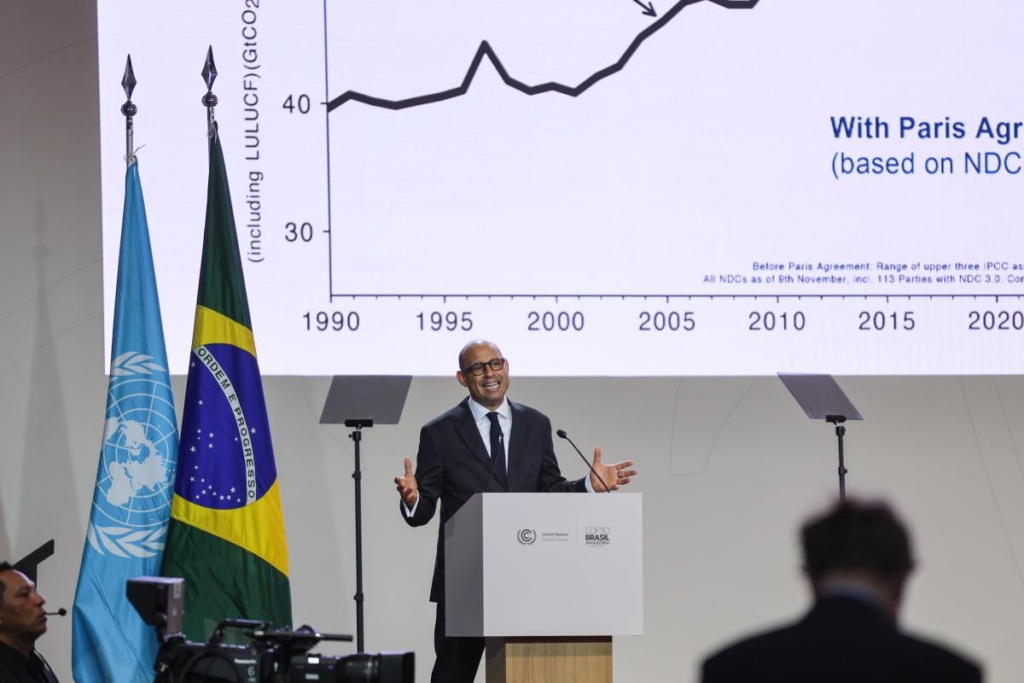
Stiell highlighted the “Baku to Belém Roadmap,” which aims to increase climate finance from the current $300 billion (agreed at COP29) to an ambitious $1.3 trillion annually by 2035.
COP30 Agenda: A Test of Global Trust
Early tensions over agenda items nearly stalled progress, particularly around climate finance and carbon taxation proposals that remained highly divisive. A moment that saw Brazil unlock the contention by deferring contentious finance negotiations to separate consultations, allowing negotiations to begin.
Key negotiation tracks have been derived to include the Nationally Determined Contributions (NDCs) as countries are called on to submit updated plans consistent with the 1.5°C pathway.
Another key agenda is Climate Finance, which is pegged on ensuring the Baku decisions, pledges, and promises are delivered with an assurance on the embrace of grants and concessions format rather than loans.
The elephant in the room remains Just Transitions, which has to entail a holistic approach to ensuring Indigenous rights, Free Prior Informed Consent (FPIC), and community protection while phasing out fossil fuels and adopting renewable and clean energy.
Brazil even passed a symbolic law transferring the capital to Belém from November 11–21 to center Amazon voices at the heart of government decision-making.
André Corrêa do Lago (COP30 President) emphasized the immediacy of the crisis, referencing recent global disasters (including floods in the Philippines) as a “grim warning that the climate crisis is already here and the world cannot afford to wait any longer.”
“The action plan will reveal many paths forward. This, therefore, is an implementation COP,” opined Lago.
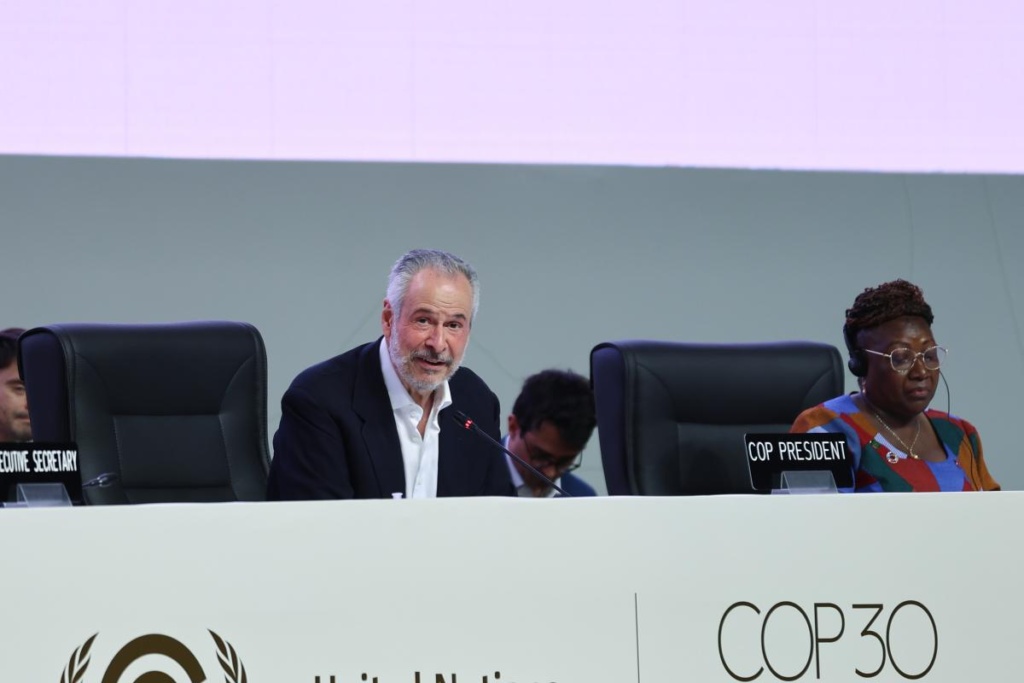
The global leaders’ speeches collectively resonated with a finality that Blem is the place for actions only. UN Secretary-General António Guterres, with his ever-calm posture, called on global leaders to choose courage over incrementalism. Maintaining his stance of a people-centred approach that would ensure no one is left behind, as is embedded in the Early Warnings for All initiative.
“Missing 1.5°C is a moral failure. The challenge is immense, but the choices are clear. Choose to make Belém the turning point. Stand with science. Stand for justice. Stand for future generations,” said António Guterres, UN Secretary-General.
However, amidst all the COP30 celebrations, some members of the civil society groups have accused Brazil of double standards. A section is critiquing the new Amazon highway that was purposely built for the summit, as they attribute it to having caused the displacement of açaí farming communities. In addition to this, it’s also alleged that Brazil continues to approve oil exploration near the rainforest.
These contradictory undertones and murmurs seem to reflect a global dilemma, stirring others to question whether it will be possible for the world to transition away from fossil fuels while still expanding oil exploration.
One of the most significant announcements that evidenced how Africa is leading the Global South on a path into the future was Ethiopia being announced as the official host of COP32.
For the African continent, this marks a major moment of climate leadership, positioning Africa not only as the most impacted region but as a key driver of solutions.
It is indeed notable that COP30 has begun with hard truths, emboldening the higher expectations engraved among the most vulnerable, those on the frontline, as well as those in anxiety.
The stage is set, the audience is watching, the planet is listening. We have all seen that Belém is more than just a normal venue; hence, we presume it as a demand for accountability.
If COP28 was the year of compromise, and COP29 the year of finance pledges, then COP30, with every tick tock of the clock, is positioning itself as the year of truth, where words must turn into action.
Author Profile

-
Seeker.
Inspire AFRIKA.
Latest entries
 Agriculture14 October 2026Africa’s Food Systems Future Depends on Listening to Farmers
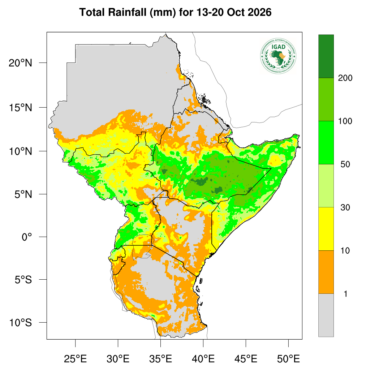 Weather Forecasts13 October 2026Rain and Rising Temperatures Forecast Across the Greater Horn of Africa
 Climate9 October 2026Beyond Negotiations: Africa Expects Concrete Outcomes from Antalya
 Animals7 October 2026In Kajiado’s Drylands, Collective Selling of Small Herds Is Changing the Livestock Trade