
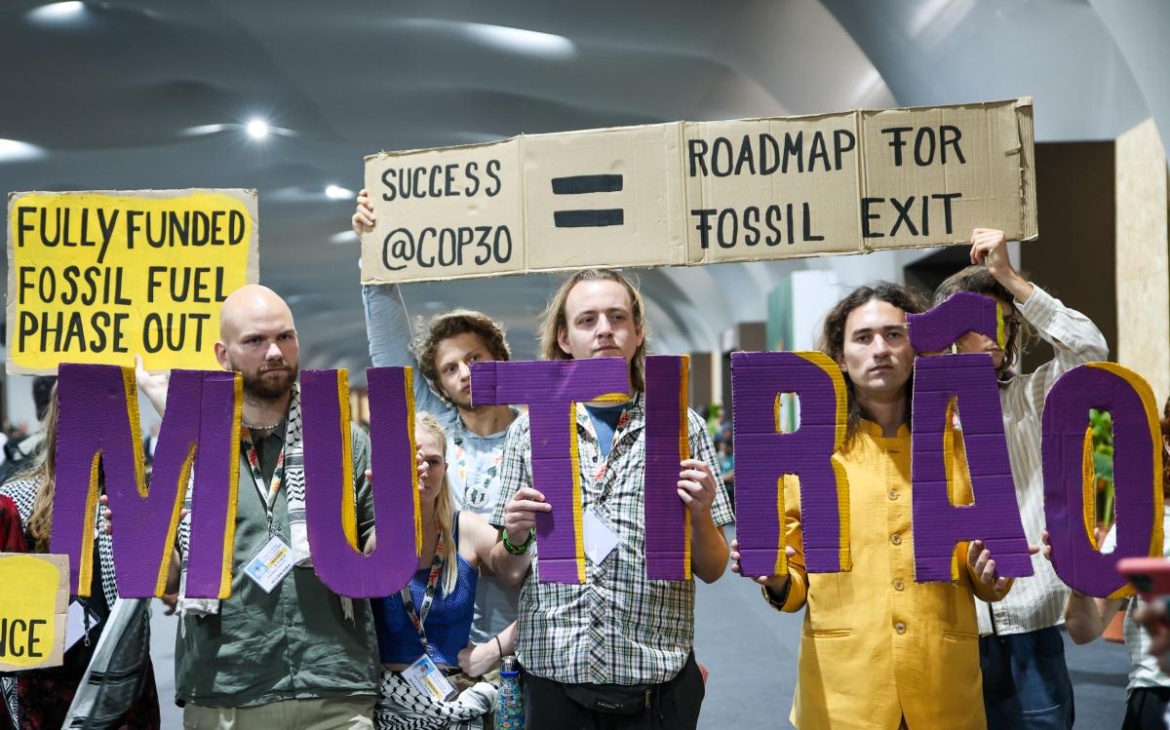
As COP30 negotiations drew to a close, the release of the latest draft text with no mention of fossil fuels sparked widespread concern. In response, the Governments of Colombia and the Netherlands announced their intention to co-host the First International Conference on the Just Transition Away from Fossil Fuels, a move widely viewed as a show of leadership.
The hopeful announcement was made by Colombia’s Minister of Environment, Irene Vélez Torres, and the Netherlands’ Deputy Prime Minister and Minister for Climate Policy, Sophie Hermans, during a high-level press conference in Belém.
This landmark meeting, aimed at developing a concrete roadmap for phasing out fossil fuels, will take place on 28–29 April 2026 in Santa Marta, Colombia, a major port city with significant coal exports. Pacific nations have already committed to convening a subsequent meeting in the region to advance the outcomes.
“From the heart of the Amazon, indigenous peoples, Afro descendant communities, campesino organizations, academia, and social movements delivered a message that we cannot ignore,” she said.
Torres insisted that COP30 cannot end without a clear, just, and equitable roadmap for the global phase-out of fossil fuels.
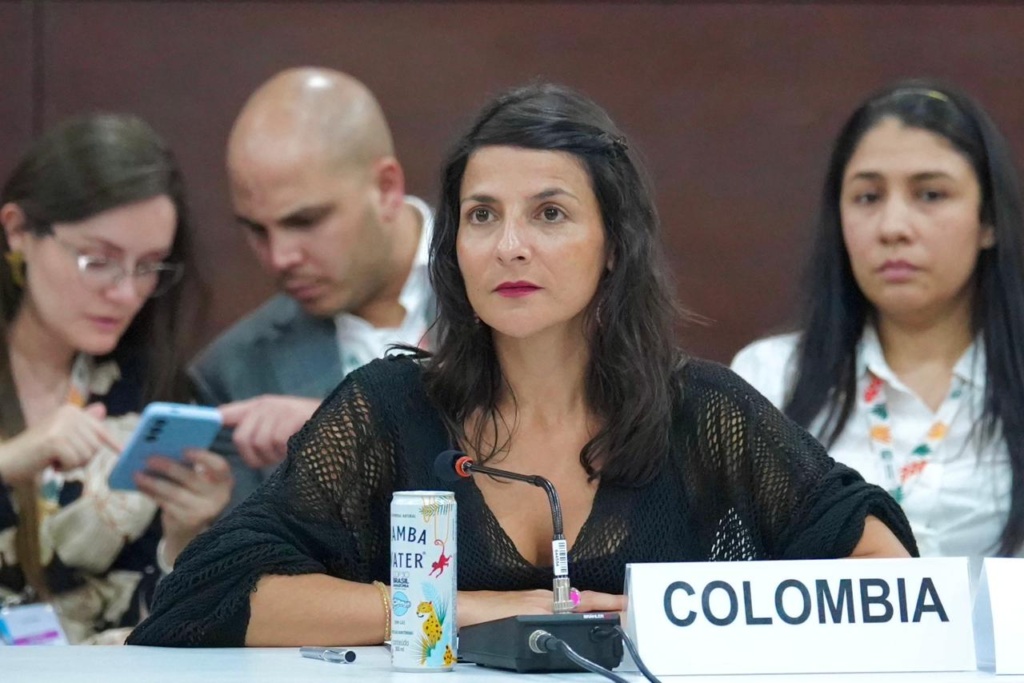
“We are not asking for an empty document. We are not asking for an empty announcement. We must leave this COP with a global roadmap that guides us, not symbolically, but concretely, our collective efforts to phase out fossil fuels.”
Acknowledging the difficulties faced in negotiations, she noted that the conversation cannot end here, urging the need to keep momentum, lead with bravery, rise to the challenge, and build a coalition of the willing.
Reflecting the role fossil fuels have played in driving climate impacts globally, Colombia, in partnership with the Netherlands, has taken a pioneering stance. Their decision not only to hold the first international conference on the just transition away from fossil fuels, but also to invite willing countries, subnational actors, campesinos, Afro communities, Indigenous peoples, NGOs, and others to join in Santa Marta, marks a bold step.
According to the declaration, the conference will serve as a broad intergovernmental, multisectoral platform complementary to the UNFCCC, designed to identify legal, economic, and social pathways necessary for phasing out fossil fuels.
Hermans commended the growing momentum behind fossil fuel phase-out efforts, urging the world to seize it.
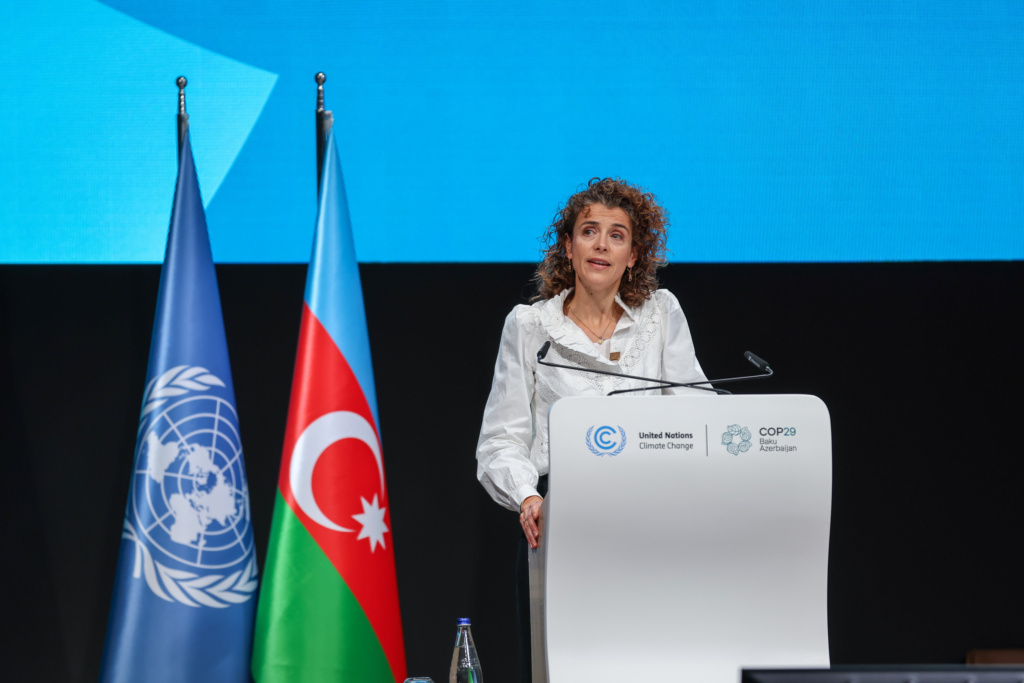
“We must begin to materialize what this phase-out could look like and start a concrete roadmap that allows us to incorporate the new and leave the old behind,” she said.
The conference aims to advance international cooperation on transitioning away from fossil fuel extraction, reinforcing the Paris Agreement, and aligning with the recent Advisory Opinion of the International Court of Justice, which confirmed that states have a legal obligation to protect the climate, including by addressing fossil fuel production, licensing, and subsidies.
Hosting this summit in a major coal port, in the world’s fifth-largest coal producer, sends a powerful message: fossil-fuels-dependent nations want to end their reliance on coal, oil, and gas, but doing so fairly requires unprecedented international cooperation so that no one is left behind.
Ralph Regenvanu, Vanuatu’s Minister for Climate Change, Energy, Environment, and Disaster Management, lauded the historic conference as a critical step forward, recognizing that this is the beginning of an ongoing and urgent process.
“To ensure momentum continues, Vanuatu is committed to working with our Pacific brothers and sisters to explore hosting a subsequent convening under our leadership… so that collectively we can build the roadmap for the fossil-free future we need, one that is just, funded, and achievable,” he said.
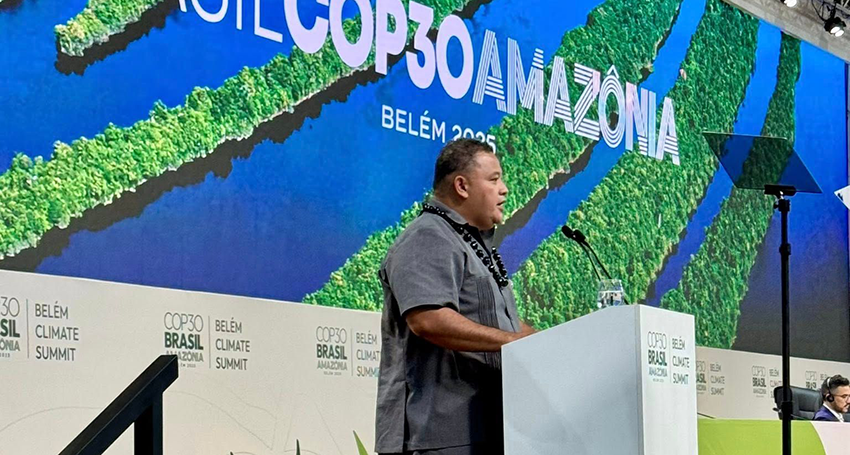
Tuvalu’s Minister of Climate Change, Maina Talia, reinforced the urgency.
“As a nation facing the existential threat of sea-level rise, Tuvalu understands firsthand the devastating impacts of the fossil-fueled climate crisis… We must ensure that any transition is rooted in equity and justice,” he said, calling for a binding Fossil Fuel Treaty.
The major announcement was accompanied by the launch of the “Belém Declaration on the Just Transition Away from Fossil Fuels.” The declaration is supported by 24 countries, constituting a direct contribution to President Lula’s call for a global roadmap and setting out minimum ambition for a just and equitable transition.
The First International Conference on the Just Transition Away from Fossil Fuels will provide a strategic space for dialogue among government representatives, experts, rural and Indigenous Peoples, Afro-descendant communities, civil society, climate advocates, industry leaders, and academia. This endeavor will be to explore viable, fair, and equitable pathways toward sustainable, diversified, and accessible energy systems.
It builds on successful diplomatic summits that reshaped global action, including the Ottawa Conference on landmines, the Oslo Conference on cluster munitions, and the Humanitarian Initiative that reframed nuclear weapons as a humanitarian issue, leading to breakthrough UN resolutions.
This announcement comes at a pivotal moment, with a widening gap between fossil fuel production plans and what is required to limit warming to 1.5°C. However, Government projections show production will exceed Paris-aligned levels by more than 120% in 2030, and by 2050 could be 4.5 times higher than what a 1.5°C pathway allows, highlighting the urgency of a coordinated global effort.
At the same time, momentum toward a fossil-free future has never been stronger. Cambodia became the 18th nation to join the call for a Fossil Fuel Treaty during COP30, adding to a rapidly expanding coalition. It’s now backed by 140 cities and subnational governments, the WHO, the European Parliament, over 4,000 civil society organisations, more than 3,000 scientists and academics, 101 Nobel laureates, over 900 parliamentarians, and numerous businesses.


